





 Portuguese
  English
  Spanish
  4 min of reading
  0 comments


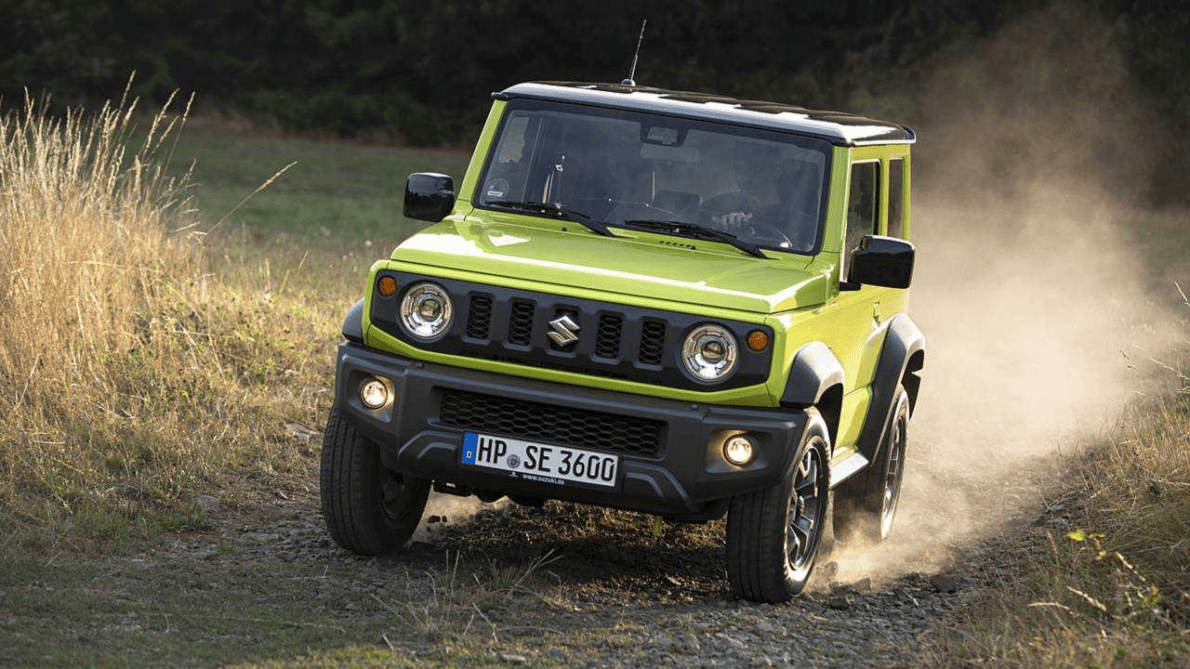
New Emission Law Prevents The Import Of The Jimny Sierra Model, The Only Vehicle From Suzuki Sold In The Country
The Suzuki may end its operations in Brazil by 2025, due to new restrictions imposed by environmental legislation.
The HPE, the manufacturer’s representative in the country, is facing difficulties importing new units of the Jimny Sierra, the only vehicle of the brand sold here, since January 1, 2025.
Import Ban Due To New Law
The ban on importing the Jimny Sierra was caused by the new Brazilian emission law, which requires all vehicles to meet the Proconve L8.
-
With an investment of R$ 612 million, a capacity to process 1.2 million liters of milk per day, Piracanjuba inaugurates a mega cheese factory that increases national production, reduces dependence on imports, and repositions Brazil on the global dairy map.

-
Brazilian city gains industrial hub for 85 companies that is equivalent to 55 football fields.

-
Peugeot and Citroën factory in Argentina cuts production by half and opens a layoff program for more than 2,000 employees after Brazil drastically reduced purchases of Argentine vehicles.

-
A Brazilian city gains a factory worth R$ 300 million with the capacity to process 200 thousand tons of wheat per year, a mill of 660 tons/day, silos for 42 thousand tons, and an industrial area of 276 thousand m².

This regulation, which came into effect in Brazil at the beginning of 2025, is the eighth phase of the Vehicle Air Pollution Control Program.
The little off-road vehicle from Suzuki does not meet the established requirements, resulting in the interruption of its import.
Before the Proconve L8 came into effect, between 1,000 and 1,500 units of the Jimny Sierra arrived in Brazil, according to information from the magazine Autoesporte.
This volume is enough to keep dealerships supplied until the end of 2025, considering an average sales rate of about 130 units per month.
The situation illustrates how new legislation can directly impact manufacturers’ operations and the availability of models in the market.
Negotiations Between HPE And Parent Company In Japan
The HPE has been in negotiations for months with the Suzuki parent company in Japan to update the aspirated 1.5 engine of the K15B family, used in the Jimny Sierra.
However, according to Autoesporte, talks have stalled due to a deadlock over who will bear the costs of the necessary modifications to meet the new emission standards.
The lack of an agreement could lead to the definitive interruption of the manufacturer’s operations in Brazil, if alternative models to replace the Jimny Sierra are not found.
The issue of costs is a critical point in the negotiations, as updating engines and adapting vehicles to the new standards may require significant investments from the manufacturer.
This raises the question of the economic viability of continuing operations in Brazil, especially for models that face homologation difficulties.
Alternative To Keep The Brand In Brazil
A possible solution for Suzuki to remain in Brazil would be the introduction of the e-Vitara, a compact electric SUV that was presented abroad at the end of 2024.
Because it is an electric vehicle, homologation of this model could be simpler, allowing the manufacturer to adapt to the demands of the Brazilian market.
The e-Vitara measures 4.28 m in length, a size similar to that of the Jeep Renegade, and has a wheelbase of 2.70 m, comparable to that of the Toyota Corolla.
In Europe, Suzuki offers three versions of the e-Vitara:
1st Entry-level version with a front engine of 144 hp, 49 kWh batteries, and front-wheel drive.
2nd 4×2 version with 174 hp and 61 kWh batteries.
3rd 4×4 version, which has 184 hp and a rear engine of 65 hp to drive the rear wheels.
The introduction of the e-Vitara in Brazil could not only replace the Jimny Sierra, but also position Suzuki in a growing market for electric vehicles, aligning with trends in sustainability and technological innovation.
This transition to electrification is a strategy that many manufacturers have adopted to meet global demands for cleaner and more sustainable vehicles.
The Impact Of Proconve On The Automotive Industry
The Proconve is an essential program for reducing pollution caused by motor vehicles in Brazil.
By setting strict emission limits, the program forces manufacturers to invest in cleaner and more efficient technologies.
This not only benefits the environment but also drives innovation in the automotive industry. Manufacturers that cannot adapt may face serious challenges, as Suzuki is currently facing.
The Brazilian environmental legislation reflects a global trend towards greater rigor in regulating vehicle emissions.
As countries around the world seek to reduce their carbon footprint, the pressure on manufacturers to adapt to new standards increases.
This means that companies need to not only innovate but also strategically plan their product lines for the long term.
Statement From HPE
In a statement to the press, HPE stated: “Suzuki Vehicles continues with its plans for the Brazilian market awaiting guidance from the parent company in Japan on upcoming products available that meet Brazilian emission standards, and for strategic reasons we cannot provide more details. In the meantime, the Jimny Sierra remains available for sale at dealerships across Brazil.” This statement highlights the manufacturer’s intention to remain in the market, although dependence on a single model may jeopardize its operations.
The Future Of Suzuki In Brazil
The situation of Suzuki in Brazil reflects the difficulties faced by manufacturers in light of new environmental legislation.
The growing concern for sustainability and reduction of pollutant emissions requires companies to adapt quickly to continue operating.
The continuation of Suzuki in Brazil will depend on its ability to align with the new requirements and find viable solutions to maintain its market presence.
Additionally, the manufacturer must consider the potential of new models, such as the e-Vitara, which can revitalize its image and attract consumers looking for sustainable alternatives.
The future of Suzuki in Brazil is at stake, and its ability to innovate and adapt will be crucial for its survival in an increasingly competitive and regulated market.
The situation of Suzuki in Brazil serves as a warning to other manufacturers, highlighting the importance of being prepared for regulatory and market changes.
Adapting to new emission standards is not just about compliance but an opportunity to innovate and stand out in an ever-evolving automotive landscape.
SOURCE: OLHARDIGITAL







Seja o primeiro a reagir!