





 Portuguese
  English
  Spanish
  8 min of reading
  0 comments


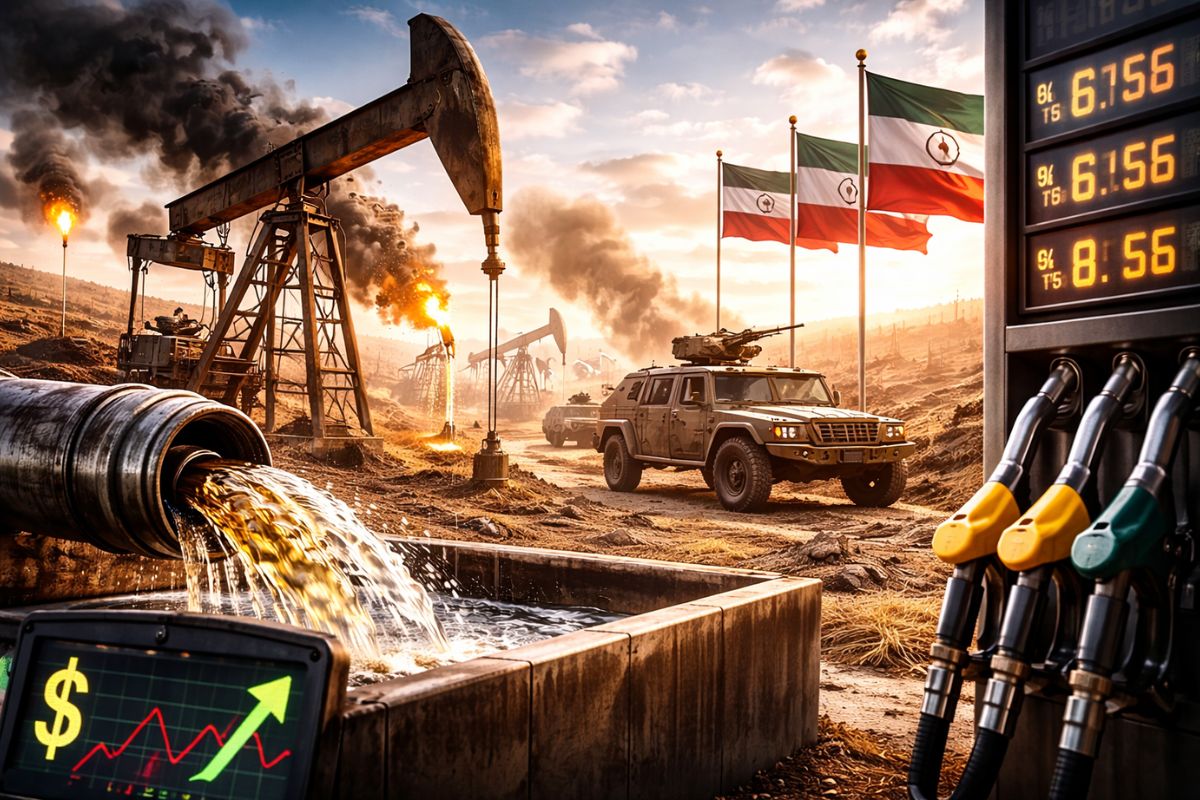
The Jump In Oil Price Less Than 48 Hours After The Military Operation Against Iran Sounded A Global Alert And Put Brazil In The Face Of Pressure That Could Quickly Reach The Gas Station, The Supermarket, And The Pockets Of Families.
Oil has returned to the center of the world economy after, according to the sent transcript, the United States and Israel launched Operation Epic Fury against Iran on February 28, 2026, eliminating Supreme Leader Ali Khamenei. The market reaction was almost immediate, with the barrel rising by more than 20% in less than 48 hours and putting the Middle East back in the spotlight of global concerns.
This surge in oil is not restricted to the international market nor does it affect only those who have cars. The rising barrel price pressures diesel, gasoline, freight, fertilizers, inflation, interest rates, and credit. When energy becomes more expensive, the effect spreads throughout the entire consumption chain and reaches the daily lives of those who buy food, use ride-sharing, rely on financing, or simply try to keep their budget under control.
What Happened And Why Did Oil React So Fast
According to the sent base, the central point of the problem lies in the Strait of Hormuz, a waterway between Iran and Oman through which up to 35% of all oil in the world passes. The logic is simple.
-
Brazilian city bets on the business environment to generate jobs and attract investments in the energy sector — secretary reveals strategy at Macaé Energy 2026.

-
50 viaducts, 4 tunnels, 28 bridges, and 40 kilometers of bike paths: BR-262 in Espírito Santo will receive 8.6 billion reais for the largest engineering project in the state’s history, inspired by the Immigrant Highway in São Paulo.

-
Brazil produces too much clean energy and doesn’t know what to do with it: over 20% of solar and wind capacity was wasted in 2025 while investors flee and 509 renewable generation projects were abandoned in the last year.

-
Piauí will produce a new fuel that replaces diesel without needing to change anything in the truck’s engine and reduces pollutant gas emissions by half: truck drivers from all over the Northeast are already celebrating the news that will arrive later this decade.

If such a strategic region enters a state of tension or threat of blockade, the market reacts as if global supply is at risk.
That is what, according to the transcript, caused the barrel to jump from about 70 dollars to more than 110 dollars in just a few days. The material also indicates that Qatar has flagged the possibility of the barrel reaching 150 dollars if the crisis worsens. The market doesn’t wait for the physical lack of oil to raise prices. It reacts to the fear of interruption.
This is why a war thousands of kilometers away from Brazil can quickly affect the lives of those living in Fortaleza, Cuiabá, Porto Alegre, or the outskirts of São Paulo. The global economic system is interconnected through energy, transportation, money, and food. When an important link goes into shock, the rest feels it.
How Oil Affects Gasoline And Diesel In Brazil
The first visible impact appears at the pump. The transcript highlights that Brazil still imports about 25% of the diesel it consumes, in addition to some gasoline.
Since these products are purchased in dollars and are closely linked to the international price of oil, any significant increase abroad pressures costs here.
The base text also states that Petrobras monitors international prices. This means that if the oil remains high for long enough, pressure for adjustments at refineries increases. When this adjustment occurs, the pass-through shows up at the pump and weighs directly on consumers.
Another important piece of data mentioned in the transcript is that diesel was already experiencing a 41% lag before the conflict even began. In other words, the international market was already more expensive than the price practiced domestically. When this difference becomes difficult to sustain, the cost tends to show up later at the pump.
Gasoline Influences Inflation More Than Many People Imagine
The sent base notes that gasoline carries a weight of 5.07% in the IPCA basket, the official inflation index of the country. This makes the fuel one of the items with the greatest capacity to contaminate the rest of the economy.
According to the transcript, economists estimate that every 1% increase in gasoline adds 0.05% to inflation. In isolation, it seems small. But when the increase is 20% or 30%, the impact becomes significant and starts to trigger a chain reaction.
The problem is not just paying more for fuel. It is seeing the increase in fuel pulling several other prices up at the same time.
That’s why the oil shock is often treated as something much larger than a simple rise in the barrel price. It acts as a trigger for broader adjustments and creates an environment of rising costs throughout the economy.
More Expensive Freight Takes The Oil Shock To The Supermarket
This is where the rise in oil starts to affect even those who do not drive. Road transport remains the main means of circulating goods in Brazil.
Trucks run on diesel. If diesel prices rise, freight costs rise. If freight costs rise, the cost is passed on to the final price of food, medicine, cleaning supplies, and nearly everything that reaches the shelves.
The transcript reinforces this logic by reminding us that rice, beans, meat, cookies, and medicines depend on trucks to reach consumers. Thus, even if a person never fills up a car, they feel the impact of the oil price increase in the invisible cost embedded in practically every purchase of the month.
The material also highlights that the North, Northeast, and Midwest tend to feel this impact more strongly and quickly than the Southeast, as they rely more on long-distance transport for supply.
In other words, the pressure from oil is not distributed evenly across the country. In some regions, it arrives sooner and with more intensity.
High Dollar Amplifies The Effect Of Oil On Prices
Another central point of the transcript is the dollar. In times of global crisis, investors tend to withdraw money from emerging countries and seek protection in the U.S. dollar. This causes the dollar to rise in Brazil and makes everything imported or priced in foreign currency more expensive.
The oil fits exactly into this logic. Fertilizers, industrial inputs, electronic components, and various strategic products also follow this path. With a higher dollar and a more expensive barrel, the country needs more reais to buy the same amount of goods.
This is the type of combination that gradually increases costs and makes the feeling of inflation grow over weeks and months.
The transcript explains this effect well by stating that the impact doesn’t always come in one wave. It appears in waves, through small adjustments, localized increases, and pressures that accumulate until they become a generalized perception of rising costs.
Fertilizers And Food Enter The Risk Zone
The sent base highlights a point that tends to receive less attention in public debate, but is central to the pockets of Brazilians: fertilizers. According to the transcript, Brazil imports between 80% and 85% of the fertilizers it uses in agriculture, and the Middle East is an important supplier in this chain.
The material states that, in 2025, Iran and countries in the region accounted for about 35% of Brazilian urea imports, one of the most important fertilizers for planting.
If this route becomes more expensive or suffers interruptions, the producer’s costs increase. When the producer’s costs rise, so do the prices of foods such as beans, corn, and chicken.
Moreover, the transcript reminds us that the Middle East is also a relevant buyer of Brazilian products, especially corn and chicken. According to the base, the region accounted for 26% of all chicken exported by Brazil. This creates a double risk scenario, with potential pressure on production costs as well as on external demand.
Expensive Oil May Keep Interest Rates High And Credit Pressured
The base text also connects the oil crisis to the behavior of the Central Bank. When inflation threatens to rise, the monetary authority may keep the Selic high for longer or even raise it to try to contain the escalation of prices.
According to the transcript, before the war, the expectation was to reduce interest rates throughout 2026. But with the barrel rising and the dollar pressured, this scenario becomes more difficult.
The material quotes a calculation from BTG Pactual indicating that if the barrel of oil remains around 80 dollars for long enough, Brazilian inflation could reach 4.7% in 2026, above the ceiling of the official target. If the barrel rises even further, the pressure would be greater.
In practice, this means more expensive credit, heavier financing, more oppressive credit card debt, and less room for risk-taking by families and businesses.
When oil becomes more expensive and inflation rises, high interest rates cease to be merely a technical issue and start to directly interfere in the lives of those trying to buy, invest, or undertake.
There Are Those Who Profit From Expensive Oil
The transcript also emphasizes that not everything is loss on the macroeconomic front. Brazil is a producer and exporter of oil, which means that a more expensive barrel can increase revenues, tax collection, and the inflow of dollars.
According to the material, XP Investimentos calculated that a shock of just 10 dollars in the barrel price could inject more than R$ 10 billion additional into government accounts in 2026. The base also mentions projections of gains of up to 8.5 billion dollars in the trade balance, according to BTG and XP.
But this benefit does not automatically reach consumers. The government can collect more while the population pays more at the pump, at the supermarket, and for credit. It’s this difference between macroeconomic gain and microeconomic pinch that makes the discussion so sensitive.
How Long Can This Pressure Last
According to the transcript, crises in the Middle East tend to have acute but relatively short impacts, with estimates ranging from six to eight weeks of strong pressure before some stabilization occurs.
Still, the text highlights that 2026 brings an aggravating factor: the oil shock would be adding to the trade tariffs imposed by the Trump administration in the United States.
This combination creates an environment described in the material as stagflation, the worst of worlds for an economy. Weak growth with persistent inflation at the same time. The economy does not accelerate, but prices keep rising. This is the type of scenario that makes an external crisis especially dangerous for countries like Brazil.
The final impact, as the transcript itself highlights, will depend on the duration of the conflict and the actual disruption of the Strait of Hormuz. If tensions prolong, the pressure on the barrel and on internal prices may go beyond what is already on the radar.
What This Crisis Changes For The Brazilian Consumer
In the end, the main lesson of the base text is clear. Oil is not a distant issue reserved for economists, governments, or investors. It functions as an axis that connects war, transportation, fertilizers, inflation, interest rates, and consumption.
A crisis in the Middle East may begin in a waterway that most people have never seen on the map, but weeks later shows up in freight costs, meat, beans, ride-sharing, credit card bills, and difficulty accessing credit. This is how the global economy operates. The shock starts far away, but the effect reaches close.
The big difference, as the transcript itself suggests, lies between those who understand this dynamic early and those who only realize when their budgets have started tightening.
In your opinion, should Brazil use moments of high oil prices to better protect itself from these external crises or is the country still too vulnerable to what happens abroad?







Seja o primeiro a reagir!