





 Portuguese
  English
  Spanish
 4 min of reading
  0 comments


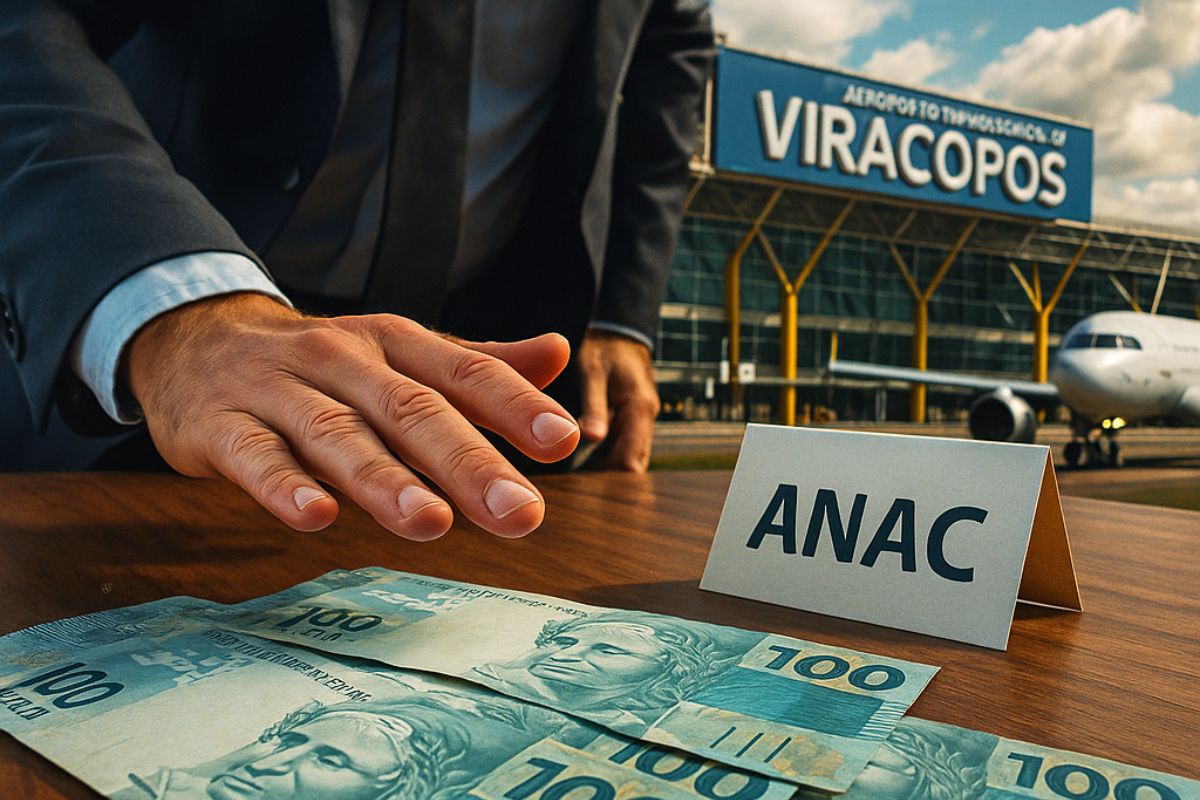
The National Agency of Civil Aviation (Anac) opened a negotiation table with the Viracopos concessionaire in Campinas to try to avoid the expiration of the contract and ensure the continuity of airport operations after the closure of the relitigation process decided by the TCU.
The announcement was made on Tuesday (14) during a public hearing of the Chamber of Deputies in Brasília. The decision marks a new chapter in the long dispute involving the concession of Viracopos International Airport, operated by the private sector since 2012 and considered one of the most efficient terminals in the country.
The measure seeks to preserve the provision of services and avoid losses to the airline industry, after years of legal and financial impasses.
Why Anac Decided to Open a Negotiation Table
The establishment of the negotiation table, called a self-composition commission, was approved by Anac’s board with the aim of finding a consensual solution between the federal government and the concessionaire.
-
Brazilian city bets on the business environment to generate jobs and attract investments in the energy sector — secretary reveals strategy at Macaé Energy 2026.

-
50 viaducts, 4 tunnels, 28 bridges, and 40 kilometers of bike paths: BR-262 in Espírito Santo will receive 8.6 billion reais for the largest engineering project in the state’s history, inspired by the Immigrant Highway in São Paulo.

-
Brazil produces too much clean energy and doesn’t know what to do with it: over 20% of solar and wind capacity was wasted in 2025 while investors flee and 509 renewable generation projects were abandoned in the last year.

-
Piauí will produce a new fuel that replaces diesel without needing to change anything in the truck’s engine and reduces pollutant gas emissions by half: truck drivers from all over the Northeast are already celebrating the news that will arrive later this decade.


The group will include representatives from the Attorney General’s Office (AGU) and the Ministry of Ports and Airports (MPOR).
According to the Superintendency of Economic Regulation of Airports, Emanuelle Soares, the process is still considered embryonic and its scope will be defined based on technical, financial, and operational analyses.
The priority is to ensure the continuity of public service and the economic-financial balance of the concession, avoiding the terminal from entering into administrative collapse.
What Is at Stake for the Future of Viracopos
The decision by Anac comes at a decisive moment for the future of the Viracopos concession, whose contract faces the risk of expiration.
The relitigation, initiated after the concessionaire’s request for return in 2017, has not progressed because the legal deadline for publishing the notice expired in June 2025, according to the Relitigation Law.
The main point of conflict involves the amount of compensation owed by the Union to the concessionaire for investments made since the beginning of the contract.
The Federal Court of Accounts (TCU) required Anac to hire an independent audit to calculate the amount, estimated at around R$ 2.5 billion, but the process stalled before the notice was published.
With the negotiation table, Anac aims to avoid a litigious rupture and seek an extrajudicial agreement, considered more advantageous for the airport sector and for terminal users.
The Position of the Viracopos Concessionaire
Aeroportos Brasil Viracopos (ABV), responsible for managing the terminal, classified the creation of the table as an important step to restore dialogue and attempt to save the contract.
The company’s CEO, Gustavo Müssnich, stated that the concessionaire is open to building a balanced solution.
“With dialogue and rationality, it is possible to preserve a strategic asset that has well served the public interest”, said the executive during the hearing.
The concessionaire also emphasized that Viracopos has been elected five times as the best airport in Brazil in its category, which, in the company’s view, reinforces the argument that the continuity of the current private management is beneficial for the country.
In a statement, ABV added that the amounts for economic rebalancing not recognized by Anac exceed the charges made against the concessionaire, and that negotiations could correct distortions accumulated over the nearly 13 years of the contract.
The Position of the Government and Regulatory Bodies
The Ministry of Ports and Airports supports the reopening of dialogue.
The National Secretary of Civil Aviation, Daniel Longo, stated that the government sees the initiative as a legitimate attempt for an administrative solution, limited to the technical aspects of the contract, demand projection, and the concessionaire’s investment obligations.
The AGU also indicated representatives to accompany the process and ensure that any agreements respect the public interest and sector regulations.
The TCU , however, announced that it would not participate in the new table, claiming to have already conducted previous attempts at composition that did not reach consensus.
The divergence among the agencies shows the level of institutional complexity involved in the dispute, which combines legal, financial, and regulatory issues in a contract considered a model at the beginning of the past decade.
Why the Relitigation Failed and What May Happen Now
The relitigation process for Viracopos was the first of its kind in the Brazilian airport sector.
The initiative began after the concessionaire entered judicial recovery in 2017, but faced successive technical and legal impasses.
The TCU’s demand for auditing the amounts of indemnity and the lack of consensus between the government and the concessionaire stalled the notice publication, leading to the expiration of the legal deadline in 2025.
With the formal closure of the relitigation, the expiration of the contract has become the alternative provided by legislation.
However, the government seeks to avoid this path, which could lead to lengthy legal disputes, affect service, and reduce market confidence in future concessions.
The negotiation table is, therefore, the last attempt to maintain the current management and stabilize the terminal without resorting to extreme measures.
If the agreement does not prosper, the expiration process may be resumed, and the airport will return to state control until a new bidding process.










Seja o primeiro a reagir!