





 English
  Francês
  Alemão
  Italiano
  Japonês
  Norueguês
  Portuguese
  Spanish
  4 min of reading
  0 comments


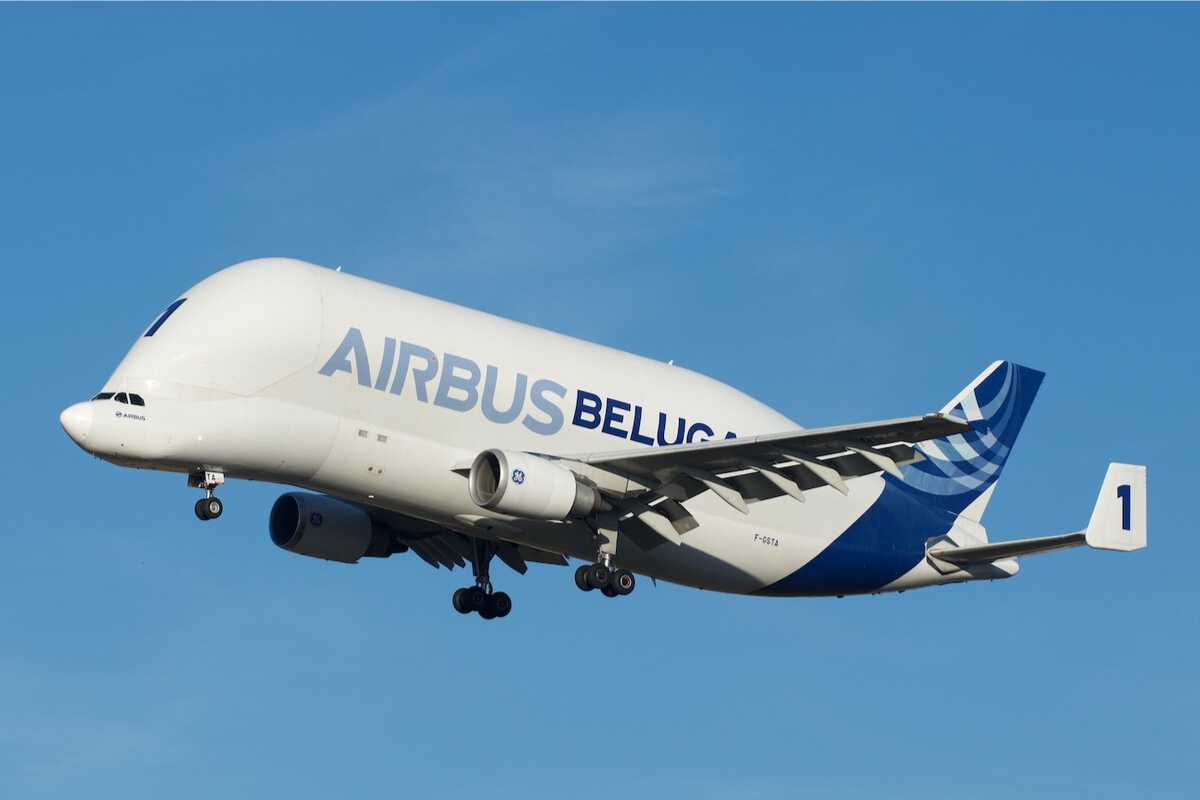
Of The Five Beluga ST Produced, Four Have Already Been Retired In Cities Like Bordeaux And Toulouse, One Will Be Transformed Into A Classroom In The United Kingdom, And Only The F-GSTC “3” Continues Flying With An Uncertain Future
After years playing a strategic role in the transportation of large aerospace components, the Airbus Beluga ST (A300-600ST) is heading toward its definitive retirement. The aircraft was for decades one of the central elements of Airbus’s industrial logistics, ensuring that parts produced in different countries reached the assembly lines within extremely tight deadlines.
After attempting a second life in the civil special cargo market — an initiative that was commercially unsuccessful — the model now faces an uncertain future, with only one unit still operational.
An Aircraft Created To Solve An Industrial Challenge
The Beluga ST entered service in 1995, developed from the Airbus A300-600 platform. Its objective was clear: to transport oversized components between Airbus factories spread throughout Europe.
-
Chaos On Airplane Could Be Expensive: Proposal Aims To Prevent Disruptive Passengers From Flying For Up To 1 Year In Brazil And Face Fines Of Up To R$17,500

-
Man Arrested After Halting Takeoff of Fire Department Helicopter During Child Rescue in Guaratuba

-
With 37 Tons of Cargo, Over 8,000 km Range, and Ability to Land on Unpaved Runways, the Airbus A400M Demonstrates How Europe Created a Military Giant That Transports Armored Vehicles, Aerially Refuels Fighters, and Operates in Conflict Zones and Humanitarian Missions Worldwide
-
Emergency Landing in Campos Amarais After Bird Strike on Small Plane
Despite its unconventional shape, the design prioritized functionality. The oversized cargo compartment allowed for the transportation of structures that simply would not fit in traditional cargo aircraft.
With a capacity of up to 47 tons and enough internal space to accommodate parts up to 30 meters long, the Beluga ST could transport, for example, a complete wing per flight.
For years, this was sufficient to sustain the production pace of the manufacturer.

The Increase In Production Demanded A Larger Solution
With the growth in demand for commercial aircraft and the intensification of the just-in-time logistics production model, the Beluga ST began to show limitations.
Routes such as the one connecting Broughton (United Kingdom) — where the wings are manufactured — to the final assembly lines in Toulouse (France) and Hamburg (Germany) became increasingly demanding.
To meet deadlines with the old model, Airbus would have to:
- Increase the number of aircraft in the fleet
- Or significantly expand flight hours
Faced with this scenario, the company opted to gradually replace the ST with the BelugaXL, an enlarged version capable of transporting two wings per trip, doubling efficiency on certain critical routes.
The fleet of six BelugaXL officially took over the primary role in Airbus’s internal logistics and remains active in this function.
The Attempt At A Second Commercial Life
Even after leaving the primary logistics operation, the Beluga ST still had operational potential. Designed for around 40,000 flight hours, Airbus estimated in 2022 that the aircraft withdrawn from internal logistics could still fly for up to 20 additional years.
With this outlook, Airbus Beluga Transport (AiBT) was created, an airline dedicated to the transportation of oversized cargo.
In November 2023, AiBT obtained the Air Operator Certificate (AOC) and began commercial operations. The focus was to serve a specific niche:
- Transportation of satellites
- Aerospace engines
- Helicopters
- Heavy industrial machinery
The timing seemed strategic. Aircraft traditionally used in this segment, such as the Antonov An-124, were being redirected to demands related to the Russia and Ukraine conflict, reducing their availability in the international market.

Lack Of Demand And Immediate Closure
Despite the seemingly favorable context, the market did not respond as expected. Approximately one year after the start of operations, Airbus announced the immediate closure of Airbus Beluga Transport.
According to the company, there was not enough external demand to economically sustain the air transportation of large dimension cargo with the Beluga ST.
The project was therefore closed before reaching commercial maturity.
The Current Situation Of The Five Aircraft
In total, five units of the Beluga ST were produced. Today, only one remains in operation:
- F-GSTC (“3”) — the only aircraft still active.
The others have already been retired or are awaiting destination definition:
- F-GSTA (“1”) — retired in Bordeaux on April 21, 2021.
- F-GSTB (“2”) — retired on December 18, 2025, also in Bordeaux.
- F-GSTD (“4”) — retired in Toulouse on September 17, 2025.
- Fifth unit — ceased operations in Broughton on January 29.
- F-GSTF (“5”) — will have an educational destination, being converted into an interactive classroom focused on STEM studies in the United Kingdom.
The future of the still-active unit remains uncertain.
Spain Will Not Preserve Any Examples
Spain is also not expected to keep any unit of the model on permanent display.
A similar situation happened previously with the Super Guppy, predecessor of the Beluga ST. Although it was planned that one unit would be destined for the Getafe Air Museum, the proposal was rejected for lack of space. The aircraft ended up being sold to NASA, where it continued operating for years.
The same happened with the prototype of the Airbus A400M, which was in Seville. Instead of being preserved, it was dismantled. Meanwhile, other units from the program are exhibited at the Aeroscopia Museum in France and at Airbus facilities in Bremen.










-

-

-

-

-

29 pessoas reagiram a isso.