





 Portuguese
  English
  Spanish
  4 min of reading
  0 comments


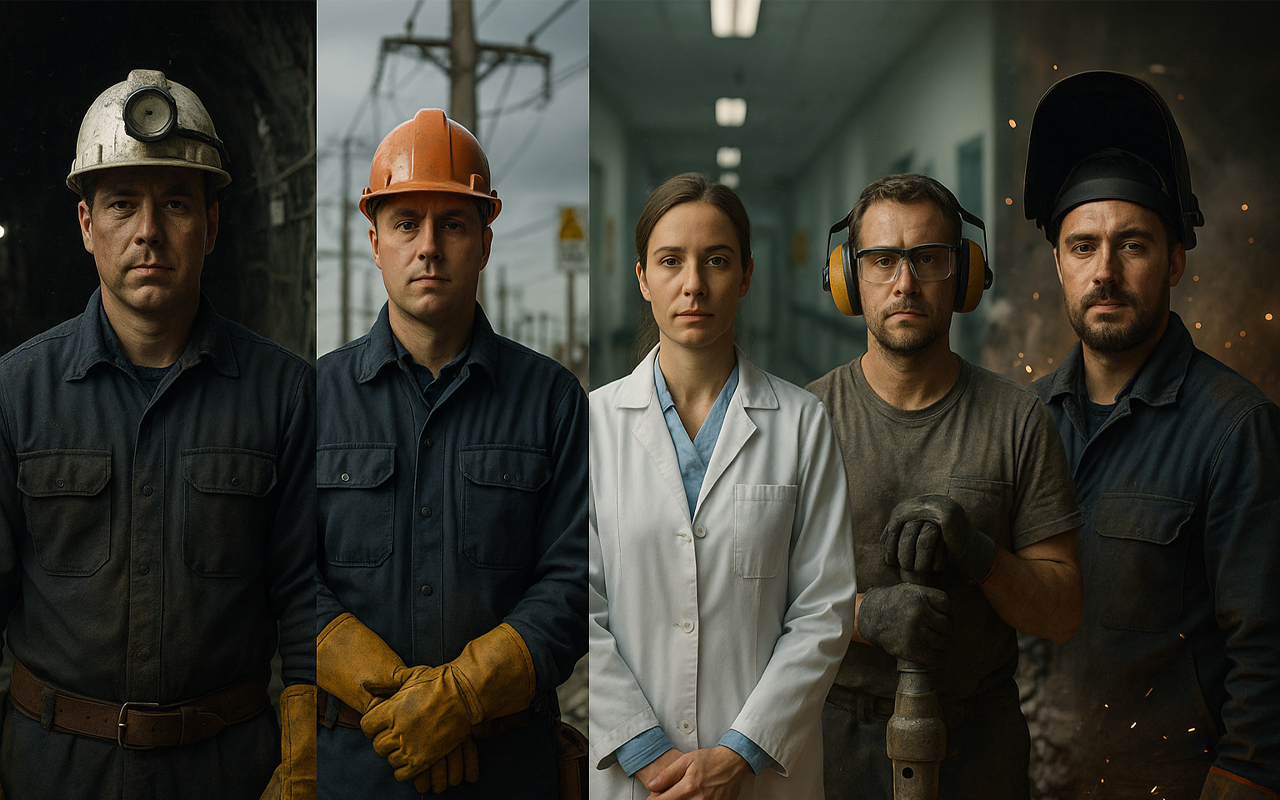
The STF, in Topic 709, defined that those who receive special retirement cannot continue in risky activities. If there is exposure to harmful agents, the payment is suspended and only resumes when proof of distancing is provided.
The Federal Supreme Court consolidated the rule that those receiving special retirement cannot continue working in unhealthy or hazardous activities. If exposure to harmful agents continues, payment is suspended until the worker proves the distancing from risk. The decision, known as Topic 709, applies nationwide and guides the actions of the INSS and the courts.
The measure does not mean a definitive cancellation. The benefit remains valid, but payment ceases while there is exposure to risk. When the insured moves to a non-hazardous function and presents the documentation, payments resume. The start date of the benefit is also defined: when the request was made at the INSS, with financial effects retroactive to the protocol, which helps those who waited for the analysis.
To avoid losing money and headaches, it is important to understand if the current activity is risky, how to prove distancing, and which documents to present. Below, we explain in straightforward language what changes, who is affected, and how to proceed.
-
The government requests the Federal Revenue Service for a new system to automate the income tax declaration, reducing errors, time, and bureaucracy for millions of Brazilians.

-
Pix in installments, international Pix, and contactless payment without internet: the Central Bank revealed the new features coming to the tool that is already used by almost every adult in Brazil.

-
Mercado Livre has just started selling medications with delivery in up to three hours to your door, and this move could completely change the way Brazilians buy medicines on a daily basis.

-
In Dubai, rising tensions from the war in the Middle East are causing super-rich individuals to leave the Gulf and direct their fortunes to a new financial refuge in Asia.


Who Is Affected: 5 Professions with the Highest Risk of Payment Suspension
The STF’s decision does not create a closed list of professions. It affects those who are exposed to harmful agents that characterize special activity. In practice, there are categories with higher probability of classification.
Common examples include miners underground, where exposure to mineral dust, risk of collapse, and vibration is high. Also included are electricians working in high voltage, subject to electric shock and arc flash, and health professionals with regular contact with biological agents in hospitals, emergency rooms, and laboratories.
Another frequent group involves drilling and breaking operators, with exposure to noise and vibration above tolerance limits. Metalworkers and welders also undergo examinations due to noise and metal fumes. In all cases, the central point is the habitual and permanent exposure to harmful agents, not just the job title. It is the technical proof that determines the classification.
If the retired worker with special retirement continues in the same harmful environment or returns to it, the payment of the benefit is suspended. When relocated to a common function, free of harmful agents, payment is reinstated.
What the STF Decided in Topic 709
The Supreme Court decided that it is constitutional to prevent those who receive special retirement from continuing to perform special activities. Practically, there are two main consequences. First, payment is suspended while there is exposure to risk.
Secondly, the start date of the benefit must revert to the date of the request at the INSS, ensuring retroactive financial effects for insured individuals who were waiting for the grant.
This understanding has begun to guide administrative and judicial decisions. The aim is to preserve the health and integrity of the insured, as special retirement was created precisely to distance them from harmful conditions. The STF also clarified that the prohibition applies even if the new special activity is different from the one that originated the retirement.
What Happens in Practice: Suspension, Not Cancellation
The INSS can initiate proceedings and suspend payment upon verifying that the special retiree remains or returned to work in special conditions. Resumption occurs when the insured presents proof of distancing from risk, such as a change of sector, function, or employer, provided they are free from harmful agents.
Several decisions from the Federal Regional Courts have applied Topic 709 and determined suspension upon finding that the individual continued in a special activity after implementation. Conversely, the same processes acknowledge that, once the risk has ceased and the documents presented, payment returns to normal.
If you receive special retirement and the company offered relocation to a risk-free function, accept and formalize the change. Written proof is essential to avoid suspension. If you are self-employed in a risky profession, you will also need to demonstrate that you interrupted exposure.
How to Prove Distancing from Risk and Avoid Problems
The key is the documentation set. The electronic PPP replaced the paper form and gathers the health and safety information provided by the company to the eSocial. The worker can view the PPP through Meu INSS. For periods worked from January 1, 2023, the electronic PPP is mandatory.
Companies and public agencies register exposure to harmful agents in the eSocial S-2240 event. When there is change of function or relocation to a risk-free activity, the employer must update the S-2240 and issue a new PPP reflecting the current condition. The LTCAT and other reports feed this information, which is the basis for the INSS analysis.
In 2024, the INSS updated internal procedures for analysis of special activity and improved monitoring flows. In practice, it became even more relevant to keep the PPP up to date and consistent with the eSocial, as inconsistencies can generate requirements and suspensions until the situation is clarified.









-

-

-

-

16 pessoas reagiram a isso.