





 Portuguese
  English
  Spanish
  3 min of reading
  0 comments


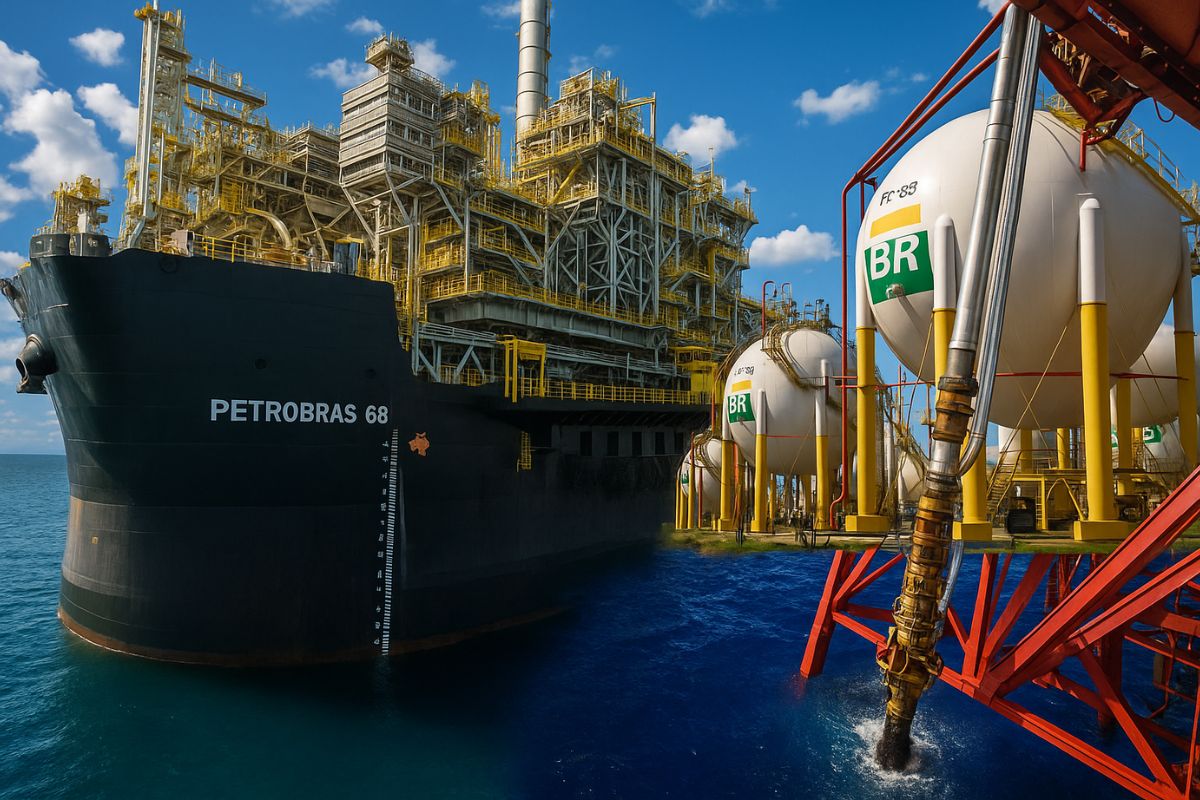
Petrobras Announces High-Value Oil Discovery in Block Aram, An Asset That Cost R$ 5 Billion and Could Secure the Company’s Future Production in the Santos Basin.
In a move that validates one of its biggest bets, Petrobras announces an oil discovery in a new well in Block Aram, in the pre-salt layer of the Santos Basin. The news, confirmed in May 2025, reinforces the immense potential of the area, which could become one of the company’s most important assets in the next decade and a new pillar for energy production in Brazil.
The discovery of “excellent quality” oil free of contaminants is the result of a successful exploration campaign in a block that cost R$ 5.05 billion to the consortium led by Petrobras. It is proof that the giant’s bet, made years ago, is beginning to pay off.
The R$ 5 Billion Bet for Oil Discovery: How Petrobras Acquired Block Aram in 2019
The story of Block Aram began on November 7, 2019, during the 6th Round of Sharing Auction by ANP. The block was considered the most promising of the round, with the agency estimating it could contain a volume of up to 29 billion barrels of oil.
-
Spain surprises the world by erecting 62 artificial dunes, mixing sand with natural remains of posidonia, and causing the structure to lose only 1.4% of its volume in 1 year.

-
With 16 Bulava missiles, improvements in acoustic stealth, and a design focused on silent patrols, Russia’s nuclear submarine was born to ensure Moscow’s invisible retaliation and has become one of the pillars of its maritime strength.

-
‘Populous’ city in Rio among the worst in Brazil in national ranking and exposes silent development crisis.

-
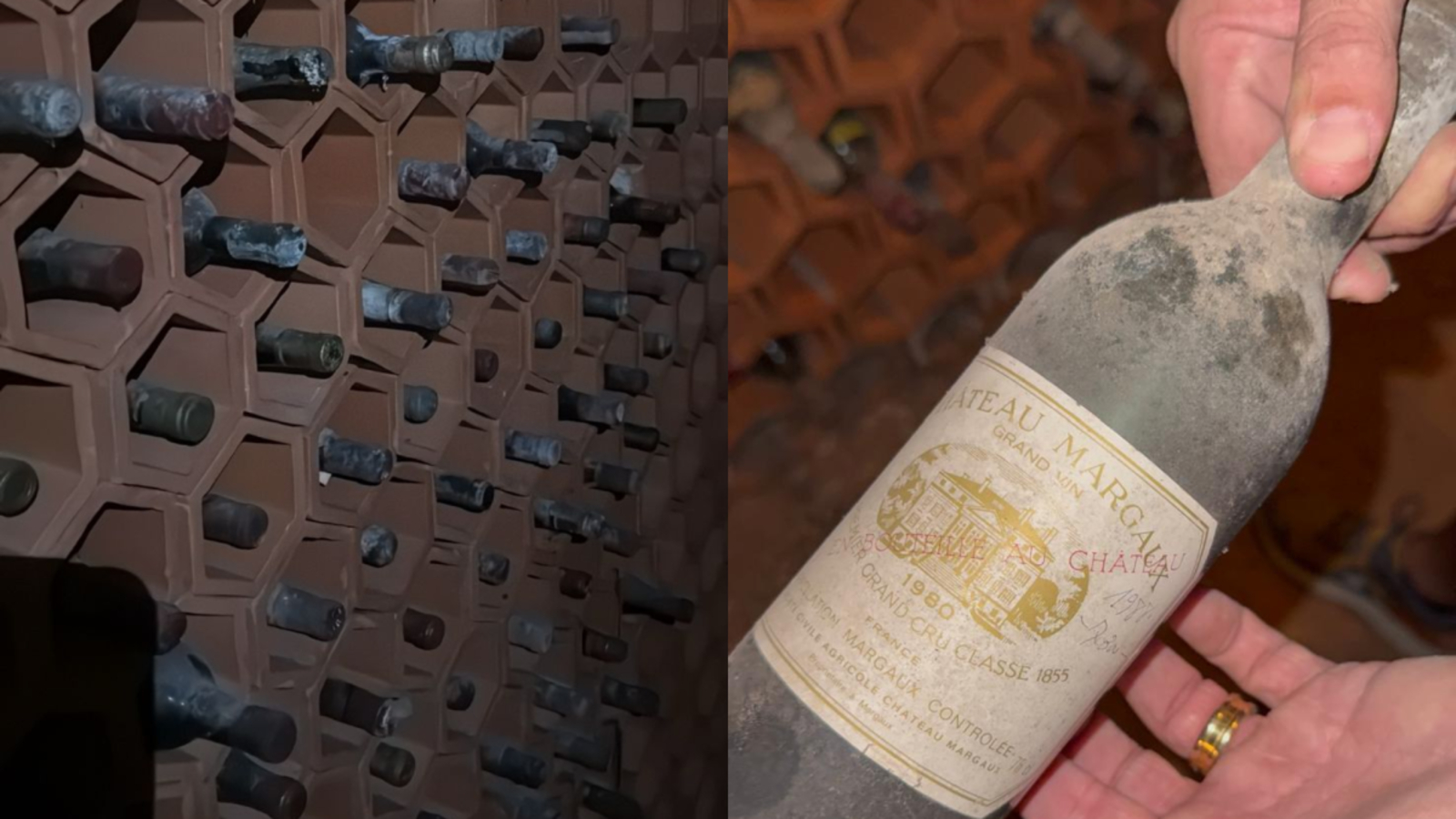
Couple buys house in the South Zone of São Paulo, opens a hidden door in the garage, and finds a secret wine cellar with dozens of old wines forgotten since the 1970s.

Despite the potential, only one consortium made a bid: Petrobras (with 80%) and the Chinese state-owned company CNPC (with 20%). They acquired the block with a signing bonus of R$ 5.05 billion, a high-value bet based on Petrobras’s confidence in its geological analysis of the area.
Sequential Discoveries: The Wells That Confirmed the Block’s Potential Between 2022 and 2025

Petrobras’s optimism has proven justified. The exploration campaign in Aram has been a sequence of successes. The first well, drilled in 2022 and nicknamed “Curaçao,” had already confirmed the existence of a productive reservoir.
Confidence grew in 2025. In March, the company announced the presence of hydrocarbons in a second well. And in May 2025, confirmation came of the new discovery in the third well drilled, consolidating Block Aram as an asset with a proven oil system and large scale.
“Excellent Quality” Oil: Why Is the Absence of Contaminants a Billion-Dollar Advantage?
The most important news for the project’s viability was the quality of the oil found. It was described as “excellent and free of contaminants.” This means it is light oil, of higher value in the market.
Even more crucial is the absence of CO2. Many pre-salt fields have high concentrations of carbon dioxide, which necessitates the construction of extremely expensive processing plants to separate and reinject the gas. The absence of CO2 in Aram eliminates this need, representing a savings of billions of dollars in the project’s development cost.
The Assessment Plan and the Future of Block Aram

With confirmed discoveries, Petrobras announces oil finding after oil finding, but the work is still ongoing. The consortium is now executing a Discovery Assessment Plan (PAD), which has a deadline to be completed by 2027.
This phase is crucial for determining the exact size of the reserve and the commercial viability of the field. The plan includes drilling more evaluation wells, such as Curaçao-3, Curaçao-4, and Tortuga-1. The results from these wells will determine the size of the final production project.
The Importance of Aram for the Future of Petrobras
The discovery in Aram is vital for Petrobras’s long-term strategy. One of the company’s biggest challenges is replenishing its reserves, as large and older fields such as Tupi are expected to begin showing a natural decline in production from 2030.
With a potential that could exceed 8 billion barrels, Aram is perfectly positioned to become the next major production pillar for Petrobras in the 2030s, ensuring the sustainability of the company and Brazil’s energy security for many years to come.







-

-

-

-

6 pessoas reagiram a isso.