





 Portuguese
  English
  Spanish
  3 min of reading
  16 comments


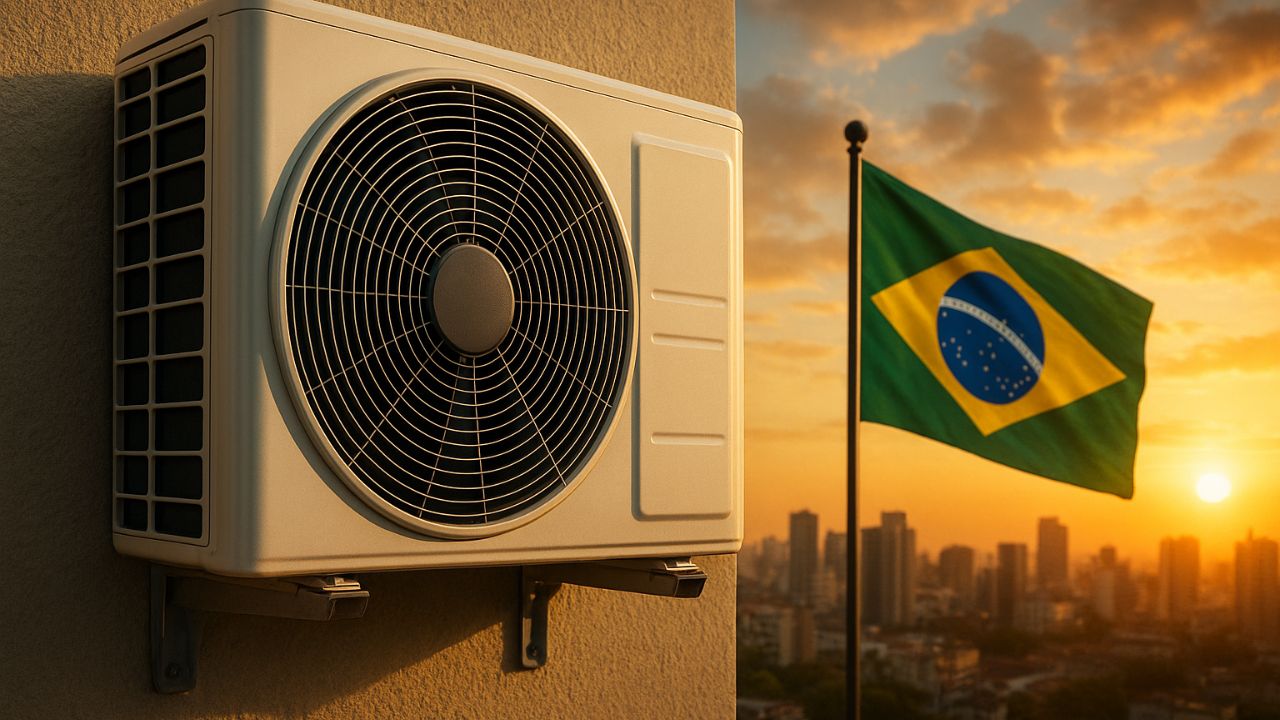


Government Study Indicates That Peak Energy Consumption Migrated to the Afternoon, Nullifying the Savings That Justified Advancing the Clocks in Brazil.
The Daylight Saving Time, a public policy that has been part of Brazilian routine for decades, was officially suspended in 2019 and has no forecast for return until 2025. The main justification for ending the measure, according to government technical analyses, is a deep change in the energy consumption habits of the population, mainly driven by the popularity of air conditioning. What was once an effective strategy to save electricity in the early evening has now lost its central purpose.
The logic behind the end of advancing the clocks is simple: the peak electricity demand in the country no longer occurs in the evening. According to the Ministry of Mines and Energy (MME), the highest consumption is now concentrated in the early afternoon, between 2 PM and 4 PM. This phenomenon is directly related to high temperatures and the need for climate control, rendering the savings that Daylight Saving Time provided virtually null and, in some cases, even detrimental to the stability of the electric system.
The Change in Consumption Pattern: The Air Conditioning Factor
Historically, the Daylight Saving Time was implemented with a clear objective: to shift energy consumption away from peak hours, which occurred between 6 PM and 9 PM. During this period, the use of light bulbs, electric showers, and other appliances overloaded the system. By advancing the clock by one hour, natural light was utilized for a longer time, delaying the need for artificial lighting and, consequently, “flattening” the demand curve, as explained by the MME itself. This strategy alleviated the load on transmission lines and distributors.
-
The government requests the Federal Revenue Service for a new system to automate the income tax declaration, reducing errors, time, and bureaucracy for millions of Brazilians.

-
Pix in installments, international Pix, and contactless payment without internet: the Central Bank revealed the new features coming to the tool that is already used by almost every adult in Brazil.

-
Mercado Livre has just started selling medications with delivery in up to three hours to your door, and this move could completely change the way Brazilians buy medicines on a daily basis.

-
In Dubai, rising tensions from the war in the Middle East are causing super-rich individuals to leave the Gulf and direct their fortunes to a new financial refuge in Asia.


However, this reality has changed drastically. Data from the National Electric System Operator (ONS) and the MME confirm that the major villain of contemporary electricity consumption is heat. With increasingly intense summers — the period of 2024 and 2025 has been classified by the government as the hottest since 1961, the massive use of air conditioning and refrigeration has created a new peak demand in the afternoon. In this new scenario, advancing the clock no longer yields savings, as the demand for cooling during the hottest hours of the day far exceeds the savings from lighting in the early evening.
The End of an Era: Economic Impact and Energy Stability
The decision to suspend the Daylight Saving Time was not just a matter of habit but a technical response to concrete data. The studies that underpinned the end of the measure showed that the economic benefits had become residual. The energy savings, which were once significant, became so low that they no longer justified the operational costs and the impact on the routine of the population and sectors such as agribusiness and air transport. Maintaining the policy would be to ignore the new consumption dynamics of the country.
More than savings, the ONS’s concern has shifted to the safety and stability of the National Interconnected System (SIN). Managing the peak afternoon consumption, exacerbated by extreme heat waves, demands much more from the system than the old nighttime peak. Therefore, maintaining the Daylight Saving Time would not contribute to solving the most critical problem of the current energy matrix. The measure, which was born as a solution for efficiency, has become irrelevant in the face of the technological and climate transformations that Brazil and the world are facing.
Was the decision to end the Daylight Saving Time correct for Brazil’s current reality? Do you miss advancing the clocks and enjoying the late afternoon with more light or do you prefer the stability of standard time, even with the intense heat?
We want to know your real opinion: leave your comment below!








Palhaçada esse horário de verão.
Não adianta ficar até mais tarde aproveitando o sol, já que temos que acordar mais cedo, fora que de manhã temos que acender a casa toda pq ainda está tudo escuro.
Não entendo esse governo. Querem restringir a instalação de placas solares em residências por que o sistema pode entrar em colapso, mas o país ainda não é autossuficiente em eletricidade. Nas alta demanda precisa ligar termoelétricas que queimam toneladas de carvão.
Somente comentários de pessoas que não vivem.. só sobrevivem mesmo
Chegar da escola das crianças as 19h e poder aproveitar o sol e a rua não tem preço, todos os países do hemisfério norte tem horário de verão justamente para poderem aproveitar mais.. não por economia de energia.
Enfim..