





 Portuguese
  English
  Spanish
  5 min of reading
  0 comments


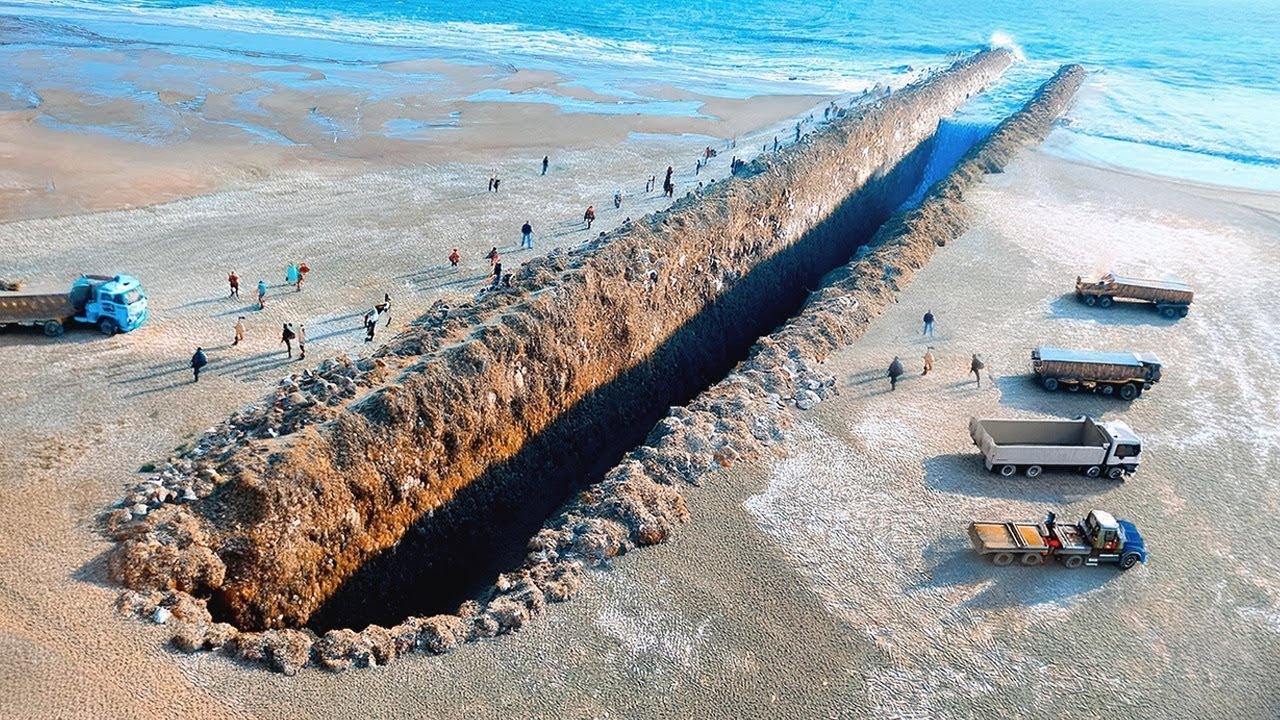
Discover How Saudi Arabia Revolutionized Saline Water Storage with an Innovative Underground Reservoir. The Desert Tech Project Utilizes Advanced Engineering in the Desert to Protect Millions of Gallons of Water Below the Sand, Ensuring Sustainability and Water Efficiency in Arid Environments
Saudi Arabia faces one of the greatest environmental crises of the century: the scarcity of potable water amid one of the driest deserts in the world. To overcome this limitation, the country launched an innovative project involving the storage of saline water in underground reservoirs. Millions of gallons of water are literally buried beneath the desert sand, creating a technological and sustainable solution that challenges the limits of engineering in the desert.
Known as the Desert Tech Project, this pioneering initiative represents a significant advance in the management of water resources in extremely dry environments and can serve as a model for other regions with similar problems around the globe.
The Scenario of the Water Crisis in Saudi Arabia and the Storage of Saline Water
Saudi Arabia is globally recognized for its extreme aridity, with an average annual precipitation of less than 100 mm over much of its territory. This scenario drastically limits access to natural sources of freshwater, making supply a constant challenge for the population, agriculture, and industry.
-
Motorola launched the Signature with a gold seal from DxOMark, tying with the iPhone 17 Pro in camera performance, Snapdragon 8 Gen 5 that surpassed 3 million in benchmarks, and a zoom that impresses even at night.

-
Satellites reveal beneath the Sahara a giant river buried for thousands of kilometers: study shows that the largest hot desert on the planet was once traversed by a river system comparable to the largest on Earth.

-
Scientists have captured something never seen in space: newly born stars are creating gigantic rings of light a thousand times larger than the distance between the Earth and the Sun, and this changes everything we knew about stellar birth.

-
Geologists find traces of a continent that disappeared 155 million years ago after separating from Australia and reveal that it did not sink, but broke into fragments scattered across Southeast Asia.

Currently, the country primarily relies on seawater desalination to meet its needs. However, efficiently and safely storing this treated water has been an obstacle due to the high temperatures and rapid evaporation characteristic of the desert environment.
To tackle this issue, the Saudi government has invested in the development of a subterranean reservoir system capable of storing large volumes of saline water directly beneath the desert sand, protecting this resource from loss due to evaporation and contamination.
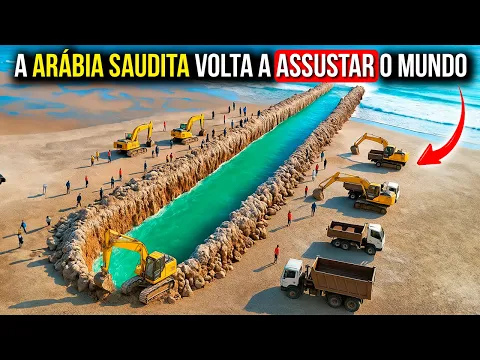

According to studies published in the Encyclopedia MDPI, storage and evaporation control techniques in arid environments, such as the use of underground reservoirs and physical covers, can reduce water loss due to evaporation by up to 76%, significantly contributing to the efficiency of water use in Saudi Arabia.
Engineering in the Desert: The Functioning of the Underground Reservoir
The construction of this system in the hostile desert environment requires robust and innovative engineering. The Desert Tech Project involves the excavation and preparation of enormous underground chambers where millions of gallons of saline water are stored.
The sand, with its high insulating capacity, acts as a natural barrier that protects the stored water, maintaining a stable temperature and reducing exposure to external agents that may compromise the quality of the liquid.
Moreover, the project utilizes advanced monitoring systems, with sensors that continuously track parameters such as pressure, temperature, and salinity of the water. This infrastructure is complemented by smart management software capable of optimizing the control of stored volume and predicting future demand, ensuring that distribution is carried out efficiently and sustainably.
Impacts of Saline Water Storage on the Environment and Local Economy
The environmental impact of this system is highly positive. By opting for a subterranean reservoir, Saudi Arabia avoids the need for large surface tanks, which occupy extensive areas and cause rapid evaporation of water, a chronic problem in arid regions.
This solution also contributes to the preservation of local fauna and flora by reducing the impact on the desert ecosystem. The reduced need for water intake and transportation over long distances decreases the emission of polluting gases, aiding in the mitigation of climate change.
From an economic perspective, the project generates a reduction in operational costs. Lower water losses imply less spending on desalination and treatment, making supply cheaper and more accessible to the population. Additionally, the technological innovation employed strengthens the local engineering and environmental technology industry, creating jobs and attracting investments.
Desert Tech Project: Technology and Innovation Transforming the Desert
The driving force behind the project is the combination of cutting-edge technology with specialized knowledge. The Desert Tech Project involved the collaboration of engineers, researchers, and scientists from around the world to overcome the challenges posed by the extreme environment.
The equipment used is designed to withstand temperatures exceeding 50°C and resist frequent sandstorms. Moreover, the smart sensors enable remote monitoring, reducing the need for human interventions and the risk of failures.
Automation and the use of artificial intelligence in system control enable efficient water management, capable of adjusting resource usage in real-time according to the demands of nearby cities and industries.
Millions of Gallons of Saline Water Below the Sand: A Legacy for Sustainability
Storing millions of gallons of saline water beneath the desert sand is a solution that goes beyond simple resource management; it represents a legacy of sustainability for the future of Saudi Arabia and the world.
This model of engineering in the desert not only ensures local water security but also serves as an inspiration for other countries facing similar challenges, such as regions in the Middle East, Africa, and even parts of Australia.
The Social Impact of the Underground Storage Project in Saudi Arabia
In addition to technical and environmental aspects, the underground storage of saline water has important social impacts. More stable access to potable water improves the quality of life for local communities, reduces water insecurity, and strengthens public health.
The project also has a multiplier effect on the economy, encouraging the creation of skilled jobs in environmental technology, engineering, and maintenance of underground reservoir systems.
Environmental education programs linked to the project promote public awareness of the importance of water conservation, making water management a collective effort.
The Innovation of the Underground Reservoir and Its Next Steps
The success of the Desert Tech Project has driven investments in research to expand the capacity of the reservoirs and integrate alternative sources of water, such as treated wastewater and atmospheric water harvesting systems.
New pilot projects are in development to test complementary technologies, such as advanced coatings for underground tanks and hybrid systems that combine underground storage with green surfaces, seeking to further reduce environmental impact.
Saudi Arabia intends to remain at the forefront of innovation in desert engineering, with plans to expand underground storage to other regions of the country and export technology to international markets.
Why the Saline Water Storage Project Is a Global Reference
The model adopted by Saudi Arabia to store millions of gallons of saline water beneath the sand is a clear example of how engineering in the desert can be used to overcome complex environmental challenges.
This initiative shows that with planning, innovation, and investment in technology, it is possible to create sustainable solutions that ensure water supply even under extreme conditions. The underground reservoir is an alternative that reduces losses, preserves the environment, and promotes economic and social development.
For countries facing water scarcity, the project offers a valuable reference that can be adapted and replicated, contributing to global water security.








Seja o primeiro a reagir!