





 Portuguese
  English
  Spanish
  4 min of reading
  0 comments


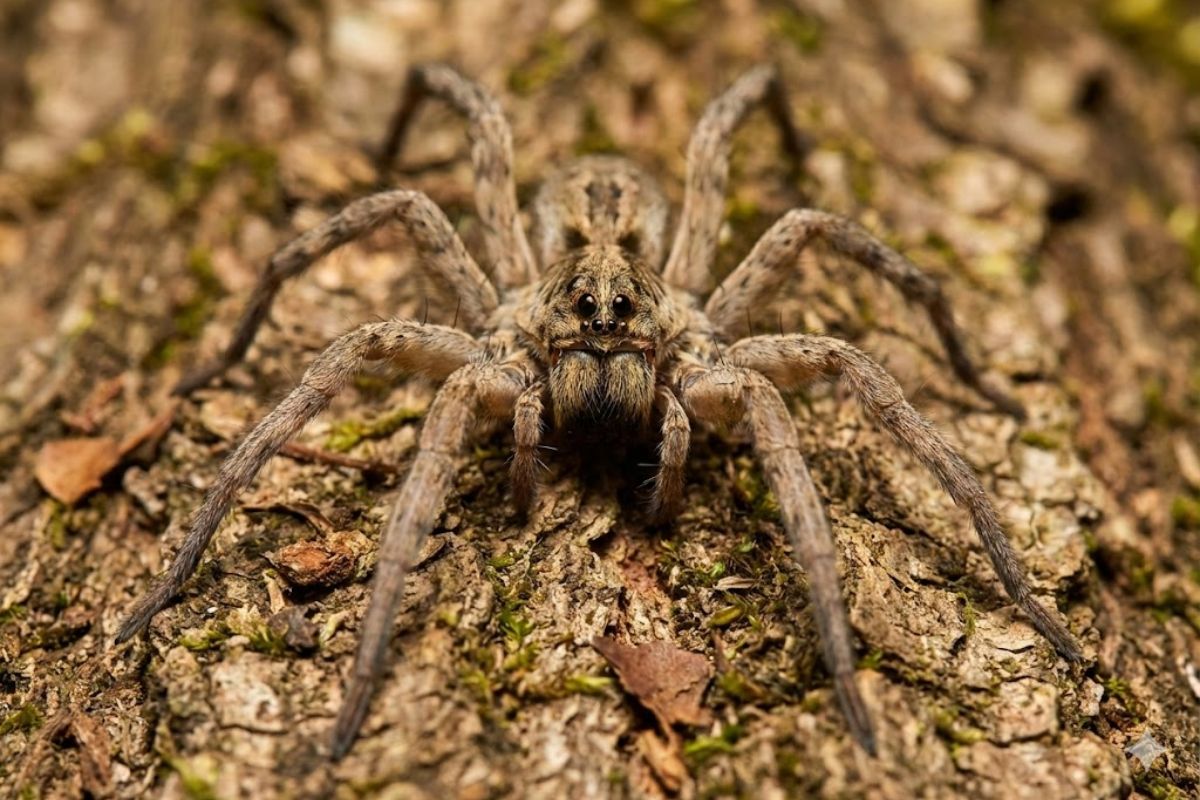
The Wolf Spider Aulonia albimana, with orange legs and endangered, had not been seen in the United Kingdom since 1985. Entomologists refound it this autumn in the Newtown National Nature Reserve on the Isle of Wight, 2 km from the older colony, in the conservation program of Natural England with the National Trust.
The wolf spider Aulonia albimana, described as tiny and with orange legs, has reappeared in Great Britain after four decades without records. The last known sighting in the United Kingdom was in 1985, and the new encounter occurred this autumn on the Isle of Wight.
The reappearance within the Newtown National Nature Reserve, managed by the National Trust, is significant because it is linked to targeted habitat protection actions and serves as a concrete sign that rare species can persist when given the right conditions to survive.
A “Missing” Wolf Spider Since 1985 Returns to the Map

Aulonia albimana is presented as a critically endangered wolf spider, small and easy to overlook, which helps explain why a species can go so long without being seen despite existing in specific areas.
-
A forgotten cord on the floor of a basement in Vienna leads a plumber to a box containing 30 kilograms of gold with Mozart’s face, hidden before World War II. The treasure, worth 2.3 million euros, was just centimeters away from a worker who ignored the sign a day earlier.

-
A couple buys an old chalet, breaks the kitchen floor for renovation, and finds over a thousand coins of gold and silver hidden since the English Civil War over 4 centuries ago.

-
Rigid bags with their days numbered: new trend prioritizes comfort in 2026.

-
YouTuber creates an excavator equipped with a giant 4.5-meter sword to challenge his brother to a rematch, and the invention quickly goes viral on social media.


The fact that organizes this story is straightforward: four decades without official confirmation in Great Britain.
When a species goes so many years without records, the expectation is often the worst.
Therefore, refinding the wolf spider rekindles an uncomfortable and powerful question in conservation: how many species considered “lost” may just be out of our observational reach?
The Scenario of the Rediscovery: Isle of Wight and the Newtown Reserve

The encounter happened on the Isle of Wight, in a protected area called the Newtown National Nature Reserve, associated with the National Trust.
This information matters because it places the wolf spider in an environment with conservation and management rules, and not in a random location.
Another detail worth noting is the distance: the wolf spider was found about 2 km from the old registered colony in the past.
This reinforces the idea that the disappearance “on paper” may have been, in part, due to a lack of new records and the difficulty in locating a tiny species, rather than a complete disappearance from the region.
Who Found It and Why the Record Is a Milestone

The rediscovery was attributed to entomologists Mark Telfer and Graeme Lyons.
In addition to confirming the presence of the wolf spider, they also produced a relevant technical milestone: it is the first time the species has been digitally photographed in the United Kingdom.
This type of record is not just “a pretty picture.”
It consolidates the refinding with modern evidence, facilitates documentation, future comparison, and communication of the finding for conservation projects.
When a species reappears after 40 years, every detail that becomes proof counts.
The “White Knot” and What Makes This Wolf Spider Identifiable
The team involved in the discovery adopted an informal nickname for the wolf spider: “white knot.”
The name was inspired by two elements.
The first is anatomical: the characteristic pale “knots” on the pedipalps, described as small appendages resembling legs, located on either side of the mouth.
The second element is narrative, almost cinematic: the very drama of time running out that marked the search and eventually became part of the identity of this rediscovery.
The Countdown Search That Became History
Graeme Lyons reported that the fieldwork had a very short window: only four hours at the location associated with the last historical record, before the boat returned to pick them up.
This type of limitation turns any sweep into a race against the clock.
And that’s when the detail that exploded the tension came: Lyons found the first wolf spider with only nine minutes remaining and the second in the last minute.
He also contextualized the magnitude of the achievement with his own history: he had seen 559 species of spiders in the British Isles, but described that one as, by far, the most exciting discovery of his journey.
Why This Is a “Victory” and Not Just Curiosity
The National Trust framed the rediscovery as a victory for the conservation project in Newtown, linked to the Natural England Species Recovery Program, aimed at targeted actions for some of the most threatened flora and fauna species in England.
Mark Telfer, who led the research, described the finding as unforgettable and pointed to a trio of factors behind the result: proper habitat management, curiosity, and collaboration.
In practice, the message is clear: the reappearance of the wolf spider is not treated as pure luck, but as a consequence of protecting the right place, in the right way, and having skilled people looking attentively.
What Changes from Here on for the Wolf Spider


The reencounter with the wolf spider does not mean that the species is “saved,” but it completely changes the starting point.
Instead of working with a total absence, the scenario shifts to confirmed presence in a protected area, with modern evidence and professionals directly linked to species recovery initiatives.
It also changes the symbolism: the wolf spider becomes a real example of how, when habitat protection is taken seriously, even species considered extinct can reappear, surprising both the public and experienced researchers.
Do you think the return of this wolf spider indicates that other species deemed lost in England may be surviving in silence, waiting for similar efforts to be found?









-

-

-

9 pessoas reagiram a isso.