





 Portuguese
  English
  Spanish
  6 min of reading
  0 comments


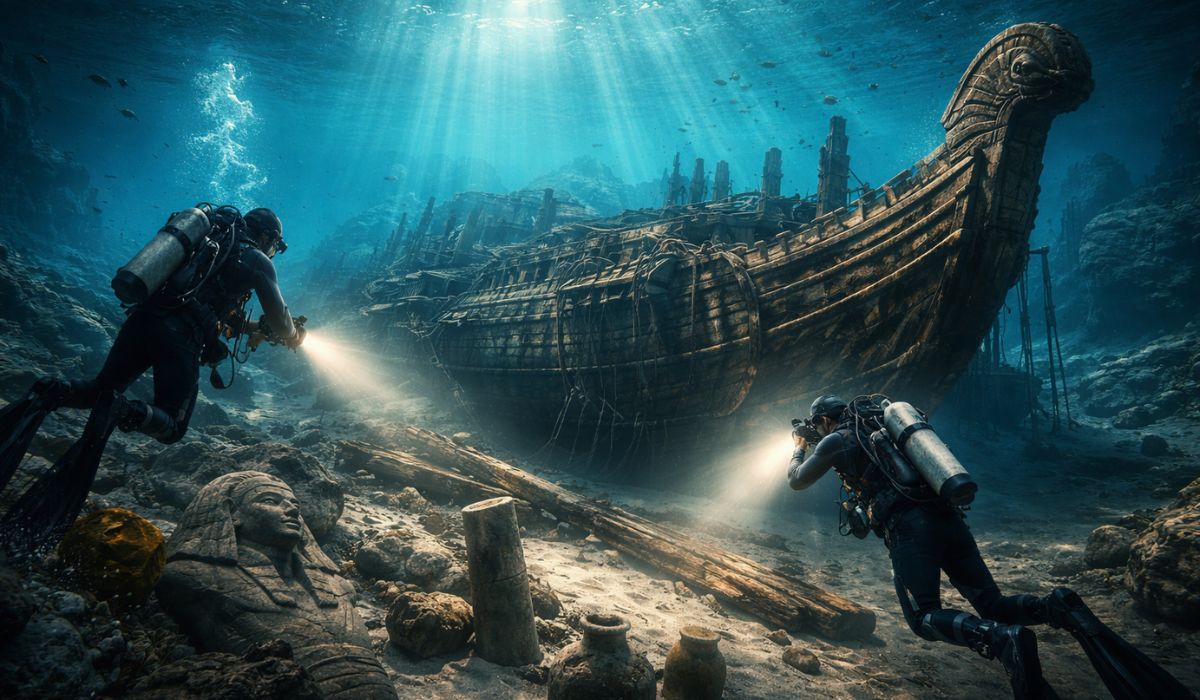
A shipwreck found in the ancient port of Alexandria renewed the debate about luxury boats, religious rituals, and navigation in ancient Egypt, in a discovery that connects underwater archaeology, classical texts, and the urban history of a central Mediterranean city.
A shipwreck found in the ancient port of Alexandria, Egypt, has reignited interest in a type of vessel known today mainly from ancient texts and artistic representations.
According to the team led by French underwater archaeologist Franck Goddio, the remains may belong to a thalamegos, a Greek name associated with large luxurious barges linked to the elites of Ptolemaic Egypt and possibly also to ceremonial uses.
In practice, this interpretation aligns the find with the idea of a pleasure barge, used by privileged groups for travel, banquets, and status display on the waters of Alexandria.
-
United Kingdom clears 40 tons of shells and concrete into the sea in an innovative project that promises to restore a marine ecosystem lost for over 200 years and improve water quality.
-
With emergency diversion to abandoned mining craters, engineers save villages from a devastating flood that was advancing through the desert and threatening to destroy entire communities in a matter of hours.
-
It seems simple, but it enriches: from R$ 500 to R$ 6,000 per piece and up to 10 days of handcrafted production, how is the couple from Praia Grande making a high income with hyper-realistic miniatures and turning a hobby into a money-making machine?
-
Artisanal well erupts with water in the sertão of Bahia, revealing a surprising flow with six active fissures underground and changing the landscape in the Bahian semi-arid region.

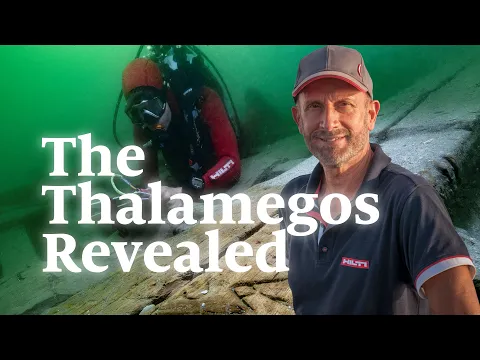
The discovery was made in the submerged area of the Portus Magnus, the Great Port of Alexandria, near the ruins of the Temple of Isis on the island of Antirhodos.
According to Goddio, the vessel preserves wood in good condition and was originally about 35 meters long and 7 meters wide, with approximately 28 meters of remaining structure identified so far.
The hypothesis that it is a luxury vessel is still under analysis.
Nevertheless, researchers state that the combination of dimensions, shape, and archaeological context makes this identification possible.
The find gained relevance because this type of boat appears in descriptions by ancient authors, but had not yet been securely confirmed through material remains of this scale.
Therefore, the shipwreck has been observed by specialists as an important element for the study of navigation, social prestige, and ritual practices in Alexandria between the end of the Ptolemaic period and the early centuries of Roman rule in Egypt.

Shipwreck in Alexandria and what was found in the ancient port
According to Goddio’s statement, archaeologists located the vessel during underwater excavations conducted in October in the area of the ancient sanctuary of Isis.
The temple was located in Antirhodos, an island that was part of the palatial core of Alexandria and is now submerged.
The ruins of the site are believed to have been hit by a destructive event around 50 A.D., possibly related to an earthquake, and the area sank between the 4th and 8th centuries.
The identified remains indicate a wide vessel, with a shallow draft suitable for navigation in sheltered waters, such as canals and port areas.
The initial interpretation suggests that it had an ornate central cabin and was propelled by oars, characteristics compatible with ancient descriptions of boats associated with high-status groups.
Still, the definitive identification depends on further studies of shipbuilding, usage context, and precise chronology of the find.
The location where the shipwreck was found is also noteworthy.
Alexandria was the capital of Egypt during the Ptolemaic dynasty, between 304 B.C. and 30 B.C., and continued to hold strategic importance under Roman rule.
In this context, a vessel of this type could help clarify how leisure, religion, aquatic circulation, and prestige representation were articulated in the port areas of the city.

What does thalamegos mean in Ptolemaic Egypt
The word thalamegos literally means something like “cabin bearer”.
Over time, the term came to designate luxurious vessels described by Greek authors when discussing the Hellenistic Egypt.
In announcing the discovery, Goddio associated the shipwreck with this category because of the proportions of the hull and the possibility that it supported a decorated central structure.
This type of boat also appears in iconographic records of ancient Egypt, although without direct archaeological confirmation so far.
One of the most cited literary references in the debate is that of the Greek geographer Strabo, who mentioned vessels used by wealthy people in travels through valued areas of the Egyptian landscape.
In one of the excerpts reproduced by Live Science, he reported that these people “hold banquets on cabin boats, which they enter through the aquatic vegetation and the shade of the leaves.”
This passage is often used by researchers to show that these boats were not just means of transport, but also spaces linked to sociability, banquets, and status display.
Still, this association does not, by itself, resolve the exact function of the vessel found in Alexandria.
The archaeological context itself led the team to consider another line of interpretation.
Since the hull appeared very close to the Temple of Isis, researchers are evaluating the possibility that the boat was also used in religious ceremonies conducted in the city already under Roman influence.
Between luxury boat and possible ritual use
Commenting on the discovery, Goddio stated that the boat could have been used in the canals of Alexandria, as suggested by Strabo’s descriptions.
At the same time, he added that the vessel was found alongside the excavations of the temple of Isis in Antirhodos and may have been affected by the same event that destroyed the sanctuary.
Based on this context, the team began to work with the hypothesis of a ritual use for the vessel.
This interpretation connects to the so-called navigatio iside, a naval ceremony of the Roman period associated with the cult of Isis.
According to the explanation reproduced by Live Science, processions of this type included a richly decorated vessel that symbolized the solar barge used by Egyptian gods to cross the skies.
From this tradition, Goddio suggested that the discovered boat could have participated in an annual journey linked to the goddess, between the Great Port of Alexandria and the sanctuary of Osiris in Canopus, along the Canopic Nile canal.
For now, this interpretation remains in the realm of archaeological hypothesis.
There is no conclusive scientific demonstration that the boat is, in fact, the ritual vessel mentioned by Goddio.
There is also no evidence that its main function was religious.
What exists so far is a combination of indications of location, chronology, and naval typology that supports this possibility, according to the team responsible for the excavation.
What experts say about the ancient vessel
The initial reception among scholars was positive but cautious.
Maritime archaeologist Timmy Gambin from the University of Malta described the find as a “spectacular discovery”, according to coverage by Live Science.
In the same coverage, however, he emphasized that it has not yet been scientifically determined whether the vessel was indeed a thalamegos.
In another statement, Gambin said that “it is still early to determine exactly what the vessel was used for”.
This observation summarizes the current stage of the investigation: there is a relevant find, but the final definition of the function of the boat still depends on analysis.

This caution is central to the reading of the case.
In underwater archaeology, the interpretation of a shipwreck depends not only on the hull but also on elements such as inscriptions, associated objects, sedimentary context, destruction pattern, and comparison with other ancient vessels already studied.
In the case of Alexandria, this work becomes more complex because the city has undergone earthquakes, land subsidence, and coastal transformations over the centuries.




Seja o primeiro a reagir!