





 Portuguese
  English
  Spanish
  3 min of reading
  0 comments


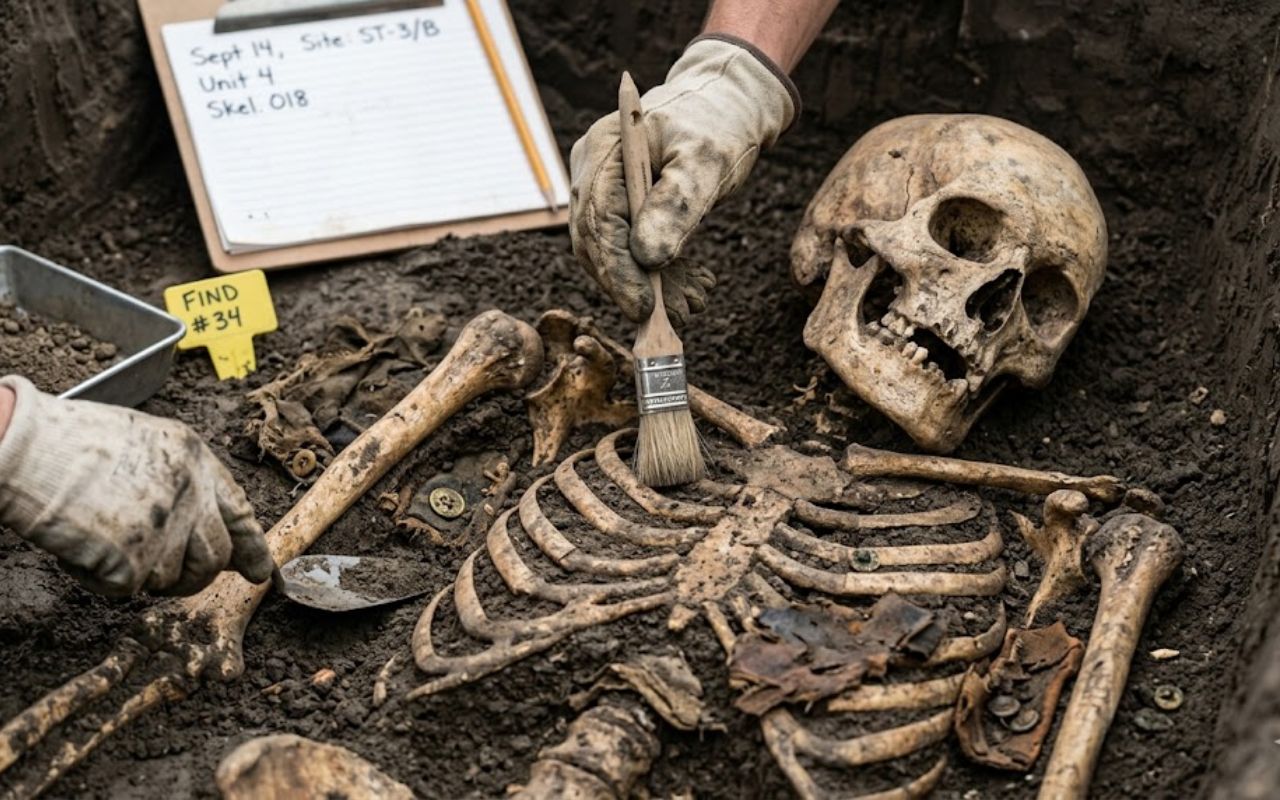
Archeologists locate the grave of George Tupper in Fort Jefferson, Florida, revealing 19th-century artifacts and traces of yellow fever epidemics.
During an assessment for the installation of a radio tower in Dry Tortugas National Park, Florida, archeologists from the United States National Park Service located the original grave of George Tupper, a U.S. Army soldier who died 153 years ago from yellow fever.
The discovery, made with ground-penetrating radar, reveals details about the sanitary conditions of the time, the proximity of a hurricane, and the military routine at Fort Jefferson.
The original grave of George Tupper, a young Army soldier who died of yellow fever on October 6, 1873, at the age of 22, during an outbreak that killed 13 people at Fort Jefferson on Garden Key, Florida.
-
New German Zeiss lenses arrive in Brazil promising to reduce mental effort by up to 90% and revolutionize the way we see amidst the excess of screens.

-
Scientific study identifies unique blood patterns that reveal the secret of individuals who surpass 100 years of age.

-
Princeton engineers create a flexible 3D-printed robot that eliminates motors and uses heat to perform complex movements.
-
Security alert: The proliferation of fake QR codes in public places facilitates financial scams and personal data theft.

The discovery occurred during an assessment for the installation of a radio tower, using ground-penetrating radar, which allows for mapping buried structures.
Josh Marano, an archeologist with the National Park Service, stated: “Locating the original grave of soldier Tupper allows us to honor him, as well as the military personnel who lived and served in Dry Tortugas.” He also emphasized the importance of careful surveys before any project.

Hurricane forces improvised burial of young soldier
Tupper’s death coincided with the approach of a hurricane, preventing him from being buried in the military cemetery on a nearby island, a common practice at the time.
Therefore, he was buried in a lime pit near the fort’s parade ground. Historical records show that he was the only documented military personnel buried within Fort Jefferson; civilians were also buried in the area.
Later, his body was exhumed and likely transferred to the Fort Barrancas National Cemetery in Pensacola, Florida.
Yellow fever epidemic and conditions of the fort
During the outbreak, Fort Jefferson faced serious sanitary difficulties. Soldiers used steam condensers to desalinate seawater, which was stored in open containers, favoring the proliferation of mosquitoes that transmit yellow fever.

The case of Tupper exemplifies how precarious conditions and the island’s isolation made military life extremely vulnerable to epidemics.
Personal artifacts and historical traces
In addition to the grave, archeologists discovered various 19th-century artifacts, including shell and porcelain buttons, iron buckles, brass fasteners, clay pipes, and glass fragments.
Among them, a bottle of Ayer’s Sarsaparilla stands out, a popular tonic at the time for treating skin diseases and rheumatism.
Window glass and containers dating from the 19th and early 20th centuries were also recovered, evidencing military daily life.
The discovery of George Tupper’s grave is part of recent archeological studies that identified traces of the old cemetery of the fort, currently submerged, and a quarantine hospital where yellow fever cases were treated.
In total, more than 200 people were identified, including soldiers and civilians, many of whom were initially recorded as unknown.
With information from Galileu Magazine









Seja o primeiro a reagir!