





 Portuguese
  English
  Spanish
  5 min of reading
  0 comments


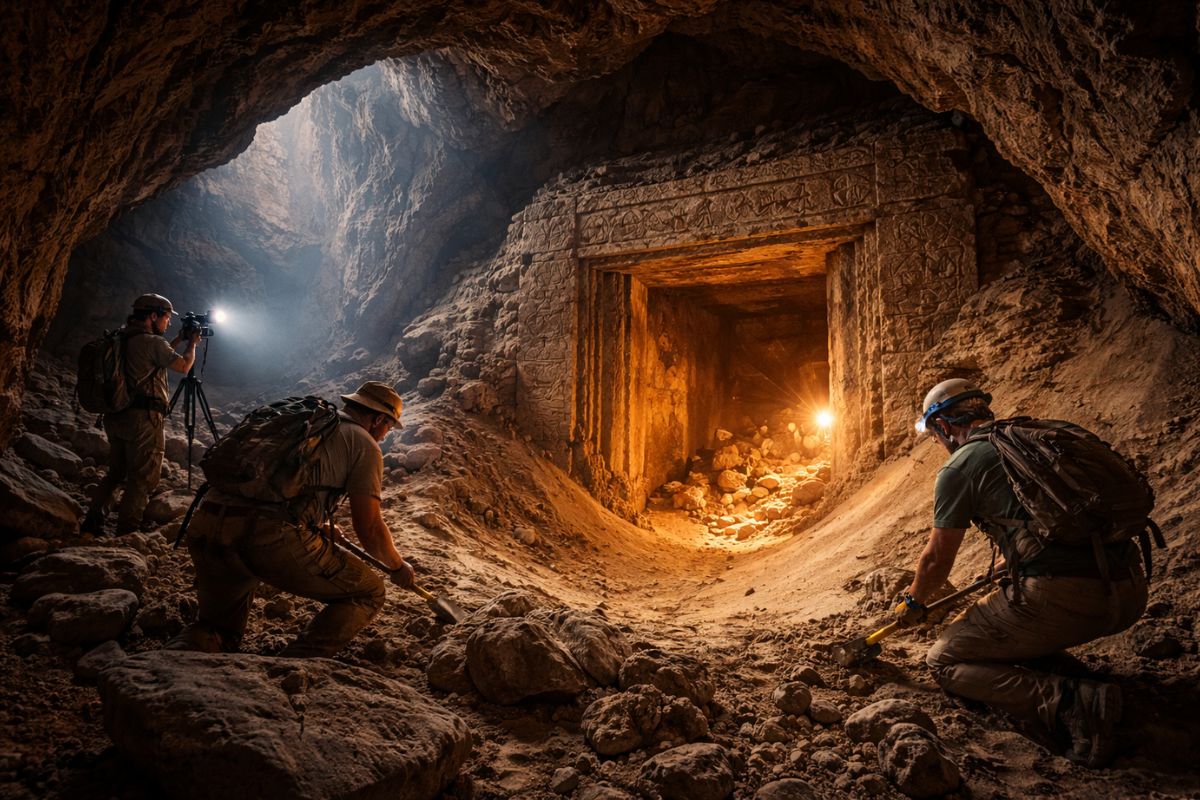
The 13-meter-long secret chamber was found sealed by sand at the back of Vanguard Cave in Gibraltar, a UNESCO World Heritage site, and contains animal bones, claw marks, and an intact conch shell since the Ice Age, in a cave complex where datings indicate the presence of Neanderthals as recently as 33 thousand to 24 thousand years ago
Archaeologists from the National Museum of Gibraltar opened a secret chamber that had been sealed by sand for approximately 40 thousand years inside Vanguard Cave, in the Gorham Cave Complex, a UNESCO World Heritage site. The secret chamber is about 13 meters long, located high in the cave’s ceiling, and had been completely isolated from the outside world since the Ice Age. Inside the untouched space, archaeologists found bones of lynx, hyena, and griffon vulture, claw marks from a large carnivore, and a marine conch shell, remnants that have remained exactly where they were left tens of thousands of years ago.
The director of the National Museum of Gibraltar, Clive Finlayson, explained that since the sand sealing the secret chamber is 40 thousand years old, the space is necessarily older and therefore would have been inhabited by Neanderthals. The discovery is significant because the Gorham Cave Complex is recognized as one of the last refuges of Neanderthals in Europe, with radiocarbon datings indicating the presence of the species as recently as 33 thousand to 24 thousand years ago, long after they had disappeared from most of the continent.
What archaeologists found inside the 40 thousand-year-old secret chamber

The secret chamber was revealed after years of patient excavation of the sand blocking the passage at the back of Vanguard Cave. Archaeologists removed layer by layer of ancient sediments until the opening appeared, granting access to a space that no human had stepped into for 40 millennia.
-
The water that may have gone to the Moon with NASA during the Apollo 11 mission and been consumed by the astronauts springs in a Brazilian city at an altitude of 945 meters, famous for its thermal springs, above-average quality of life, and a natural radioactivity so unusual that it attracted Marie Curie.

-
In 200 days, a Finnish man builds with his own hands an 11-meter boat powered by solar energy with “infinite autonomy,” capable of dispensing with refueling and already used as a floating house.

-
Neurologist Richard Restak issues a severe warning to all people over 65: there is a daily habit he recommends completely eliminating from your life because it is destroying your neurons and accelerating memory loss.

-
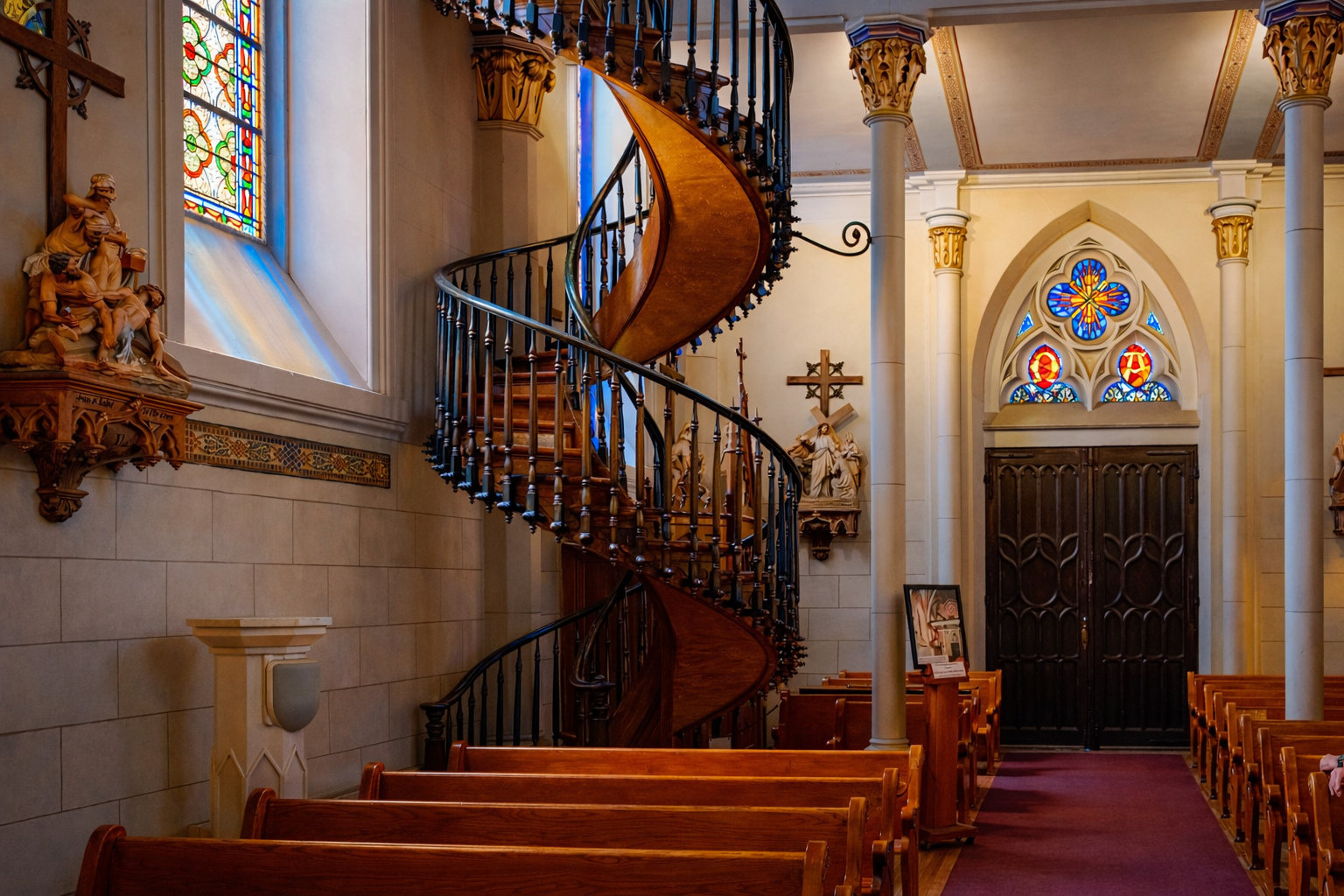
With 6.1 meters and 33 steps, the spiral staircase of the Loretto Chapel in the United States gained fame worldwide for making two complete 360-degree turns without a central support.

The intact floor of the secret chamber contained bones of lynx, hyena, and griffon vulture, animals that inhabited the region during the Ice Age.
In addition to the bones, archaeologists identified claw marks left by a large carnivore on the walls and a marine conch shell that someone, or something, brought into the space.
The state of preservation of the material is exceptional because the secret chamber remained completely isolated from the external environment, without exposure to rain, wind, light, or human activity during all this time.
It is a time capsule from the Ice Age that survived intact until archaeologists decided to open the door.
Why Gibraltar was the last refuge of Neanderthals in Europe

The secret chamber is part of the Gorham Cave Complex, located on the eastern cliffs of Gibraltar. The complex consists of four adjacent caves: Gorham, Vanguard, Hyaena, and Bennett, which preserve remnants of the lives of Neanderthals and early modern humans over more than 100 thousand years.
UNESCO recognizes the site as rare evidence that Neanderthals hunted birds and marine animals, plucked feathers for ornaments, and carved abstract engravings on the cave walls, all signs of complex and flexible thinking.
During the Ice Age, the cave entrances did not lead directly to the sea as they do today. The ocean level was much lower, and in front of the caves extended a coastal plain rich in resources. Radiocarbon datings from Gorham Cave suggest that Neanderthals still used the site as recently as 33 thousand to 24 thousand years ago.
While the species had already disappeared from most of Europe, the Neanderthals of Gibraltar persisted at the southern tip of the continent, sheltered in the caves that now hold the secret chamber.
The Neanderthals of Gibraltar ate seafood and made glue for spears
Excavations in the caves of Gibraltar over the years have revealed that the Neanderthals living there were not rudimentary hunters. The layers of remains are filled with mussel shells and bones of fish, seals, and dolphins, many with cut marks from stone tools.
These marine animals were not collected as leftovers: they were hunted and prepared as food, proving that the Neanderthals of Gibraltar systematically exploited marine resources.
In 2024, researchers working with the National Museum of Gibraltar described a hearth found in Vanguard Cave, the same cave where the secret chamber is located.
This hearth was not for cooking. It was built to heat plant material and turn it into a sticky tar used as glue to attach stone tips to wooden spears.
The Neanderthals of Gibraltar were coastal hunters, makers of composite tools, and thinkers capable of planning technical processes with multiple steps.
What the secret chamber may still reveal about the last Neanderthals
Archaeologists have only begun to explore the contents of the secret chamber. The 13-meter space has been opened, the first remnants cataloged, but deeper excavations may reveal much more.
The possibility of finding burials, stone tools, or human remains of the Neanderthals themselves inside the secret chamber is real and would transform the discovery into one of the most important archaeological finds of the century.
The fact that the secret chamber has remained sealed for 40 thousand years means that any material found will be in a state of preservation that rarely exists in open archaeological sites.
While most Neanderthal remains in other locations in Europe have been degraded by millennia of exposure, the contents of this secret chamber have been frozen in time, protected by the same sand that prevented anyone from entering throughout the history of human civilization.
A door that nobody opened in 40 thousand years and what was on the other side
The secret chamber of Gibraltar is a time capsule from the Ice Age that survived intact while entire civilizations were born and disappeared outside.
Inside, bones, claws, and a shell tell the story of the last Neanderthals who lived at the southern tip of Europe, enduring thousands of years after the species had gone extinct in the rest of the continent.
Excavations continue, and each layer removed may reveal another chapter of a story that has been locked away for 40 millennia behind a wall of sand.
What would you expect to find inside a chamber sealed for 40 thousand years? Do you think Neanderthals were smarter than the popular image suggests? What else might be hidden inside this cave? Leave your thoughts in the comments and share this article with anyone fascinated by archaeology and human history.






Seja o primeiro a reagir!