





 Portuguese
  English
  Spanish
  4 min of reading
  0 comments


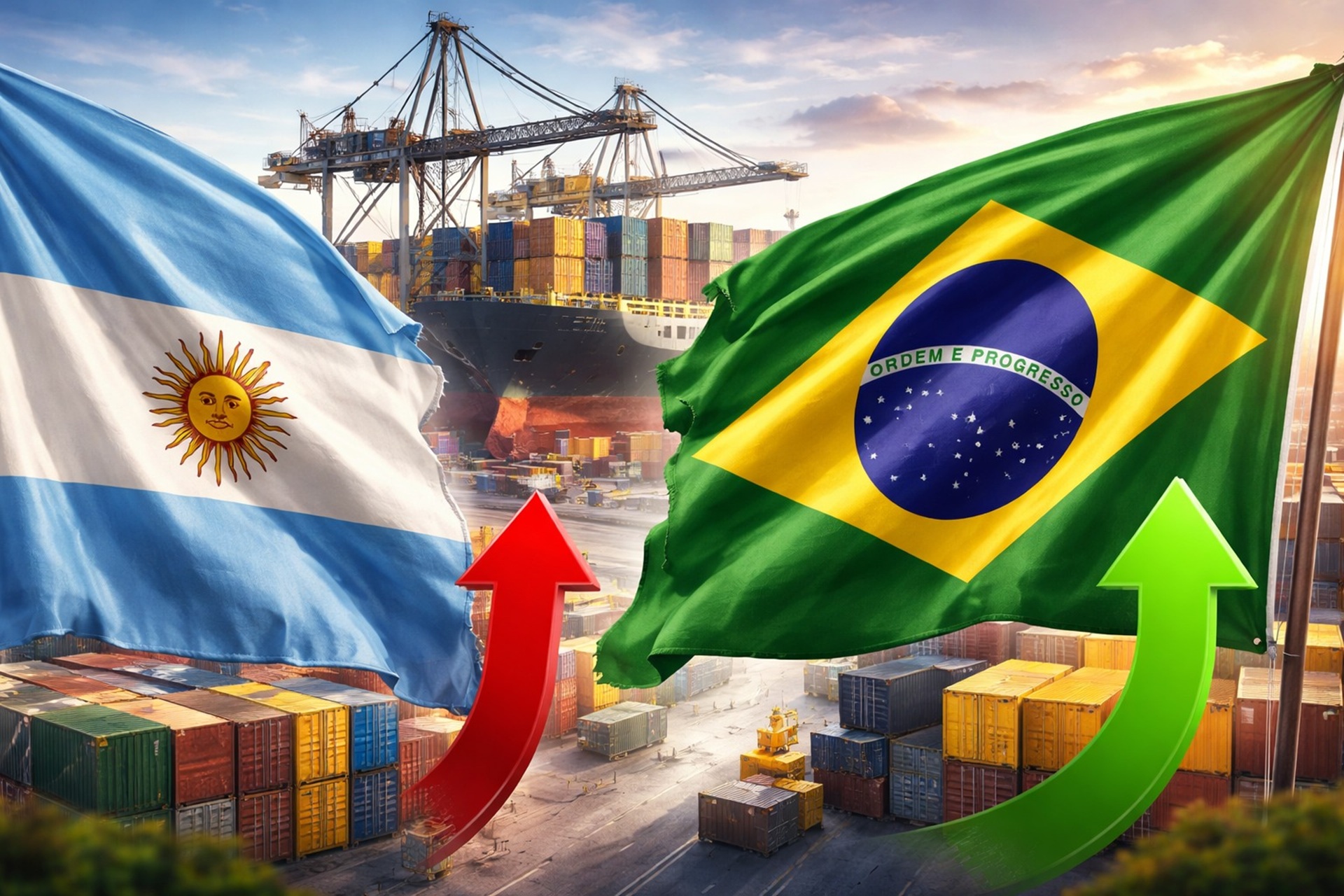
The Shift in Exports to Brazil in 2025 Reveals the Impact of the Argentine Economic Crisis, Progress in Structural Investments in Another South American Country, and Reconfiguration of Trade Relations Within Mercosur, with Possible Effects on Industrial Competitiveness and Regional Agreements
Peru has increased its relevance in Latin American foreign trade in 2025, surpassing Argentina in exports to Brazil, driven by copper, gold, and agricultural products, amidst the Argentine economic crisis and years of investments and trade agreements from the Andean country.
The Peruvian advance in regional trade marks an important turning point in South American economic dynamics. Recent data indicates that the Andean country has surpassed Argentina in exports to Brazil after significant growth in 2025, consolidating a trend built over years of economic planning, trade liberalization, and structural investments.
The Peruvian performance is not merely the result of conjunctural factors but a medium to long-term strategy. The country has been investing in infrastructure for years and maintains free trade agreements with several international partners, notably the United States and the Pacific Alliance, formed in 2012.
-
The government requests the Federal Revenue Service for a new system to automate the income tax declaration, reducing errors, time, and bureaucracy for millions of Brazilians.

-
Pix in installments, international Pix, and contactless payment without internet: the Central Bank revealed the new features coming to the tool that is already used by almost every adult in Brazil.

-
Mercado Livre has just started selling medications with delivery in up to three hours to your door, and this move could completely change the way Brazilians buy medicines on a daily basis.

-
In Dubai, rising tensions from the war in the Middle East are causing super-rich individuals to leave the Gulf and direct their fortunes to a new financial refuge in Asia.


Investments, Agreements, and Global Demand Drive Peruvian Exports
Peru has established itself as a major exporter of copper and gold, products that have strong international demand. Copper, in particular, has been experiencing growing demand due to the expansion of renewable energies and the manufacturing of electric vehicles, sectors that require large volumes of the mineral.
This favorable external scenario has been leveraged by the Andean country, which has also invested in diversifying its export portfolio. In addition to minerals, Peru has increased the export of higher value-added products and specific agricultural items, such as blueberries and avocados.
This combination of strategic commodities and differentiated agricultural products has strengthened domestic economic growth and expanded the country’s integration into global trade chains. At the same time, Peru’s performance contrasts with the Argentine situation, marked by recent structural reforms and an economic crisis whose effects are still unfolding.
Argentine Crisis and Structural Reforms Influence Regional Scenario
Argentina is undergoing deep structural reforms, including trade liberalization and economic deregulation. Although there are efforts to reorganize the economic environment, the anticipated results are still expected to take time to materialize.
In the assessment presented, the difference between the two countries lies in the continuity of economic policies. Peru has been reaping the benefits of years of planning and gradual economic opening, while Argentina is going through a transition period with measures that have more immediate impacts and uncertain effects in the medium term.
Political stability emerges as a central element in this process. Countries facing prolonged instability or democratic difficulties tend to have greater challenges in diversifying their export portfolios, becoming excessively dependent on a single product. This concentration increases vulnerability to external fluctuations and jeopardizes sustained economic planning.
Change in Mercosur Creates Risks and Pressures Brazilian Competitiveness
Peru’s surpassing of Argentina in exports to Brazil alters the balance within Mercosur and generates reflections on risks and opportunities. Argentina has historically occupied a strategic position as the main destination for Brazilian industrialized products.
Brazil still exhibits low industrial competitiveness compared to more open economies. With Argentine deregulation and the expansion of its trade opening, including to third countries like China, the possibility of direct competition with Brazilian products in the Argentine market grows.
This movement may affect specific industrial sectors, especially if Argentina diversifies its trade partners and increases imports of manufactured goods from other sources. In light of this scenario, it becomes necessary for Brazil to adopt measures to strengthen its competitiveness and avoid losses in intra-block trade.
The Argentine economic reorganization may, in the medium term, alter trade flows within Mercosur. This demands strategic planning on Brazil’s part to preserve its position as a relevant supplier of industrialized goods.
Peruvian Market Opens Space for Brazilian Industrialized Products
Although Peru has expanded its presence as a commodities exporter, its productive structure is still less industrialized than Brazil’s. This characteristic may represent an opportunity for Brazilian companies.
Higher value-added products, such as automobiles, appliances, and technology items, are pointed out as sectors with potential for expansion in the Peruvian market. As the Andean country does not have such a broad production chain in these segments, there is room for increasing Brazilian exports.
The formalization of direct trade agreements between Brazil and Peru is considered relevant to ensure predictability and stability in bilateral exchanges. Since Peru is not part of Mercosur, specific cooperation mechanisms can strengthen trade between the two economies.
Political stability is also cited as a decisive factor. Although Peru faces internal challenges, maintaining a stable institutional environment is seen as a condition for sustaining long-term trade relations based on trust and planning.
The new regional scenario indicates that Peru’s advancement in foreign trade is not merely the result of conjunctural factors but of a continuous economic strategy.
At the same time, it imposes on Brazil the need for a strategic revision, both in its relationship with Argentina and in expanding opportunities with the Peruvian market, in a context of increasing competition and reconfiguration of South American trade relations.









-

-

-

-

-

-

28 pessoas reagiram a isso.