





 Português
  Inglês
  Espanhol
  3 min de leitura
  2 comentários


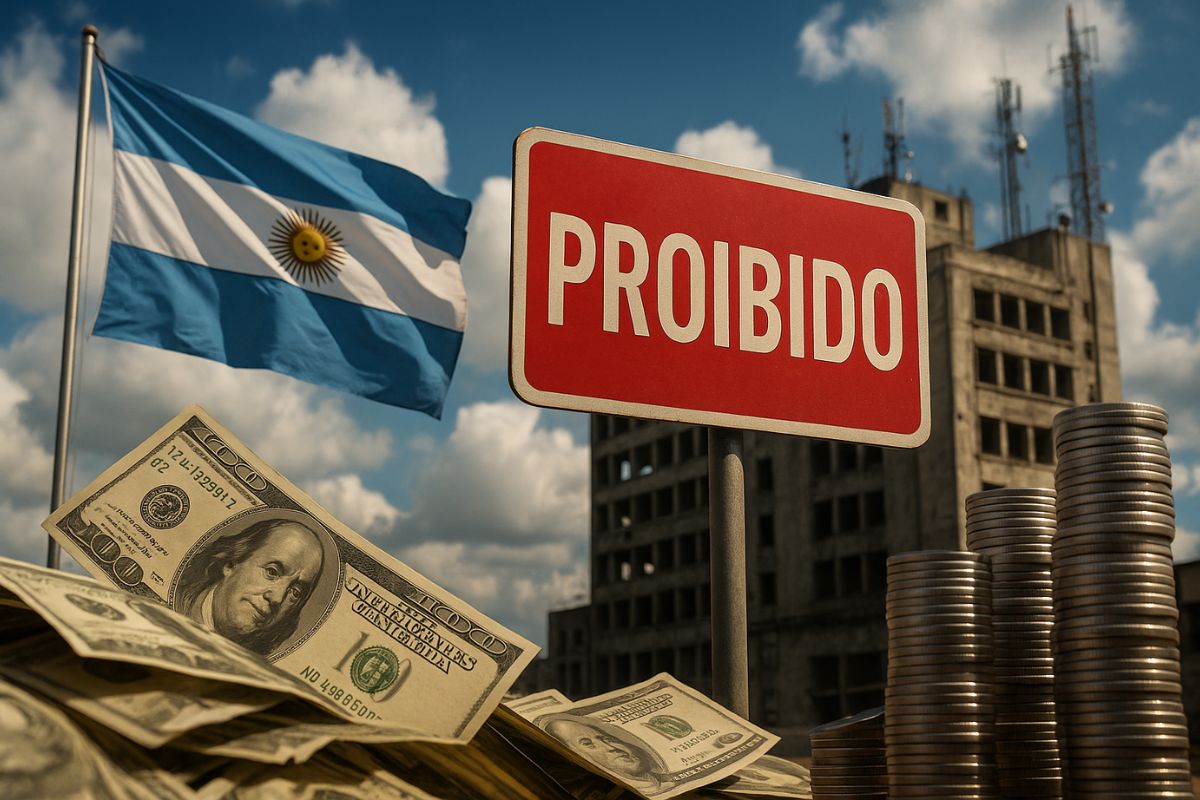


Central Bank Measure Aims to Curb Quick Profits with Parallel Dollar and Reduce Volatility Amid Crisis.
The Central Bank of Argentina announced on Friday (26) that Argentina Imposes New Currency Control to restrict arbitrage operations known as “rulo,” a practice that exploits the difference between the official rate and parallel currency markets. The measure, valid for 90 days, comes in response to the surge in speculation surrounding the dollar during the ongoing economic crisis.
According to the portal do g1, the goal is to reduce volatility, ensure liquidity, and prevent financial manipulations that drain resources from the official market. The control does not affect individual dollar savings, but limits the rapid repetition of buy and sell operations, which had allowed investors to make significant profits in just a few days.
How the New Currency Block Works
According to the Central Bank of the Argentine Republic (BCRA), any purchase operation of dollars at the official rate can only be followed by a sale in the free market after an interval of 90 days. This rule aims to slow down arbitrage and discourage the so-called “rulo.”
-
In a silent race, Shopee signs a mega contract in Guarulhos and accelerates the e-commerce war with faster deliveries, pressured shipping, and a new threat to rivals in Brazil.

-
Oil surged to $115 a barrel due to the war in the Middle East, and diesel in Brazil has already risen to R$ 7.45 per liter, while the United States…

-
Brazilian city bets on the business environment to generate jobs and attract investments in the energy sector — secretary reveals strategy at Macaé Energy 2026.

-
50 viaducts, 4 tunnels, 28 bridges, and 40 kilometers of bike paths: BR-262 in Espírito Santo will receive 8.6 billion reais for the largest engineering project in the state’s history, inspired by the Immigrant Highway in São Paulo.


The measure adds to other recent attempts to curb capital flight, such as minimum holding rules for public securities before reselling them. The focus is to redirect dollars to productive uses and protect the Argentine peso from speculative pressure.
What is the “Rulo” and Why is it Concerning
The “rulo” is a financial strategy in which investors buy cheaper dollars at the official rate and resell them in parallel markets, such as the “dólar bolsa” or in cryptocurrencies, where the exchange rate is higher. In recent days, the difference reached 5%, allowing profits to multiply in a matter of hours.
This mechanism, although legal in some scenarios, has been considered one of the factors that amplify the instability of the local currency, as it pressures the demand for dollars in an already weakened market.
History of Currency Restrictions in the Country
Argentina has a long history of currency controls and restrictions. In recent years, the so-called “cepo,” a system of restrictions on dollar purchases, has been used multiple times to try to curb the outflow of foreign currency. In April, the Central Bank temporarily relaxed some rules, but the escalation of speculation led to the reintroduction of stricter measures.
The repetition of cycles of loosening and tightening shows the country’s difficulty in finding a balance that ensures both monetary stability and freedom for investors.
Expected Impact on the Economy
Economists believe that the prohibition of the “rulo” for 90 days may help to contain exchange rate volatility and reduce short-term speculation. According to Argentine specialist Lara Ruiz, the measure aims to ensure that the available dollars are directed towards imports and productive investments, rather than immediate financial gain.
However, critics warn that while it may provide some relief, currency control does not solve structural issues in the economy, such as persistent inflation, fiscal deficit, and loss of confidence in the peso.
The announcement that Argentina Imposes New Currency Control highlights the government’s urgency in addressing speculation, but also reveals how much the country still depends on palliative measures to manage its crisis. The lingering question is: Are these restrictions a temporary solution or just another chapter in the history of instability of the Argentine currency?
And you, do you believe that this block on the “rulo” will really help stabilize the economy or merely postpone the underlying issues? Leave your opinion in the comments; we want to hear from those closely following the Argentine crisis.










Está na alegria da ****.
Ano passado argentinos invadiram Balneário Camboriú e com dólar, compravam de tudo. Só em shopping