





 Portuguese
  English
  Spanish
  5 min of reading
  1 comment


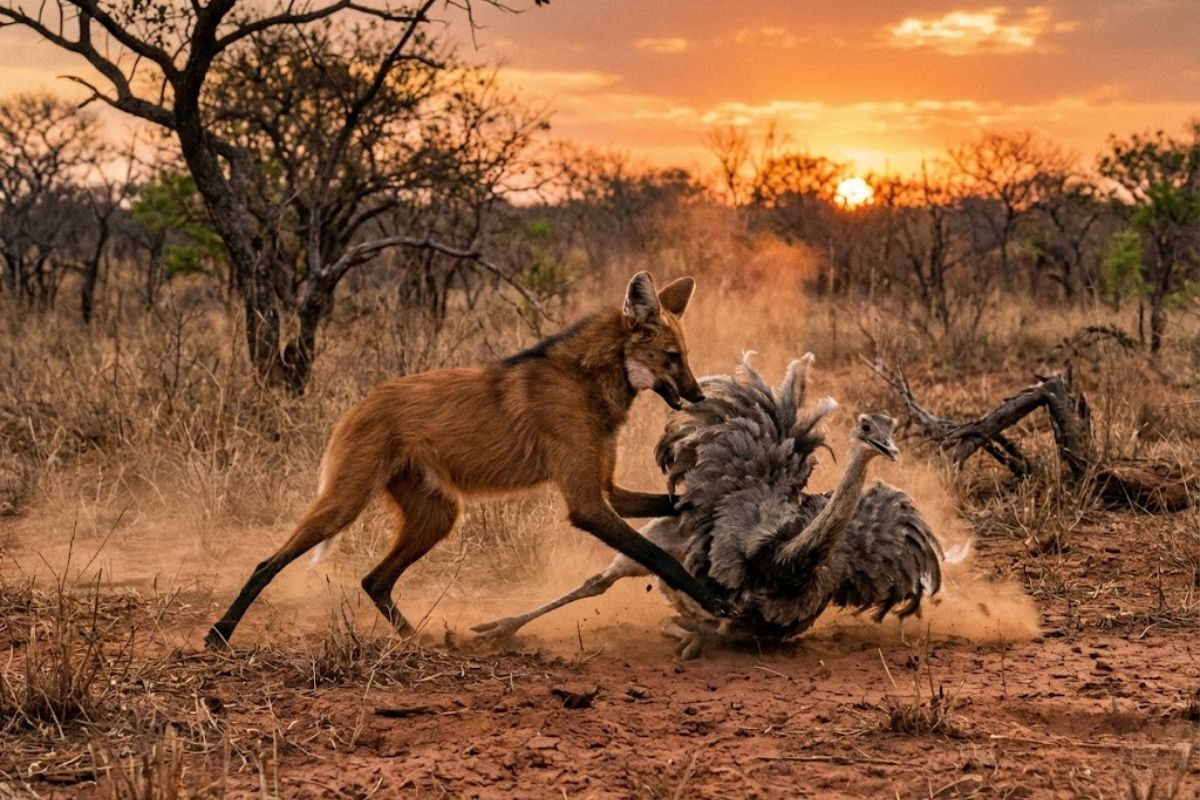


September 2022 Record, Near Pousada Trijunção and Grande Sertão Veredas National Park, Shows Wolf Capturing Rhea Americana, the Largest Bird in the Americas. Monitored with Telemetry Collar Since 2018, the Male Attacked, Dragged the Prey, Rested 40 Minutes, and the Female Vocalized Before Eating Too.
The wolf was caught in behavior that had never been directly observed in the field: knocking down and dragging an adult rhea in the heart of the Brazilian Cerrado. The scene appeared in a camera trap set by researchers and turned into a rare record of how this species can vary its diet when the environment tightens.
The episode occurred in September 2022, in the region of Pousada Trijunção and Grande Sertão Veredas National Park, on the border between Minas Gerais and Bahia. The case gained even more weight as it was detailed in a scientific note published in the international journal Canid Biology & Conservation, with the sequence reconstructed by supplementary images.
What Makes the Sighting So Uncommon

The wolf is known to have a predominantly omnivorous diet, with strong consumption of fruits and the capture of smaller prey.
-
The Argentine government celebrates the lowest poverty rate in 7 years, but experts warn that the methodology has changed, real wages have fallen, unemployment has risen, and the number of people on the streets of Buenos Aires has increased by 57% since Milei took office.

-
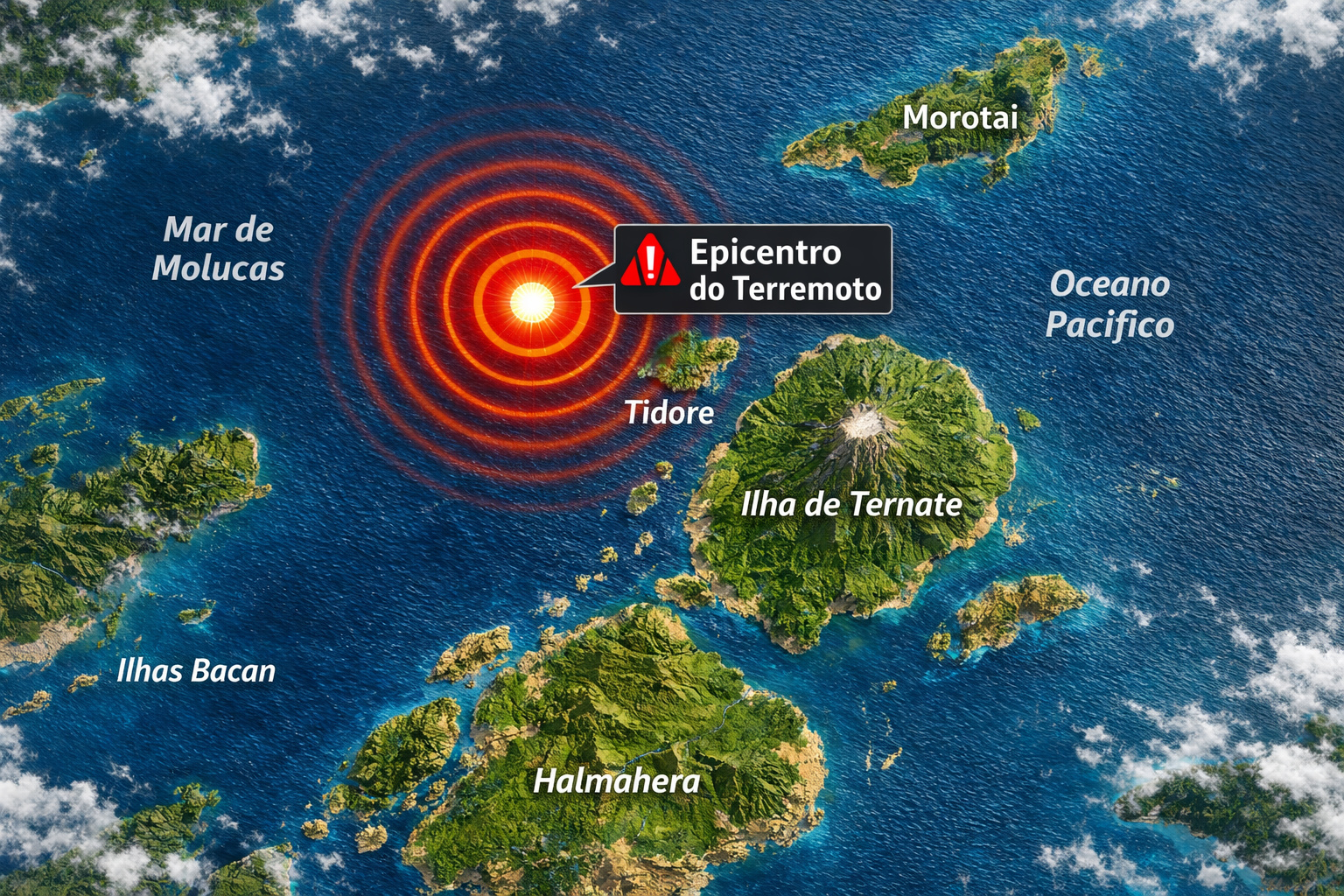
7.8 magnitude earthquake in Indonesia frightens the population, triggers tsunami alert, and hits an island with over 200,000 inhabitants this Thursday.
-
Google will finally let you change that embarrassing Gmail address you created in your teenage years without losing any accounts, logins, or old emails: the feature is already available in the United States.

-
Heading to Brazil in a Bonanza F33 single-engine aircraft: a couple departs from Florida on a visual flight, makes technical stops in the Caribbean to refuel and organize paperwork, and begins the staged crossing until they reach the country.


Therefore, the record is striking: even with previous indications of occasional consumption of larger animals, the direct capture of a prey the size of a rhea had never been documented.
The rhea, identified as Rhea americana, is the largest bird in the Americas, and its size helps measure the shock of the researchers.
An adult male can reach 1.70 meters in height and weigh up to 40 kilograms, a scale far above what tends to appear in observed attacks from the wolf in the field.
Where It Happened and Why the Location Matters
The region of the record lies between preserved and monitored areas in the Cerrado, including Pousada Trijunção and Grande Sertão Veredas National Park.
The scenario described by researchers is of a remote area where camera traps and continuous monitoring can capture events that, most of the time, remain invisible even to experienced teams.
The fact that there is a high density of rheas (Rhea americana) in protected areas is pointed out as one of the pieces of the puzzle.
In locations with protection and less direct human pressure, certain species can concentrate more, which alters encounters, opportunities, and risks for predators like the wolf.
How the Camera Trap Captured the Attack
VIDEO LINK: https://ndmais.com.br/animais/armadilha-fotografica-flagra-interacao-inedita-entre-lobo-guara-e-ema-no-cerrado-brasileiro/
The wolf recorded was accompanied by the organization Onçafari, which has been monitoring individuals in the region since 2018 with telemetry collars. This means that researchers were already closely following the animal’s routine and, nonetheless, the attack was described as fast and unexpected.
The sequence began without clear signs that something so large would happen at that moment.
According to the authors, neither the wolf nor the rhea were seen before the leap, and then came the decisive movement: the male jumped, knocked down the bird and began to drag it by the neck.
After that, the wolf took the carcass to another location, where it fed and rested for about 40 minutes, a behavior consistent with a meal of high energy gain and high effort.
The camera traps recorded stages that help reconstruct the event, including later visits to the carcass, which reinforces that it was not a fleeting encounter, but a complete sequence of capture, displacement, and consumption.
The Female, the Pups, and the Breeding Climate
During the episode, the female remained nearby and drew attention for vocalizing with frequent barks, but without participating directly in the capture.
Later, she also fed on the prey, indicating that the event involved the couple and had developments in the group.
Researchers highlighted that the couple was in the reproductive period and was caring for four pups, an important detail for understanding the context.
In such phases, the wolf may have increased energy demands, which can influence decisions regarding risk, effort, and opportunity, especially when the reward is a large prey.
Why the Drought May Have Pushed the Diet to the Extreme

The explanation suggested by researchers combines factors that may act together without relying on a single reason. The first is the drought period in the Cerrado, associated with fewer available fruits, precisely a central item in the wolf’s diet.
The second is the high density of rheas (Rhea americana) in protected areas. The third is the higher energy demand during reproduction and caring for pups.
Together, these elements may create a rare window in which the wolf explores an atypical prey, something that would hardly be recorded without continuous monitoring, telemetry, and camera traps positioned in the right place for long enough.
What This Scene Reveals About the Cerrado and the Species Conservation
The record is not just a curiosity: it expands the understanding of the behavioral flexibility of the wolf in a rapidly changing biome.
The species is classified as “nearly threatened” by the International Union for Conservation of Nature (IUCN) and as “vulnerable” in Brazil, according to the Chico Mendes Institute for Biodiversity Conservation.
In this scenario, the main threat cited is habitat loss, driven primarily by agricultural expansion and by growing investments each year.
The Cerrado, where the wolf depends on large areas and resource diversity, becomes a thermometer of how environmental pressures can even influence unexpected feeding behaviors.
Do you think the wolf will repeat this type of attack more frequently as drought and pressure in the Cerrado increase?









Claro que vai ,e só a fome apertar de novo , coitada da eminha