





 Portuguese
  English
  Spanish
  3 min of reading
  1 comment


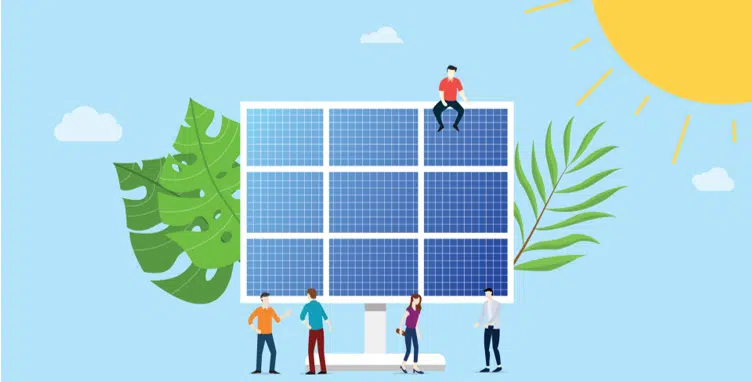

Self-Production of Clean Energy Reduces Blackouts and Costs for Brazilian Consumers
Brazil takes a significant step towards sustainability with the introduction of solar energy storage as a viable alternative for self-production of clean energy. This advancement comes at a critical moment, marked by severe climate challenges and increasing energy demands, especially after a summer in 2024 that brought heavy rains and significant blackouts in regions such as the Central-South, including periods of up to seven days without power in parts of the largest metropolis in Latin America.
Solar Energy as a Response to Climate Challenges
The need for solutions that do not exacerbate the climate crisis is urgent. Brazil, facing a summer with record temperatures and energy consumption, has seen solar energy as a crucial ally. According to the Brazilian Solar Energy Association (Absolar), solar energy already represents 17.4% of the country’s electric matrix, with 40 GW of installed capacity. This renewable energy source not only complements hydroelectric plants but also provides a resilient response to increasingly frequent extreme phenomena.
Advancements in Solar Energy Storage
Unlike the traditional solar energy system, which relies on the power grid for balancing unused energy during the day, the new battery storage system allows for greater independence. Consumers can now store excess energy generated during the day in batteries, using it as needed, even during blackouts or nighttime. This not only ensures a continuous energy supply but also promotes substantial savings on bills, potentially reducing costs by up to 95%.
-
The Brazilian state accelerates industrial competitiveness with a focus on the extraction of strategic minerals to boost the energy transition in Goiás.

-
Seagri’s headquarters invests in solar energy with Neoenergia Coelba and promises to cut electricity costs, highlighting a strategic advance in sustainability and energy efficiency within state public administration.
-
A Canadian retiree creates a hydroelectric system on a real river, generating energy continuously throughout the day and demonstrating how the power of water can supply a house with stability even in a simple structure.

-
Solar Pyramid draws attention by converting solar energy into million-dollar savings and repositioning the City Hall of Curitiba as an example of innovation, sustainability, and intelligent use of public resources.

Hybrid inverters, essential for this system, operate both connected to the grid to charge the batteries and independently, ensuring constant power even without support from the external grid. This technology ensures that even in cases of public supply interruption, energy continues to be delivered without disruption.
Benefits and Market Outlook
Solar energy storage benefits not only the industry and commerce, which require constant energy security, but also residential customers. Many work from home or rely on electric medical equipment, making uninterrupted energy supply essential. The entry of SolaX Power into the Brazilian market, a global pioneer in manufacturing hybrid inverters, signals a strong boost for this technology in the country. The company sees Brazil as a potential global leader in the solar energy market, given the vast number of consumers and the still underexplored potential for distributed generation.
The outlook is promising with the recent reduction of over 40% in solar panel costs in 2023, making solar energy even more attractive. This trend, coupled with the ability to store clean energy, promises not only greater energy security but also a significant reduction in the payback period of investments, making photovoltaic systems even more competitive and desirable for consumers across the country.
Source: : Gilberto Camargos, Executive Director of SolaX Power in Brazil.










Muito bom!