





 Portuguese
  English
  Spanish
  5 min of reading
  0 comments


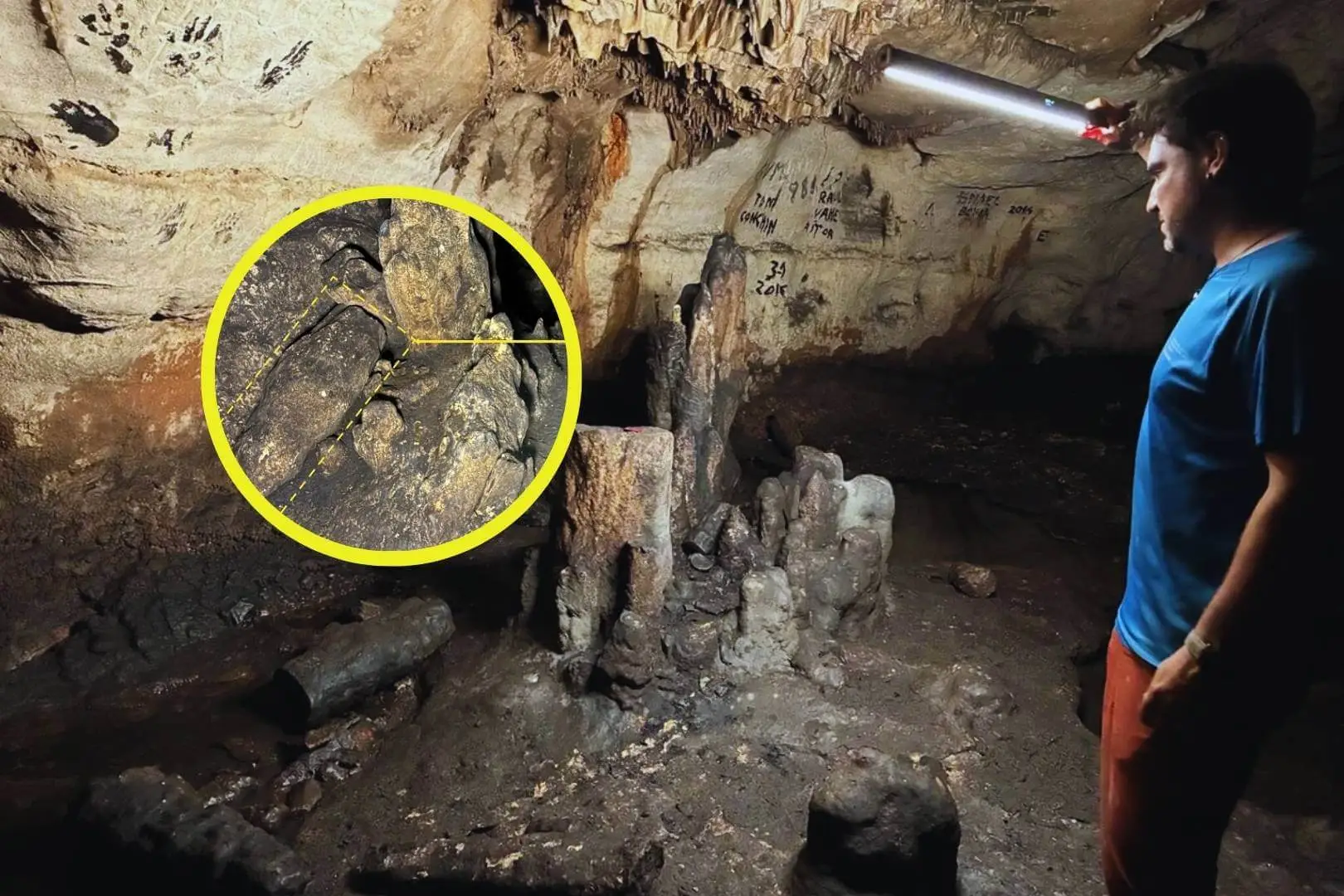
More Than 100 Structures with Manipulated Stalagmites Reveal Complex Symbolic Use in the Cova Dones Cave in Valencia Over 20,000 Years Ago.
In a discovery that could rewrite part of history, archaeologists revealed the existence of more than 100 prehistoric structures within a European cave.
Dating back over 20,000 years, the constructions suggest that people of that time already engaged in complex symbolic practices—much earlier than previously thought.
An Impressive Discovery in Valencia, Spain is reshaping the understanding of the symbolic behavior of early humans. Archaeologists identified over a hundred prehistoric structures in the Cova Dones cave, located in Millares.
-
Friends have been building a small “town” for 30 years to grow old together, with compact houses, a common area, nature surrounding it, and a collective life project designed for friendship, coexistence, and simplicity.

-
This small town in Germany created its own currency 24 years ago, today it circulates millions per year, is accepted in over 300 stores, and the German government allowed all of this to happen under one condition.

-
Curitiba is shrinking and is expected to lose 97,000 residents by 2050, while inland cities in Paraná such as Sarandi, Araucária, and Toledo are experiencing accelerated growth that is changing the entire state’s map.

-
Tourists were poisoned on Everest in a million-dollar fraud scheme involving helicopters that diverted over $19 million and shocked international authorities.


These findings indicate that human societies, more than 20,000 years ago, already used caves not only as shelter but also as spaces of complex meanings.
The Cave and Its Archaeological Importance
The Cova Dones was already known for its Paleolithic cave paintings. Now, with the new discovery led by the Universities of Alicante and Zaragoza, it has become the second largest archaeological site in the world with this type of structure, second only to the Saint-Marcel Cave in France.
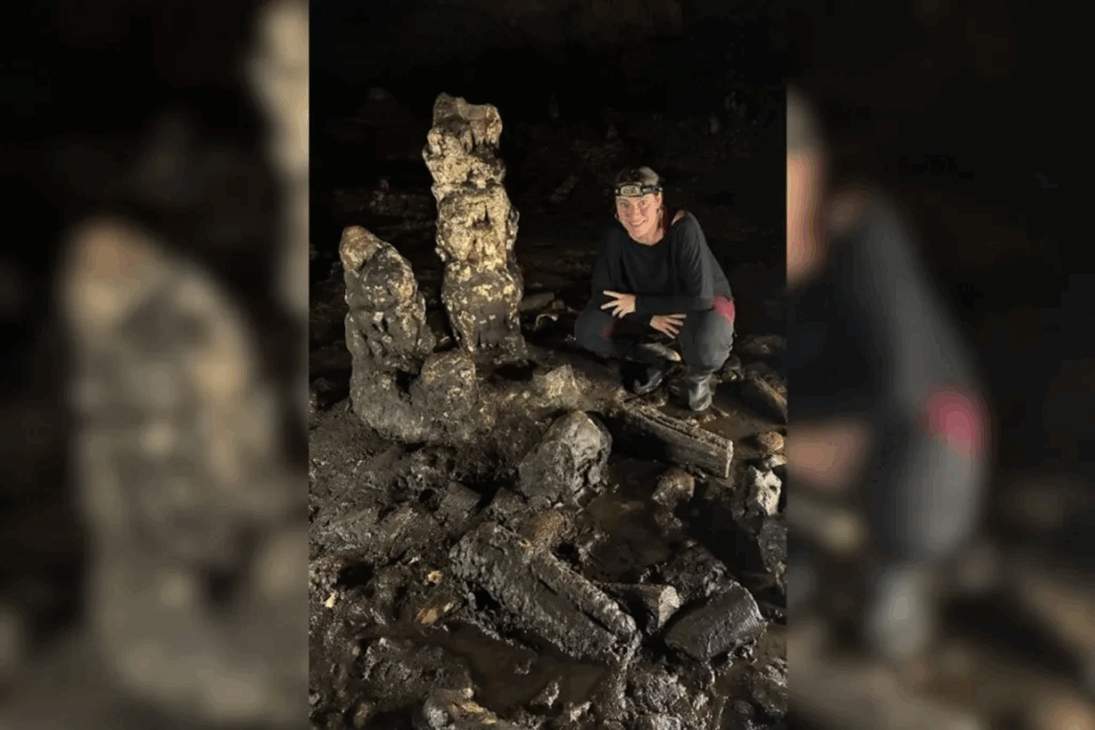
These structures, called speleo-facts, are formed by stalagmites that were intentionally broken, grouped, or relocated by human action.
The study suggests that the first inhabitants or visitors of the cave organized the space in a planned and careful manner.
This was not just casual occupancy, but a true transformation of the underground environment.
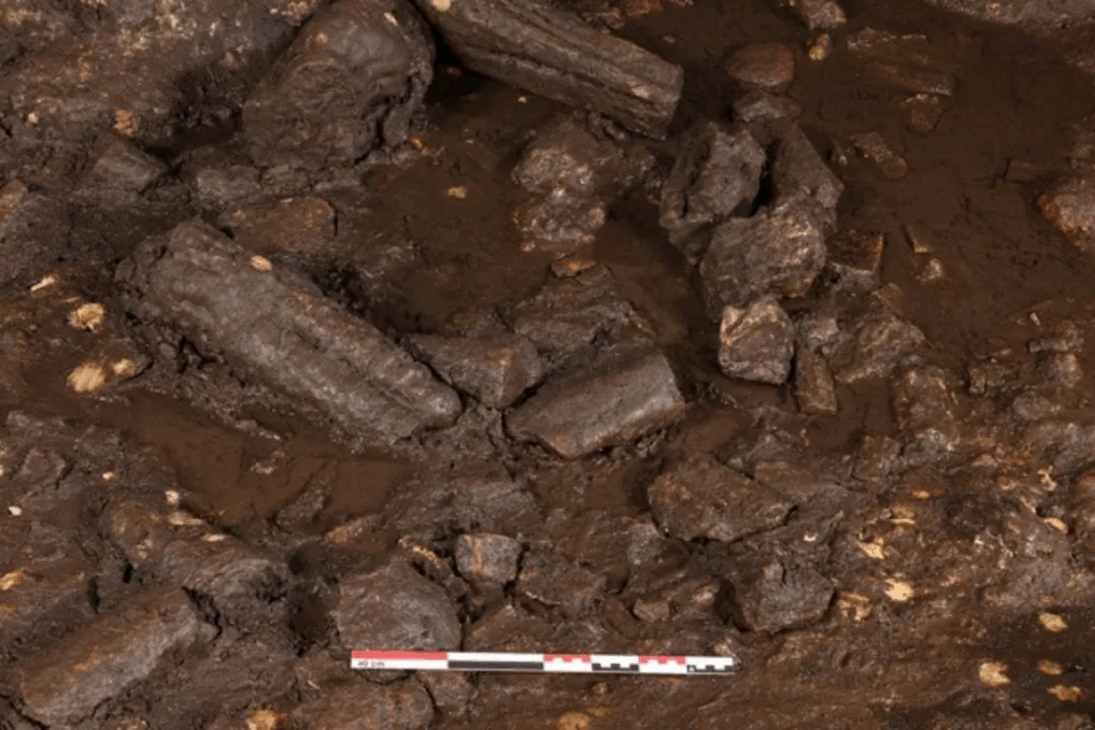
Speleo-facts: Intentional and Millennia-old Constructions
The speleo-facts are not simple fragments of stone. They have been moved and organized in visibly planned patterns.
Many of these formations take circular or ring shapes.
Moreover, the presence of calcite over the fractures indicates that the modification of these structures occurred thousands of years ago.
Archaeologists found that there are well-defined internal pathways, specific zones of occupation, and movements of stalagmites to facilitate transportation in certain areas of the cave.
All indications suggest that there was a deep knowledge of the space and a clear intention in organizing the environment.
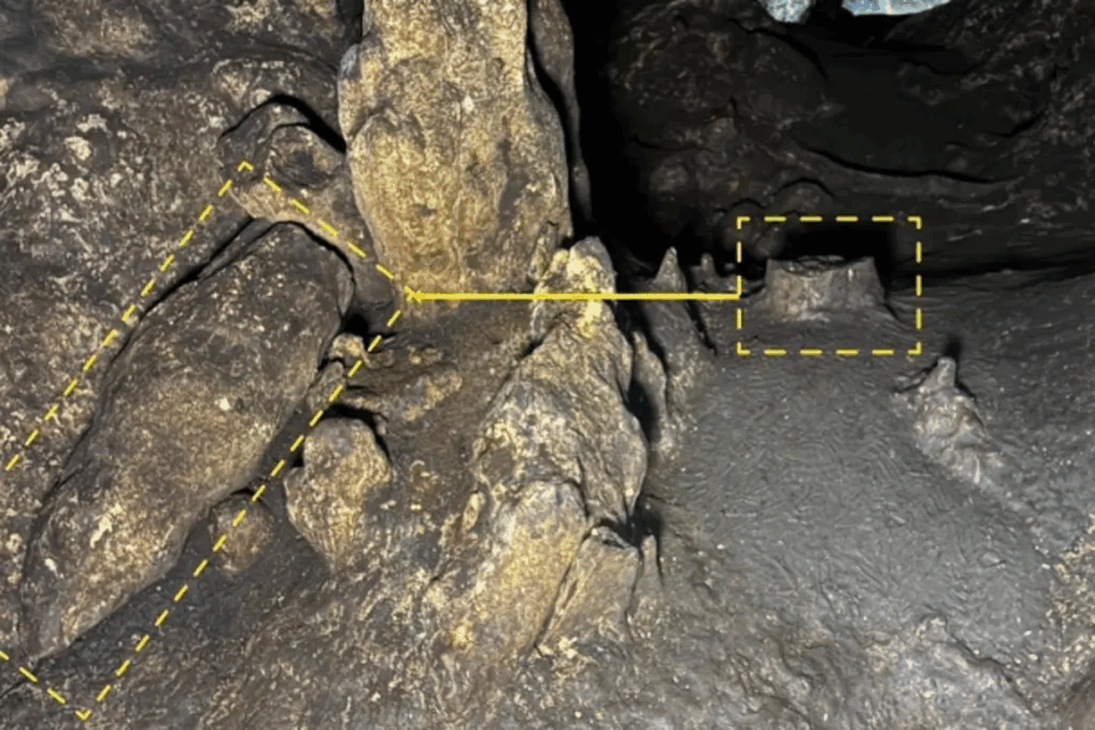
A Planned Occupation Full of Meanings
The quantity of structures and their distribution reinforce the hypothesis that the Cova Dones was more than just a simple refuge.
Researchers believe that the cave had symbolic, ceremonial, and even cosmological functions. The way the speleo-facts were organized demonstrates a sophisticated and planned relationship with the underground.
This meticulous occupation suggests that the subterranean space was conceived as an environment loaded with meanings.
Humans did not just inhabit the cave, but transformed it into a space with specific functions, likely linked to rituals and beliefs.
Cave Art and Historical Continuity
The discovery of the speleo-facts adds to other important revelations made in recent years at the Cova Dones. In 2023, a study published in the journal Antiquity classified the cave as the site with the largest collection of Paleolithic cave art on the eastern Mediterranean coast of the Iberian Peninsula.
More than a hundred paintings and engravings were identified, dating back approximately 24,000 years. The representations include horses, deer, aurochs, and other animals.
These images reinforce the ritualistic and symbolic nature of the site, showcasing a sophisticated artistic tradition already at that time.
The Roman Presence in the Cave
The history of the Cova Dones does not end in the Paleolithic. Recent research also identified a Roman sanctuary in the depths of the cave.
Latin inscriptions and a coin from Emperor Claudius were found. These findings demonstrate that, thousands of years after the first occupations, the site continued to be used for religious purposes.
The overlay of historical periods transforms the cave into a true cultural underground record, where each civilization left its mark without erasing the previous ones.
Comparisons with Other Prehistoric Caves
The discoveries in the Cova Dones are compared to the structures found in Bruniquel Cave in France.
There, around 175,000 years ago, Neanderthals also organized stalagmites into ring shapes. This similarity suggests that the symbolic use of caves and the modification of their interiors could be a very ancient human practice, spanning different periods and groups.
The idea that caves were merely natural shelters is being replaced by a more complex view, where the underground was transformed into a space laden with spiritual and social meanings.
Functions of the Structures are Still Debated
Researchers are still investigating the exact purposes of these prehistoric constructions.
Some hypotheses suggest they could function as physical barriers, guides for movement in the dark, or demarcations of specific use areas. Others suggest purely ritual or cosmological purposes.
The fact that the structures follow a clear spatial logic, with organization and patterns, rules out the possibility of being mere results of random accumulations of stones. Detailed studies are seeking to decipher these intentions through the analysis of the geomorphology of the cave, the arrangement of the speleo-facts, and the characteristics of the sediments.
Ongoing Research Programs
To fully understand the history of these structures, a detailed research program has been initiated. The analyses include uranium series dating, microstratigraphic excavations, and geomorphological studies.
These techniques aim not only to determine the age of the modifications but also to understand the construction processes and the possible meanings attributed to the structures.
The goal is to reconstruct how these prehistoric societies conceived the subterranean space and how the modifications reflected their beliefs and cultural practices.
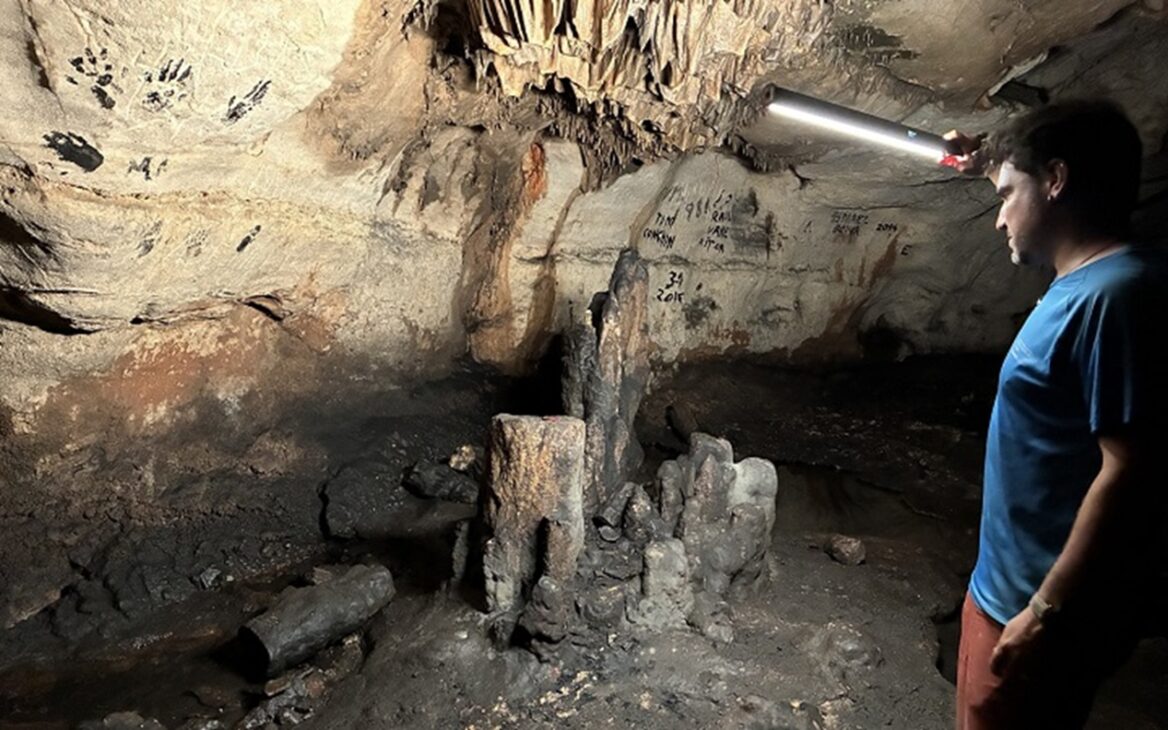
Multidisciplinary Team in the Study of Cova Dones
The DONARQ project, responsible for the discovery, brings together a multidisciplinary team. Virginia Barciela González from the University of Alicante and Aitor Ruiz-Redondo from the University of Zaragoza lead the group. Experts in various fields, such as geomatics, taphonomy, Roman epigraphy, and prehistoric art, also participate.
One of the highlights is the work of Iñaki Intxaurbe Alberdi, a postdoctoral researcher in karst transformation. His role was essential in identifying and classifying the structures, especially considering the challenging study conditions in a cave over 500 meters deep.
A Subterranean Cultural Ecosystem
The multidisciplinary approach allows for the analysis of Cova Dones as a true subterranean cultural ecosystem. The site is not merely a repository of ancient objects but an environment shaped and reinterpreted by various communities over thousands of years.
The discoveries reinforce the idea that the underground has always played a special role in human history. The Cova Dones now emerges as one of the greatest testaments to that ancestral bond with the mysteries and symbolism of caves.










-

-

-

-

-

-

29 pessoas reagiram a isso.