





 Portuguese
  English
  Spanish
  5 min of reading
  0 comments


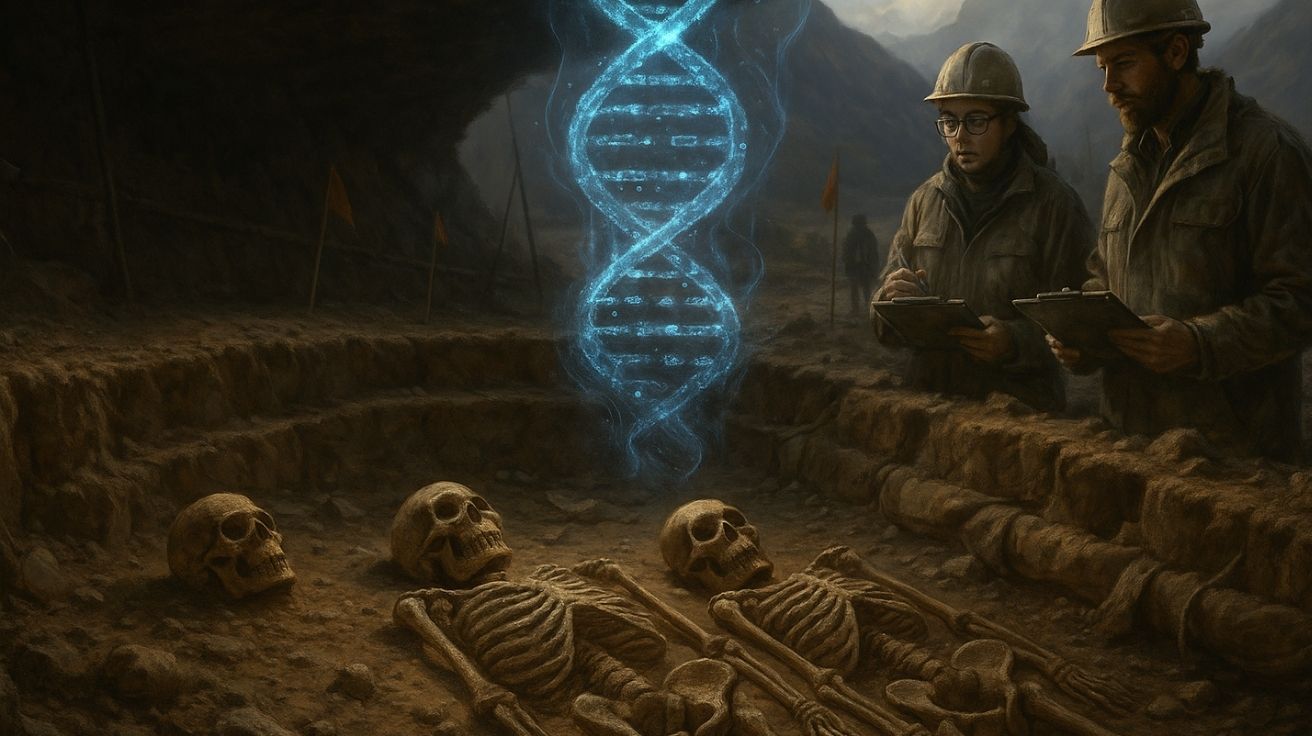
Archaeologists’ Discovery in the Colombian Altiplano Exposes a Lost Civilization That Left No Genetic Traces Among Modern Indigenous Peoples
One of the most impactful archaeological discoveries in South America has just been revealed by archaeologists: 6,000-year-old skeletons found at the pre-ceramic site of Checua, Colombia, exhibited a DNA completely different from any current Indigenous population. These remains belong to a mysterious group of hunter-gatherers who lived in isolation for millennia and vanished without leaving any genetic descendants.
According to researchers from the Senckenberg Center for Human Evolution in Germany, the DNA extracted from the bones and teeth of 21 individuals reveals an extinct genetic lineage that does not match any ancient or modern population in South America. This archaeological discovery could rewrite part of the history of human occupation in the Americas, raising new questions about migrations, isolation, and population extinctions.
Archaeologists Make Extraordinary Find of City Swallowed by the Ocean Built 140,000 Years Ago
ARTICLE CONTINUES BELOWSee also
While the world looks at oil, the war with Iran is already disrupting helium supply from Qatar, affecting car and iPhone chips, threatening AI expansion, and putting pressure on aluminum packaging at the highest value in four years.

Global warming will expose a treasure hidden under the ice of Antarctica and may spark an international dispute over gold and valuable minerals.

A street vendor from Praia Grande built a robot made of scrap from scooters and washing machines that pulls his popcorn cart on the beach, emits sounds, and interacts with customers, becoming an attraction on the coast of São Paulo.

The specifications of the Xiaomi 18 Pro Max have been leaked, and the highlight is a dual 200 MP camera with a new 22-nanometer technology that promises to consume less energy and capture details in shadows and bright areas using LOFIC HDR.

The study, published in the journal Science Advances, highlights the Colombian Altiplano as a key region for understanding the genetic archaeology of the continent. Positioned between Mesoamerica, the Amazon, and the Andes, the area served as a natural bridge between the north and south, where cultures and genes collided — and, in this case, disappeared.
Archaeologists Working with Genetics Find a Lost 6,000-Year-Old Lineage at the Checua Site
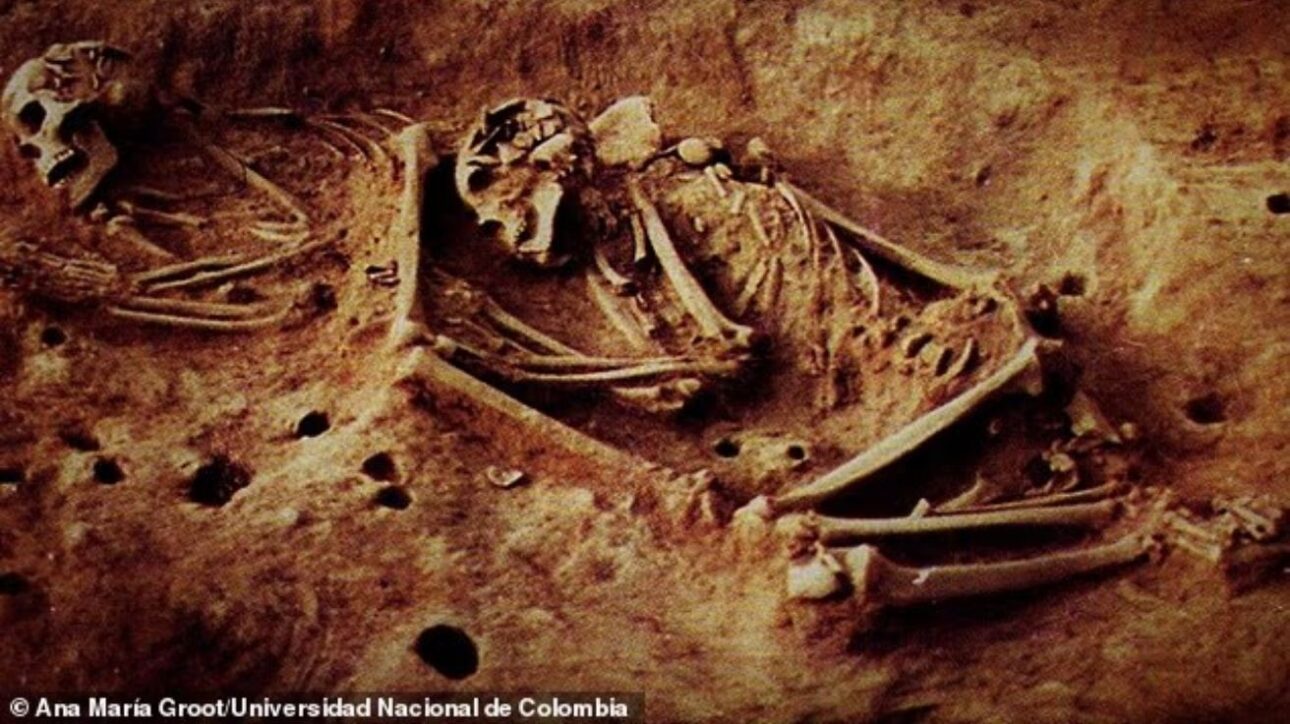
Modern archaeology has advanced through the intersection of excavations and ancient DNA analysis. In Checua, archaeologists found two skeletons of hunter-gatherers whose genetic profiles do not resemble any other group in the region, neither north nor south of the continent. This people does not share ancestors with ancient inhabitants of Chile, Brazil, or even North America.
Archaeologist Kim-Louise Krettek, the lead author of the research, states that these individuals are part of a human lineage that diverged from the others soon after the arrival of the first humans on the continent and remained genetically isolated for thousands of years. In this case, genetic archaeology revealed not only a people but also their complete disappearance.
Curiously, even the male genetic markers, such as Y-DNA Q1b1a, common among Native American peoples, were present. However, the rest of the genetic material showed no relation to the populations that later lived in Colombia or its neighboring countries.
Field archaeology found no signs of violence, war, or genocide. The disappearance of this lineage seems to have occurred gradually, possibly due to interbreeding or population replacement.
Archaeology Reveals a Silent Population Replacement in Ancient Colombia
About 2,000 years ago, the Bogotá Altiplano region underwent a radical population transformation. The genetics of the inhabitants changed completely, replaced by a group whose genetic traits resemble those of ancient Panamanians and modern Chibchan-speaking peoples in Costa Rica and Panama.
This change coincides with the arrival of the Herrera tradition, an agricultural culture with mastery of pottery. These new peoples brought technologies and possibly introduced Chibchan languages to Colombia. Still, archaeology found no evidence of conflict: the transition appears to have occurred without violence, perhaps through marriages between groups or simple cultural displacement.
Andrea Casas-Vargas, a researcher and archaeologist at the National University of Colombia, emphasizes that the complete genetic disappearance of the Checua is rare, as genetic archaeology has shown continuity between ancient and modern Andean peoples. The case of Checua is an impressive exception.
The find represents the first ancient DNA analysis conducted on Colombian territory and could inaugurate a new phase of genomic archaeology in Latin America. Other nearby regions, such as western Colombia, Venezuela, and Ecuador, have yet to be genetically studied — and may hide similar stories.
Genetic Archaeology Sheds Light on the Settlement Routes of the Americas
The discovery at Checua raises new hypotheses about prehistoric migration routes on the continent. The so-called Istmo-Colombiana region, which stretches from Honduras to the Colombian Andes, is pointed out as a transition point between the main cultural domains of the Americas: Mesoamerica, the Amazon, and the Andes.
Genetic archaeology shows that the first inhabitants of this region have no direct connection with modern Indigenous populations, reinforcing the idea that multiple waves of migration, replacement, and isolation marked the continent’s settlement. With each new discovery, the maps of prehistory are being redrawn.
Language also helps tell this story. The current hypothesis is that the original speakers of proto-Chibchan migrated from southern Central America to northern South America, where they established new communities. But archaeology and genetics indicate that the Checua did not belong to this line.
In this case, archaeology reveals more than artifacts: it reveals the very absence of heritage. An entire people, with their own culture, language, and habits, vanished without leaving genetic traces — a rare anomaly that challenges easy explanations.
The Future of Genetic Archaeology in South America Begins in Colombia
Colombia is just beginning to explore its genetic past. The discovery of the extinct lineage in Checua is a milestone for the archaeology of the continent. Regions like the Altiplano, previously viewed only for their cultural significance, now gain new importance as keys to understanding the origins and evolution of South American peoples.
Professor Cosimo Posth, a co-author of the study, warns that genetics should not be confused with cultural identity. Modern Indigenous communities, such as the Muisca, have the right to their cultural heritage, irrespective of genetics.
Respect for science and traditions intersects here: archaeologists work side by side with Indigenous leaders to interpret findings in a respectful and collaborative manner. Archaeology, after all, is not just about the past, but also about how we choose to remember and honor that past.
In the coming years, further excavations and genetic analyses may reveal new human lineages, forgotten peoples, and still-unknown routes. Archaeology is just beginning to uncover the secrets buried beneath Colombian soil.









-

Uma pessoa reagiu a isso.