





 Portuguese
  English
  Spanish
  3 min of reading
  0 comments


1600-Year-Old Bronze Artifact Used for Drinking Wine, Beer, and Fruit Juice Discovered
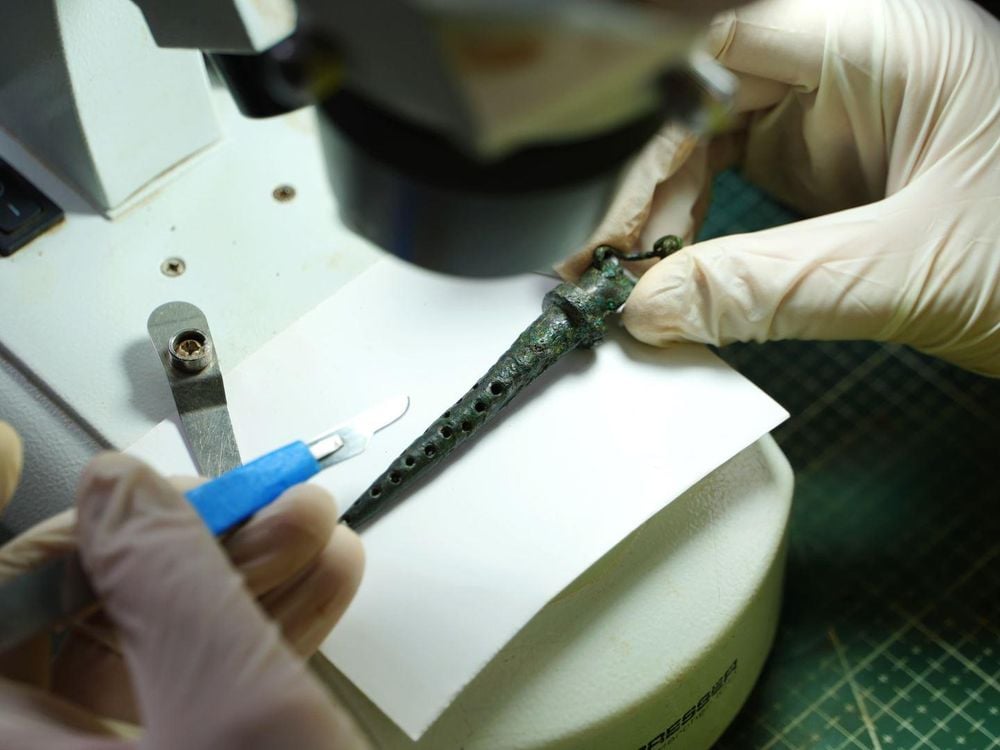
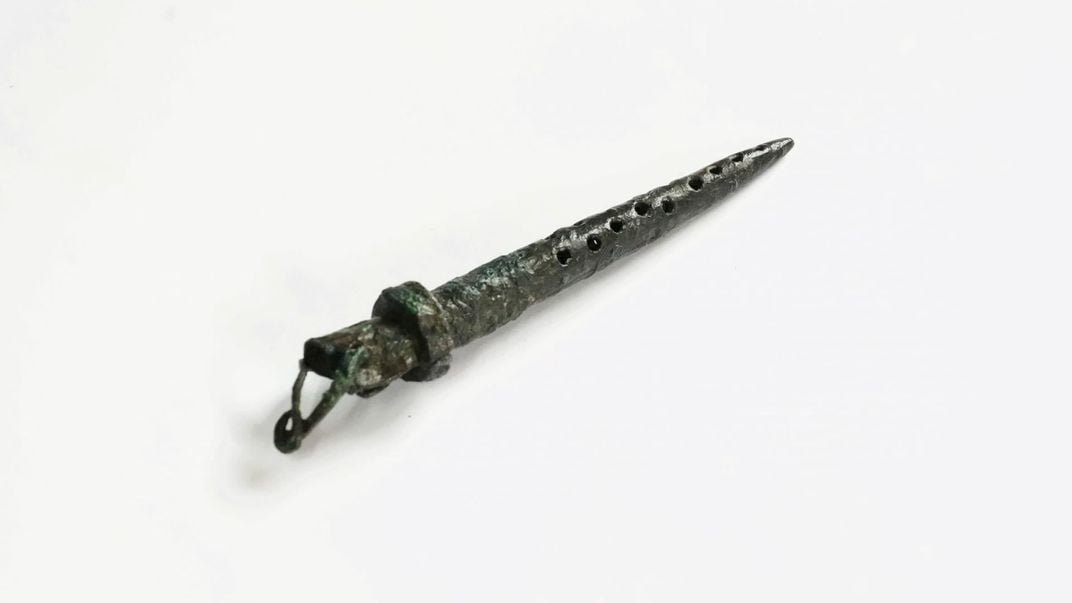
Archaeologists made a fascinating discovery in the ancient city of Hadrianopolis, in western Turkey. During excavations, they found an unusual bronze artifact, studded with holes. The object, resembling an ice cream cone and measuring 9 cm long, astonished specialists. It was attached to a ring, likely used for carrying it.
The piece drew attention for its practical use. About 1600 years ago, the region’s inhabitants consumed drinks such as wine, beer, and fruit juices.
But there was a problem: these drinks often contained large grains, pulp, and unwanted residues from the production process. To deal with these impurities, they created an innovative solution: a reusable bronze filter.
-
Italian researchers have detected what appears to be a second Sphinx buried under the sands of Egypt, and satellite scans reveal a gigantic underground megastructure hidden beneath the Giza Plateau for over 3,000 years.

-
There are 4,223 drums and 1,343 metal boxes concreted with 50-centimeter walls that store the radioactive waste from Cesium-137 in the worst radiological accident in Brazil, just 23 kilometers from Goiânia, with environmental monitoring every three months.

-
Giant Roman treasure found at the bottom of Lake Neuchâtel in Switzerland reveals an advanced trade system, circulation of goods, and armed escort in the Roman Empire about two thousand years ago.
-
He buried 1,200 old tires in the walls to build his own self-sufficient house in the mountains with glass bottles, rainwater, and an integrated greenhouse.
This filter could be attached to the end of a straw made from plant materials, such as reeds or cane. Thus, when drinking, people avoided solid pieces reaching their mouths. The discovery reveals not only the ingenuity of the ancient inhabitants but also an aspect of daily life at the time.
Karabük University
A Practical and Reusable Bronze Device
Ersin Çelikbaş, archaeologist at Karabük University and leader of the excavations, highlighted the practicality of the artifact.
According to him, the filter was cleaned and reused repeatedly during the 5th century AD. “Today, straws are made of plastic, but in the past, straws were made from plant materials and, with the addition of filtered bronze, people in antiquity enjoyed their drinks more comfortably and healthily,” Çelikbaş explained to Türkiye Today.
The city of Hadrianopolis, named after the Roman emperor Hadrian, was inhabited from the 1st century BC to the 7th century AD. During the 5th century AD, it was a prosperous agricultural center.
The inhabitants cultivated grains and fruits, such as barley, wheat, apples, grapes, and pomegranates. These products were widely used to produce wine, beer, and juices.
Hadrianopolis: An Agricultural and Cultural Center
In addition to the bronze filter, archaeologists discovered other important artifacts and structures in Hadrianopolis. The findings include churches, baths, a defensive structure, stone tombs, a villa, water cisterns, a castle, and the city’s outer wall. Vibrant mosaics depicting animals and rivers were also found, revealing the artistic side of the ancient city.
Hadrianopolis became known as the “Zeugma of the Black Sea” due to its cultural wealth and archaeological finds.
The city was inhabited during the Late Chalcolithic, Roman, and Early Byzantine periods. However, it was mysteriously abandoned. Archaeologists believe the abandonment may have been caused by an earthquake or an invasion, but the exact cause remains unknown.
Discoveries That Reveal Ancient Daily Life
The finds in Hadrianopolis are not limited to the bronze filter. Earlier this year, researchers unearthed two tokens made of bone.
According to the archaeologists, these pieces may have been used by Roman soldiers in board games during the 5th century AD. Such games were common among military personnel, serving as a pastime in times of peace or between battles.
Another significant discovery occurred last fall: a bronze pendant decorated with an image of King Solomon. The depiction shows the king riding and using a spear to defeat the devil. This find suggests religious and symbolic aspects that were part of the local culture.
Heritage Preservation Project
The Turkish Ministry of Culture and Tourism is coordinating excavations in Hadrianopolis through the “Heritage for the Future Project.” This initiative aims to preserve and highlight the historical importance of the region. The excavations continue to reveal valuable details about the way of life, customs, and technological innovations of the ancient inhabitants.
The discovery of the bronze filter highlights an unusual facet of this past. It shows that even 1600 years ago, people were seeking practical and efficient ways to make beverage consumption more enjoyable. A simple object that reveals much about the creativity and daily life of an ancient civilization.
With information from smithsonianmag










Seja o primeiro a reagir!