





 Portuguese
  English
  Spanish
  4 min of reading
  0 comments


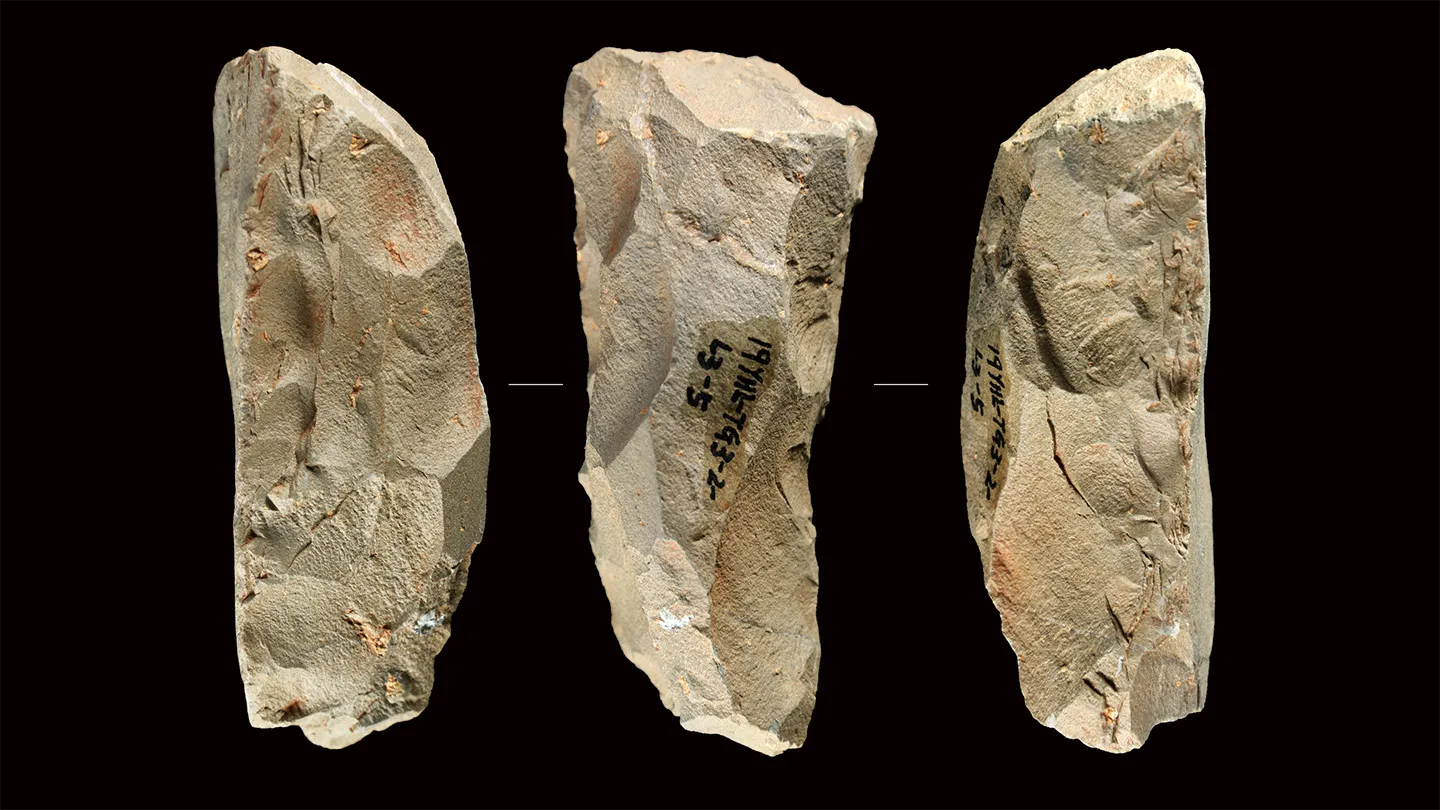
In A Recent Excavation, Archaeologists Located A Stockpile Of Stone Tools Attributed To Neanderthals. The Discovery Helps To Understand How They Organized Their Daily Lives, Showing Technical Skills And Planning In The Use Of Available Resources Thousands Of Years Ago.
An archaeological find in China surprised scientists. Stone tools, buried in red soil and up to 60,000 years old, were found in Longtan, in Yunnan province. They are nearly identical to those used by Neanderthals in Europe during the Ice Age.
So far, this type of stone tool, called Quina, had only been seen thousands of kilometers away, usually alongside Neanderthal fossils. The discovery raises new questions about the presence or influence of these hominins in East Asia.
A Style Of Stone Tool That Should Not Be There
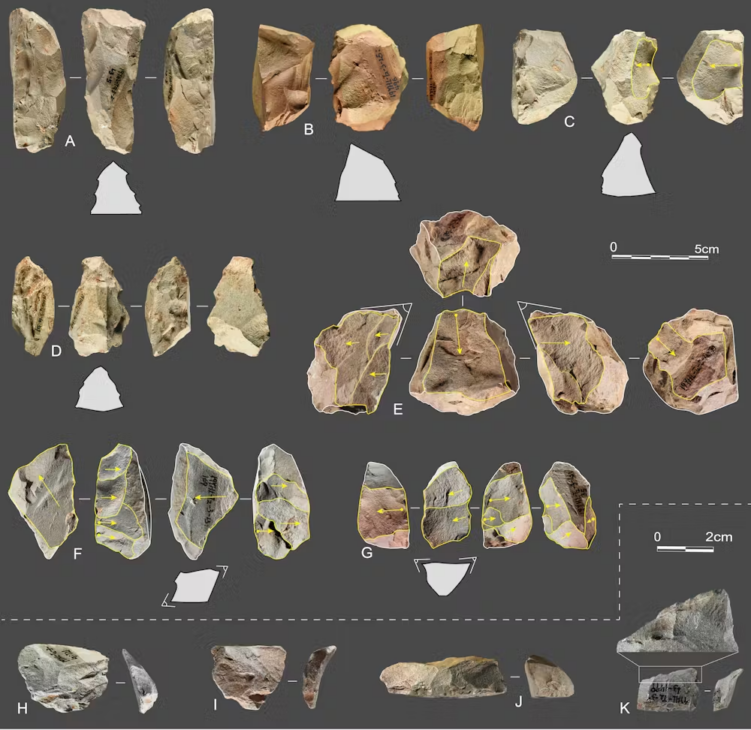
The objects were excavated between 2019 and 2020. They are thick and sharp scrapers, made with great care and specific standards.
-
The Android as we know it has its days numbered after a new rule from Google that could end free APKs and completely transform the system by 2027.

-
Archaeologists use satellite technology and find a mysterious structure of 500 m² buried up to 6 meters beneath an ancient city in Egypt.
-
Supercomputer calculates when humanity may disappear from Earth, predicts a scorching supercontinent, temperatures of up to 70 degrees, and a planet moving towards becoming uninhabitable.

-
INMET danger alert: heavy rains between the 3rd and 4th may drop up to 100 mm/day and winds of 60 to 100 km/h in several regions of Brazil require extra caution.

They show clear marks of successive retouching, a strong characteristic of the Quina style. This method of manufacturing has always been regarded as a signature of European Neanderthals.
However, the Longtan archaeological site is over 7,000 kilometers from the known regions of these hominins. This makes the discovery even more intriguing. How did this technology get there? Who used it?
Scientists applied optical luminescence dating to confirm the age of the material. The technique measures how long sand grains have been exposed to sunlight.
The result: between 50,000 and 60,000 years. But the main question remains unanswered.
Who Made The Tools?
No human bones were found at the site. There is also no DNA. Therefore, there is no way to say for sure who created the artifacts.
But the traces are clear: someone used those tools exactly as European Neanderthals did.
According to researcher Hélène Monod from Universidad Rovira i Virgili in Spain, the pieces show signs of use on meat, bones, wood, and plants.
Some tools were used for a long time, retouched and repurposed. This indicates a continuous and well-established practice.
Neanderthals Or Imitators?
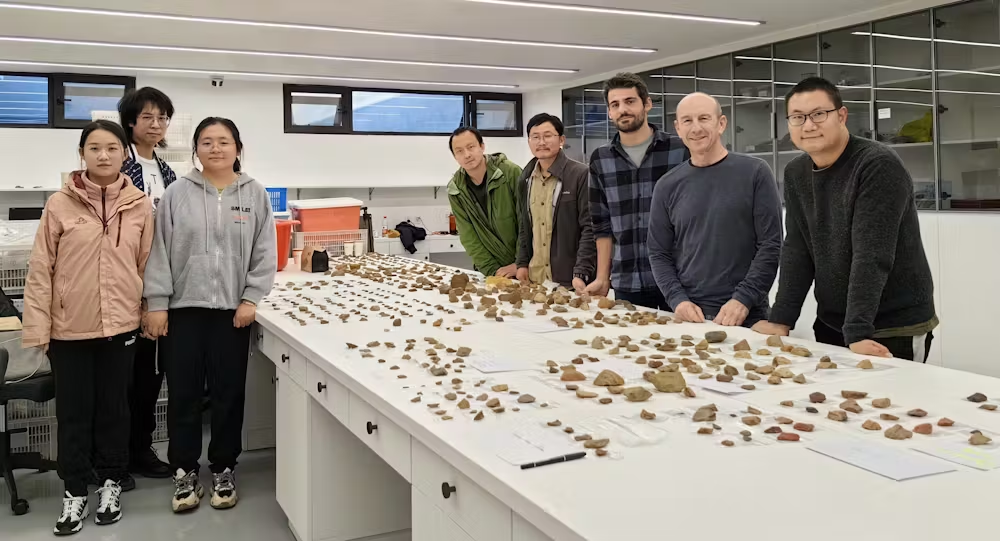
Two main hypotheses are considered by scientists. The first is that Neanderthals themselves migrated to China.
They are already known to have lived up to the Altai Mountains region, relatively close by. An even greater expansion to Yunnan would be possible.
The other hypothesis is that another species — perhaps the Denisovans — developed a tool style similar to that of Neanderthals.
This similarity may have arisen from cultural convergence, meaning different peoples creating similar solutions to the same challenges.
There may also have been some type of contact between groups. A Neanderthal could have taught the technique to another people. From there, the idea could have spread.
A New Chapter In Human Evolution
For a long time, scientists thought that populations in the region had skipped what is called the Middle Paleolithic, a transitional period with many innovations.
But the Longtan tools prove the opposite. They show that there was experimentation, technique, and adaptation there too. The Middle Paleolithic was, in fact, a much more global period than previously thought.
Still, one question remains: why do we find so few tools of this type in Asia?
According to archaeologists, this may have to do with the focus of research. Europe, with many well-known fossil sites, has received more attention over the decades. In contrast, Asia has been less excavated and often judged by European standards.
Next Steps
To better understand who made these tools, scientists hope to find more similar sites.
The idea is to dig deeper, older layers. If they contain signs of experiments with tools that evolved into the Quina style, this would indicate a local origin.
If, on the other hand, the deeper layers only have other types of artifacts, the theory that the technology came from outside gains strength.
Archaeologist Ben Marwick, one of the study’s authors, says that whatever the answer, one thing is certain: the creators of these tools were creative and flexible. They knew how to adapt their technology to the environment they lived in.
The study was published in the scientific journal PNAS, one of the most respected in the world. And marks the beginning of a new phase in investigations about human past in Asia.









-

Uma pessoa reagiu a isso.