





 Portuguese
  English
  Spanish
  5 min of reading
  0 comments


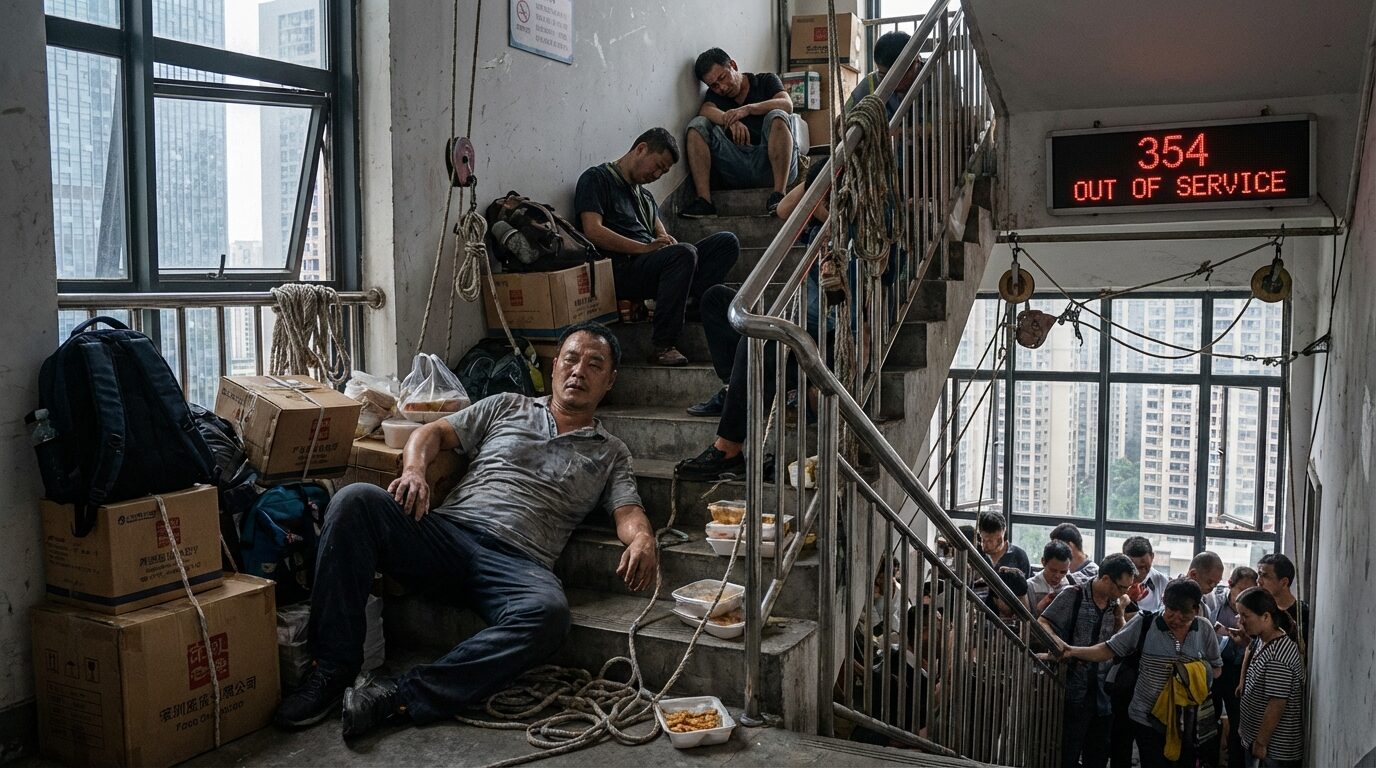
In Shenzhen, Metropolis of 18 Million Inhabitants, Skyscrapers and Crowded Elevators Created a Bottleneck in Food Deliveries. According to the New York Times, Waiting for an Elevator Can Take Up to Half an Hour at the SEG Plaza. In This Vacuum, a Microeconomy Emerged That Outsources the Last Mile of Delivery for Small Commissions.
A report from the New York Times, echoed by Xataka Brasil, shows how the logistics of apps have stalled in super-tall buildings in China. In Shenzhen, time pressure and algorithms pushed workers to informal and quick solutions. Inside the SEG Plaza, with 70 floors, the order arrives at the door, but the elevator becomes the major obstacle.
To work around the problem, the “deliverers for deliverers” were born. They pick up the food at the entrance and make the final ascent to the customer for a fee. This practice, tolerated and without a contract, has become an invisible link in the delivery chain.
These intermediaries are generally teenagers and retirees trying to make some quick money. The scenario reveals a portrait of the informal economy that thrives where the big city fails.
-
The Argentine government celebrates the lowest poverty rate in 7 years, but experts warn that the methodology has changed, real wages have fallen, unemployment has risen, and the number of people on the streets of Buenos Aires has increased by 57% since Milei took office.

-
7.8 magnitude earthquake in Indonesia frightens the population, triggers tsunami alert, and hits an island with over 200,000 inhabitants this Thursday.

-
Google will finally let you change that embarrassing Gmail address you created in your teenage years without losing any accounts, logins, or old emails: the feature is already available in the United States.

-
Heading to Brazil in a Bonanza F33 single-engine aircraft: a couple departs from Florida on a visual flight, makes technical stops in the Caribbean to refuel and organize paperwork, and begins the staged crossing until they reach the country.


In Shenzhen, Skyscrapers Create Bottlenecks in Elevators and Deliveries Are Delayed at the SEG Plaza
During peak hours at the SEG Plaza, the elevator line stretches and waiting can take up to 30 minutes, according to the New York Times. For official deliverers, every minute spent waiting reduces earnings, worsens ratings, and increases the risk of penalties on the apps.
The dilemma is simple and costly for those working on motorcycles or scooters in the streets. If they go up, they lose other orders; if they give up, they lose the race. Hence the improvised solution that only outsources the slowest stretch, the vertical.
Deliverers for Deliverers Emerge, Teenagers and Retirees Make the Last Mile


The case of Li Linxing, aged 16, illustrates this new role, according to Xataka Brasil. He waits in front of the building for orders and says he earns about 100 yuan per day (approximately R$ 75), a sum that attracted him despite intense competition.
For about R$ 1.50 per order, Li faces crowded elevators, long corridors, and the pressure of the clock. There are no contracts, rights, or insurance, just the promise of a quick turnaround for small commissions. For many, it is the only immediate source of income.
The scene is repeated with students on vacation and seniors trying to supplement their budget. The constant flow of dishes and lunch boxes moves an informal army that depends on the doormen’s goodwill, luck with the elevator, and customers who cannot wait.
The model is as organic as it is volatile. One day yields well, the next, almost nothing. But as long as deadlines are tight and buildings tall, the service finds demand.
How the Scheme Works in the Daily Life of Apps
The official deliverer arrives on a scooter, delivers the bag at the door, and scans a QR Code to validate the first stage, reports the New York Times. Then, he passes the task of the last stretch to the substitute, who goes up, locates the customer, and confirms the delivery.
Some have professionalized. Shao Ziyou, known for setting up the first “shop” in front of the SEG Plaza, created a small network of assistants and takes a percentage per order. On busy days, he manages to coordinate between 600 and 700 deliveries, according to the report.
Competition Explodes and Pushes Prices Down, with Penalties and Fights Around the Building
With more people trying to get a piece of the market, competition has become aggressive. According to the New York Times, arguments over wrong addresses and delays have become common on the street, as apps penalize official deliverers for any failure and the pressure falls on the intermediaries.
To gain volume, some charge even less for the ascent, compressing already minimal margins. The risk of error is high and the reward small, but the line of those willing to work under such conditions remains long.
Without clear rules, each building becomes its own ecosystem, with informal agreements, territory disputes, and improvised logistics that adapt to the peak lunch and late afternoon times.
Legal Vacuum Persists Even After Intervention, Those Under 16 Are Barred but Precarity Continues
Operation without contracts and social protection raised alarms. The controversy gained strength with viral videos showing school-aged children trying their luck with deliveries inside buildings, according to Xataka Brasil.
After intervention by local authorities, only those over 16, like Li, can continue. Still, the work continues in a legal vacuum, without labor guarantees, assistance, or insurance for accidents.
The Portrait of a Megacity, Microeconomy That Reveals the Soul of Shenzhen
What happens at the foot of the SEG Plaza condenses the paradoxes of Shenzhen, the city-symbol of Chinese economic opening. Skyscrapers that drive business also create new everyday bottlenecks, opening space for creative and precarious solutions.
For urbanism and labor specialists, this is an “economy within the economy,” typical of megacities that grow faster than their infrastructure. It appears where there is friction, lost time, and pressure for efficiency.
As platforms prioritize speed and ratings, and buildings rise ever higher, the trend is that the last mile of deliveries will continue to be a blind spot in the system. Amid this corridor are the workers who literally carry the weight of the city.
What do you think about this “profession” that arose from haste, crowded elevators, and increasingly rigid app goals? Should it be regulated or curtailed, considering there are teenagers and seniors involved? Leave a comment and share whether this improvised solution solves the problem or merely masks the precarization of urban labor.







Seja o primeiro a reagir!