





 Portuguese
  English
  Spanish
  4 min of reading
  0 comments


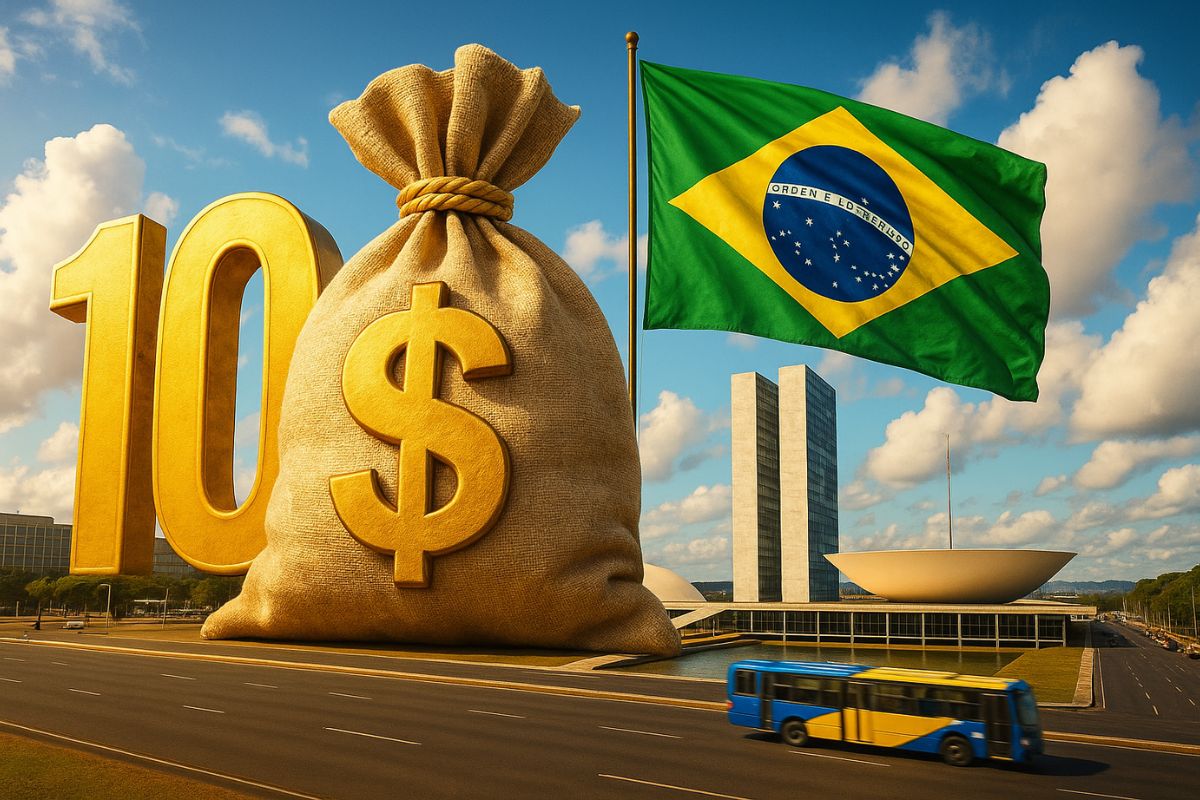
Decisions Inspired by the Washington Consensus Shaped the Country in Recent Decades with Gains and Losses that Still Divide Experts
In the 1990s, the Brazilian economy underwent a shock of reforms inspired by the so-called Washington Consensus, a set of ten guidelines created in 1989 to deal with the Latin American crisis. The promise was to stabilize currencies, attract investments, and integrate emerging countries into global trade.
The package included measures such as fiscal discipline, privatizations, trade liberalization, and competitive exchange rates. Although it helped tame hyperinflation and boost foreign capital inflows, it also generated lasting side effects, such as deindustrialization and increased inequality.
What Was the Washington Consensus
The term was coined by British economist John Williamson to describe a “common minimum denominator” of policies advocated by institutions such as the IMF, World Bank, and the U.S. Treasury Department. Created at the height of hyperinflation in Brazil and Argentina, the consensus aimed to stabilize indebted economies and integrate them into the global system.
-
BRICS is building its own payment system that could be operational by 2030, and experts say it could increase trade between the countries by up to 10% per year and add 3% to the GDP of each member of the bloc.

-
Government suspends over 3 million traffic fines in Brazil and drivers breathe a sigh of relief.

-
Iran has just approved toll charges for ships in the Strait of Hormuz and has completely prohibited the passage of vessels from the United States and Israel in the world’s most important maritime route for the global energy market.

-
Government cancels R$ 25 million “celebration” for Brasília’s anniversary and allocates funds to health.


In practice, the recommendations were more than mere advice. Countries that adopted them had greater access to international credit and favorable debt restructuring conditions. In the Brazilian case, these ideas began to gain traction during Collor’s administration and were consolidated under Fernando Henrique Cardoso’s management.
The 10 Rules That Guided the Brazilian Economy
The guidelines proposed by the Washington Consensus became known as the “10 Economic Commandments”:
- Fiscal Discipline – control over public deficit and debt/GDP ratio.
- Redirecting Spending – cuts in subsidies and prioritization of health, education, and infrastructure.
- Tax Reform – simplification of taxes and broadening the tax base.
- Market Interest Rates – avoiding artificial controls and attracting external capital.
- Competitive Exchange Rate – incentives for exports and prevention of currency overvaluation.
- Gradual Trade Liberalization – predictable reduction of import tariffs.
- Liberalization of Foreign Investment – facilitating the entry of productive capital.
- Privatizations – transfer of state-owned enterprises to private initiative.
- Deregulation – reduction of barriers for opening and operating businesses.
- Guaranteeing Property Rights – legal security for contracts and patents.
These measures, although officially non-mandatory, came with the implicit expectation that non-compliance could hinder the release of international resources.
Positive Impacts on the Brazilian Economy
The adoption of these rules helped the country dramatically reduce inflation with the Real Plan, stabilize the currency, and attract foreign investments, especially in the telecommunications and energy sectors.
There was also an increase in Brazil’s participation in the international financial market. Today, over 50% of trading on B3 involves foreign capital, and government bonds continue to be purchased by foreign investors, strengthening the liquidity of the National Treasury.
The Side Effects and the Criticisms
Despite the gains, results were not uniform. The Brazilian economy went through a process of deindustrialization: the industry’s share of GDP fell from 27% in 1986 to 11% in 2018. Social inequality worsened, with income becoming even more concentrated at the top.
Moreover, critics argue that privatizations favored private monopolies and, in some cases, involved values considered below market, such as the sale of Vale for R$ 3.3 billion in 1997. Authors like Ha-Joon Chang, in the book Kicking Away the Ladder, assert that rich countries used state strategies to grow but recommended liberal policies to developing nations, creating an implicit barrier to their ascent.
What Came After
From the 2000s onwards, parts of Latin America began to reevaluate or break away from the model. Leftist governments like Lula in Brazil, Hugo Chávez in Venezuela, and Evo Morales in Bolivia sought more heterodox policies, prioritizing social programs and greater state intervention.
The IMF, for its part, abandoned its rigid guidelines and began recommending solutions tailored to local realities. Countries like Malaysia, which rejected the rules during the 1997 Asian crisis, experienced a faster recovery than neighbors that followed the guidelines to the letter.
The Legacy for the Brazilian Economy
Today, many instruments of the Washington Consensus still shape Brazilian economic policy, such as the macroeconomic tripod (inflation target, floating exchange rate, and primary surplus). At the same time, the debate over the role of the state and the market remains open, with supporters and critics pointing to opposing paths for the future.
Do you agree with these changes in the Brazilian economy? Do you believe they helped or harmed the country in the long run? Leave your opinion in the comments; we want to hear from those who lived or studied this transformation up close.










-

Uma pessoa reagiu a isso.