





 Portuguese
  English
  Spanish
  6 min of reading
  0 comments


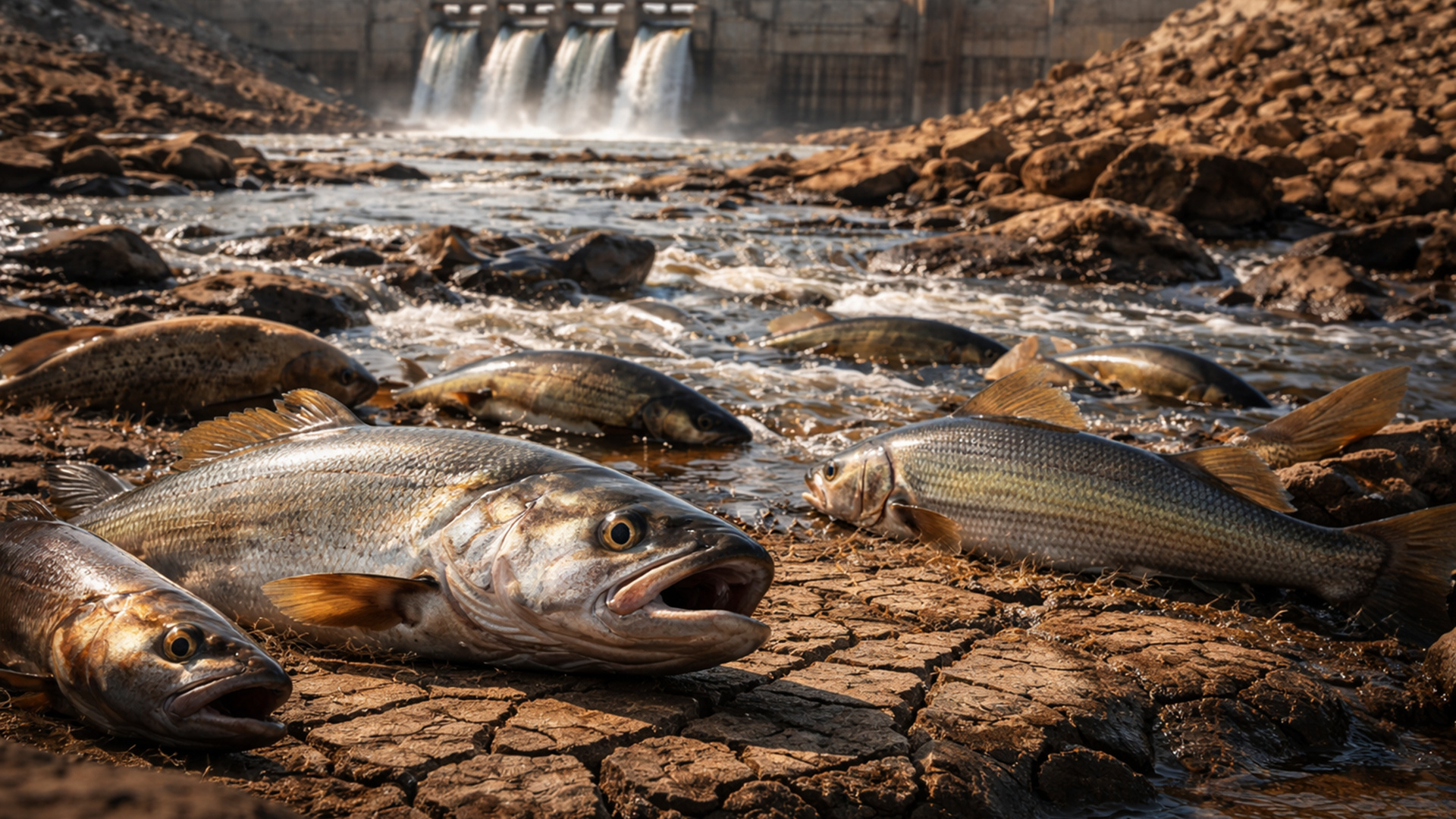
A global assessment presented at COP15 of the Convention on Migratory Species indicates that freshwater migratory fish have lost about 81% of their populations since 1970, in a crisis linked to dams, pollution, overfishing, and river fragmentation
The migrations of freshwater fish, among the longest and most important on the planet, are entering a rapid collapse, according to an assessment presented at the 15th Conference of the Parties of the Convention on the Conservation of Migratory Species of Wild Animals, held in Brazil. The diagnosis points to deep declines in populations and warns that the reconnection of rivers through international cooperation is crucial to avoid even greater losses.
The global assessment released at the meeting indicates that freshwater migratory fish are among the most threatened wildlife species on the planet. In addition to their ecological value, these species support continental fisheries and contribute to the food and livelihoods of hundreds of millions of people.
The report was prepared by scientific experts from CMS based on extensive global datasets and assessments from IUCN on nearly 15,000 species of freshwater fish. The result, according to the document, is the most comprehensive overview ever produced on the conservation needs of freshwater migratory fish.
-
Crotalaria, mucuna, and other cover crops stop being “weeds” between harvests and become central to agriculture by improving the soil, adding biomass, and enhancing green fertilization in vegetable production.

-
Coruripe Mill secures international financing of R$ 530 million and boosts the sugar-energy sector.

-
The sugar-energy sector advances with agricultural technology, but agricultural productivity still raises concerns.

-
The eggshell that almost everyone throws away is made up of about 95% calcium carbonate and can help enrich the soil when crushed, slowly releasing nutrients and being reused in home gardens and vegetable patches.


Collapse of migrations exposes a little-visible crisis in rivers
The document identifies 325 species of freshwater migratory fish as candidates for coordinated international conservation actions under CMS, in addition to the 24 species already listed in Appendices I and II of the convention. The regional distribution shows 205 species in Asia, 55 in South America, 42 in Africa, 50 in Europe, and 32 in North America, with overlap between continents in some cases.
According to the assessment, many of these species depend on interconnected rivers that cross national borders and are rapidly declining. Among the main factors identified are dam construction, habitat fragmentation, pollution, overfishing, and climate-related ecosystem changes.
The priority watersheds include the Amazon and the Paraná-Plata River in South America, the Danube in Europe, the Mekong in Asia, the Nile in Africa, and the Ganges-Brahmaputra in the Indian subcontinent. The report argues that the crisis spreads across shared river systems in various parts of the world and remains largely neglected.
The assessment also highlights that freshwater species are declining more rapidly than terrestrial or oceanic species. Nevertheless, the collapse of freshwater migratory fish has received little global attention.
Many of these fish depend on long stretches of uninterrupted rivers, linking breeding, feeding, and nursery areas in floodplains. When dams, changes in river flow, or habitat degradation break these pathways, populations can decline rapidly.
The numbers compiled by the assessment show the scale of the loss. Global populations of freshwater migratory fish have declined by about 81% since 1970, while 97% of the 58 migratory fish species listed by CMS, including freshwater and saltwater species, are already at risk of extinction.
International protection and river management emerge as central axes
The report states that the effective protection of these species depends on treating rivers as interconnected systems, rather than as isolated national resources. This logic, according to the document, is essential because more than 250 transboundary rivers and lakes exist in the world, and approximately 47% of the Earth’s surface is situated within common watersheds.
Among the measures identified as immediately implementable by governments are the protection of migratory corridors and environmental flows. The text also mentions basin-scale action plans, transboundary monitoring, and coordinated seasonal fishing.
The assessment argues that cooperation between countries is essential to prevent the worsening of the collapse. The focus, according to the document, should be on keeping rivers connected, productive, and capable of sustaining the species and ecosystems that depend on them.
The lead author of the assessment, Dr. Zeb Hogan, stated that many of the world’s great wildlife migrations occur underwater. According to him, the study shows that freshwater migratory fish are facing serious difficulties and that their protection will require joint efforts between countries to keep rivers connected, productive, and full of life.
Amy Fraenkel, Executive Secretary of CMS, stated that the new assessment highlights a conservation priority that has not received the attention it deserves until now. She said that by aligning science, public policy, and international cooperation, governments can protect the remaining great migrations of freshwater fish, as well as the communities and ecosystems that depend on them.
Michele Thieme, Vice President and Freshwater Lead of WWF-US, stated that rivers do not recognize borders, and the same is true for the fish that depend on them. According to her, the ongoing crisis under waterways is more severe than most people realize and requires coordination beyond borders and investments in basin-scale solutions before these migrations are lost forever.
Amazon and Plata Basin concentrate proposals presented by Brazil
Brazil, the host country of COP15, presented proposals related to the two largest river systems in South America: the Amazon and the Paraná-Plata River. The measures are among the most ambitious international efforts mentioned in the document to protect freshwater migratory fish.
The assessment points out that the Amazon Basin remains one of the last great strongholds for these fish, although increasing development pressures threaten this condition. A case study released alongside the assessment identified 20 species of migratory fish from the Amazon that meet the criteria for possible inclusion in Appendix II of CMS.
These large long-distance migrants are described as emblematic of river migratory fish. According to the document, they account for about 93% of the fish landings in the Amazon and support a regional fishing activity valued at approximately $436 million per year.
Among the highlighted species is the golden catfish, identified by the scientific name Brachyplatystoma rousseauxii. The fish is described as a bottom-dwelling animal with metallic golden or silver skin, highly valued in commercial fishing and capable of reaching up to 2 meters in length.
The document records that the golden catfish undertakes one of the longest migrations in freshwater ever recorded. Its journey reaches 11,000 kilometers, from the Andean headwaters to coastal nurseries, being noted as the longest migratory life cycle in freshwater among fish.
To strengthen conservation, Brazil and other governments propose a Multi-Species Action Plan for the Amazon Migratory Catfish from 2026 to 2036. The proposal was developed from regional cooperation involving several countries.
Brazil also proposed the inclusion of the painted catfish, Pseudoplatystoma corruscans, in Appendix II of CMS. The justification presented highlights the need for coordinated actions in the Plata Basin, where the species is threatened by dams, changes in river flow, and fishing pressure.
Numbers reinforce the scale of loss and human dependence
The dataset compiled in the assessment includes nearly 15,000 species of freshwater fish analyzed with the support of the IUCN Red List and global databases. The document states that this database forms the broadest set of evidence ever gathered specifically for freshwater migratory fish.
In addition to the 325 species candidates for coordinated international actions, the numbers indicate Asia as the main global focus of species at risk, with 205 records. South America appears with 55 identified species, followed by Europe, Africa, and North America.
The data also reinforce the economic and food weight of these species in strategic regions. In the Amazon, the predominance of migratory fish in catches and the estimated annual value of fishing activity illustrate the practical reach of the crisis described in the report.
Throughout the assessment, the main response pointed out is the same at different scales: manage rivers as interconnected ecological systems. For CMS and the experts cited, the continuity of these migrations depends on coordinated actions between countries, focusing on connectivity, habitat protection, and joint management of watersheds.







Seja o primeiro a reagir!