





 English
  Francês
  Alemão
  Italiano
  Japonês
  Norueguês
  Portuguese
  Spanish
  5 min of reading
  0 comments


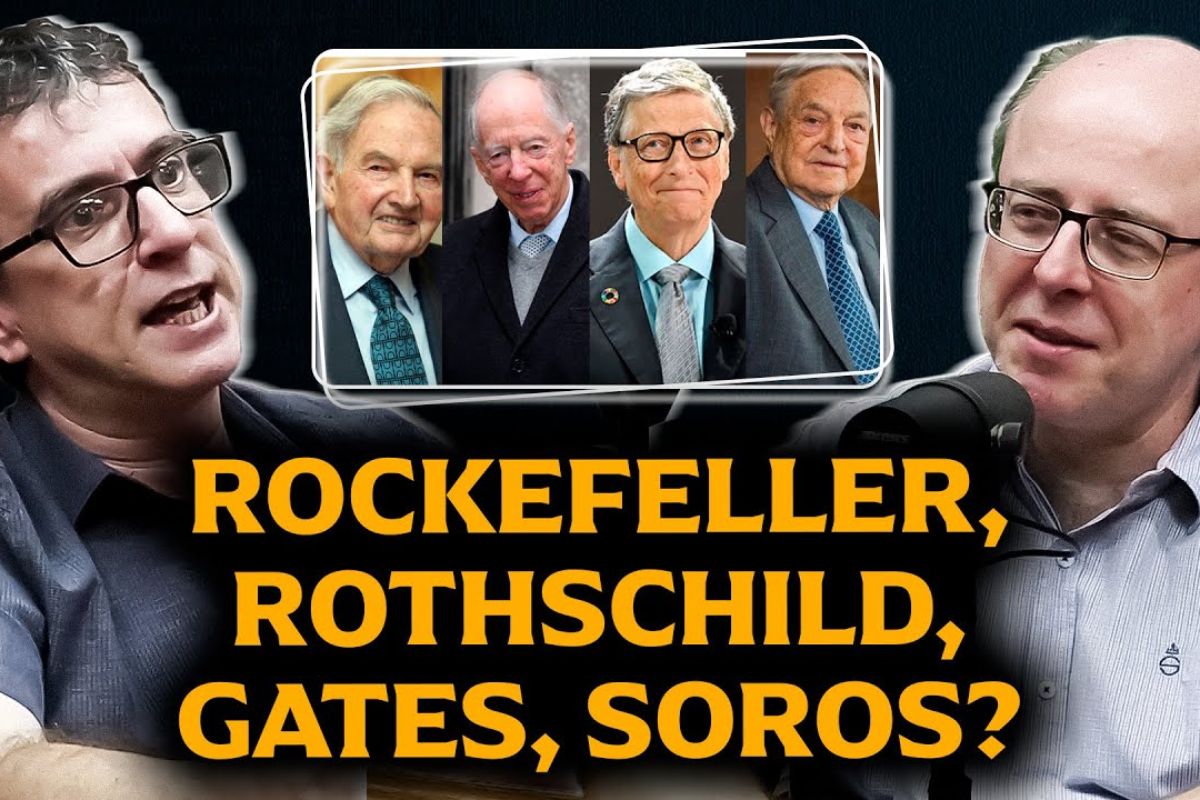
How The Discussion About The Most Powerful Families In The World Relates To Fortunes, Philanthropy, Banks And Megafunds, And Why Critical Reading Is Essential To Understanding What Real Power Is And What Perception Is
The Most Powerful Families In The World are often pointed out as protagonists of global networks of influence that weave together historical fortunes, investment banks, strategic philanthropy, and participation in megafunds. The narrative is seductive because it offers a guiding thread to explain complex economic and political decisions, but it requires methodology, evidence, and distinction between fact, interpretation, and hypothesis to avoid confusing influence with absolute control.
As Professors Alexandre da Costa and Marcelo Andrade explain, when analyzing names like Rockefeller, Rothschild, Gates, and Soros, a central question arises that drives the public debate: Who Influences What, With Which Instruments, and On What Scale. The answer lies in modern market structures, governance rules, regulatory transparency, and the various forms of exercising power that go far beyond a surname.
What It Means To Be Powerful In The 21st Century
Economic power is not just accumulated wealth.
-
Seen from space, a colossal ‘Y’ cuts through the largest desert in China, blending a jade-filled river, red and white mountains, and revealing the absurd scale of the transformation of the Taklamakan surrounded by a green wall with billions of trees.

-
The Pacific Ocean reveals what the cliffs of Big Sur have hidden for millennia: Pfeiffer Beach, in California, features swirling purple sand formed by garnet crystals and displays a stone arch that is illuminated by the sun in winter for just a few days each year.

-
Aursjøvegen in Norway is a 100-kilometer gravel road that crosses chasms and dark tunnels carved into the rock at an altitude of 947 meters in the fjords and is only open for four months a year.

-
With about 4,000 m², the building constructed in a traditional neighborhood in France looks like a rainbow, has a colorful facade, mixes vibrant glass, and creates one of the most unusual visuals in Bordeaux.


In contemporary financial capitalism, power also translates into access to information, coordination capacity, philanthropic agenda, and regulatory and cultural influence.
Families and individuals with many decades of activity become associated with decisions that transcend political cycles and borders.
Still, there is a distance between influence and direct command.
Listed companies, funds, and management firms operate under governance rules, accountability, and oversight that limit centralized decisions.
Confusing diffuse shareholding with vertical command can inflate the perception of control, producing conclusions that do not hold up when confronted with formal decision-making mechanisms.
The image of networks connecting historic fortunes, banks, foundations, and investment funds relies on some objective elements and others that are interpretative.
Among the objectives are family histories linked to finance, the creation of foundations that finance science, health, and education, and dispersed financial holdings in large companies.
Among the interpretative, there is the thesis of silent coordination, which attributes to a few agents the ability to direct entire markets.
The analytical challenge is to distinguish coincidence of interests from effective coordination.
Major investors may reach the same companies and sectors based on technical criteria of risk and return.
Without clear documentation of joint command, speaking of total cartelization becomes a hypothesis, not evidence.
Megafunds, Governance And The Public Reading
Global management firms and broad indices aggregate holdings in thousands of companies.
This creates the perception that a handful of actors dominates everything, when in practice there are investment mandates, committees, fiduciary goals, and regulations that shape behavior.
Financial concentration exists and deserves scrutiny, but governance limits unilateral decisions and imposes minimum transparency.
For the reader, the key is to ask how decisions are made, who votes, what the rules are, and what the degree of public disclosure is.
Without this data, attributing direct causality between a surname and a global outcome risks turning correlation into certainty.
Private foundations can influence research, public health, education, climate, and technology agendas by financing institutions, projects, and networks of experts.
This is legitimate influence within the law, but raises relevant questions: how to avoid conflicts of interest, what are the criteria for resource allocation, and how to audit impacts.
At the same time, philanthropy does not replace public policy. Nation-states continue to define regulatory frameworks, levy taxes, and adjudicate disputes.
Simplifying the world to decisions made by a few families ignores the strength of institutions, the press, civil society, and courts, which often challenge and limit private initiatives.
What Really Matters To Separate Myth From Fact
To assess the conversation about the most powerful families in the world, it is worth adopting a verification checklist: who is formally involved in decisions, what documents record votes and positions, what is public and auditable, what economic interests are at stake, and how regulators and minority shareholders react.
Without this minimum set, the analysis falls into generalizations, which explain everything but prove little.
Another point is not to confuse history with the present.
Families with a financial legacy may have very distinct roles today compared to the height of their activities.
The market changes, the rules change, the investment vehicles become more sophisticated, and the picture of power needs to keep pace with this dynamic to avoid freezing the debate in the past.
Responsible coverage requires technical language, context, and transparency about information limits.
It is legitimate to investigate concentrations of capital, corporate structures, and the agenda of large foundations, but it is equally necessary to avoid concluding total control without documentary evidence.
For the public, the best defense is financial and regulatory literacy: understanding how funds, boards, voting, and regulatory bodies function.
When the debate is elevated, readers, economic democracy, and the quality of public policies benefit.
Informed criticism does not criminalize philanthropy nor romanticize the market, and asks the right questions about power, responsibility, and accountability.
The discussion about the most powerful families in the world touches a sensitive nerve of our time: who decides the direction of money, technology, and policies that shape common life.
Separating legitimate influence from imagined control is the necessary step for a useful debate, focusing on governance, transparency, and social outcomes.
For you, what is the most reliable indicator of real power today: significant shareholding, the ability to set philanthropic agendas, or preferential access to regulators and opinion makers? Have you seen cases where public perception of dominance does not match the governance documents of a company? Bring concrete examples and professional experiences in the comments to enrich the analysis.









-

-

-

6 pessoas reagiram a isso.