





 Portuguese
  English
  Spanish
  4 min of reading
  6 comments


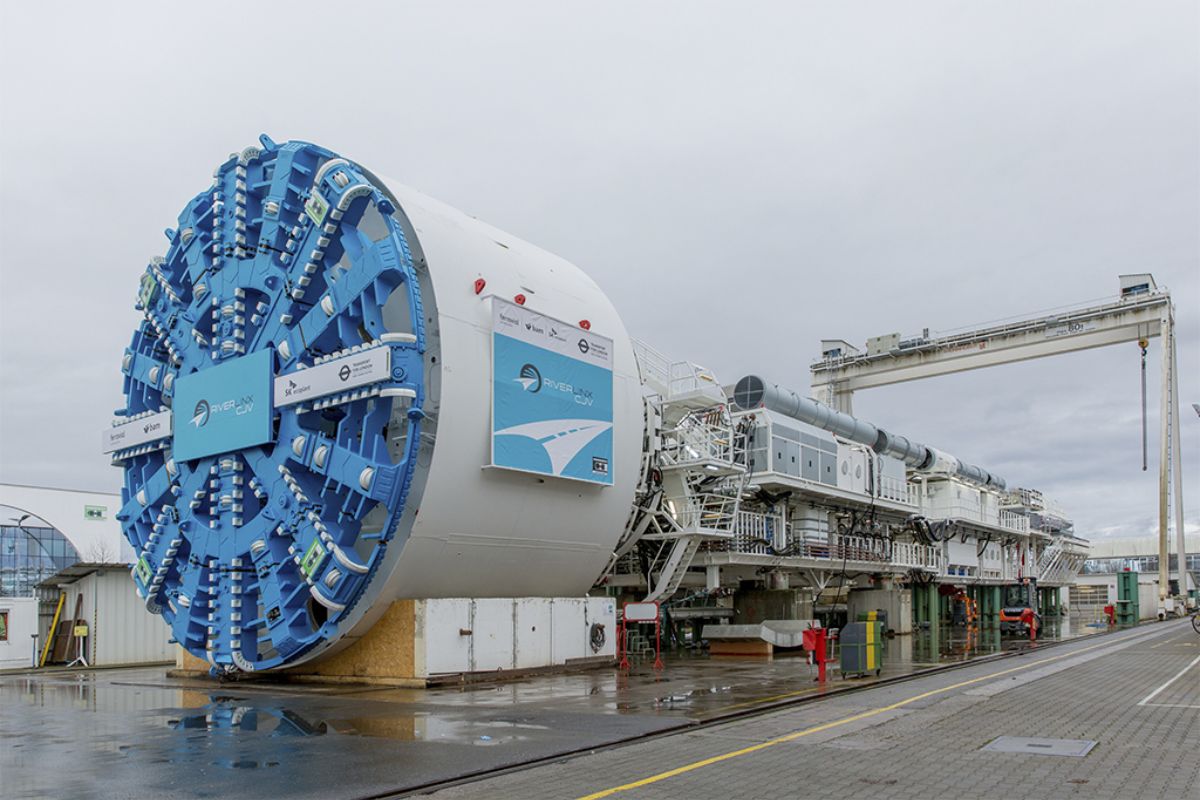

Meet the TBMs, Colossal Tunnel Boring Machines That Advance Meters Per Day, Excavating and Lining the Way with Concrete to Shape the Subterranean Infrastructure.
The tunnel boring machines (TBMs) are a pinnacle of civil and mechanical engineering, essential for excavating tunnels for subways, highways, sanitation, and other utilities. These “colossal steel worms” overcome geographic barriers and enable sustainable urban development, minimizing surface disruptions, especially in large metropolitan areas.
This article explores the universe of giant TBMs, typically with excavation diameters exceeding 10 meters, and some surpassing 15 meters. We will analyze the operation, types, construction process of these tunnel boring machines, the challenges faced, and innovations that promise to evolve mechanized tunneling.
The Crucial Role of Tunnel Boring Machines in Modern Infrastructure
TBMs are fundamental to modern infrastructure. They allow the installation of vital systems underground, a crucial factor in densely populated cities. The ability to operate discreetly beneath the urban fabric is essential for orderly growth and quality of life, making TBMs facilitators of contemporary urbanization.
-
Friends have been building a small “town” for 30 years to grow old together, with compact houses, a common area, nature surrounding it, and a collective life project designed for friendship, coexistence, and simplicity.

-
This small town in Germany created its own currency 24 years ago, today it circulates millions per year, is accepted in over 300 stores, and the German government allowed all of this to happen under one condition.

-
Curitiba is shrinking and is expected to lose 97,000 residents by 2050, while inland cities in Paraná such as Sarandi, Araucária, and Toledo are experiencing accelerated growth that is changing the entire state’s map.

-
Tourists were poisoned on Everest in a million-dollar fraud scheme involving helicopters that diverted over $19 million and shocked international authorities.


The development of tunnel boring machines is linked to the increasing complexity of urban environments. With the expansion of cities, underground solutions for mobility and services are pressing. Large-diameter TBMs enable high-capacity tunnels with significantly less surface impact compared to traditional methods.
How Complex Tunnel Boring Machines Work
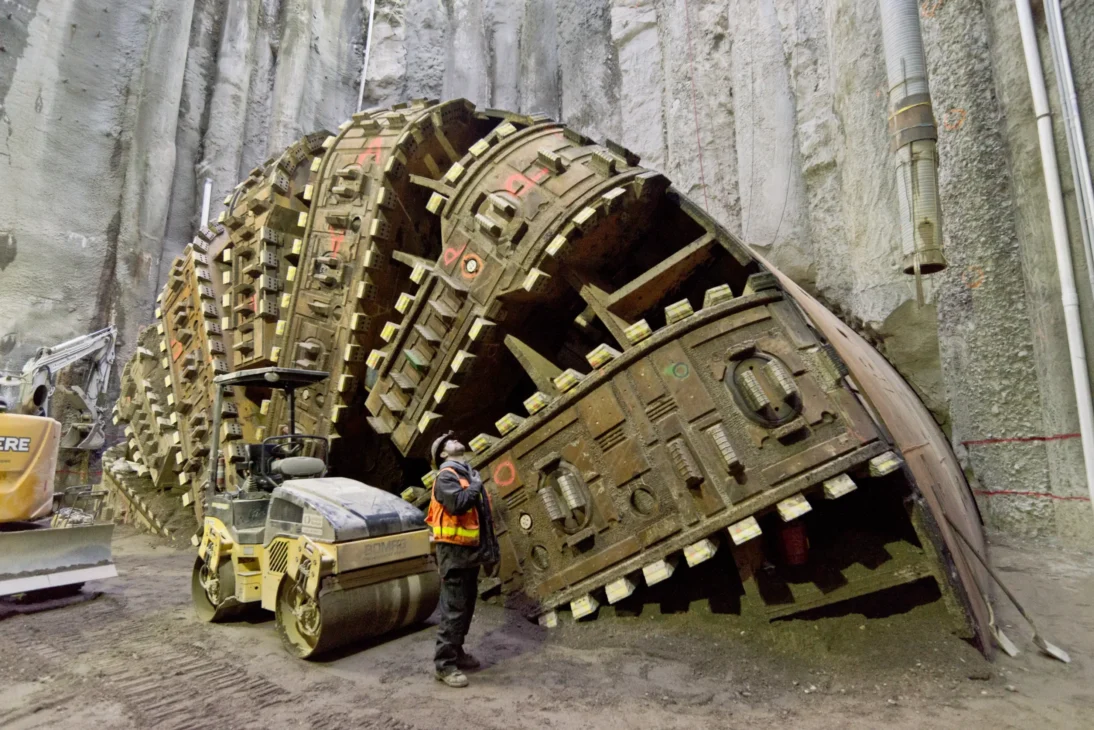
TBMs are true mobile underground factories. Their operational cycle involves excavating material at the front, removing this spoil, and installing a support lining, often concurrently. Powerful hydraulic jacks propel the machine, reacting against the newly installed lining or against anchoring shoes (grippers) in hard rock.
The cutting head, a rotating disc at the front of the TBM, breaks up the soil or rock with specific tools: cutting discs for rock; scrapers and knives for soil. The shield, a steel cylinder, protects operators and equipment and supports the excavated ground. Behind the shield, the support system (gantries) provides power, ventilation, and materials, being crucial for the rate of advance.
The Various Types and Their Applications
There are various types of tunnel boring machines, each adapted to specific geological conditions. EPB TBMs (Earth Pressure Balance) are used in soft and urban soils, such as in São Paulo’s Metro, controlling the stability of the face with the excavated and conditioned material. Slurry Shield TBMs are employed in granular soils with high water pressure, like in Tokyo Bay’s Aqua-Line, using pressurized bentonite mud to stabilize the face.
For hard rock, open face TBMs (Main Beam) are used, which are simpler and more robust. Shielded TBMs (single or double shield) offer protection and, in the case of double shield, allow for simultaneous excavation and lining, increasing the advance. Crossover TBMs (XRE/multi-mode) are adaptable to mixed terrains, such as in the Gerede Tunnel in Turkey, able to change their operation mode according to the geology.
Notable Projects
Manufacturers like Herrenknecht, Robbins, MHI/JIMT, CREG/CRCHI, and Hitachi Zosen lead the development of tunnel boring machines giants. Notable examples include “Bertha” (17.5m in diameter) in Seattle, the Santa Lucia TBM (15.87m) in Italy, and “Jianghai” (16.64m) in China. In the UK, “Jill” (11.87m) excavated the Silvertown Tunnel, and “Stella-Rose” (6m) set a record for length (25.8 km) at the Woodsmith mine.
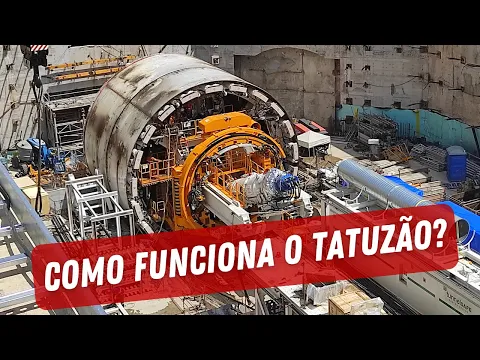
In Brazil, the “Tatuzões” are crucial for the expansion of São Paulo’s Metro. The “Cora Coralina” TBM (Line 2-Green), the largest ever used in the country, achieved remarkable performance. These projects face challenges such as variable geology, high water pressure, unstable ground, and the need to minimize impacts in densely populated urban areas, overcome with meticulous planning and advanced engineering solutions.
The Future of Drilling

The technology of tunnel boring machines is constantly evolving. Subsystem automation, such as cutting head control and segment assembly, is an increasing trend, with robotics being introduced for hazardous tasks, such as disc changing (e.g., TBM “CREC 1459”). The goal is to achieve fully autonomous operation.
Artificial Intelligence and Machine Learning will optimize operational parameters and predict geological conditions. There is a growing focus on sustainability, with “Green TBMs” (Herrenknecht, CREG) aiming for energy efficiency and lower environmental impact. Advances in materials, digitization (BIM, Herrenknecht.Connected), and the search for machines for even larger, longer, and deeper tunnels will continue to shape the future of these underground giants.










Excelente Matéria com excelente tema que me ajudou muito no entendimento sobre o assunto. PARABÉNS AOS ENVOLVIDOS. ESSES DEVERIAM RECEBER OTIMOS SALÁRIOS E ESTABILIDADE FINANCEIRA, JOGADOR DE FUTEBOL É SÓ ENTRETENIMENTO.
Trabalho na indústria que produz as ferramentas e acessórios usados nesses tatuzôes, aqui no Japão, há mais de 24 anos. Já vi fotos de muitos canteiros de obras pelo mundo onde foram usadas ferramentas produzidas por nós, inclusive na Vale do Rio Doce para extração de minério.
Roberto bom dia !!
Estou no interior na Bahia , vc está no JPão, e essa obra em São Paulo já foi concluída?
****,vc tá é em sergipe
Oxi eu acabei de te ver no boteco aqui em Sergipe kkk
Fenomenall