





 Português
  Inglês
  Espanhol
  4 min de leitura
  0 comentários


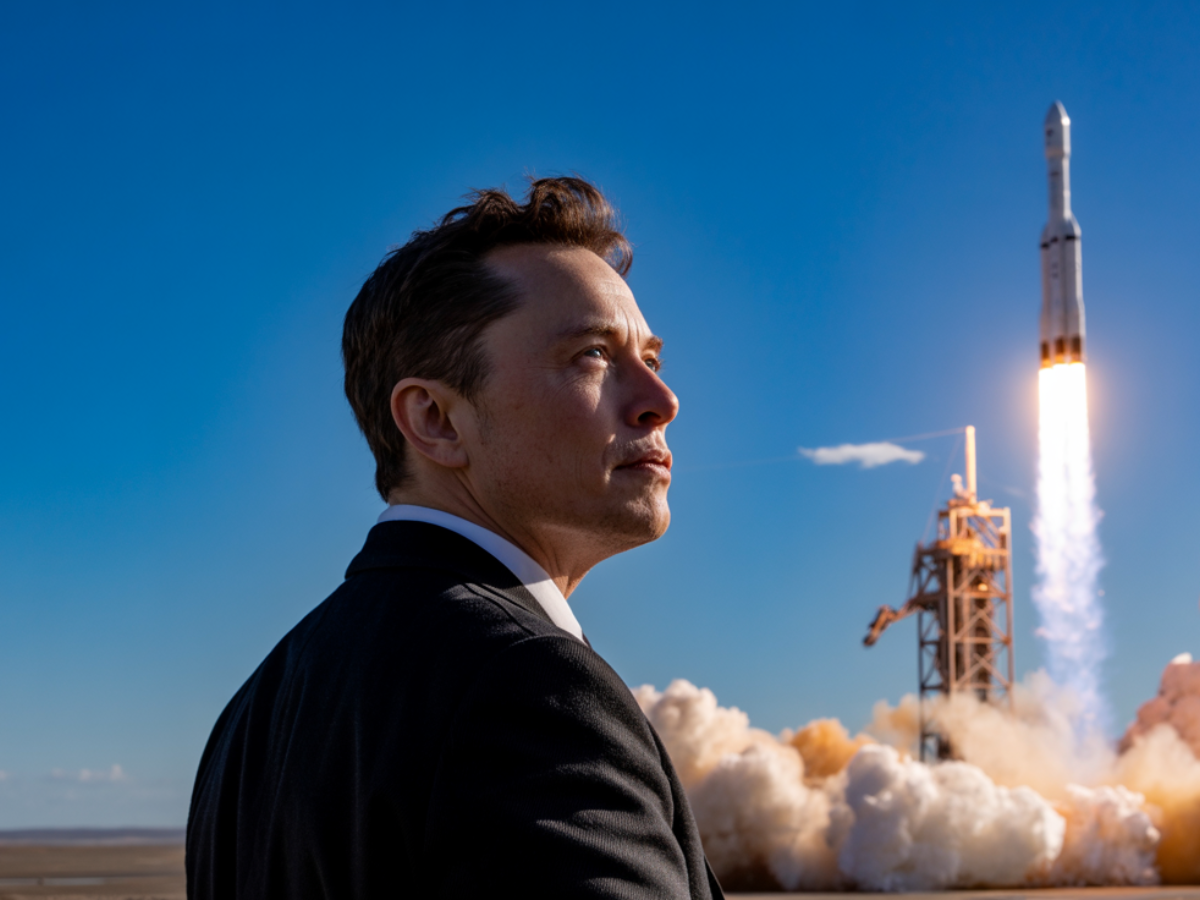
An Analysis of the History of Elon Musk’s Predictions Until 2025, His Successes, Notable Failures, and the New Bold Promises for Tesla, SpaceX, AI, and the Future of Humanity.
Elon Musk has established himself as a central figure in the global technological landscape, not only as a leader of innovative companies but also as a visionary whose predictions about the future often set the agenda for discussions on innovation. His statements about artificial intelligence, space exploration, and the fate of humanity capture global attention and influence markets.
Diving into the history of Elon Musk’s Predictions until May 2025, analyzing what has materialized, what has failed or been postponed, and what his new bold bets are. Understanding his statements requires recognizing the fine line he draws between concrete roadmaps and aspirational visions, a strategy that shapes narratives and motivates teams.
The Musk Phenomenon: Understanding the Impact of His Statements
Elon Musk is often seen as an “oracle of disruption”. His Elon Musk Predictions transcend corporate announcements, serving as strategic tools to inspire, attract talent and capital, and position his companies – Tesla, SpaceX, Neuralink, The Boring Company, and X/xAI – at the technological forefront.
-
The world’s first octopus farm wants to open in the Canary Islands and is already provoking an international reaction: the plan aims to produce 3,000 tons per year.

-
Drought may be creating stronger superbugs in the soil and helping antibiotic resistance reach hospitals, warns a study highlighting a problem that could grow alongside extreme weather.

-
The biggest scam in history: Napoleon’s France deceived the United States by selling them a territory that was Spanish.

-
Why is the Danakil Desert so dangerous? It has unstable terrain and how extreme temperatures and toxic gases turn the region into one of the most hostile environments on Earth.


His visions for different sectors are interconnected: SpaceX aims to colonize Mars; Tesla’s Optimus robots would help build Martian infrastructure; Neuralink could adapt humans to new environments; and xAI’s AI would drive autonomous systems. Evaluating his predictions in isolation may obscure this larger strategic intent.
History of Elon Musk’s Predictions (Pre-2025): Successes, Failures, and Notable Delays
Analyzing Elon Musk’s Predictions until 2025 reveals a pattern of remarkable successes, significant failures, and, primarily, persistent delays.
Tesla: The promise of Full Self-Driving (FSD) Level 5 and Robotaxis has seen repeatedly failed timelines between 2016 and 2025. By May 2025, FSD still requires human supervision, although limited tests without a driver are emerging. The Cybertruck, revealed in 2019 for a 2021 launch, arrived in 2023 with modifications. The affordable EV (Model 2) of $25,000, announced in 2020, had its timeline altered, with an uncertain launch.
SpaceX: Colonizing Mars is a long-standing goal. A crewed mission to Mars, originally scheduled in 2016 for 2024, has not occurred. The new targets are 2029-2031. The development of the Starship, crucial for these plans, progresses with iterative testing, including controlled landings in 2024, but also faces failures.
Other Companies: Neuralink has shown early progress with brain implants in humans, allowing control of computers by thought. The Las Vegas Convention Center (LVCC) Loop by The Boring Company is operational, but it is a scaled-down version of the Hyperloop vision. The transformation of Twitter into “X, the everything app” is far from realization, facing functional and regulatory challenges.
Musk’s “errors” are predominantly related to timelines, not necessarily to technological direction. FSD is advancing, reusable rockets are a reality, and BCI shows potential.
The Anatomy of Elon Musk’s Predictions
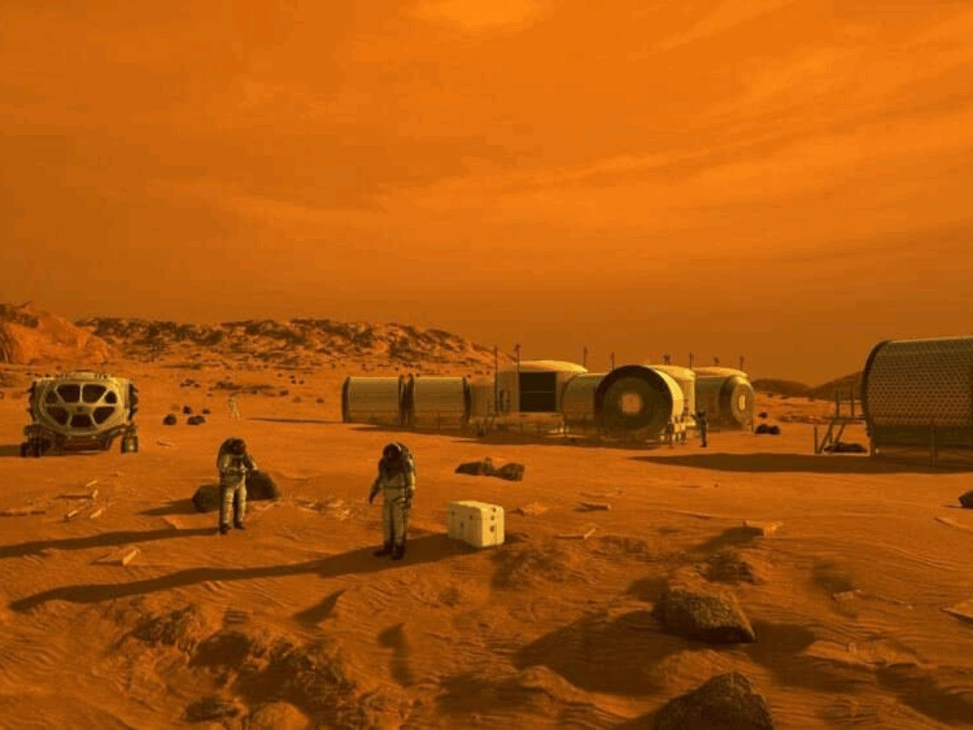
Elon Musk’s Predictions often serve as ambitious goals, a phenomenon known as “Musk Time”. Although deadlines are rarely met, the underlying projects often revolutionize industries. This “Musk Effect” galvanizes his teams, attracts investment, and captures media attention, potentially accelerating innovation.
However, it also generates pressure and skepticism. The success of his predictions depends on technological maturity, complexity of execution, capital, regulatory scenarios, and market demand. The strategy behind bold predictions seems to leverage optimism and attention to generate momentum, even if timelines are unrealistic.
What Do Elon Musk’s Predictions Indicate Post-2025?
Looking ahead, Elon Musk’s Predictions are even more ambitious:
Artificial Intelligence and Robotics: xAI aims to develop an AI smarter than all humans combined by 2029/2030. The humanoid robot Optimus from Tesla is projected to produce millions of units annually by 2029/2030, potentially leading to an “age of abundance” and making work “optional”, requiring a “high universal income”.
Multiplanetary Humanity: Updated timelines for Mars include the first uncrewed Starship by the end of 2026 and crewmissions by 2029 or 2031, with a self-sustaining colony by 2050.
Personal Technology and Transportation: Neuralink (BCI) could, in the long run, replace smartphones.10 Tesla anticipates a Robotaxi pilot in Austin in June 2025 and the production of the Cybercab in 2026, with a more affordable Tesla model still expected in 2025.
These bets represent a convergence of the technologies of his companies, aiming for a future deeply integrated with AI, robotics, and space exploration.
A Critical Look at Elon Musk’s Upcoming Predictions

Assessing Elon Musk’s Predictions requires a “Musk filter”: expect ambitious goals and likely delays, but also potential for significant progress. It is crucial to focus on the underlying technological achievements, not just the deadlines.
The impact of Musk in redefining the possible is undeniable, forcing industries to accelerate. However, the increasing scale of his future predictions, which imply civilizational transformations, requires more rigorous public and ethical scrutiny. Discussions about AI safety, governance on Mars, and the future of work need to keep pace with his ambitions. Society must engage proactively and multidimensionally with the futures Musk is actively trying to create.








Seja o primeiro a reagir!