





 Portuguese
  English
  Spanish
  5 min of reading
  0 comments


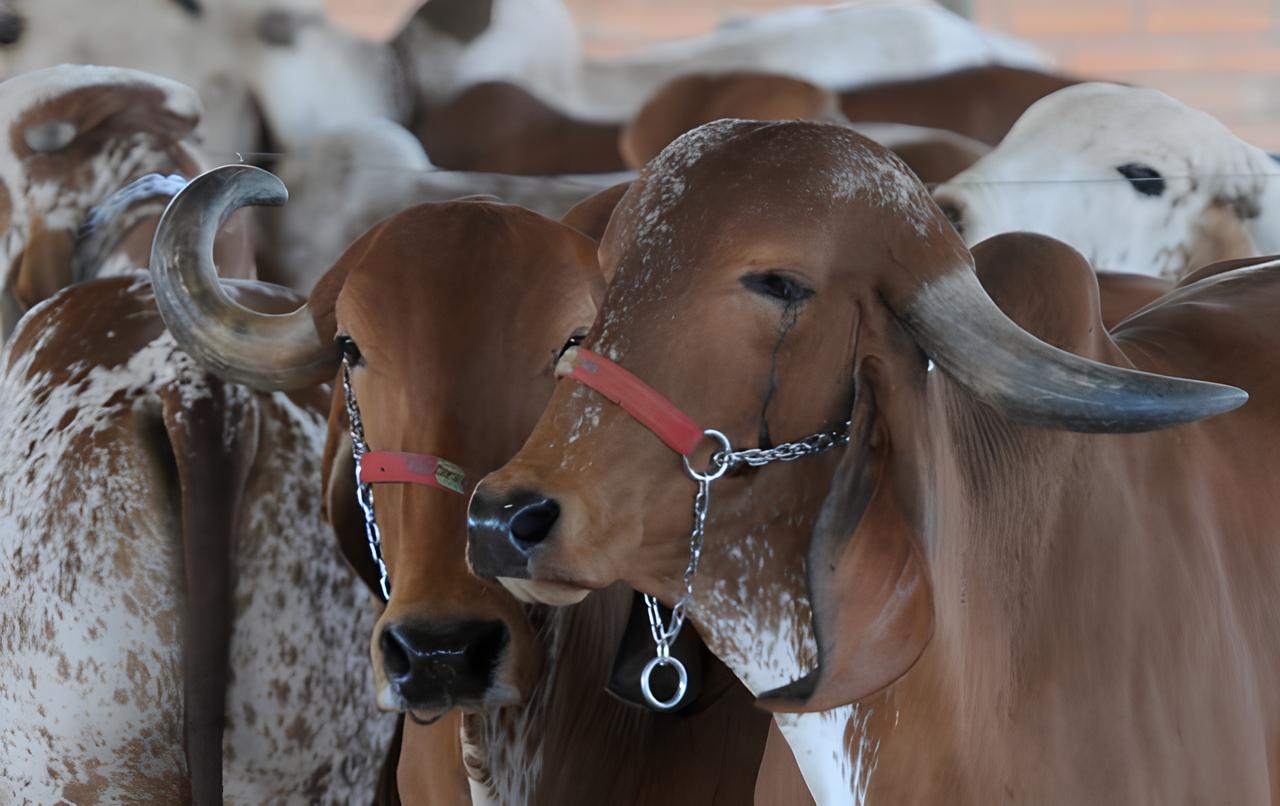
Zebu Supercows Have Transformed Brazil into the World’s Largest Beef Exporter, with Enhanced Genetics, Tradition, and Global Impact on Livestock Farming.
In early May 2025, Uberaba (MG) becomes the center of attention for the global agribusiness. There are 400,000 visitors and nearly 2,500 animals gathered at ExpoZebu, the largest zebu breed fair in the world. The event is more than just a livestock exhibition: it is a celebration of a project over a century long that has made Brazil the world’s largest exporter of beef, with 2.9 million tons shipped in 2024.
The star of this spectacle is the zebu cattle, popularly known as the “Brazilian supercow.” Resulting from crossbreeding, genetic improvement, and decades of adaptation, zebu has become a symbol of national livestock farming. Impressive, standing up to 1.8m in height, with light skin, long horns, and the characteristic hump, these animals are treated as an economic and cultural asset of Brazil.
The Million-Dollar Genetics That Drive Auctions
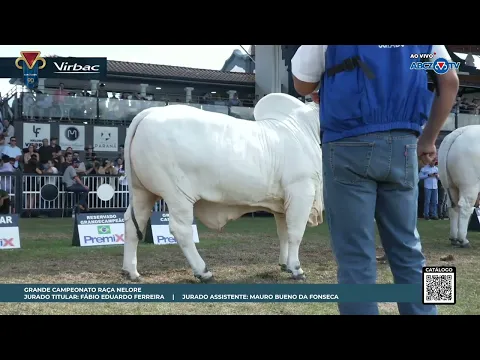

At ExpoZebu, rural luxury materializes in the auctions. In 2024, a single cow was sold for R$ 25 million, not for slaughter, but to be a genetic matriarch for future generations. There are bulls like the famous Gabriel, responsible for over 600,000 descendants from his semen.
-
Money with chickens: how much can 200 laying hens yield per month with eggs at R$ 12 per dozen?
-
As dams and pollution advance, migratory freshwater fish are facing a silent global crisis that has already decimated populations, threatened fisheries, and raised alarms in major basins.

-
Crotalaria, mucuna, and other cover crops stop being “weeds” between harvests and become central to agriculture by improving the soil, adding biomass, and enhancing green fertilization in vegetable production.
-
Coruripe Mill secures international financing of R$ 530 million and boosts the sugar-energy sector.


This parallel genetics market is one of the pillars of success. Champion animals are worth fortunes not for their cuts, but for their potential to multiply elite herds across the country. Each award is a passport to million-dollar business deals, strengthening a network that extends from elite farms in Minas Gerais and Goiás to the slaughterhouses that supply the world.
From Criollo Cattle to Zebu: The Historic Turn
In the 16th century, Brazil relied on criollo cattle, descended from animals brought by the Portuguese. Small and resilient, they fed enslaved people and local populations with salted meat, but they were far from sustaining a global export project.

It was in the 19th century that the country faced the dilemma: how to expand livestock farming to the tropics? European cattle could not withstand the heat, pests, and scarce grazing. The solution came from the other side of the world: the Indian zebu, resistant to high temperatures, with long legs, economical metabolism, and even eyelashes adapted to the sun and dust.
Between 1893 and 1914, more than 2,000 heads were imported from India. The result was explosive: in a few decades, zebu dominated Brazilian pastures and gave rise to a new national livestock identity, with breeds like Indubrasil and Guzerá.
Beef as the Engine of the Economy
World War I solidified meat as a strategic priority. Europe demanded canned meat and leather for soldiers, and Brazil found a historic opportunity there. During World War II, the scenario repeated itself: boots, backpacks, and frozen meat left Brazilian ports for the front.
In the post-war period, meat surpassed coffee and sugar as the country’s main export product. In the 1970s, with the creation of Embrapa, the cycle accelerated: new African pastures, veterinary treatments, and genetic advancements emerged. Livestock farming advanced to the Cerrado and the Amazon, expanding the agricultural frontier.
Brazil with 225 Million Zebus
Today, Brazil hosts about 225 million head of cattle, a number that exceeds the country’s own population. The majority consists of zebus or crossbreeds derived from them. This massive base ensures abundant meat for the domestic market — with Sunday barbecue as a cultural symbol — and supplies clients in over 150 countries.

The competitive cost is the great weapon: Brazilian beef is produced predominantly on pasture, which reduces expenses compared to countries that rely on confinement. Additionally, labor is cheaper than in competitors like the United States and Australia.
Environmental Impacts and the Dilemma of Expansion
However, success has a price. Livestock farming is one of the main drivers of methane emissions, a gas 80 times more potent than CO₂ in the short term. Moreover, the expansion northward into forest areas intensifies the debate on deforestation in the Amazon.
There is, however, an interesting contradiction: precisely because they grow fast and fatten in less time, modern zebus emit proportionally less methane per kilo of meat than traditional breeds.
In other words, Brazilian “supercows” can paradoxically be part of the solution for environmental efficiency, if properly managed.
ExpoZebu as a Global Showcase
The fair in Uberaba is the synthesis of this story. More than just business, it functions as a global showcase of Brazilian livestock power. Auctions, judgments, exhibitions, and agreements intertwine in a spectacle that attracts foreign investors and reaffirms Brazil’s role as the global pantry of animal protein.
For cowboys and breeders, the fair is also a ritual of pride: animals prepared with baths, grooming, and daily care are displayed as stars. Winning there is synonymous with status, power, and million-dollar contracts.
The Future of Supercows
The horizon points to new leaps. Chinese demand remains high, Brazil was declared free from foot-and-mouth disease in 2024, and global appetite for animal protein is far from diminishing. Producers speak of doubling the herd in the coming decades, which could further elevate the country’s influence in the global meat trade.
But the equation is complex: it will be necessary to balance productivity with sustainability, avoid the loss of forests, and invest in low-carbon technologies. In this scenario, zebu genetics — already adapted to the tropics — may be the key to reconciling expansion and environmental efficiency.
Brazilian Pride and Dilemma
The “supercows” zebu are more than just animals: they are a metaphor for a country that has transformed limitations into advantages and has become a global leader in one of the planet’s most competitive sectors. From a modest beginning with criollo cattle to the current position of largest global exporter of beef, the trajectory of zebus summarizes Brazil’s ability to adapt and innovate.
However, the same herd that ensures billions of dollars in exports also places Brazil at the center of debates on climate, land use, and sustainability. The challenge of the future will be to preserve the title of meat powerhouse without compromising environmental responsibility.
The fact is that, with its 225 million head, million-dollar genetics, and presence in every corner of the country, zebu supercows have already secured an eternal place in Brazil’s history — and perhaps, a decisive role in the challenge of feeding a transforming planet.








-

-

-

-

8 pessoas reagiram a isso.