





 Portuguese
  English
  Spanish
  7 min of reading
  0 comments


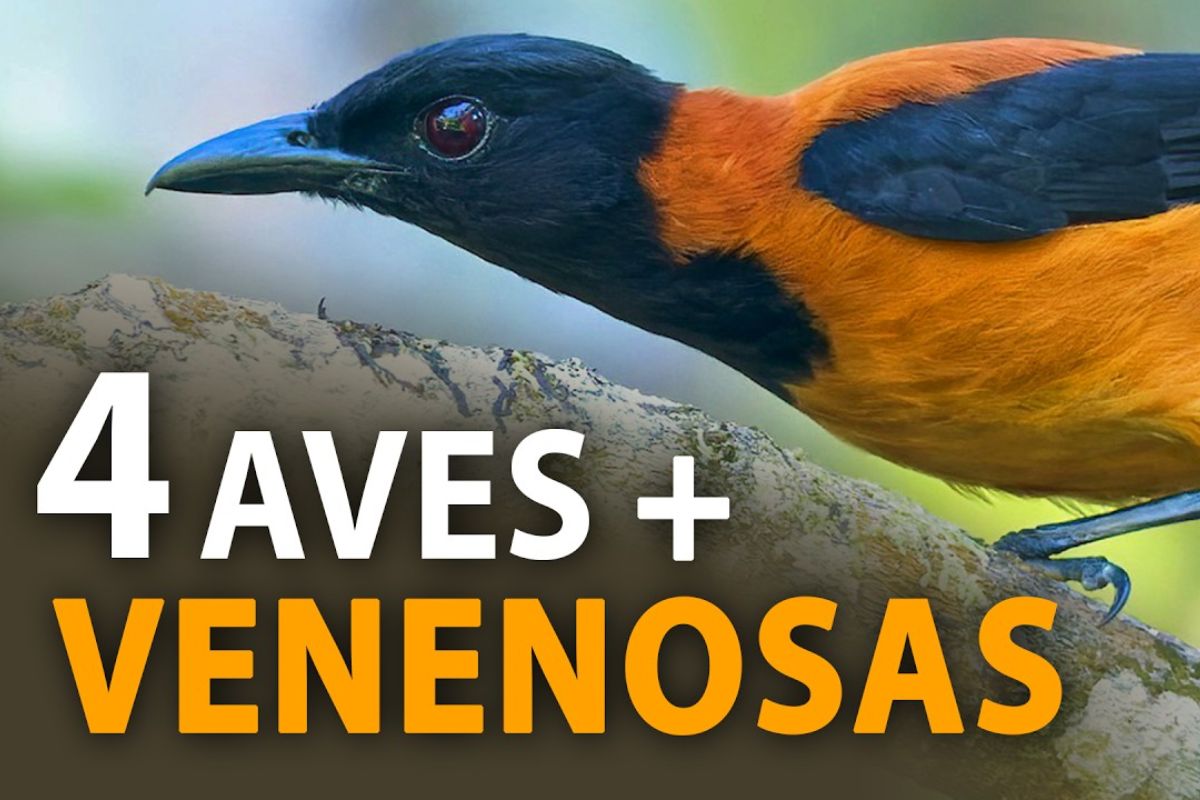
The Poisonous Birds That Science Is Still Trying to Decipher Reveal Dietary Toxins, Discreet Risks to Humans, Bizarre Chemical Tricks, and Secret Defenses Scattered Across the Skies of the Whole Planet Today, The Poisonous Birds That Do Not Make Poison but Become Dangerous Due to the Food They Choose
When someone mentions a poisonous creature, the mind immediately thinks of snakes, scorpions, or spiders. Very few imagine that there are poisonous birds flying around. The most curious detail is precisely this: unlike venomous reptiles, these birds do not produce their own poison; they borrow toxins from the plants or insects they consume and store it in their feathers, skin, and even muscles.
The result is a strange combo: birds that look normal but can cause tingling, burning, numbness, serious kidney problems and, in extreme scenarios, real danger if someone insists on turning these exotic species into a main dish. Science has already identified some well-documented cases in New Guinea, Australia, Europe, and Africa, and is still far from exhausting the subject.
What, Actually, Makes These Poisonous Birds Different from Others?
The logic is simple but quite cunning: the bird is not a “factory” of toxins; it is a mobile storage unit. It eats toxic seeds or insects, its body can handle the toll, and part of these substances ends up in the feathers, skin, fat, and muscles.
-
New 100% clean fuel produced in Brazil could retire diesel.

-
Plastered walls become a trend and end up being the perfect choice for finishing; the secret of the 2 coats that prevent waste in painting.
-
With 333 meters and equivalent to a 20-story building: China launches a supertanker that transports 2 million barrels, has 540,000 m² of area, and saves $5 million per year.

-
Brazil becomes a beacon of hope for ending plastic waste by leading a global plan that could prevent millions of tons from entering the oceans.

Among the known poisonous birds, a consistent pattern emerges:
- toxins come from their diet
- the creature handles what would be a heavy problem for mammals
- the ones at risk are the predator, the parasite… or the curious human who decides to eat or handle the wrong species at the wrong time
The same meal that is just another lunch for the bird can turn into a hospital case for us.
Pitohui: The “Trash Bird” That Numbs Hands and Mouth

One of the most famous cases of poisonous birds is the Pitohui, a little bird from the forests of New Guinea that became a scientific article in the 1990s. The discovery was entirely accidental:
a researcher scratched himself while trying to remove it from a mist net, his hand started going numb, and he had the brilliant idea to lick the cut. The result: his mouth also tingled.
The Pitohui feeds on fruits and toxic beetles, accumulating a toxin from the batrachotoxin family in its plumage. In the bird, the highest concentration appears in the chest, legs, and belly feathers.
For humans, the dose found in this species causes tingling, burning sensation, and numbness in areas of contact, reactions considered mild. It is not a “creature from the end of the world,” but it is also not an innocent little bird to handle.
Furthermore, the Pitohui has another “charm”: it exudes a strong, sour, very unpleasant smell, which helps repel parasites and probably discourages predators. Therefore, locals have nicknamed the species the “trash bird”, a perfect blend of repulsion and respect.
And it is not alone. Other species of the same genus, the Pitohui, also exhibit toxicity, and there is even a handful of birds from the region that follow the same path: they become poisonous after feasting on certain toxic beetles in their diet.
Bronze-Wing Dove: The “Pretty Dove” from Australia That Can Take Down Mammals

Leaving New Guinea and landing in Australia, another intriguing example appears: the bronze-wing dove, a bird that visually easily passes for a “pretty bush dove.” The problem lies in the seeds it consumes.
This dove feeds on seeds from a genus of plants that concentrates monofluoroacetic acid, a toxic substance for mammals, including humans. The bird can handle it, but anyone who eats the bird may not.
In practice:
- eating this dove is considered dangerous, especially for mammals
- there have been cases of domestic animals and zoo creatures getting sick after consuming this species
- despite this, there are no confirmed reports of human poisoning specifically due to this dove
In other words, it is not a cause for panic, but it is also not something to treat like a rotisserie chicken.
European Quails That Became Hospital Problems During Migration

The European quail Coturnix coturnix is a very common species in Europe, Asia, and Africa. In day-to-day life, it does not fall into the category of poisonous birds and is even valued by hunters. But there is a seasonal detail that changes the game.
At a certain time of year, some populations of the European subspecies become poisonous. During the migration to Africa, these quails start to feed on toxic plants. They are immune to these substances, but those who eat the meat of these birds at the wrong time can face serious problems, especially kidney issues and other serious complications.
This is not a “legend” poisoning. It is a case of “ate it, got sick, run to the hospital”. The same little creature that for much of the year is just another game bird can turn into a walking chemical trap at another time.
Spur-Winged Goose: The African Scorpion Duck That Carries Toxin in Its Muscles

In Africa, the spur-winged goose, also known as the scorpion duck, is another example of a bird that can become poisonous due to its diet. Some populations, especially in the Gambia region, feed on venomous beetles from a group known for producing a toxin that is very dangerous to humans.
These toxins are absorbed by the bird and stored in its tissues, including muscles. The quantity is usually not excessive, but in higher doses it can be lethal to humans.
Important points:
- theoretically, even cooked, the meat of a goose with a high load of this toxin still poses a risk
- so far, there are no confirmed human cases, but the potential for poisoning is recognized
- anyone who insists on turning this species into a meal is playing with a kind of chemical roulette
It’s one of those typical cases where the best choice is to admire from a distance and leave the creature alone.
Why Don’t These Poisonous Birds Get Sick with So Much Toxin?
The obvious question is: if the food is so toxic, why don’t the poisonous birds collapse first? The answer lies in the very biology of the creature.
These species have developed immunity to the substances they accumulate, and in some cases, this is linked to mutations in important genes, which alter the target of the toxins in their bodies. Thus, what is a threat to our bodies becomes just another biochemical seasoning for them.
It’s a straightforward evolutionary game:
- birds that withstand the toxin can use this “chemical arsenal” to their advantage
- predators, parasites, or curious mammals that do not have the same protection pay the price
The poison ceases to be an internal problem and becomes an external tool, a kind of invisible armor.
The True Target of the Toxins: Parasites or Predators?
When we see poisonous birds, the reflex is to imagine that all this serves only to deter predators. But the main hypothesis today is different: defense against parasites.
Studies with birds that have toxins in their plumage, like the pitohuis from New Guinea, show that they carry fewer lice and other external parasites than similar species in the same region. The idea is that the toxins in their feathers and skin create a hostile environment for these little creatures.
Of course, the bright plumage combined with toxicity can serve as a warning signal to predators: something like “don’t eat me, I’ll make you feel sick.”
However, this part has not been fully confirmed yet. It is a strong hypothesis, but science is still carefully testing this scenario.
Chemical Defenses Without Poison: Vomit, Acid, and Bad Smell
Even when they don’t officially fall into the category of poisonous birds, some species use very creative chemical tricks to protect themselves.
In South America, including Brazil, antbirds, woodpeckers, and other passerines are known to rub themselves on ants and other arthropods that release formic acid.
This helps reduce parasites in their feathers and skin, as if the bird were “bathing” in an improvised natural repellent.
The white shearwater, an Arctic seabird, takes another approach:
- it is not toxic but vomits partially digested fish oil onto competitors and predators
- the vomit sticks to the enemy’s feathers, hindering flight and thermal insulation capability
- it’s an effective weapon that solves the problem without needing classic poison
The hoopoe bets on scent… in the opposite way:
- during the breeding season, the uropygial gland produces an extremely foul secretion
- the bird rubs this goo on its feathers
- the hypothesis is that this repels predators and parasites, protecting the nest and the chicks
It’s not always necessary to be poisonous to be chemical and dangerous.
And In Brazil, Are There Any Poisonous Birds? What Does Science Need to Discover?
With all this, another inevitable question arises: and here, what’s the situation? So far, no species from Brazil or South America is known to be classified as poisonous in the same way as pitohuis, toxic quails, or spur-winged geese.
There are indications, curious behaviors, and preliminary studies with birds that use chemical defenses, but nothing that allows us to firmly state an “official poisonous bird” in our backyard.
What is clear is that:
- there is still much to be discovered about poisonous birds in the world
- many known cases were discovered accidentally, during field research
- new species may reveal chemical secrets that are still poorly understood, both for ecology and medicine
In the end, poisonous birds remind us that even a seemingly harmless animal can carry an entire pharmacy in its feathers, and that the planet is full of evolutionary tricks that science is still racing to understand.


And you, after learning these stories, would you have the courage to touch one of these poisonous birds, or would you prefer to admire this chemical arsenal only through the screen?







-

-

3 pessoas reagiram a isso.