





 Portuguese
  English
  Spanish
  4 min of reading
  0 comments


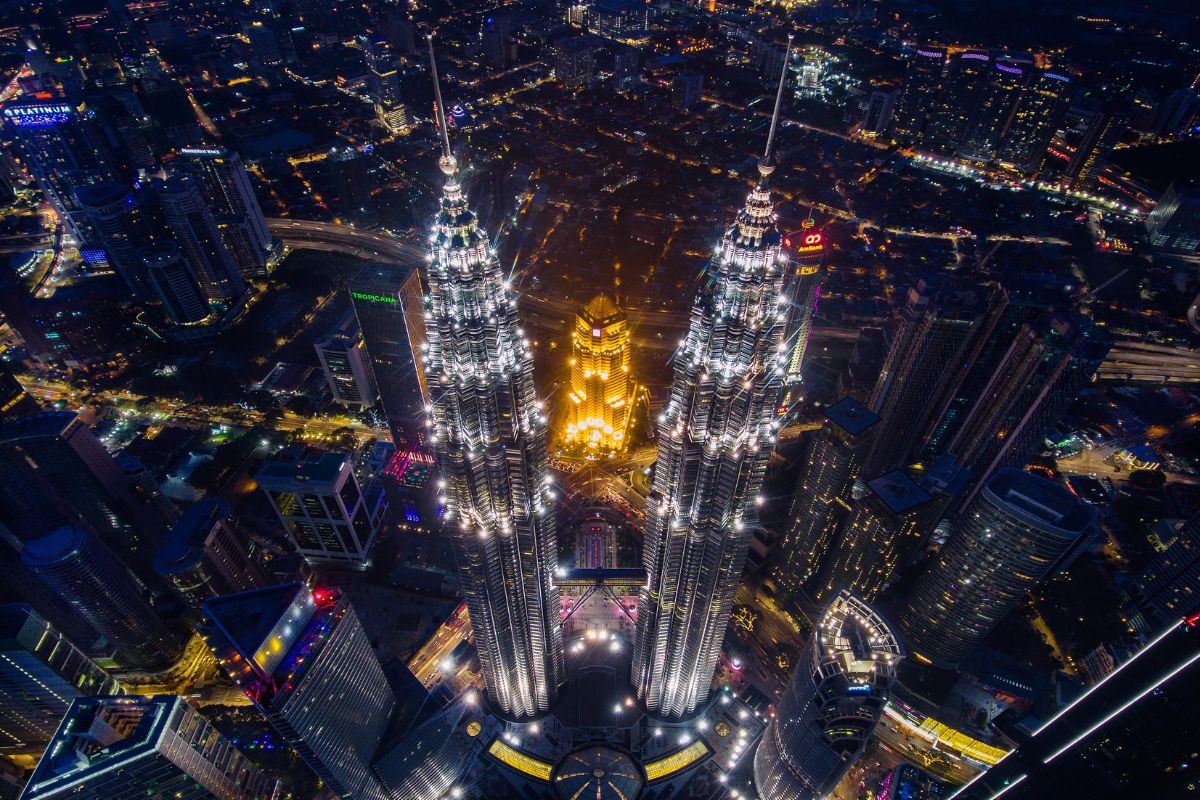
The Tallest Twin Towers in the World Elevate Kuala Lumpur to 451.9 Meters, Come with 88 Floors and Were Built with High-Strength Concrete, a Solution That Reduced Costs, Increased Stiffness Against the Wind and Consolidated a Global Icon of Architecture.
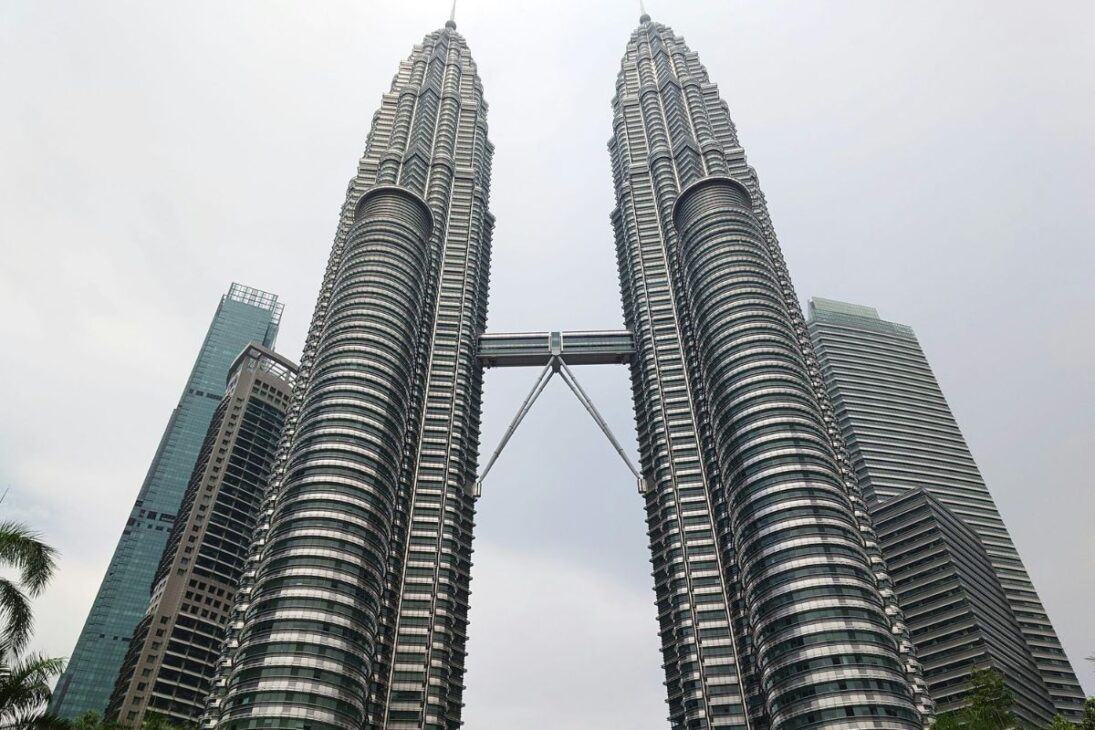
The tallest twin towers in the world were completed in 1998 after an investment of $1.6 billion. The complex is linked by a two-level skybridge between the 41st and 42nd floors at a height of 170 meters, a feature that became a trademark of Kuala Lumpur’s skyline and enhanced the operational safety of the complex.
Designed by César Pelli, the towers combine contemporary design and symbolism of Islamic art in a structural solution that prioritized high-strength reinforced concrete instead of imported steel. The result was a pair of exceptionally heavy and rigid buildings, with less sway and strong performance in wind.
Who Signs the Project and What Was the Architectural Concept
The American-Argentine architect César Pelli led the design with an explicit reading of the local culture.
-
The Argentine government celebrates the lowest poverty rate in 7 years, but experts warn that the methodology has changed, real wages have fallen, unemployment has risen, and the number of people on the streets of Buenos Aires has increased by 57% since Milei took office.

-
7.8 magnitude earthquake in Indonesia frightens the population, triggers tsunami alert, and hits an island with over 200,000 inhabitants this Thursday.
-
Google will finally let you change that embarrassing Gmail address you created in your teenage years without losing any accounts, logins, or old emails: the feature is already available in the United States.

-
Heading to Brazil in a Bonanza F33 single-engine aircraft: a couple departs from Florida on a visual flight, makes technical stops in the Caribbean to refuel and organize paperwork, and begins the staged crossing until they reach the country.

Islamic motifs appear in the layout through the Rub el Hizb symbol, formed by two overlapping squares that create an eight-pointed star, refined by curves to compose elegant and easily recognizable volumes.
This aesthetic vocabulary dialogues with facade materials in glass, aluminum, and steel and with a six-level base that includes philharmonic hall, art gallery, library, and commercial areas.
The complex became a symbol of the country’s modernization at the end of the 20th century, with strong international projection.
How Engineering Responded to Cost and Material Restrictions
The decision to replace imported steel with high-strength concrete met an economic imperative and generated material innovation.
The new concrete allowed for more efficient columns and cores, while the additional weight increased global stiffness and reduced the amplitude of wind-induced oscillations.
The structural system articulates with reinforced concrete cores and elements that distribute loads in a direct and predictable manner.
The elevated total mass acts as an ally in dynamic stability, a technical choice that dialogues with the climate and wind demands of the region.
Deep Foundation and Wind Performance
The piled foundations reach 114 meters deep at some points, forming a forest of concrete elements that anchor the pair of towers in the ground and control differential settlements.
This robust base is part of the package of solutions for a high-demand urban site.
In operation, the rigidity of the complex helps reduce discomfort from oscillation and maintains the performance of high-capacity elevators.
The choice of concrete aligns with this ambition for stability, favoring comfort, durability, and maintenance.
The Skybridge Between the Towers and Vertical Mobility
The link between the buildings is the two-level skybridge, installed between the 41st and 42nd floors at a height of 170 meters.
The skybridge is not rigidly fixed to the facades and can slide subtly, following the natural movement of the towers under wind, which increases safety and creates an efficient escape route.
Circulation is supported by a set of double-deck elevators and dedicated executive units, sized for large corporate flows and for visitor traffic.
The skybridge became an urban experience and a technical element at the same time, connecting mobility, operation, and image.
Schedule, Cost and Final Delivery
Construction began after a competition and project development in the early 1990s.
Construction ended in 1998 and the official inauguration took place in 1999, with an approximate cost of $1.6 billion.
Each tower has 88 floors, forming a balanced pair that dominates the skyline of Kuala Lumpur.
The extensive use of high-strength concrete and the planning of deep foundations made execution feasible without heavy dependence on imported materials.
Cost control acted as a trigger for innovation, something that marked the engineering of the project.
Culture, Identity and Urban Legacy
Besides being record-holders as the tallest twin towers in the world, the structures synthesize national identity and economic ambition.
The design inspired by Islamic art and the metallic finish create a visual narrative that associates tradition and future, projecting the city to the world.
The corporate, cultural, and commercial complex strengthens urban centrality and generates showcase effects for new fronts of investment.
The legacy is simultaneously technical and symbolic, demonstrating how well-resolved restrictions can elevate the standard of an architectural landmark.
Main Specifications in Focus
Total Height of 451.9 Meters per tower, recognized as the tallest twin towers in the world
88 Floors per tower with corporate use and visitor areas
Skybridge with two levels between the floors 41 and 42 at a height of 170 Meters
High-strength reinforced concrete as the predominant material
Foundations with piles reaching 114 Meters at critical points
Construction cost of $1.6 billion and completion in 1998
The tallest twin towers in the world demonstrate how budgetary and supply limitations can drive original engineering solutions, from high-strength concrete to the global stiffness strategy and deep foundations.
The complex remains a reference in form, function, and identity, articulating performance, culture, and urban image on a monumental scale.
If you could choose a single experience in these towers, would you prefer the view from the skybridge or a close look at the facade details that reinterpret Islamic art? Let us know in the comments.







-

-

-

-

-

-

122 pessoas reagiram a isso.