





 Portuguese
  English
  Spanish
 5 min of reading
  0 comments


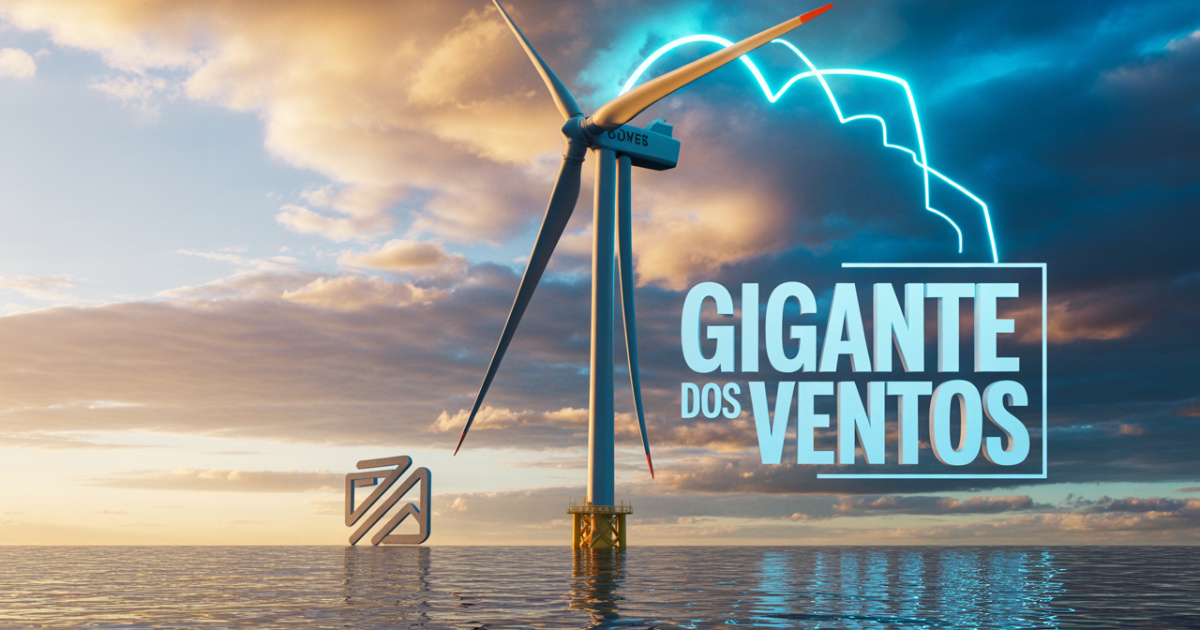
The 26 MW Turbine Installed in the Strait of Taiwan Positions China Ahead in Offshore Wind Energy, Reduces Global Costs and Pressures Competitors to Accelerate Large-Scale Projects.
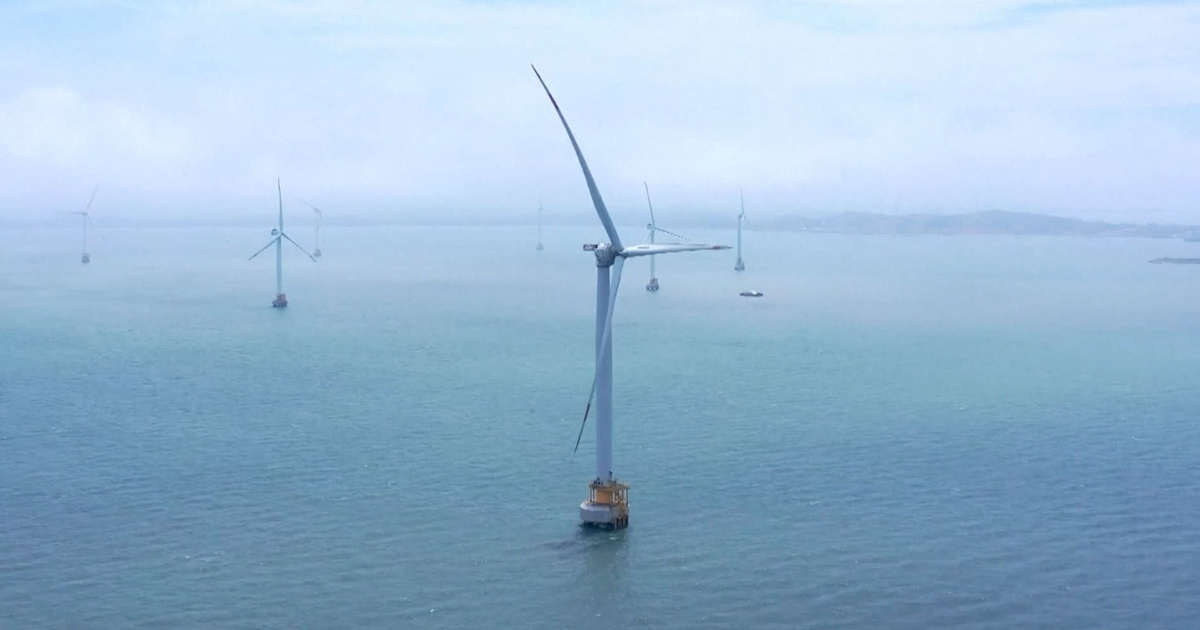
Fujian, August 29, 2025 — The state-owned Dongfang Electric has completed the installation of the first offshore turbine capable of generating 26 megawatts in the Strait of Taiwan.
The equipment, positioned about 35 kilometers from the coast of Fujian province, has become the most powerful in the world and reinforces China’s ambition to dominate renewable energy.
Advancement in the Strait of Taiwan
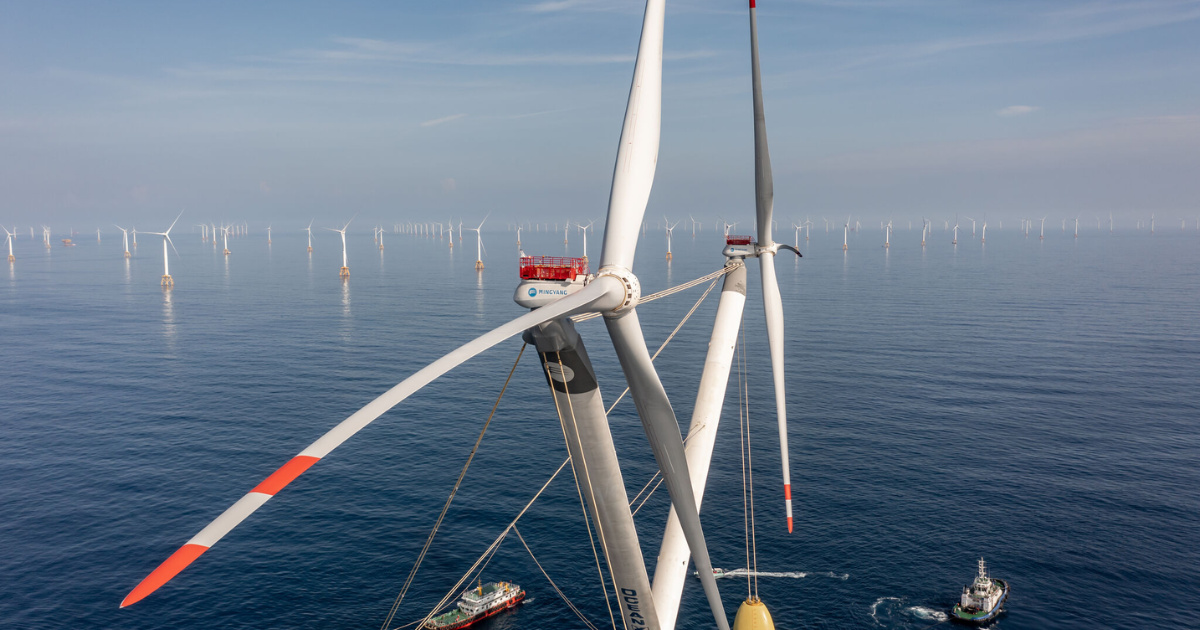
After lifting the nacelle and the three blades measuring 153 meters, the tower reached a height of 185 meters, equivalent to a 63-story building.
-
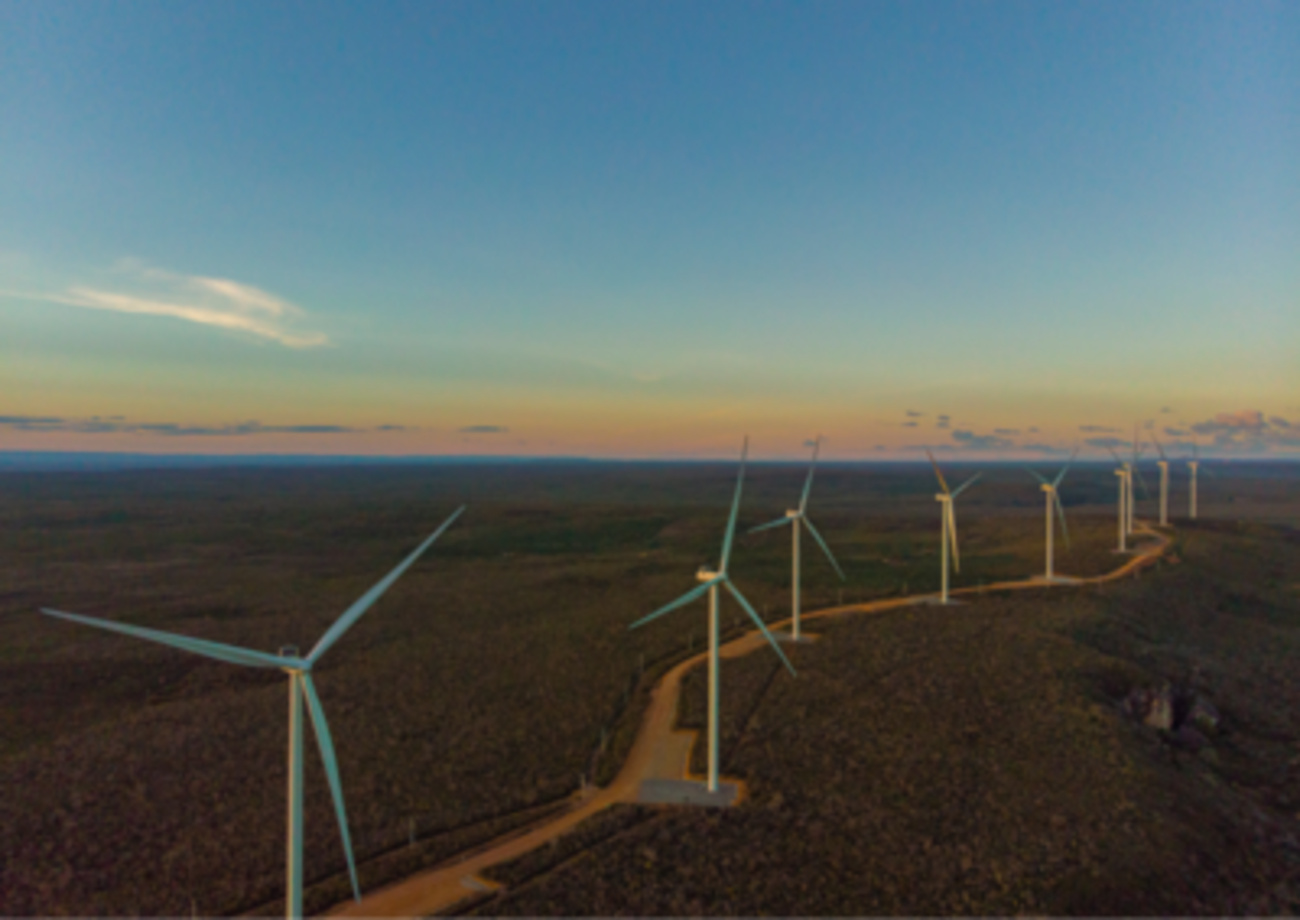
Giant of the winds in Rio Grande do Norte: Serra do Tigre Wind Complex receives new investments and accelerates the expansion of clean energy generation to supply millions of Brazilian homes.
-
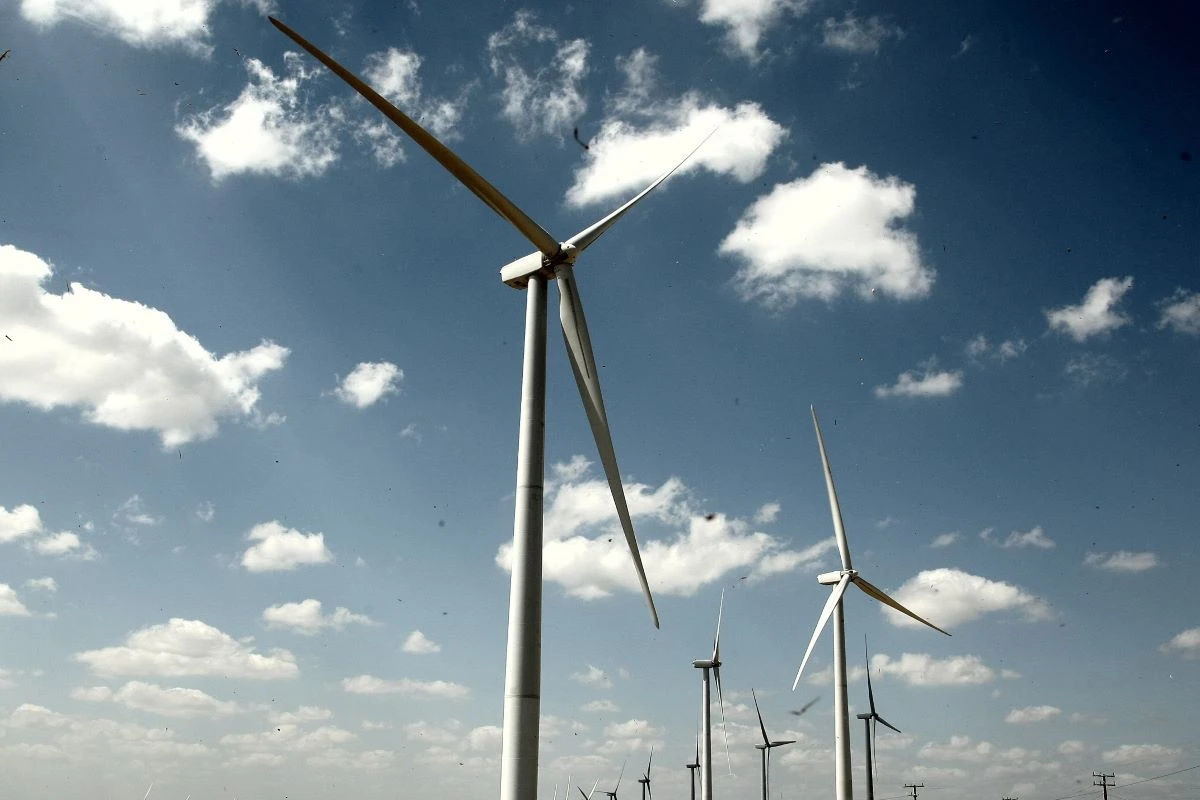
Urgent energy transition: Greenpeace advocates for massive investments and points to Brazil as a global leader in wind energy production in the coming years.
-
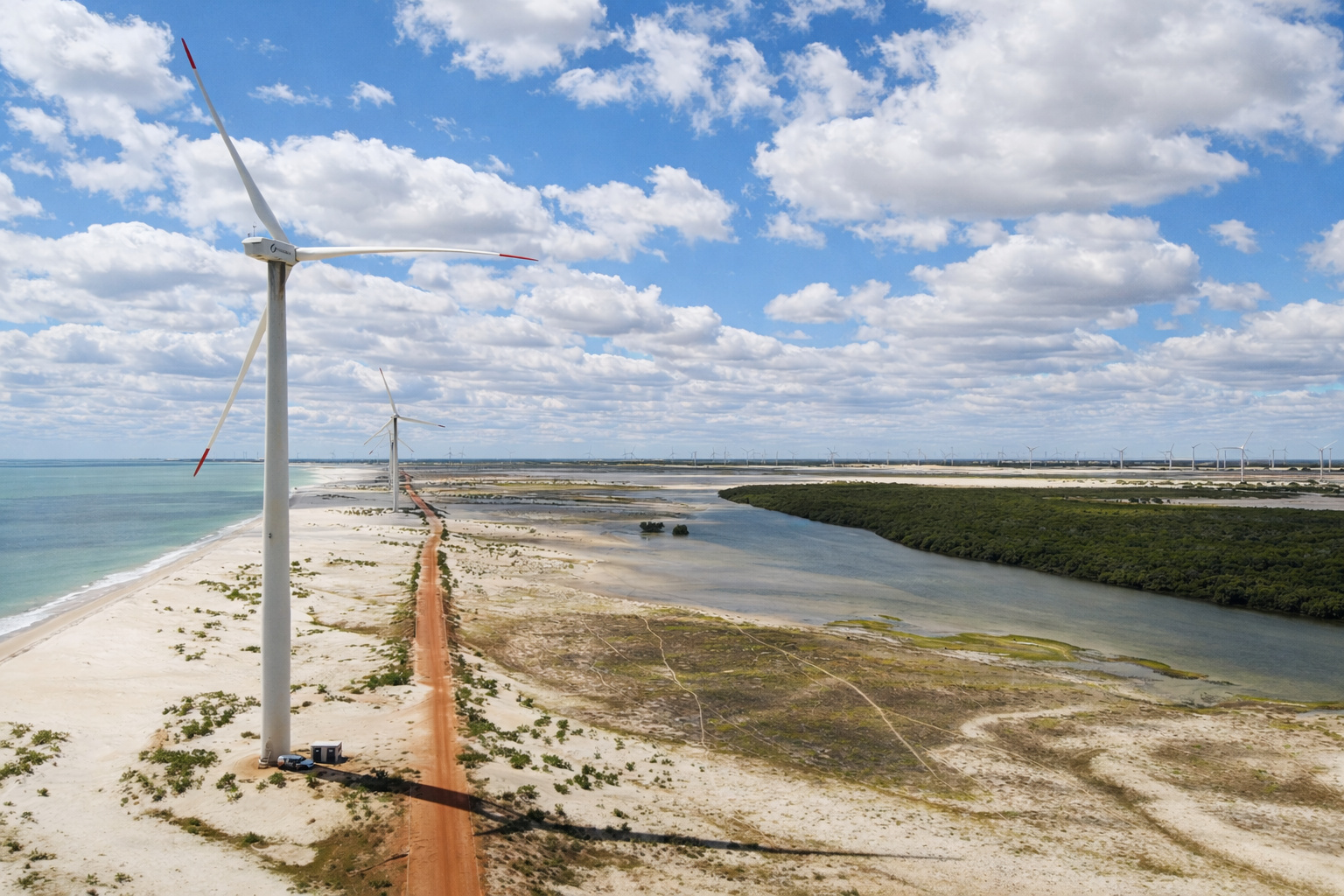
Conflict in the Sertão: Rural communities in Rio Grande do Norte report issues with wind farms and the new challenges of clean energy in the semi-arid region.
-
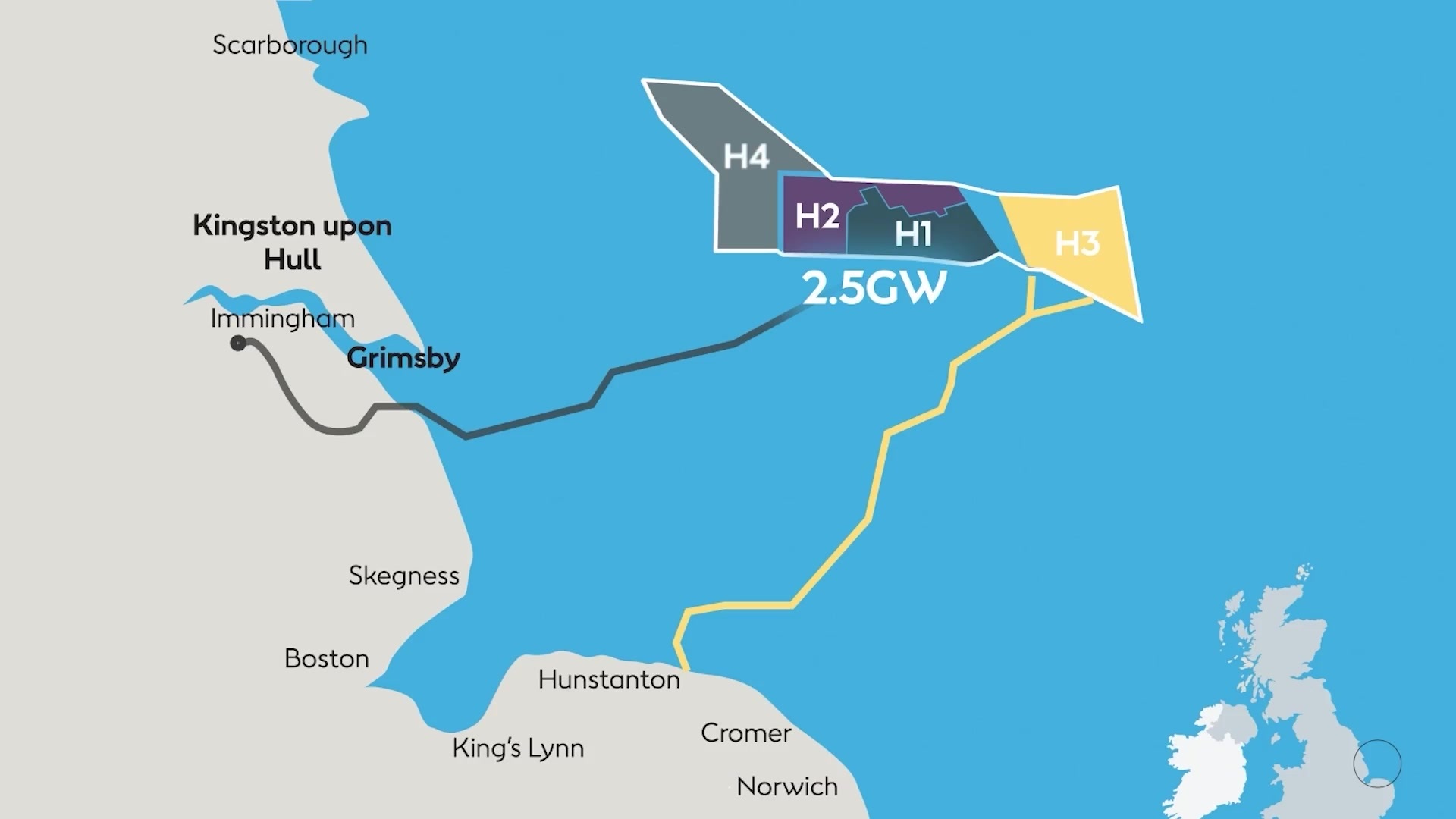
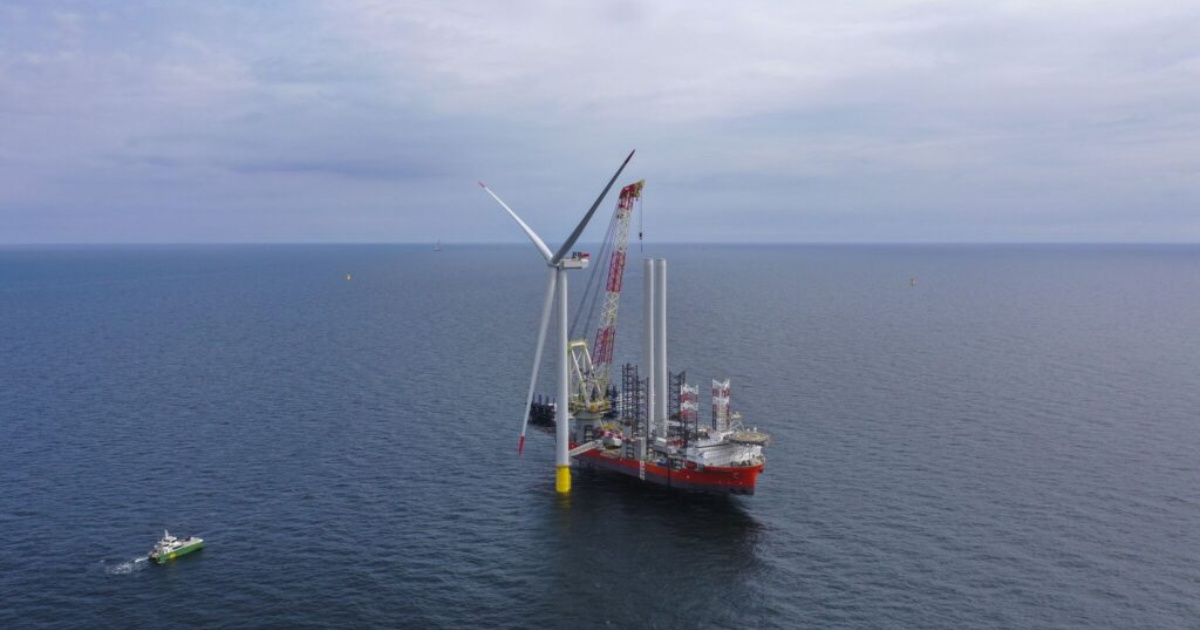
231 turbines of 260 meters at 160 km from the coast, monopiles weighing as much as nine blue whales embedded in the North Sea, and a crane ship taller than the Eiffel Tower: Hornsea 3 will be the largest offshore wind farm on the planet by 2027, and its first components have already arrived in England.

The rotor exceeds 310 meters in diameter and sweeps 77 thousand square meters, an area larger than ten football fields combined.
This diameter allows capturing winds at different altitudes, increasing the stability of electricity production in tropical seas subject to variations in speed.
By surpassing the 21.5 MW prototype from Siemens Gamesa installed in Denmark, Dongfang has increased the previous record by 4.5 MW and raised the benchmark in the race for “mega-rotors.”
The project took advantage of short weather windows, with high-capacity marine cranes operating between rain fronts and strong currents.
Corrosion-Protected Semi-Direct-Drive Technology
To face the intense salinity of the strait, the consortium adopted a semi-direct-drive system in which the generator, shaft, and gearbox share the same sealed compartment.
This integration reduces failure points, decreases vibrations, and simplifies maintenance at sea.
Fiber optic sensors installed on the blades monitor, in real-time, the structural deformation caused by gusts of up to 200 km/h, typical of typhoons classified as Beaufort 17.
The collected data feeds into a predictive analysis platform that schedules inspections before small cracks evolve into critical defects.
The manufacturer reports that the modular design can be disassembled in sections, shortening repair time when internal parts need replacement.
Energy and Environmental Impact
With an average wind speed of 10 m/s, each unit is expected to produce 100 gigawatt-hours per year, enough energy to supply 55 thousand households.
This generation will avoid the annual burning of 30 thousand tons of coal and the emission of 80 thousand tons of carbon dioxide, according to calculations validated by the National Wind Energy Center.
The saving of fossil fuels also reduces the emission of sulfur and nitrogen oxides, decreasing acid rain in industrialized coastal regions.
In addition to the climate impact, the offshore operation preserves nearby agricultural areas, saving land that would have been required for onshore wind farms.
Dongfang claims that over a lifespan of 25 years, a single turbine will avoid the equivalent of planting 1.3 million mature trees.
Declining Offshore Costs
Thanks to a 100% domestic supply chain, the levelized cost of energy (LCOE) of Chinese projects is already 50% lower than that registered in British parks inaugurated in 2025, according to Wood Mackenzie.
Local production of bearings, power conversion systems, and installation vessels eliminates expenses related to imports and currency exchange, stabilizing budgets.
The standardization of components allows volume contracts that reduce the price per installed megawatt.
Tax incentives, tradable carbon credits, and reduced port fees complete the competitiveness package offered to investors.
Analysts predict that the price level achieved by China will force European and North American bids to reconsider margins in upcoming expansion cycles.
Chinese Industrial Leadership
Preliminary data from the Global Wind Energy Council indicate that three out of four offshore turbines installed in 2025 were built in Chinese shipyards.
The official goal of exceeding 150 GW of offshore capacity by 2030 aligns with the “dual carbon” strategy, which aims for peak emissions in 2030 and neutrality by 2060.
Subsidized interest credit lines and state guarantees attract private funds to parks in the provinces of Fujian, Guangdong, and Jiangsu.
The pace of construction favors economies of scale, accelerating the learning curve in the industry.
Reports from the People’s Bank of China indicate a 23% increase in jobs linked to the wind supply chain between 2023 and 2024, consolidating the sector as a vector for regional development.
European Reaction in Testing Phase
European consortia are testing 22 MW turbines on land platforms in Denmark and the Netherlands, but still lack the infrastructure for installation in open sea.
Companies cite logistical bottlenecks, steel costs, and regulatory hurdles as factors delaying the entry of models above 20 MW along their coastlines.
Experts warn that delays may reduce the competitiveness of projects in the North Sea, where leasing and insurance costs are high.
“The technological gap is no longer nominal power, but manufacturing speed,” assesses Marianne Krogh, a professor at the Technical University of Denmark.
She points out that Asian industrial maturity allows launching pilot series in timeframes that, in Europe, still depend on lengthy environmental permits.
Fatigue Testing and Next Parks
The prototype will undergo twelve months of fatigue testing, involving one thousand complete load cycles required for class society certification.
Technicians will measure vibrations in multiple axes and record thermal variations during storms to calibrate control algorithms.
If approved, the model will equip parks in deep waters off Fujian and Guangdong, where the average wind speed exceeds 8 m/s year-round.
The China Three Gorges group has already reserved grid allocations to receive the energy generated by future commercial series.
Provincial governments are planning underwater direct current interconnections to channel production to industrial centers inland.
Towards Turbines Above 30 MW
Researchers at Peking University project that machines above 30 MW are expected to emerge before 2030, driven by competition among Dongfang, Goldwind, and Ming Yang.
The trend is to combine diameters close to 350 meters with reinforced steel towers, capable of withstanding extreme dynamic loads.
According to Li Hua, chief engineer of DEC, “it’s not just about maximum power, but reliability in typhoon scenarios and industrial maturity.”
National planners are already studying floating platforms to install giant turbines in depths greater than 60 meters.
The success of these prototypes could definitively shift the center of gravity of wind innovation to the Chinese coastline.
To what extent will the Chinese advance compel Europe and the United States to accelerate their own giant turbines and modernize their supply chains?








-

Uma pessoa reagiu a isso.