





 Portuguese
  English
  Spanish
  3 min of reading
  0 comments


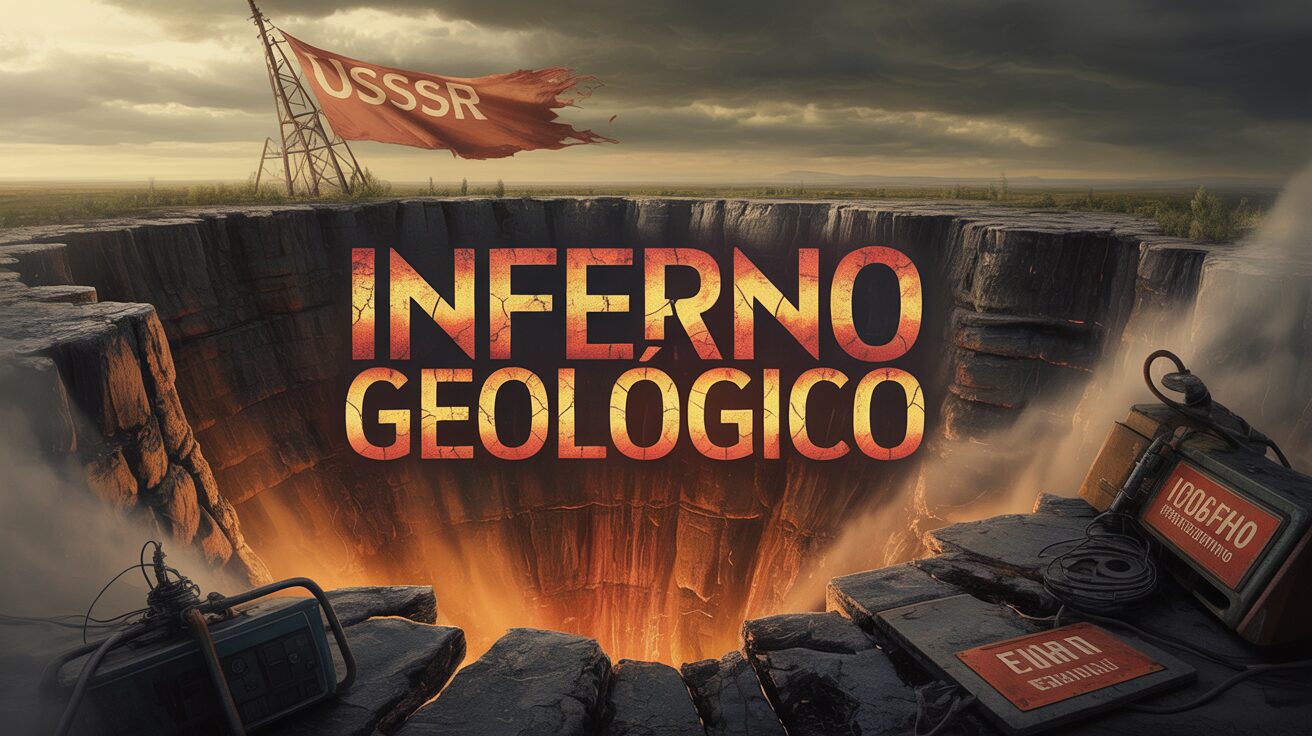
Dug by Soviet scientists at the height of the Cold War, the deepest hole in the world hides extreme geological secrets and abandoned stories after the collapse of the USSR, with real stories and myths that continue to spark fascination and theories.
The Kola Superdeep Borehole, located in Russia, is the deepest artificial hole ever drilled by humans, reaching 12,262 meters deep.
Started in 1970 by the Soviet Union, the project aimed to explore the depths of the Earth’s crust for scientific purposes, with no intention of extracting natural resources.
Despite significant discoveries, such as the presence of liquid water at great depths and microscopic fossils billions of years old, the project faced technical challenges, such as extreme temperatures that damaged equipment.
-
Friends have been building a small “town” for 30 years to grow old together, with compact houses, a common area, nature surrounding it, and a collective life project designed for friendship, coexistence, and simplicity.

-
This small town in Germany created its own currency 24 years ago, today it circulates millions per year, is accepted in over 300 stores, and the German government allowed all of this to happen under one condition.

-
Curitiba is shrinking and is expected to lose 97,000 residents by 2050, while inland cities in Paraná such as Sarandi, Araucária, and Toledo are experiencing accelerated growth that is changing the entire state’s map.

-
Tourists were poisoned on Everest in a million-dollar fraud scheme involving helicopters that diverted over $19 million and shocked international authorities.

With the collapse of the Soviet Union in 1991 and the consequent lack of funding, drilling was halted in 1992, and the site was sealed in 2008 for safety reasons.
The Scientific Race During the Cold War
During the Cold War, the Soviet Union and the United States competed not only in the space race but also in ambitious scientific projects.
The Kola Superdeep Borehole was the Soviet response to the American Mohole Project, which aimed to drill the Earth’s crust at the bottom of the Pacific Ocean.
While the Mohole Project was abandoned in 1966 due to funding cuts, the Soviets continued with the Kola Borehole, achieving record depths.
Surprising Discoveries in the Depths of the Earth
Over two decades of drilling, scientists made unexpected discoveries. They found liquid water at more than 5 km deep, which challenged the geological theories of the time.
Additionally, microfossils of unicellular organisms dating back more than 2 billion years were discovered, indicating the presence of life in extreme conditions.
Another significant find was the porous composition of rocks at great depths, contradicting expectations that they would be denser.
Technical Challenges and the End of the Project
Despite the advancements, the project faced significant technical obstacles. Temperatures at the bottom of the well reached around 180°C, almost double what was expected, making the continuation of work extremely difficult and costly.
The intense heat damaged drilling equipment, and the rocks became more plastic, complicating the process.
With the collapse of the Soviet Union in 1991, government funding was cut, leading to the official halt of drilling in 1992.
The Scientific Legacy of the Kola Borehole
Although the Kola Borehole has been abandoned, its scientific legacy remains. The data collected during drilling continues to be relevant for researchers, providing valuable information about the deep geology of the Earth.
The project also inspired other deep drilling initiatives in different parts of the world, contributing to the advancement of knowledge about the interior of our planet.
Myths and Urban Legends
The Kola Superdeep Borehole has also been the subject of urban legends. One of the most well-known is the story that Soviet scientists heard sounds resembling human screams coming from the bottom of the well, leading to speculation that they had drilled down to hell.
However, this story has been debunked and attributed to a hoax involving edited sounds from a horror movie.
The Current State of the Kola Borehole
Currently, the Kola Superdeep Borehole is sealed with a metal cap, and the surrounding facilities have been abandoned.
The site has become a symbol of the limits of human exploration and the relentless pursuit of knowledge. Despite its state of abandonment, the Kola Borehole continues to fascinate scientists and curious minds, representing a landmark in the history of geological exploration.









Seja o primeiro a reagir!