





 Portuguese
  English
  Spanish
  5 min of reading
  0 comments



National Automotive Sector Faces Historic Retraction, With Traditional Manufacturers Reporting Minimal Sales and Considering Exit From Brazil, While Experts Point to Economic and Fiscal Causes for the Current Market Crisis.
The scenario of the Brazilian automotive sector is experiencing one of its most delicate moments in recent years.
According to an analysis by professor and economist Josué Aragão, presented in a video published on his YouTube channel, established brands like Kia, Suzuki, Lexus, and JAC are facing rapidly declining sales and may even stop operating in Brazil, mirroring movements similar to Ford, which ended its manufacturing operations in the country in 2021.
According to Josué Aragão, the current crisis of the national automotive market intensified throughout 2025, impacting not only lesser-known brands but also traditional names that, in previous years, were among consumers’ favorites.
-
Brazilian city gains industrial hub for 85 companies that is equivalent to 55 football fields.

-
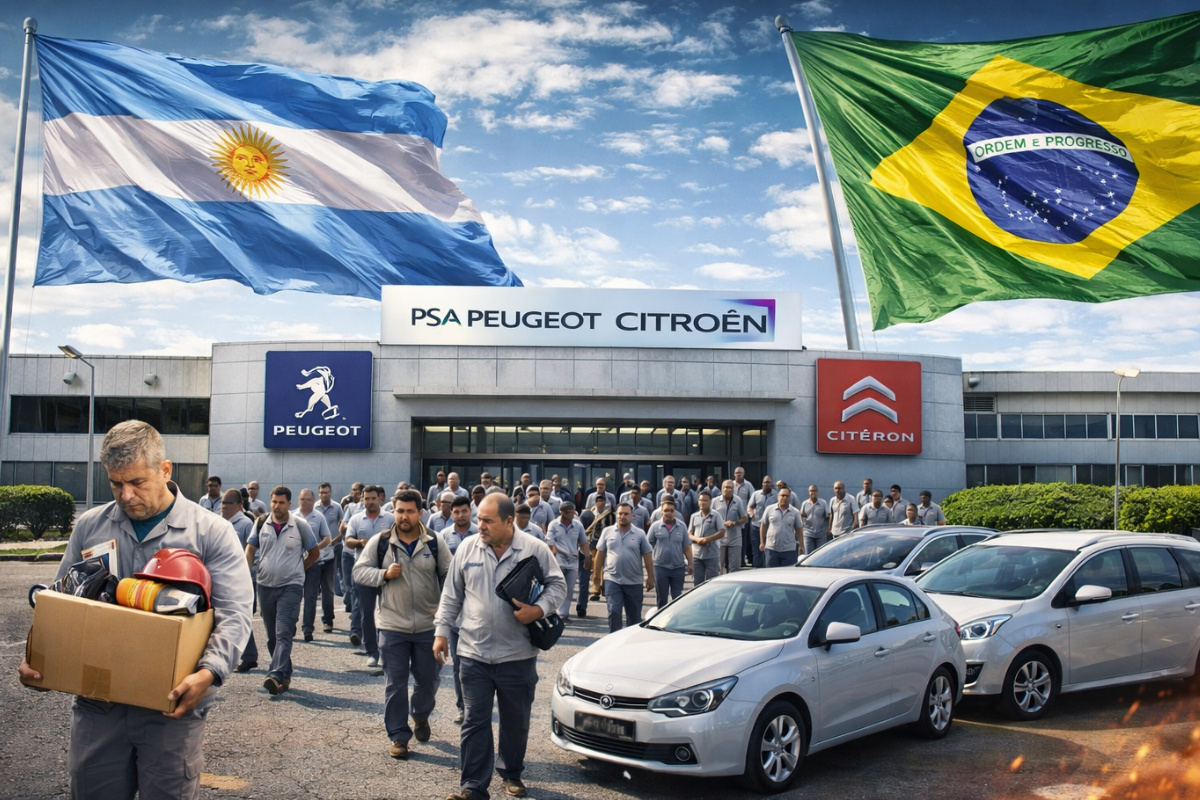
Peugeot and Citroën factory in Argentina cuts production by half and opens a layoff program for more than 2,000 employees after Brazil drastically reduced purchases of Argentine vehicles.
-
A Brazilian city gains a factory worth R$ 300 million with the capacity to process 200 thousand tons of wheat per year, a mill of 660 tons/day, silos for 42 thousand tons, and an industrial area of 276 thousand m².

-
Havan will leave the shopping mall in Blumenau to inaugurate something that the chain has never done before: a megastore in half-timbered style in the Historic Center of the city, which is expected to be completed in May and change the landscape of local retail.


The expert highlights that, in some cases, the volume of vehicles sold by certain manufacturers did not even reach 500 units throughout the year, evidencing the severity of the situation.
Tax Burden and Vehicle Prices in the Brazilian Automotive Sector
As analyzed in the video, factors such as rising prices of new cars, high tax burden, and government interference in the automotive sector have been hindering the growth and sustainability of these manufacturers’ operations in Brazil.
Aragão emphasizes that, while countries like China and the United States maintain tax rates on vehicles at 5% and 7%, respectively, Brazil taxes up to 44% of a car’s value, a situation that is likely to worsen with the implementation of the tax reform set to take effect in 2026.
According to data presented by Josué Aragão, to acquire a model like the Toyota Corolla, the Brazilian consumer spends about R$ 150,790, of which over R$ 66,000 is only for tax payments.
For a worker earning the minimum wage, it would take more than 23,000 hours of work to acquire this vehicle, while, in the United States, that time is reduced to just over two thousand hours.


Traditional Brands Face Sales Declines in the National Automotive Market
Among the manufacturers with critical performance, Kia Motors stands out.
The brand, which once had a strong presence in the national market, sold less than one thousand vehicles in 2025 — with 600 of them being Bongo trucks.
Thus, fewer than 400 passenger cars were sold during the period.
According to Aragão, this retraction is directly linked to the dependence on imports, worsened by the high dollar rate and fierce competition from national and imported SUVs.
The Kia Sportage model, for example, starts at R$ 270,000, a price higher than that of better-equipped competitors.
Meanwhile, Suzuki, another traditional manufacturer, faces a similarly delicate situation.
As highlighted by the economist, only 430 units were registered that year, mostly of the Jimny Sierra model, which starts at R$ 170,000.
The lack of recent launches and the absence of advertising campaigns exacerbate the stagnation of the Japanese brand, which operates in Brazil in partnership with HPE Automotores and Mitsubishi.
Toyota’s luxury division, Lexus, is also feeling the impact of the crisis.
In the first quarter of 2025, only 258 vehicles were sold in the country, all priced above R$ 299,000. The RX model, for instance, exceeds R$ 670,000.
According to Josué Aragão, the high added value and the brand’s discreet presence in the national territory contributed to the retraction.
JAC Motors, a Chinese manufacturer that arrived in Brazil in 2011 with innovative proposals and competitive prices, has practically ceased operations in the passenger car segment.
Of the fewer than 350 vehicles sold in 2025, 70% correspond to electric trucks.
Aragão explained that the company’s new strategy, focused on electric vehicles, was severely impacted by the increase in import taxes imposed by the Brazilian government.
The taxation on hybrid cars, for example, jumped from 15% to 30% between January 2024 and July 2025, and is expected to reach 35% in July 2026.
For electric vehicles, the tax rate will rise to 35% in the same period.
Other Manufacturers and the Impact of the Crisis on the Brazilian Automotive Sector
Other traditional brands, such as Land Rover and Subaru, also face results below expectations.
According to Josué Aragão’s video, Land Rover sold only 267 units in February 2025, while Subaru had only 12 vehicles registered in March of the same year.
Luxury models like the Defender and Velar easily exceed R$ 500,000, making them inaccessible for most consumers.
In addition, Aragão mentioned the global crisis faced by giants like Volkswagen and Stellantis, the group responsible for brands like Fiat, Jeep, Peugeot, and Citroën.
Although they still lead the Brazilian market, these companies are reporting declines in sales due to increased Chinese competition, high production costs, and economic instability.
In June 2025, Fiat held a 21.1% share of the national market, followed by Volkswagen (15.9%), GM (12.6%), Toyota (fourth place), Hyundai, and Renault.
Causes of the Retraction and Future of the Brazilian Automotive Sector
But, after all, what explains this retraction scenario?
According to the economist, the main factor is the so-called “Brazil cost,” a term that summarizes the combination of high tax burden, excessive bureaucracy, labor costs, and expensive energy.
As a result, manufacturing vehicles in the country becomes less competitive, increasing dependence on imports, which, in turn, are also becoming costlier due to unfavorable exchange rates and new import tariffs.
For Aragão, public policy decisions that increase taxes on imported vehicles — especially hybrids and electric vehicles — harm consumers, limit competition, and reduce the availability of innovative models in the national market.
The economist notes that, contrary to what is proposed with the protection of the local industry, the lack of incentives and excessive taxes weaken the sector, decrease jobs, and delay fleet modernization.
The debate about the future of the Brazilian automotive sector remains open.
As Josué Aragão pointed out on his YouTube channel, “the less competition there is, the lower the chances for innovation and access to fairer-priced vehicles for the population.”
Do you believe that the national automotive sector will be able to reinvent itself in light of this scenario, or are we headed toward an increasingly restricted and elitized market?








Seja o primeiro a reagir!