





 Portuguese
  English
  Spanish
  6 min of reading
  0 comments


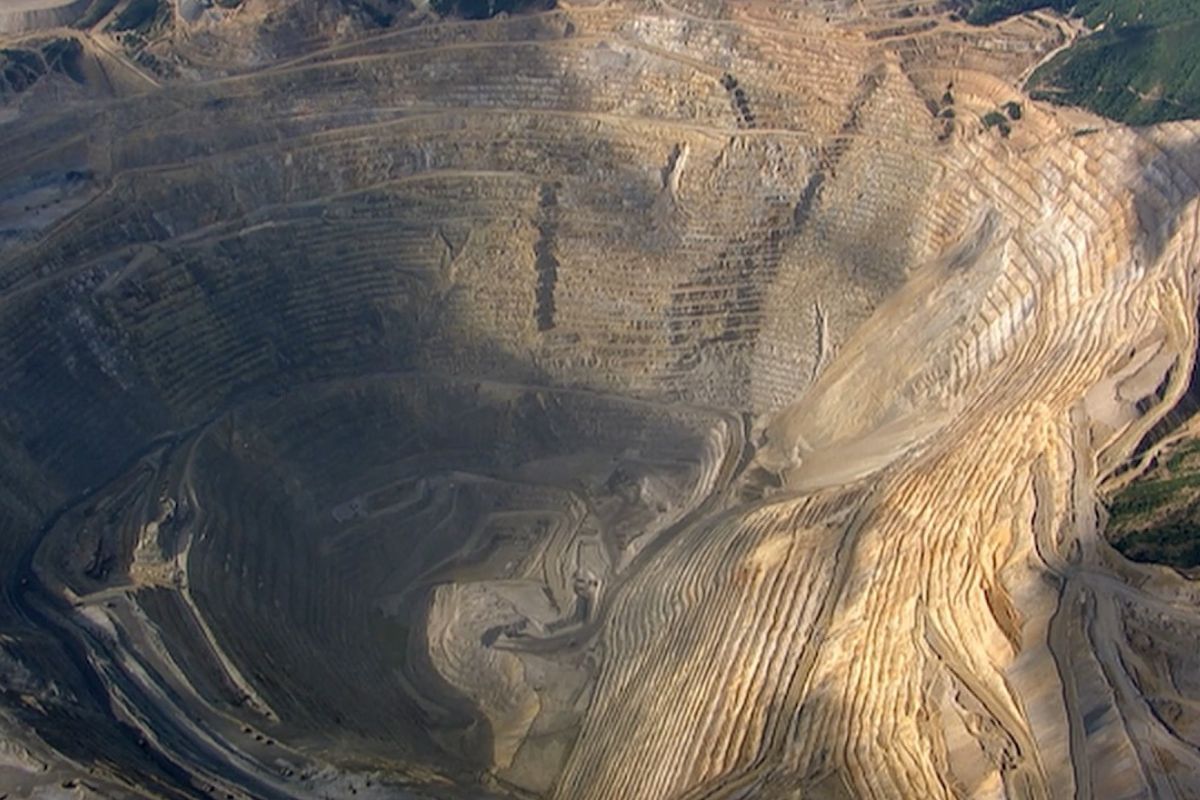
In China, Humans Assemble An Aqueduct In Sections Of 50 Meters, Each Block Weighing 1,200 Tons, Adjusted To Centimeters For The Water To Flow On Its Own To Beijing. In The US, The Bingham Mine Has Been Digging For 100 Years With Three Daily Explosions. In Mexico, Divers Unclog Raw Sewage. Mega Ships Carry 13,000 Containers.
Humans have changed the planet’s landscape with industrial-scale infrastructure that has become routine across various continents. From an aqueduct built piece by piece to transport water without pumps, to mines that lower mountains, the common mark is the same: engineering to move water, rock, waste, and goods in gigantic volumes.
In practice, this transformation appears in numbers and tasks that do not fit common imagination. Blocks of 1,200 tons aligned by centimeters, trucks that consume hundreds of liters per hour, dives into raw sewage to unclog pumps, and ships that go from a weekly loading cycle to just a few hours, all operated by humans and trained teams.
Chinese Aqueduct Raised Like A River Made By Humans, With 1,200 Ton Blocks

In China, the project is described as the largest engineering undertaking in progress on the planet, an elevated channel, an aqueduct, assembled on-site in stages. Construction progresses in separate sections of 50 meters in length, each beginning as a structure of steel bars, assembled by a team of 20 men in a metal skeleton compared to a nest. Then, the entire set is encapsulated in concrete to gain rigidity and become a single piece of transportation and fitting.
-
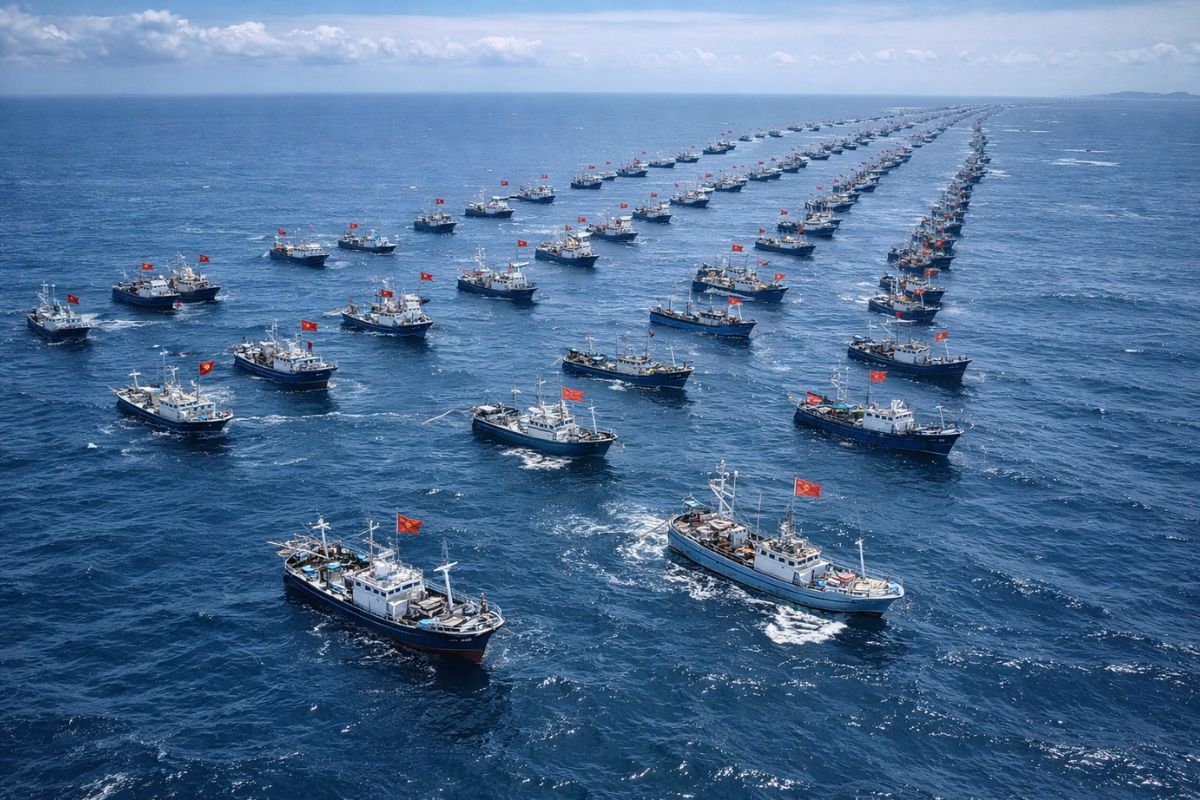
China has deployed more than 1,400 fishing boats in formation, creating a barrier of 320 kilometers at sea, and the whole world wants to know if this is fishing, a military exercise, or a message of war.
-
Spain surprises the world by erecting 62 artificial dunes, mixing sand with natural remains of posidonia, and causing the structure to lose only 1.4% of its volume in 1 year.

-
With 16 Bulava missiles, improvements in acoustic stealth, and a design focused on silent patrols, Russia’s nuclear submarine was born to ensure Moscow’s invisible retaliation and has become one of the pillars of its maritime strength.

-
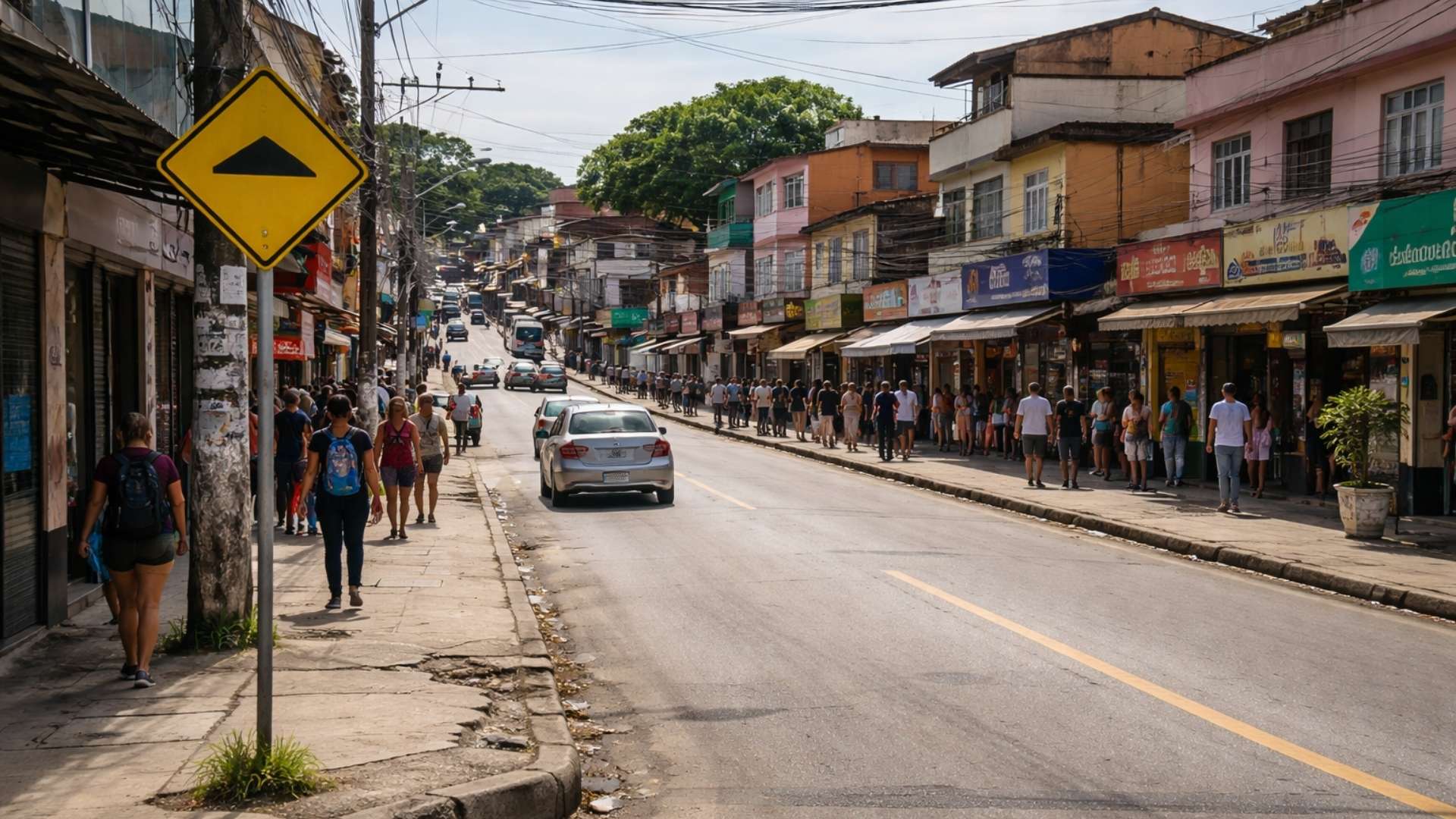
‘Populous’ city in Rio among the worst in Brazil in national ranking and exposes silent development crisis.

When the section is ready, one of the most powerful cranes in the world comes into play to move and position the block in the final layout. Each piece weighs 1,200 tons, a mass placed as exceeding the weight of three jumbo jets. The operator featured in this snapshot is 25 years old, Guang Ah Fung, and his job is not just to lift and fit, but to get the exact angle of the system right.
The detail that defines the operation is gravity. There are no pumps. The water needs to flow on its own northward to Beijing, which makes positioning critical. Guang Ah Fung must set each block on a millimetric gradient, only one centimeter lower at one end than the other, to ensure hydraulic continuity in an extremely long work. The extension is so great that the aqueduct is not expected to be fully operational before 2030, and when it is functioning, millions of people in northern China should benefit from water transportation to where the population is concentrated.
Bingham Canyon Mine, The Largest Open-Pit Mine, With A Century Of Daily Explosions

If in China the challenge is to move water with precision, in the United States the challenge is to move rock on a permanent scale. The mentioned example is the Bingham Canyon Mine, presented as the largest open-pit mine in the world, with annual ore production sufficient to “rewire” every home in the US and Mexico. The operational portrait comes with concrete dimensions: the pit reaches 2.5 miles wide at its widest point and nearly one mile deep at its deepest point.
The operations manager, Matt Lengerich, describes the logic of expansion: as the mine grows, it retreats in cuts of about 1,000 feet, and each of these cuts can take seven years to reach the ore, even before extraction can proceed. The scale is not a detail, it is a necessity, because the ore contains only a small amount of copper. This requires removing enormous volumes to obtain useful amounts of pure metal.
The material cited as an example is low-grade ore, a “limestone ore,” with bright spots of pyrite. And the balance of a century reinforces the scale of the intervention: more than 100 years of mining, with a cumulative production of 19 million tons of copper and a total movement of about eight billion tons of material, using giant machines and fleets.
The logistics include enormous trucks, each weighing more than a jumbo jet, operating non-stop to remove waste and transport ore. A driver identified as Frosty reports seven years of driving and describes the energy cost of the cycle: when loaded trucks go up the ramp, they burn about 100 gallons per hour. And when the goal is to break loose the rock, the inevitable method comes into play: explosives. The operation uses three detonations per day, and the sum of a century of explosions is presented as the largest excavation ever made in human history.
Divers In Raw Sewage In Mexico City To Keep Pumps Running

Not all colossal works have visible concrete and steel. In Mexico City, engineering appears underground, in the system that needs to push sewage out of the city. Several pumping stations force sewage to rise and move forward, but the pumps frequently clog, creating an extreme routine to keep the network operating until a “super sewer” is ready.
The work falls on professionals like diver Julio and his team, who enter raw sewage to unclog pipes manually. The risk and discomfort explain the low demand for this role. The system concentrates all the liquid waste from industries, residences, and even hospitals into a single sewer, and the giant pumps repeatedly lock up.
The described scene includes the type of obstruction that disrupts the rhythm of an entire station. In one episode, the issue is something the size of a horse’s head, and the intervention requires direct inspection of a large pump that keeps the flow moving. It is a chain where humans sustain basic infrastructure, even when the working environment is toxic and unpredictable.
Container Ships With 13,000 Units And Ports That Unload In Hours
The pressure from global trade translates into even larger machines: container ships. The construction of one of the largest ships in the world, in this context, involves 50,000 workers, molten metal heated to over 1,000 degrees Celsius, tens of thousands of tons of steel per vessel, and engines described as the size of houses.
The referenced engine exceeds 100,000 horsepower, while a typical new car hovers around 100 horsepower. To assemble pieces the size of buildings, a crane capable of lifting 1,300 tons comes into play. Operator Ju Seong-jong appears as a specialist elite, with 27 years of experience, moving giant pieces with millimeter precision.
The finished ship rises more than 50 meters from the keel, is three times longer than a football field, and has a capacity for 13,000 containers. And the number that redefines industrial scale is the production rate: in a single shipyard, about 100 ships of this type are built per year, nearly one mega ship every three days.
The consequence appears in the ports. Forty years ago, loading and unloading required 100 men working for more than a week. Today, the same process occurs in just a few hours due to container standardization, identical boxes that enter and exit efficiently. An operator explains that a crane can handle 35 containers per hour. With five ship-to-shore cranes, the capacity reaches 400 containers per hour.
In this scenario, Ulsan is cited as the fifth largest port in the world, handling about 14 million containers per year. The combination of larger ships and accelerated operations changes global logistics, shortening windows and requiring increasingly mechanized and synchronized ports.
Subway Tracks And Megacities: Humans Move Millions Every Day
Besides water, ore, sewage, and cargo, humans also move people in mass. The London subway system is described as the oldest in the world, with over 500 trains per day running on 250 miles of tracks and transporting nearly three million people. During peak hours, some of these journeys are “invisible” as they are underground, and some lines are so deep that, if above ground, they would reach the equivalent of ten stories.
The most intense example appears in Tokyo, the busiest system in the world, with eight million passengers crossing the city daily, totaling three billion rides per year. To make this flow work, there is a team on each platform, cited as 25 officers to keep the circulation smooth and prevent delays, with expectations of extreme punctuality.
Overall, the narrative is the same: humans create systems that reorganize everyday life and the functioning of entire cities, with performance that depends on precision, scale, and continuous management.
Which of these human interventions seems most impressive to you: the pump-free aqueduct to Beijing, the mine that blasts rock three times a day, the dive into raw sewage, or the ships carrying 13,000 containers in a few hours?







-

-

2 pessoas reagiram a isso.