





 Portuguese
  English
  Spanish
  3 min of reading
  0 comments


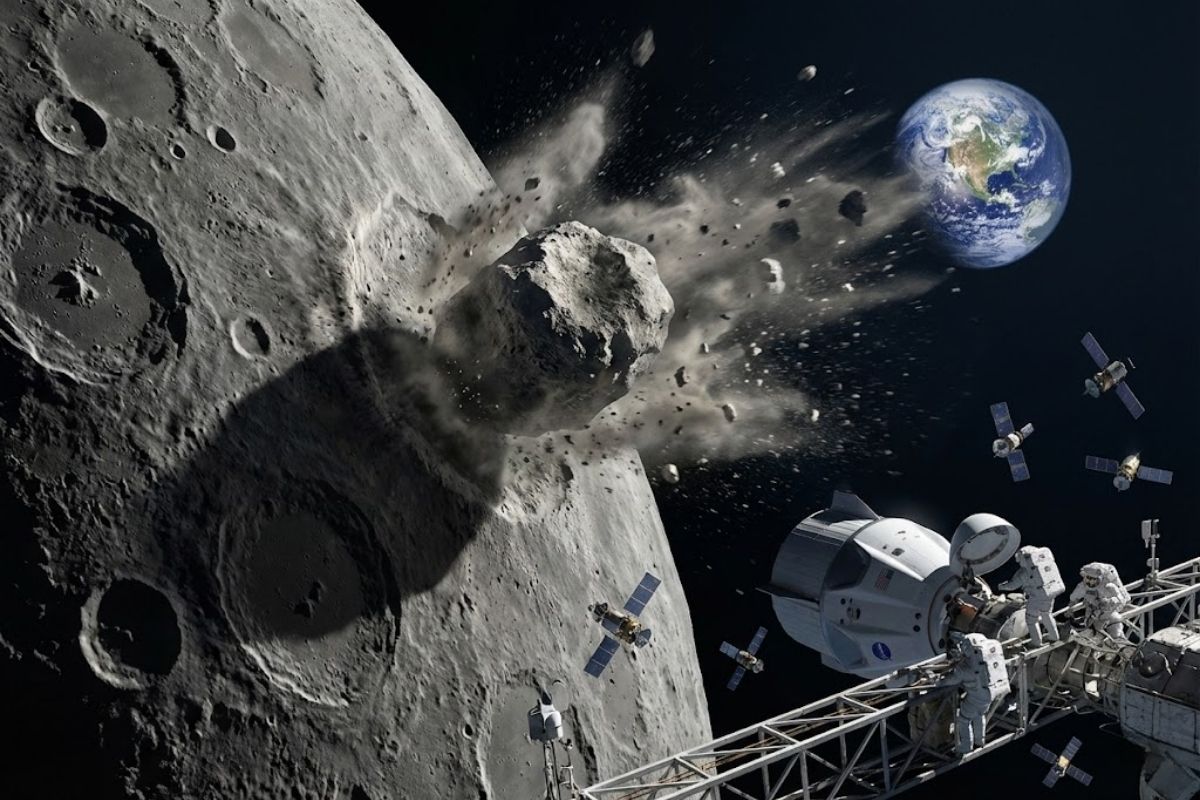
With About 4% Chance of Lunar Impact on December 22, 2032, NASA Scientists Warn That Asteroid 2024 YR4 May Produce Visible Flash from Earth and Eject Meteoroids, Increasing Risks to Satellites, Astronauts and Future Lunar Operations While Debates on Deflection and Fragmentation Gain Urgency
The NASA scientists discuss a rare scenario: asteroid 2024 YR4, described as the size of a building and estimated to be about 60 meters wide, currently has a probability of about 4% of hitting the Moon in 2032. The hypothesis includes the possibility of an impact producing a flash visible from Earth, depending on local observation conditions.
Beyond the brightness, NASA scientists point to a secondary risk more sensitive to space infrastructure: there is about a 1% chance that the lunar impact will scatter numerous tiny meteoroids in near-Earth space, potentially harming satellites and exposing astronauts to a more hostile debris environment.
Probabilities, Date and What Changed Since 2024

The object was detected in December 2024 and, shortly after its discovery, was treated as a potential threat of collision with Earth.
-
In Mexico, a 3,000-year-old Maya site with the dimensions of an entire city may have been built as a colossal map of the cosmos, created to represent the order of the universe and reveal how this people organized space, time, and rituals.

-
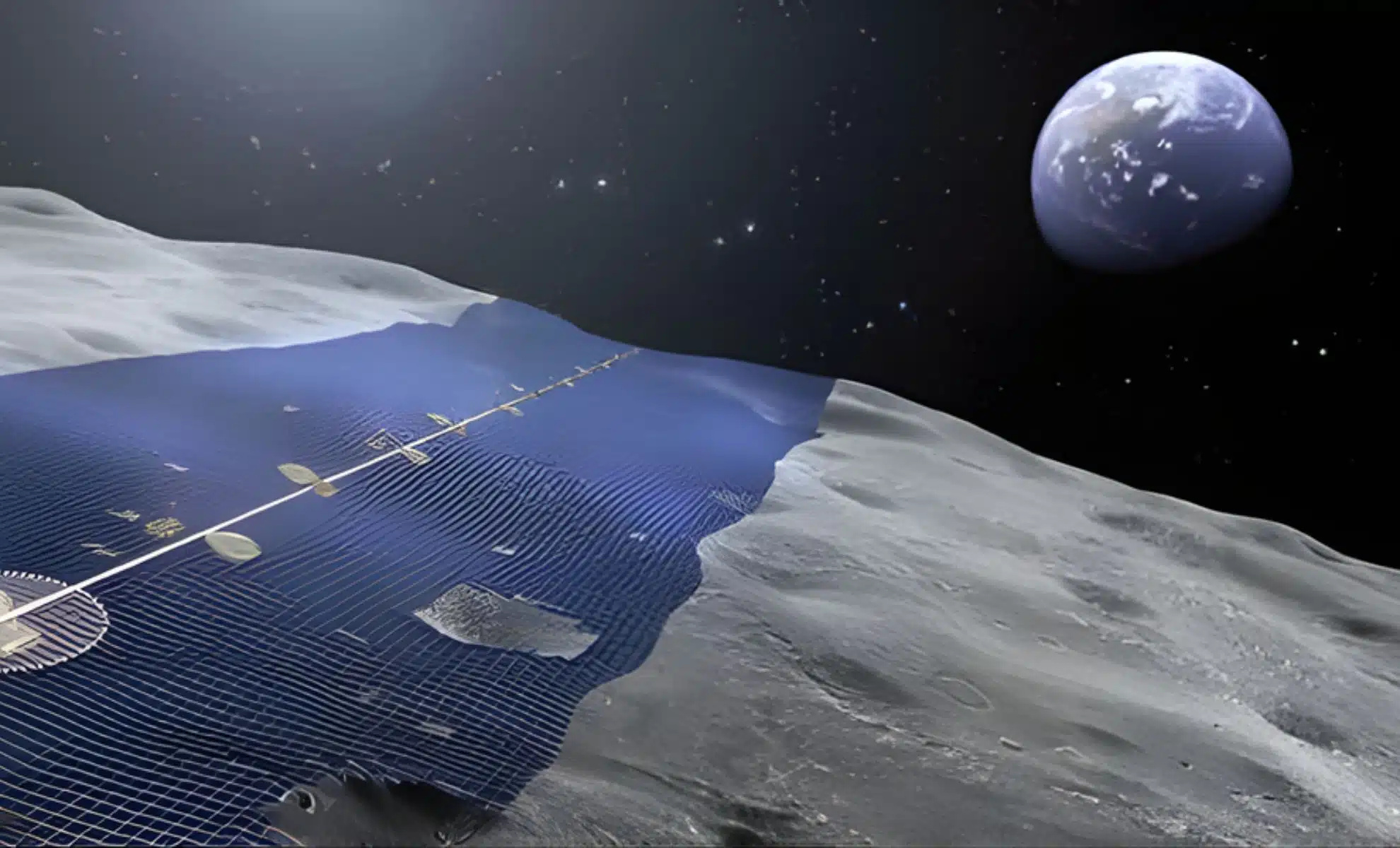
Japan wants to build a solar ring of 10,900 kilometers on the Moon to continuously send energy to Earth.
-
Weighing almost 1 ton, with temperatures of up to 3,000°C, the ability to launch 10,000 fragments within a radius of 1 km, capable of penetrating concrete and melting steel, Turkey’s terrifying bomb emerges as one of the most destructive non-nuclear weapons ever presented.

-
After a submarine disappeared beneath the “Doomsday Glacier,” scientists announce a new monstrous machine capable of operating at 3,000 meters depth to return to the heart of the ice and investigate a threat that could raise sea levels worldwide.


This possibility peaked at 3.1% on February 18, but further observations ruled out the Earth collision.
Since then, the chance of lunar impact has slightly increased and is estimated to be around 4%.
The scenario presented by NASA scientists works with a likely date: December 22, 2032.
The Impact on the Moon May Be Visible from Earth

If 2024 YR4 hits the Moon, the estimate is that there is an 86% chance that the collision will occur on the side facing Earth.
In this case, the impact could generate a flash that would likely be visible from our planet, provided local observation conditions are favorable.
With the geometry associated with the projected date, Hawaii would have an excellent viewpoint, and the western United States would be in a condition considered quite favorable to witness the event.
Energy Released and the Danger of Debris in Near-Earth Space


The lunar impact, if it occurs, could release energy equivalent to the detonation of approximately 6 million metric tons of TNT, estimated to be about 400 times the energy released by the Hiroshima bomb.
This level of energy helps explain why the debris issue has gained priority in the debate.
The concern is that the collision could launch a cloud of fragments and particles, creating a temporary risk corridor for assets in Earth’s orbit.
In practice, the alert from NASA scientists targets satellites and also the safety of astronauts on future missions, including in the context of lunar operations.
Deflection, Fragmentation and the Dilemma of Minimum Reaction Time
A critical point is the uncertainty: there is still not enough precision regarding the size and mass of 2024 YR4 to sustain a safe deflection with high confidence.
Therefore, the most practical alternative considered is to intentionally fragment the asteroid, through a high-speed impactor or even a nuclear explosion.
The cited deadline is tight: this action would need to occur at least three months before a lunar impact, so that the resulting debris spreads far from Earth.
Ideally, the plan would also include a reconnaissance mission in the coming years to reduce uncertainties and avoid blind decisions.
The Role of James Webb in 2026 and the Decision Window
The James Webb Space Telescope may observe the asteroid in February 2026, which would help rule out a lunar impact or, in the extreme, raise the projected chances to as much as 30%.
This possible jump shows how the situation can still change with new measurements.
If the telescope fails to observe the object for any reason, the problem becomes governance under uncertainty: NASA scientists admit that decisions might be necessary even without complete data, precisely because the development of any intervention mission would have to begin very soon.
Do you think NASA scientists should prioritize a reconnaissance mission first, even with the clock ticking, or accept the risk and already plan for a fragmentation before 2032?










-

-

-

-

-

10 pessoas reagiram a isso.