





 Portuguese
  English
  Spanish
  5 min of reading
  8 comments


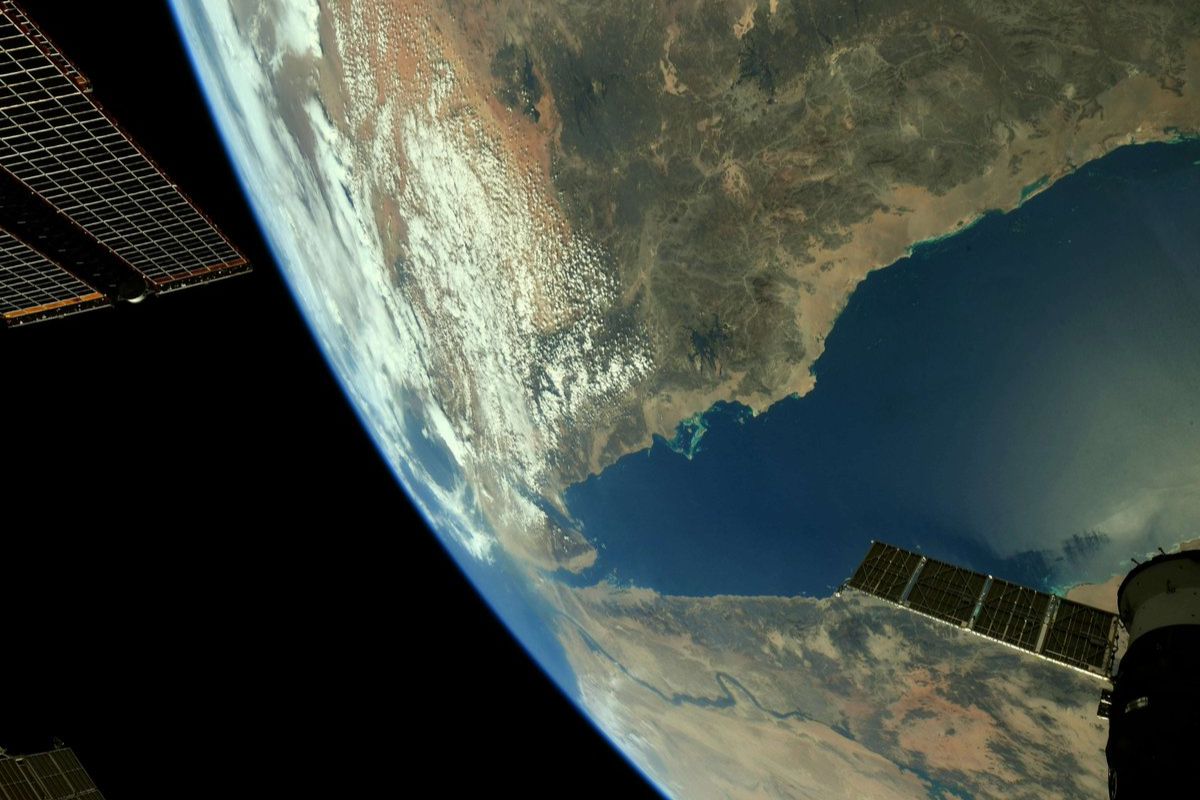


Astronaut Ronald J. Garan Jr, Former NASA, Claims That the Biggest Transformation After 178 Days in Orbit and Over 2,800 Revolutions Was Not Technical, but Human: From the International Space Station, He Saw the Atmosphere as a Thin Layer, Without Borders, and Concluded That We Treat Life as Subordinate to the Economy.
The astronaut Ronald J. Garan Jr, former NASA member, issued a direct warning after living 178 days in orbit around the Earth, a period during which he completed over 2,800 revolutions around the planet. From the International Space Station, he stated that the deepest change was not scientific or operational, but a human perception shift.
For the astronaut, observing the planet from above exposed a contradiction he considers dangerous: humanity, according to his assessment, maintains distorted priorities by placing the economy above the preservation of the planet and life itself. He reports that, when seeing the Earth as a whole, without visible borders, the economic logic disappears in the face of what sustains survival.
178 Days in Orbit, 2,800 Revolutions and an Impact He Calls “Human”

The astronaut Ronald J. Garan Jr spent 178 days in space, in an orbital trajectory, and completed over 2,800 revolutions around the Earth.
-
A forgotten cord on the floor of a basement in Vienna leads a plumber to a box containing 30 kilograms of gold with Mozart’s face, hidden before World War II. The treasure, worth 2.3 million euros, was just centimeters away from a worker who ignored the sign a day earlier.

-
A couple buys an old chalet, breaks the kitchen floor for renovation, and finds over a thousand coins of gold and silver hidden since the English Civil War over 4 centuries ago.

-
Rigid bags with their days numbered: new trend prioritizes comfort in 2026.

-
YouTuber creates an excavator equipped with a giant 4.5-meter sword to challenge his brother to a rematch, and the invention quickly goes viral on social media.


Beyond the time in orbit, he also describes numbers that quantify his career: during missions, he traveled about 71 million kilometers in orbital trajectory, performed four spacewalks, and participated in activities related to scientific research and logistical operations at the International Space Station.
He is also presented as a retired Colonel of the United States Air Force and claims to have participated in missions on different platforms, both on the space shuttle and on the Russian Soyuz capsule.
Even with this technical background, the central point of the account is different: the true impact, according to him, arose from contemplating the Earth from a distance, something that would have permanently altered his perception.
What He Claims to Have Seen Through the ISS Window: Storms, Auroras, and the “Thin Layer” That Sustains Life
The astronaut described a specific scene while looking through the window of the International Space Station.
He states he saw flashes of electrical storms, as well as auroras like “dancing curtains” that seemed close, almost within reach.
The most insistent detail of the account is the atmosphere: he mentions the thin layer of atmosphere as the physical limit that maintains all life on the planet.
This description organizes the logic of the warning: for him, the perception of the fragility of the Earth is not abstract; it is visual and immediate.
The planet appears as an integrated system, with a thin and vulnerable edge, and this changes how he perceives human decisions that, in daily life, seem distant from the actual functioning of the world.
Overview Effect: The Cognitive and Emotional Shift from Seeing a Planet Without Borders
The phenomenon cited by the astronaut has a name: overview effect.
It is defined as a cognitive and emotional shift reported by astronauts when they observe the Earth as a whole, without visible borders, without apparent political divisions, and without physical marks that sustain religious conflicts or disputes between countries.
In Garan’s account, the absence of borders functions as a kind of reality shock.
The world, viewed from space, ceases to seem like a collection of competing territories and becomes a fragile unit, with an environmental system that does not negotiate with political narratives.
For him, the way priorities are defined on the ground becomes questionable when the planet is seen as a single organism.
“I Did Not See the Economy”: The Phrase He Uses to Support His Critique of Global Priorities
The astronaut formulates the critique in a direct comparison: he says he saw the Earth alive, but did not see the economy. He describes the vision as a iridescent biosphere, full of life, and contrasts this with how societies treat vital systems of the planet.
The most striking phrase of the account summarizes the warning: he claims we treat even the vital systems of the planet as subordinate to the global economy, and concludes that, from space, this becomes obvious.
In his view, the risk is not just moral or philosophical.
It is practical: by subordinating the environment and social well-being to economic indicators, society would be putting its own survival at risk.
Why He Calls the Situation a “Dangerous Lie” and What the Fear Behind the Warning Is
In what he describes, the “lie” is not linked to a technical secret or a theory, but to a hierarchy of values.
The astronaut claims there is an illusion when the economy becomes the center of everything, and that this inversion of priorities ignores what makes life possible.
The fear pointed out is straightforward: the current logic would put human survival at risk by relegating the preservation of the planet and social well-being to a secondary position.
He does not describe a specific event, nor a numerical prediction of collapse, but asserts that the direction of priorities is already, in itself, a dangerous path.
“A Change of Order”: The Inversion He Advocates for a Sustainable Future
The astronaut states that the path involves a clear inversion of this logic.
For him, recognizing the interdependence between natural and human systems is the necessary step to build a sustainable future.
The central point is that humanity is not outside the environmental system, but embedded within it, dependent on it, and vulnerable when treating it as a detail.
The proposal, within the information presented, does not enter into specific measures or concrete public policies.
It is presented as a change of priority, a shift of axis: placing what sustains life above what measures economic performance, without denying that the economy exists, but refusing to treat it as more important than the planet.
An Account He Claims Is Not Isolated: Other Astronauts and the Transformation After the Overview Effect
Ron Garan’s reflections are presented as part of a larger set of accounts from astronauts who underwent profound changes after experiencing the overview effect.
Researchers describe this state as a form of transcendental awe, capable of expanding consciousness about the connection between all living beings.
In this framing, the astronaut’s account serves as an example of a recurring experience among people who observe the Earth from the outside: when seeing the entire planet, the logic of separation loses strength and the idea of connection takes center stage.
The result, in Garan’s case, is a harsh warning about human priorities and about what he claims truly matters for survival.
Do you agree with the astronaut that the economy has become an illusory and dangerous priority, or do you think it is possible to balance economic growth and preservation without changing the order of things?






Governantes de nações em guerra deveriam passar por essa experiência, pois só deles pode surgir algo que mude essa realidade catastrófica pra o qual a humanidade caminha a passos largos , nossas crianças nem terão chance de viver a inocência da infância.
Concordo plenamente com a percepção dele mais jamais seria obtido essas lógica se não fosse encima de um capital, que se levar em consideração de vida teria matado a fome de milhões, nesse 178 dias milhões de pessoas morreram de fome
Somente quando viagens espaciais ao redor da Terra (ou imersões de realidade virtual) forem comuns como viagens de avião é que esse tipo de percepção será possível para a maioria das pessoas.