





 Portuguese
  English
  Spanish
  4 min of reading
  0 comments


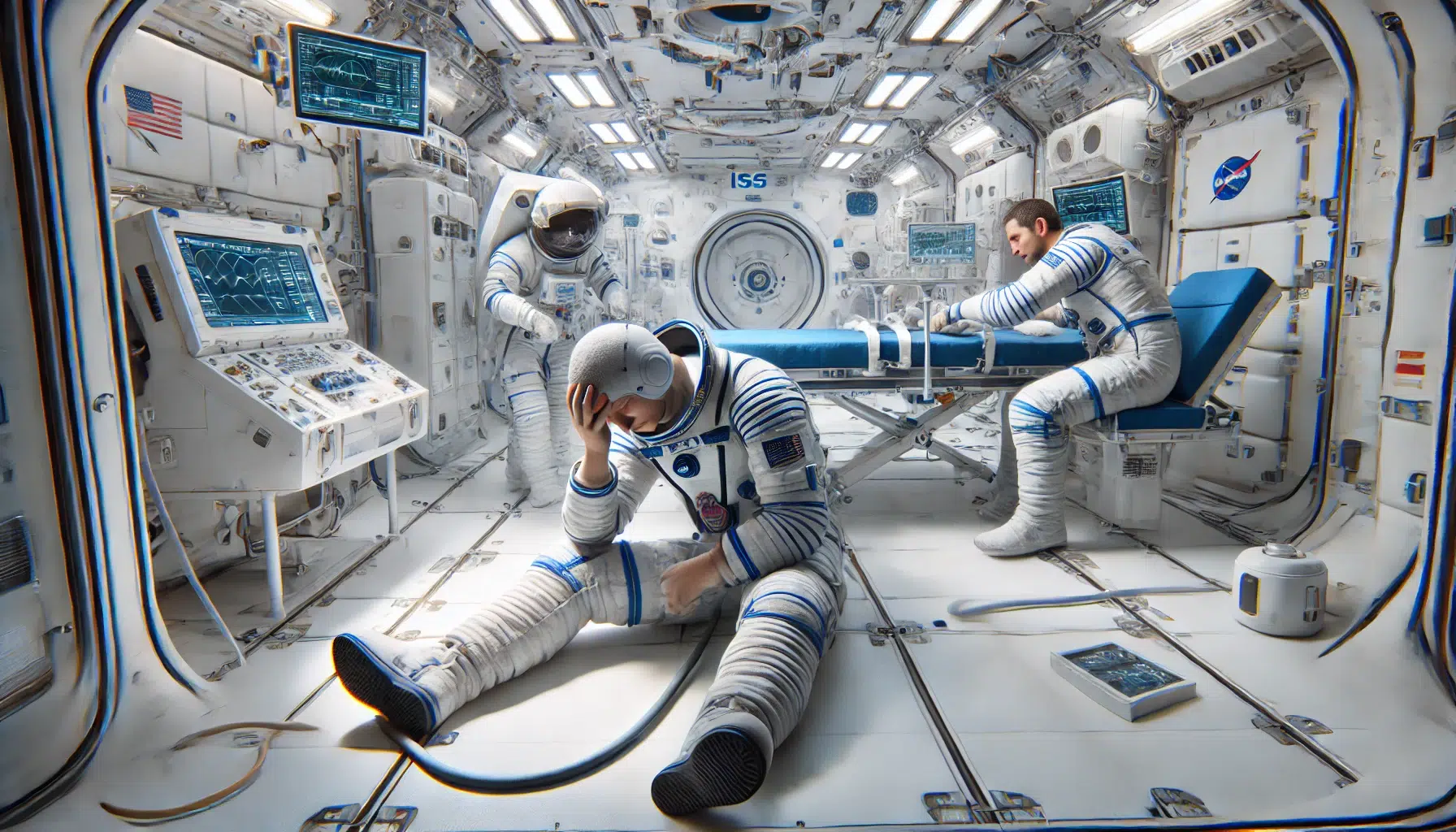
Extreme Cleaning of the International Space Station May Be Making Astronauts Sick: Understand the Microbial Problem in Space
The International Space Station (ISS), a symbol of scientific and technological advancement, faces an unexpected challenge: extreme cleaning of the environment may be compromising the health of astronauts. While it is essential to keep the place free from contamination, the lack of microbial diversity is being pointed out as a possible cause of recurring illnesses among the crew.
Researchers from the University of California, San Diego, identified a microbial imbalance on the ISS, where the highly sterile environment—without soil, animals, or vegetation—prevents astronauts from coming into contact with beneficial microorganisms. This scenario was detailed in a study published in the prestigious journal Cell.
Why Are Astronauts Getting Sick on the International Space Station?
According to the study, several astronauts reported symptoms such as persistent rashes, unusual allergies, and recurring infections, including cases of cold sores, fungal infections, and even shingles. The cause is linked to the artificial and ultra-clean environment of the ISS, where almost all the bacteria present were brought by the humans themselves.
-
Motorola launched the Signature with a gold seal from DxOMark, tying with the iPhone 17 Pro in camera performance, Snapdragon 8 Gen 5 that surpassed 3 million in benchmarks, and a zoom that impresses even at night.

-
Satellites reveal beneath the Sahara a giant river buried for thousands of kilometers: study shows that the largest hot desert on the planet was once traversed by a river system comparable to the largest on Earth.

-
Scientists have captured something never seen in space: newly born stars are creating gigantic rings of light a thousand times larger than the distance between the Earth and the Sun, and this changes everything we knew about stellar birth.

-
Geologists find traces of a continent that disappeared 155 million years ago after separating from Australia and reveal that it did not sink, but broke into fragments scattered across Southeast Asia.

Rob Knight, director of the Microbiome Innovation Center at the University of California, explained to the Wall Street Journal that the human immune system has been shaped over thousands of years through contact with natural microbes from soil, plants, and animals. “There is a big difference between being exposed to our own dirt and interacting with a healthy and diverse ecosystem, like the one we have outdoors on Earth,” he noted.
On the ISS, the continuous absence of these external sources creates an “overly sterile” environment, which may weaken the immunity of astronauts over time.
How Was the Discovery About Microbes on the ISS Made?
The research involved the help of the astronauts themselves, who collected samples from the surfaces of the Space Station during their missions. Microbiological analysis revealed that almost all of the microorganisms present came from the crew itself. This means that, while cleaning prevents dangerous pathogens, it also eliminates microorganisms that help maintain the immune balance of humans.
One of the solutions considered by Knight and other experts is the creation of an artificial ecosystem in space, capable of providing healthy microorganisms to astronauts. The idea would be to “bottled” these beneficial bacteria or simulate natural environments that stimulate a balanced microbial flora.
Astronaut and microbiologist Kathleen Rubins also advocates for the reintroduction of natural elements into the ISS, but with great caution. “It will likely be necessary to bring a little more from the outside into the Space Station — but this needs to be done safely to avoid the growth of fungi or unwanted pathogens,” she stated.
What Happens to Astronauts When They Return to Earth?
Even when returning to the planet, the challenges do not stop. The return to Earth requires intense physiological readjustment, which can last for weeks or even months. Astronauts face side effects such as dizziness, disorientation, loss of muscle mass, changes in vision, and a weakened immune system.
Moreover, the cosmic radiation that they are exposed to during long missions can affect human cells, raising the risk of degenerative diseases and even cancer. These changes are constantly monitored by NASA and other agencies, with the goal of ensuring the health of the crew during future long-duration missions, such as those planned for Mars.
Although it may seem contradictory, extreme cleaning on the International Space Station can be as harmful as a lack of cleaning. The challenge now is to find a balance between protection against pathogens and the preservation of a healthy microbiota, essential for human well-being.
With the advancement of research on the human microbiome in space, new solutions may emerge to ensure safer and more comfortable missions, contributing to the conquest of territories beyond Earth — and showing that even in space, the human body still needs a bit of Earth to survive.








-

4 pessoas reagiram a isso.