





 Portuguese
  English
  Spanish
  4 min of reading
  2 comments


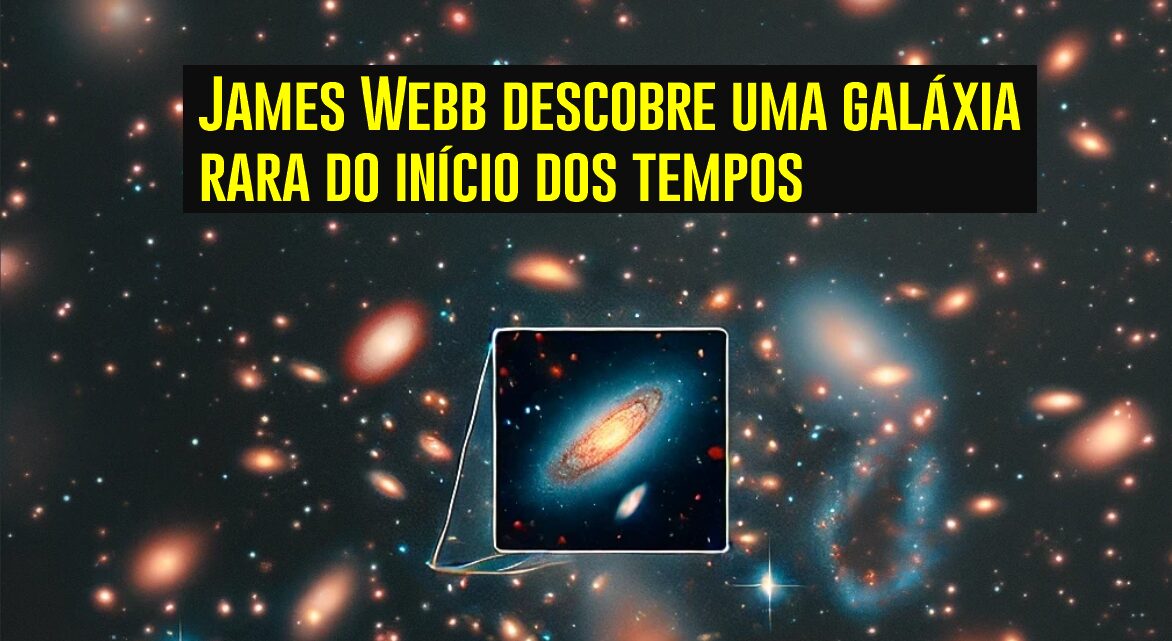

Using the James Webb Space Telescope, Astronomers Sighted an Extremely Rare and Ancient Galaxy, Potentially Connecting the First Stars of the Universe with Those We Observe Today, Offering New Clues About Stellar Evolution
Recently, the James Webb Space Telescope (JWST) made a discovery that could change the understanding of the formation of the first galaxies in the universe. A galaxy named GS-NDG-9422, located approximately one billion years after the Big Bang, has been identified as a possible key piece in galactic evolution, marking a potential “missing link” between the first generations of stars and modern galaxies.
Characteristics of GS-NDG-9422
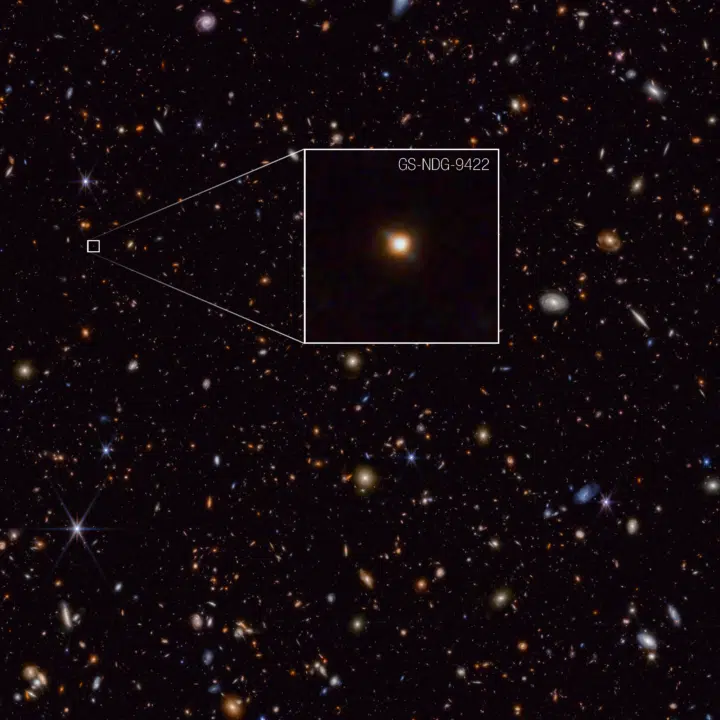
The GS-NDG-9422 stands out due to its unusual characteristics, particularly regarding its stars and the behavior of the gas surrounding it. The stars in this galaxy burn at temperatures of up to 80,000 degrees Celsius, nearly twice the temperature of stars found in the local universe.
-
Researchers in the U.S. have created a flying robot that transforms into a land vehicle while still in the air. The technology, based on aerodynamic transition, converts landing into a scene worthy of Transformers and redefines mobility between sky and ground.

-
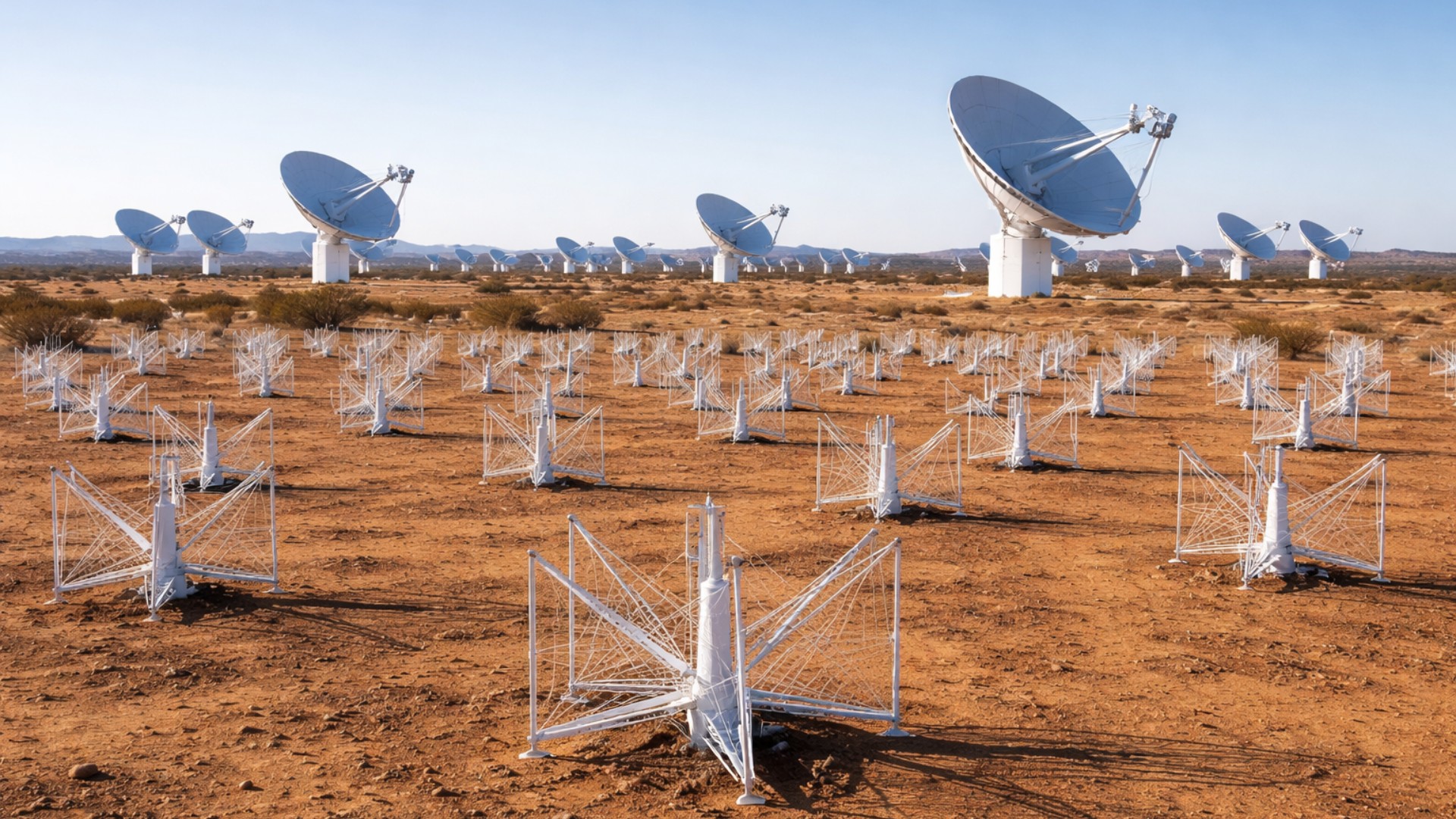
Spread across two continents, with 197 parabolic antennas in South Africa, 131,000 2-meter antennas in Australia, and a range of up to 150 km, the SKA begins to “listen” to the Universe on an unprecedented scale and accelerates the search for black holes, primitive galaxies, and nearly invisible radio signals.
-
Goodbye batteries: a new sensor created by Japanese scientists uses sweat as an energy source and points to a promising path for more sustainable devices, with greater autonomy and less need for frequent recharging.

-
The Brazilian Army inaugurated the assembly line for the Guaicurus armored vehicle with a contract for 420 units by 2033, and the same vehicle has already been tested in combat in Afghanistan and Lebanon by European armies.

This extreme heat is a characteristic that intrigues astronomers, as the exotic stars in GS-NDG-9422 are bombarding the gas clouds surrounding them with enormous amounts of photons. This phenomenon causes the gas to obscure the stars themselves, a feature rarely observed.

These gas clouds, when heated by the massive stars, produce brightness that obscures the direct view of these stars, something astronomers believe is common in galaxies harboring the first generations of stars.
This discovery was described in the October edition of the “Monthly Notices of the Royal Astronomical Society”, where the lead researcher, Alex Cameron from the University of Oxford, highlighted the strangeness of the captured data.
According to him, this is precisely the function of the Webb telescope: revealing completely new and unknown phenomena that will help us understand the early stages of cosmic history.
The Search for the First Stars of the Universe Through the James Webb Telescope
The formation of the first stars in the universe has always been a mystery for scientists. They formed from the hydrogen and helium left over from the Big Bang and are known as Population III stars.
These primordial stars were theoretically extremely large, bright, and hot, but their existence is challenging to prove, as they burned quickly and exploded in supernovae, dispersing heavier elements necessary for forming subsequent generations of stars and planets.
The galaxy GS-NDG-9422 represents an important step in understanding this phase of the early universe. Although its stars are incredibly hot, astronomers have confirmed that they do not belong to Population III, as JWST data reveals the presence of elements beyond hydrogen and helium, indicating greater chemical complexity.
Harley Katz, a cosmologist at the University of Oxford, emphasizes that the stars of GS-NDG-9422, while different from those we know, may provide crucial clues on how the universe transitioned from the first stars to modern galaxies.
Implications of the Discovery for Astronomy
This discovery opens new possibilities for exploring the primitive universe. As light travels at a fixed speed in a vacuum, the farther we look, the further back in time we go. By observing the light from this galaxy, scientists are visualizing events that occurred billions of years ago, close to the beginning of cosmos formation.
The Webb telescope, with its unprecedented capability to detect infrared light, is allowing astronomers to glimpse regions and epochs of the universe that were previously unexplored.
This discovery marks just the beginning of a series of new revelations. The search for more galaxies like GS-NDG-9422 will continue in hopes of discovering how common these exotic stars are and how they shaped the evolution of galaxies.
According to Cameron, this is a “very exciting moment” for astronomy, and the James Webb telescope is just beginning to show its potential to unravel the mysteries of the primitive universe.
In summary, GS-NDG-9422 is more than just a distant galaxy — it is a key piece in the puzzle of cosmic history, helping to explain how the universe evolved from the first incandescent stars to the galaxies we know today.









seria muito top se voltasse o tempo,queria que fosse retroceder em 2011
Parabéns excelente materia
https://www.rcwtv.com.br