





 Portuguese
  English
  Spanish
  2 min of reading
  0 comments


Unprecedented Discovery Intrigues Scientists And May Reveal New Class Of Stellar Object
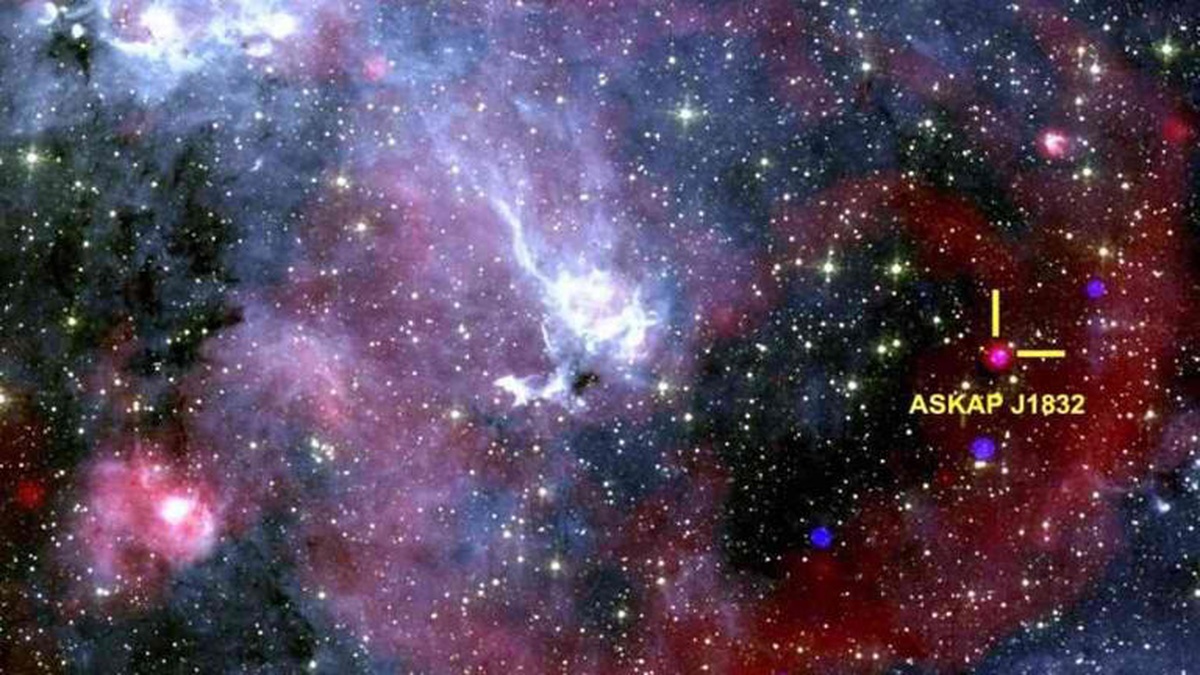
Astronomers have identified an unusual celestial object in the Milky Way, emitting X-rays and radio waves simultaneously. The discovery, published on May 28, 2025, in the journal Nature, was made through observations from NASA’s Chandra X-ray Observatory. The object, named ASKAP J1832−091, is located approximately 15,000 light-years from Earth.


Periodic Emissions Suggest Unknown Phenomenon
The object exhibits peculiar behavior: it emits radio signals and X-rays intermittently, with a cycle that repeats every 44 minutes during periods of heightened activity. These emissions were initially detected accidentally in 2024 during observations with the Chandra telescope. The phase of intense activity lasted about a month, after which the object ceased detectable emissions.
Possible Explanations And Implications For Astronomy
Ziteng Andy Wang, an astronomer at Curtin University and one of the authors of the study, suggests that the object could be a highly magnetized neutron star, like a magnetar, or a white dwarf. However, the observed characteristics do not exactly match those known for these types of stars. This raises the possibility that the object belongs to a yet unidentified class of celestial bodies.
-
A startup sends robotic gloves for users to wear at home while washing dishes, folding clothes, and making coffee; every finger movement is recorded and sent back to train a domestic robot that has already learned 10 million real tasks without ever having entered a kitchen.

-
In a flooded well, archaeologists found a 1,700-year-old Roman egg that still contains clear and yolk intact inside the very thin shell.

-
Something is happening around the Earth: Inside the huge explosion of fireballs in 2026

-
A hot air bubble coming from Argentina expands over Brazil, causing thermometers to exceed 38 degrees with a thermal sensation of 40 degrees in late March, affecting 6 states at once.


Importance Of The Discovery For Understanding The Universe
The identification of ASKAP J1832−091, therefore, reinforces the importance of continuous, detailed, and above all, systematic observations of the cosmos. Moreover, phenomena like this often provide valuable insights into the formation and consequently, the evolution of stars. For this reason, they also reveal aspects of the most extreme physical processes that frequently occur in the universe. Furthermore, the discovery clearly highlights the urgent need to review and expand current astrophysical models. Thus, it becomes essential to adapt these theoretical structures to encompass new and surprising types of stellar objects.
Next Steps In Astronomical Research
Scientists plan to continue monitoring the region where the object was detected, simultaneously utilizing various instruments and methods of observation. Furthermore, scientists want to find out if ASKAP J1832−091 is an isolated phenomenon or if there are similar objects in our galaxy. This investigation may reveal a new class of astronomical objects and thus significantly expand our understanding of the cosmos. The study also seeks to deepen our knowledge of the mechanisms that emit energy and therefore shape the structure of the universe.









Seja o primeiro a reagir!