





 Portuguese
  English
  Spanish
  3 min of reading
  1 comment


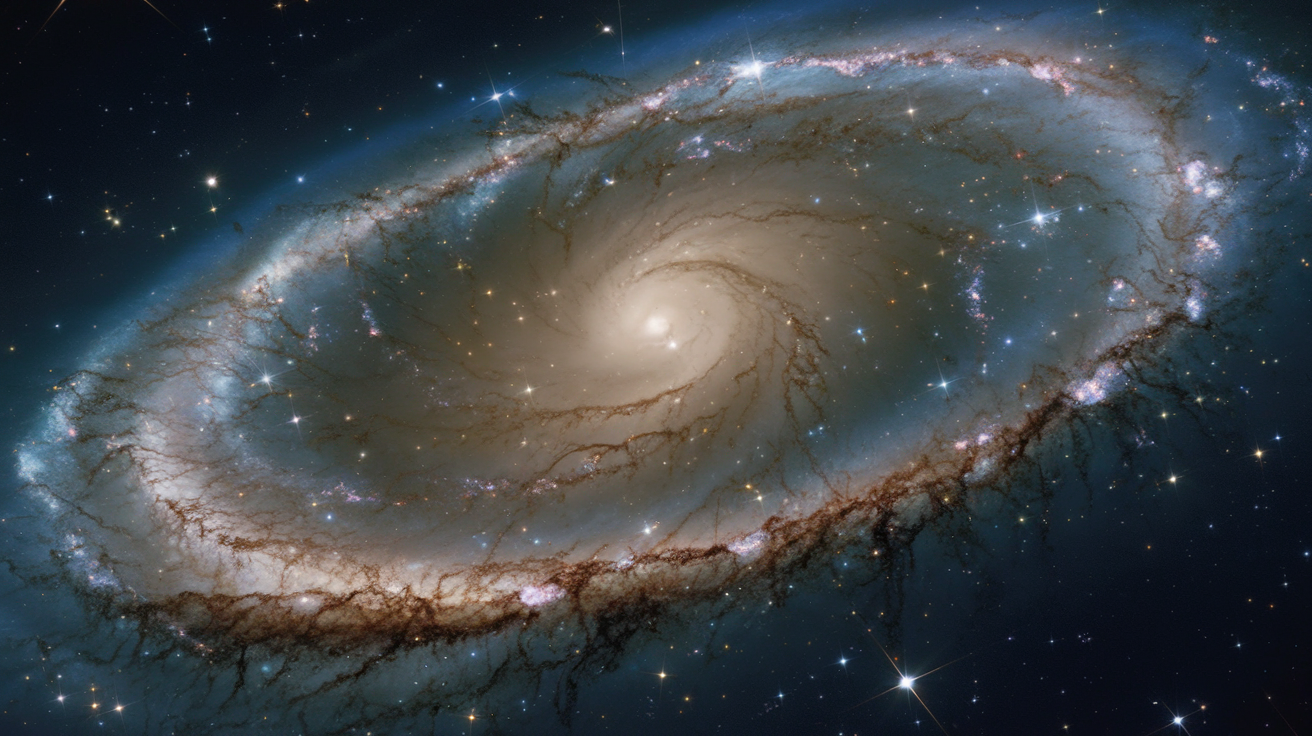


Astronomers Identify The Largest Structure In The Universe Ever Observed! Named Quipu, This Gigantic Formation Extends Over 1.3 Billion Light-Years And Challenges Theories About The Distribution Of The Universe.
The “Quipu,” the largest cosmic structure ever observed, spanning 1.3 billion light-years, has recently been identified, challenging astronomers’ understanding of the distribution of matter in space. The discovery of the world’s largest cosmic structure, resulting from a study published on ArXiv on January 31, opens new perspectives on the large-scale organization of the cosmos.
Quipu Has A Mass Equivalent To 200 Quadrillion Solar Masses
Located between 424 and 815 million light-years from Earth, the largest cosmic structure ever observed by astronomers is composed of thousands of galaxies linked by gravity. With a mass equivalent to 200 quadrillion solar masses, it represents one of the largest structures ever observed. Its name, inspired by the Inca Quipus, reflects its complex filamentous shape, resembling a network of strings and knots.
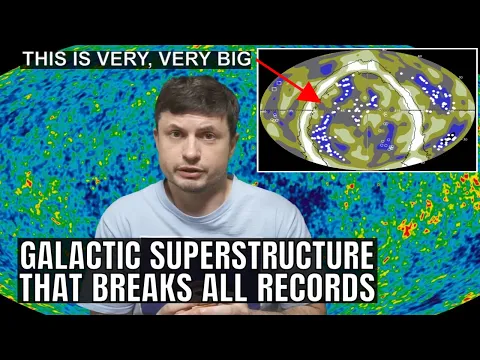

The largest cosmic structure ever observed is distinguished by a main filament surrounded by secondary branches, thus generating a dense and interconnected assembly. This configuration, revealed by x-ray observations, shows a cloud of superheated gas emitting unique radiation. These signals allow astronomers to map the distribution of matter in this region of the universe.
-
China has created a mass-produced hypersonic missile that costs the same as a Tesla, and this is changing everything in modern warfare because the United States cannot defend itself without spending millions.

-
100% Brazilian technology transforms agricultural waste into a meat-scented ingredient using fungi from the Amazon rainforest. The process does not use excessive water or chemicals, and it also increases the nutritional value of the final product.

-
Psychology reveals that adults who avoid conflicts at all costs are not balanced individuals, but rather children who learned in the worst way that expressing emotions brought punishment and now live paralyzed by the fear of expressing themselves.

-
Goodbye pet hair on clothes: a washer with an internal filter promises to remove up to 5 times more hair than regular machines and uses an XL trap dryer system to capture what remains.


The largest cosmic structure in the world significantly influences its environment. Its mass distorts the light from distant objects, a phenomenon known as gravitational lensing. This distortion generated by Quipu affects measurements of the Hubble constant, essential for understanding the expansion of the universe. Furthermore, it alters the cosmic microwave background radiation, a relic of the Big Bang.
Expansion Of The Universe Will Fragment The Largest Cosmic Structure In The World
The existence of Quipu highlights the predictions of the ΛCDM model, which describes the evolution of the universe since the Big Bang. Numerical simulations have anticipated the formation of such structures; however, direct observation remains rare.
Quipu and its neighbors represent approximately 45% of known galaxy clusters, providing valuable data on the distribution of dark matter and energy.
Although enormous, the largest cosmic structure ever observed is not an eternal entity. The accelerated expansion of the universe will eventually divide this superstructure into smaller units. This evolution reflects the dynamic and ever-changing nature of the cosmos, where even the largest structures like Quipu are subject to colossal forces.
In studying the largest cosmic structure in the world, astronomers used information from the German ROSAT satellite, applying an algorithm known as “friends-of-friends” that establishes a maximum distance between clusters to define them as part of the same structure.
Study Also Finds Other Superstructures
Until then, the Shapley supercluster was known as the largest structure ever discovered; however, Quipu has attracted all the attention, along with three other giant structures found by the same research: the Serpens-Corona Borealis superstructure, Hercules, and Sculptor-Pegasus superstructure, which extends between the two constellations that originated their names.
Together, these five superstructures contain 45% of galaxy clusters, 30% of galaxies, and 25% of the matter in the observable universe, according to astronomers in the article. In total, they represent 13% of the volume of the universe.
Researchers also observed that the velocities of galaxies change near the largest cosmic structure ever observed and other superstructures, where local expansion can alter measurements of the overall expansion of the universe, known as the Hubble constant.
The Hubble constant measures the rate of expansion of the universe. It is determined by the conservation of distance and the recession velocity of galaxies. However, massive structures like Quipu can distort these measurements by adding velocities to the expansion.
Source: IGN










ESTÁ ESCRITO NA BÍBLIA SAGRADA: Os céus Proclamam a Grandeza de Deus !!!