





 Portuguese
  English
  Spanish
  5 min of reading
  0 comments


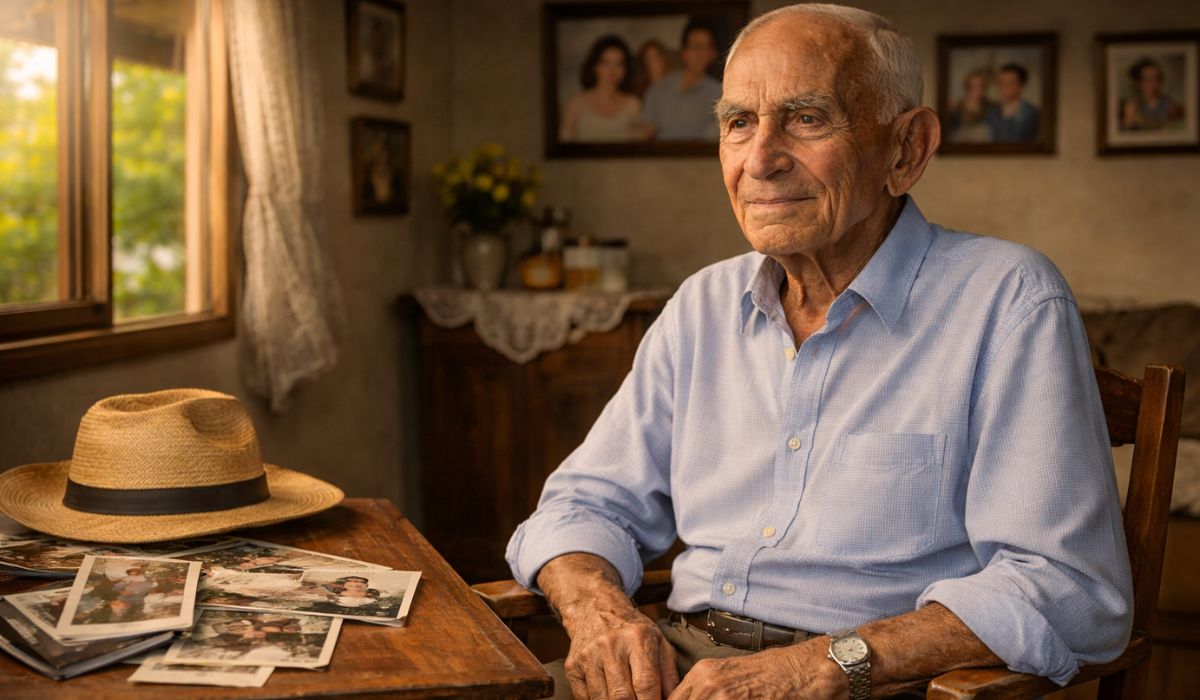
Francisco Nunes’ trajectory brings together work in the field, changes between states, and a family that spans generations, in a narrative marked by displacements, family memory, and the preparation of a centennial celebration in Campo Grande.
Francisco Nunes reached 100 years with a message that, according to him, summarizes his own trajectory: work, honesty, and distance from vices.
A resident of Jardim Samambaia, in Campo Grande, he was interviewed by Midiamax after expressing, the previous year, the desire to see his story recorded upon completing a century of life.
The interview, published on March 20, 2026, gathers memories of life in the field, changes across different states, and the path he built to form a large family.
-
Germany proposes silent propellers to solve a centuries-old problem: the damage caused in the ocean by ship noise.
-
What the Public House of Julius Caesar was like inside in the Roman Forum: layout, atrium with compluvium and impluvium, tablinium and peristyle, and the scandal of the Bona Dea, revealed in an AI recreation.

-
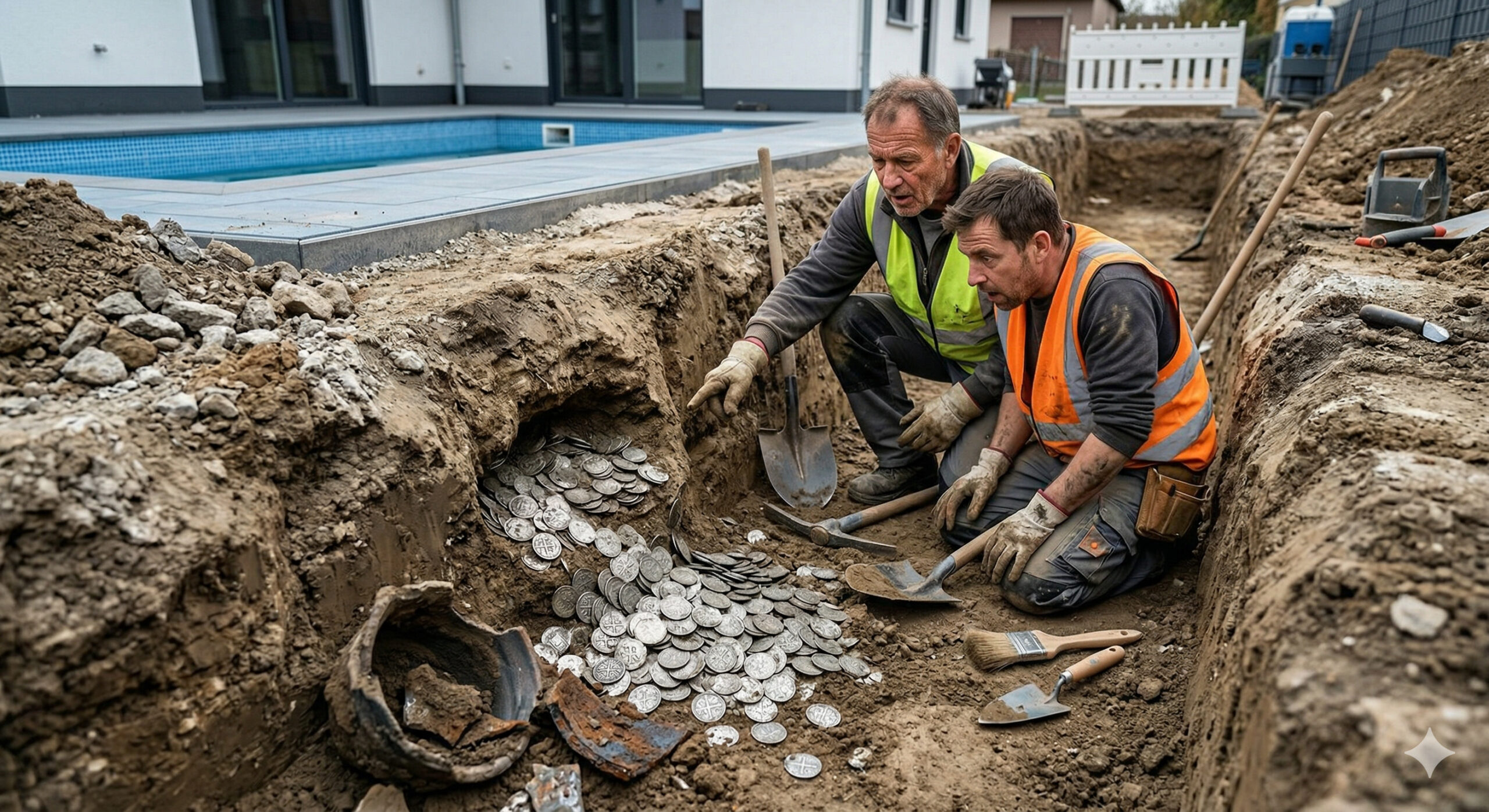
While digging a trench next to a pool in Germany, workers found more than 1,500 silver coins from 1320 in the rubble, revealing a treasure buried for over 700 years.
-
Flight Helios 522, the “ghost” flight with 121 people: the commercial aircraft flew for more than 2 hours on autopilot after a pressurization failure left pilots and passengers unconscious and only stopped when it ran out of fuel.


While recalling his own journey, Francisco associated longevity with a routine of effort and discipline.
The centenarian became, in the report, an occasion to record the trajectory of a rural worker who passed through different regions of the country and witnessed the growth of his family over the decades.
In the account published by Midiamax, he appears connected to agricultural activities, a sector in which he concentrated most of his professional life.
Rural work marked the trajectory of Francisco Nunes
Born in southern Bahia, Francisco recounted that he left the region at 24 to work as a farm foreman.
From there, he passed through Paraná and São Paulo until settling in Mato Grosso do Sul, where, he reported, he has lived for 45 years.
During this journey, he stated that he always worked in activities related to farm development and rural daily life.
In one part of the interview, he summarized this journey by stating: “I left there from southern Bahia, at 24, to work as a farm foreman.”
In the same statement, he added that he lived in Paraná, then in São Paulo, and subsequently in Mato Grosso do Sul.
He also mentioned that he got married in São Paulo and had five biological children.
Regarding his descendants, he said he no longer accurately tracks all the numbers and commented that he had lost count of grandchildren and great-grandchildren.
Throughout the testimony, the focus falls on the continuous work on farms he passed through and the experience accumulated in rural life.
Instead of detailing specific episodes from this trajectory, Francisco emphasized the permanence in this activity over the years.
The interview captures this perspective from the narrative of the character himself.

Changes between Bahia, Paraná, São Paulo, and Mato Grosso do Sul
The passage through different states appears as one of the axes of Francisco’s story.
The displacement that began in Bahia first took him to Paraná, then to São Paulo, and finally to Mato Grosso do Sul, a state that became his most enduring residence.
In the interview, this sequence is presented as part of his professional trajectory linked to work in the field.
In Campo Grande, the last years have been lived in a retirement rhythm.
According to the Midiamax text, Francisco lives in Jardim Samambaia, where he enjoys chatting and “enjoying retired life.”
Prior to this, he worked on a property in the rural area of the capital of Mato Grosso do Sul and also tended to small farms.
The succession of these jobs indicates the continuity of his work in the rural environment even in the final years of his professional life.
Additionally, he mentioned a situation he expressed regret over: having to resort to the courts at a certain point in his life.
Without detailing the case, he stated that he “won the case in Brasília.”
As the report does not provide information on the nature of the process nor present additional documentation about this episode, the reference remains limited to the account attributed to the interviewee.
Family memory and origin of Chico Baiano
The interview also opens space for a memory linked to Francisco’s father.
According to him, his father spent 15 days on the São Francisco River, on a steamboat, at a time when this type of travel could also occur by train and took several days.
After the trip, he would have gone to Paraná to manage a farm and worked for a long time in developing properties and caring for coffee plantations.
According to the testimony, it was in this context that the father came to be known as “Chico Baiano.”
The memory places the family history within the same rural universe described by Francisco throughout the interview.
The text, at this point, reproduces the interviewee’s memory of his father’s work in the field and the displacements made by the family.
100th birthday party gathered children, grandchildren, great-grandchildren, and great-great-grandchildren
The celebration of the 100 years mobilized relatives living in other states.
According to the report, family members from Paraná were on their way to participate in a party larger than the one held on the previous birthday.
A relative interviewed by Midiamax stated that, at 99 years old, Francisco received only “a little cake,” while the centennial would be celebrated in a party hall, in a broader tribute organized without him knowing the details.
The text also informs that, in addition to the five biological children mentioned by Francisco, the family claims he also adopted two other children.
The report presents the composition of descendants up to the time of publication: 26 grandchildren, 41 great-grandchildren, and six great-great-grandchildren.
The numbers presented help to gauge the size of the family gathered around the birthday celebration.
However, there is a discrepancy between what Francisco declared about the great-great-grandchildren and the count presented by the family.
In his speech, he said he had been informed of the existence of four great-great-grandchildren.
At the end of the article, the number attributed by the family is six.
As both records appear in the published text, the discrepancy was maintained and contextualized.
Request to Midiamax became record in the centennial
By asking for his story to be told upon reaching 100 years, Francisco made the birthday also an occasion for recording.
The content of the interview indicates that he wanted to associate his own trajectory with values he considers central, such as work, honesty, and dedication to family.
This perspective appears in the published material based on the interviewee’s statements and the information gathered by relatives.
The report is organized around these memories and includes excerpts in which Francisco summarizes life directly.
The text published by Midiamax shows a centenarian who revisits passages of work in the field, changes between states, and the formation of an extensive family.






Seja o primeiro a reagir!