





 English
  Francês
  Alemão
  Italiano
  Japonês
  Norueguês
  Portuguese
  Spanish
  4 min of reading
  0 comments


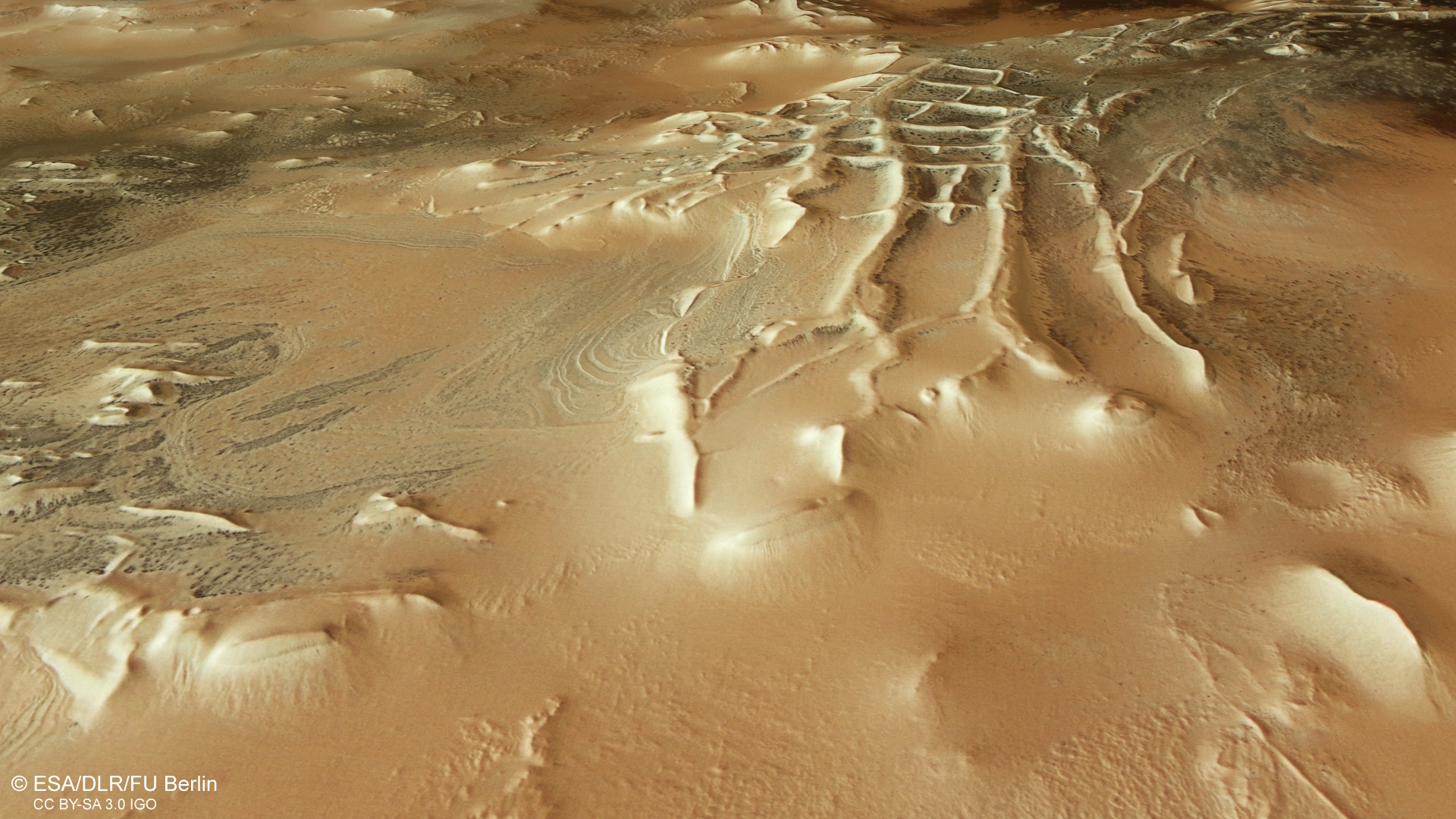
Formation “Inca City” on Mars intrigues scientists with a kilometer-scale geometric pattern near the south pole, shaped by ice and ancient fractures.
In 2024, new high-resolution images released by the European Space Agency (ESA), based on data from the Mars Express mission, drew attention once again to one of the most intriguing formations on the Martian surface: the region known as Angustus Labyrinthus, popularly nicknamed “Inca City.” The name, used by scientists for decades, arose from the unusual appearance of the terrain — a network of interconnected ridges that, viewed from above, resembles the streets and blocks of an ancient city.
Located near the south pole of Mars, in a band above 80° south latitude, this formation stands out not only for its aesthetics but for the rare combination of geological processes that created it. Despite its artificial appearance, there is no evidence of constructed structure: everything there is the result of natural forces that have acted over millions of years.
What is “Inca City” on Mars and why does it look like a city from space
The region called Angustus Labyrinthus consists of a set of linear and interconnected ridges, forming patterns that resemble an urban grid. These structures extend for several kilometers and create blocks that, at first glance, appear to be organized in an almost regular manner.
-
Seen from space, a colossal ‘Y’ cuts through the largest desert in China, blending a jade-filled river, red and white mountains, and revealing the absurd scale of the transformation of the Taklamakan surrounded by a green wall with billions of trees.

-
The Pacific Ocean reveals what the cliffs of Big Sur have hidden for millennia: Pfeiffer Beach, in California, features swirling purple sand formed by garnet crystals and displays a stone arch that is illuminated by the sun in winter for just a few days each year.

-
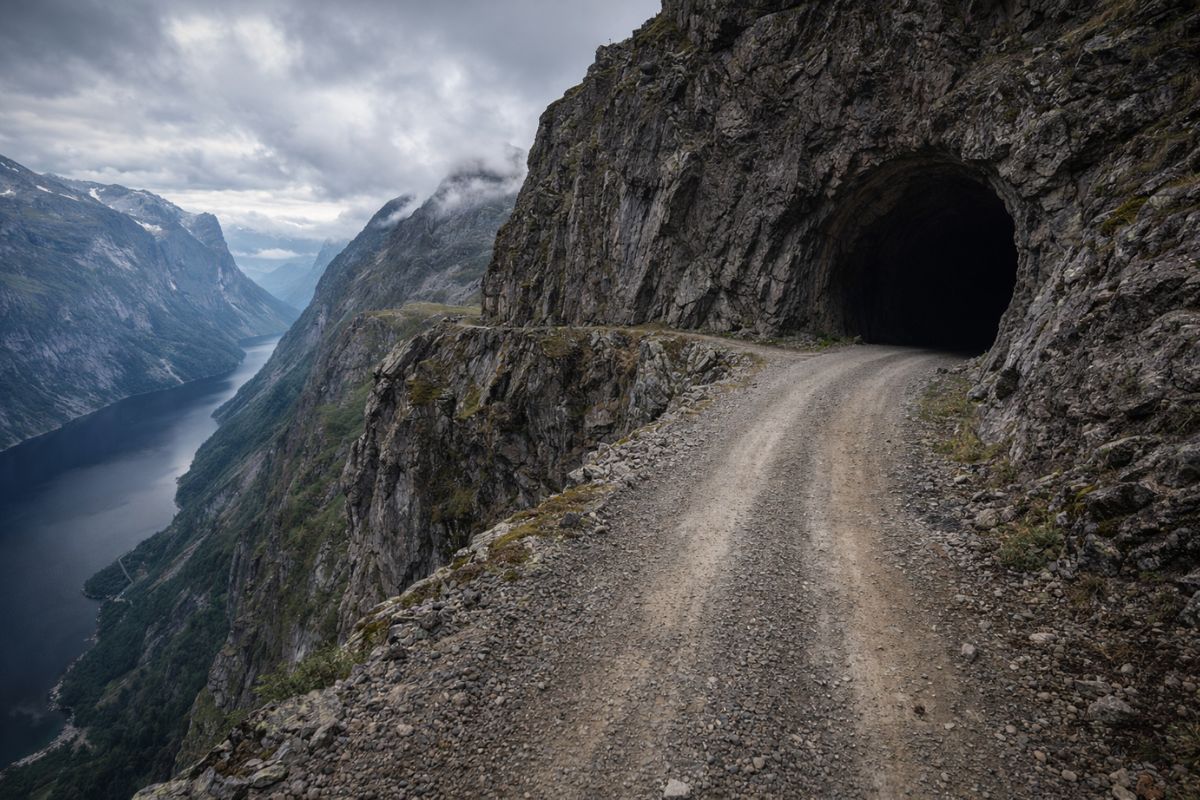
Aursjøvegen in Norway is a 100-kilometer gravel road that crosses chasms and dark tunnels carved into the rock at an altitude of 947 meters in the fjords and is only open for four months a year.
-
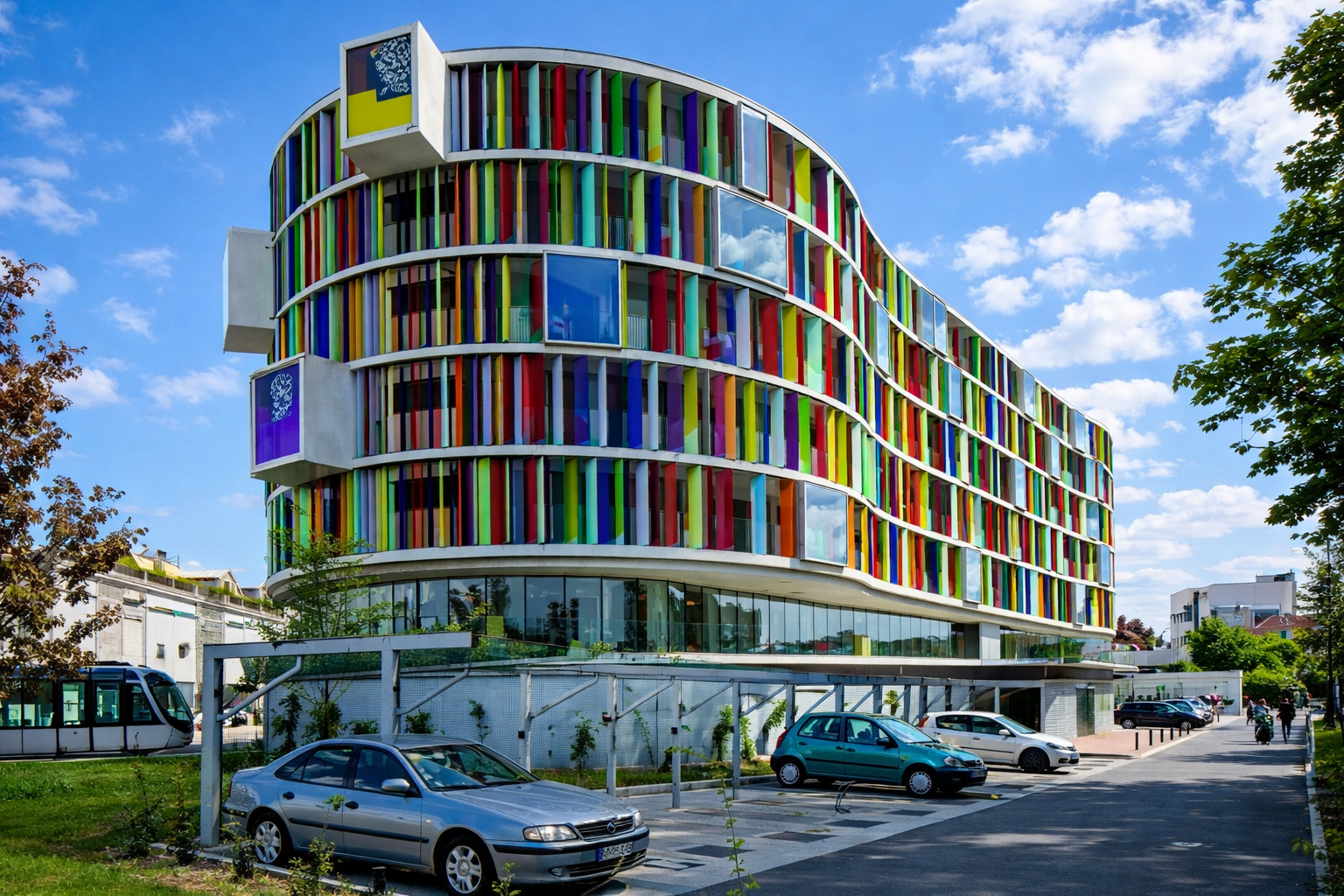
With about 4,000 m², the building constructed in a traditional neighborhood in France looks like a rainbow, has a colorful facade, mixes vibrant glass, and creates one of the most unusual visuals in Bordeaux.


This visual effect is what led to the nickname “Inca City”, a reference to the ancient stone cities of the Inca civilization, known for their geometric patterns. However, the resemblance is merely visual. When analyzed in detail, the structures show irregularities, variations in height, and erosion — characteristics typical of natural formations.
Ancient fractures in the crust are the basis of the geometric structure
The most accepted scientific explanation for the origin of “Inca City” begins with deep fractures in the Martian crust. These fractures may have been formed by ancient tectonic stresses, meteorite impacts, and thermal contractions of the soil.
Over time, these fissures were filled with materials more resistant than the surrounding terrain. When erosive processes began to act, the more fragile material was removed, while the more resistant parts remained elevated.
The result is an inverted relief, where ancient cracks transform into elevated ridges — creating the grid pattern observed today.
The role of ice and sublimation in shaping the terrain
In addition to the fractures, another crucial factor in the formation of “Inca City” is ice — especially frozen carbon dioxide (CO₂), abundant in the polar region of Mars. During seasonal cycles:
- Ice accumulates on the surface
- It subsequently sublimates (changes from solid to gas)
- This process fragments and reshapes the soil
Sublimation acts as an active erosive agent, widening fissures and reinforcing the geometric pattern over time. This mechanism is particularly intense at the Martian south pole, where extreme temperatures favor repeated cycles of freezing and sublimation.
Impressive kilometer-scale even in high-resolution images
One of the most striking aspects of “Inca City” is its scale. The observed structures:
- Extend for several kilometers
- Form large interconnected blocks
- Are visible even in orbital images
This scale reinforces the contrast between appearance and origin: what looks like an organized city is, in fact, a product of large-scale geological processes.
Why the formation is not artificial, despite its unusual appearance
The geometric appearance of “Inca City” often generates misconceptions outside the scientific community. However, the geological community is clear: there is no evidence of artificial origin. The observed patterns can be explained by natural fracturing of the crust, differential erosion, and processes related to ice.
Similar formations, although less symmetrical, also exist on Earth, especially in volcanic regions and areas subjected to extreme freezing.

Space missions continue studying the region
The region continues to be monitored by orbital missions, such as:
- Mars Express (ESA)
- Mars Reconnaissance Orbiter (NASA)
These missions use high-resolution cameras and spectral instruments to analyze the composition and evolution of the terrain. The goal is to better understand:
- The geological history of Mars
- The dynamics of ice on the planet
- The processes that shape extreme environments
A natural laboratory to study the geology of Mars
More than a visual curiosity, “Inca City” is a natural laboratory to study the interaction between fractures, erosion, and ice on another planet. It helps scientists answer fundamental questions about Mars:
- How its crust has evolved
- How climate has influenced the surface
- What processes are still active today
Each new image reveals details that deepen the understanding of the red planet, showing that, even without active tectonic activity like Earth, Mars still has a complex and dynamic geology.
A landscape that looks urban but is entirely natural
“Inca City” is a rare example of how nature can produce patterns that challenge human perception. What looks like a city from space is, in fact, the result of millions of years of interaction between rock, ice, and extreme climate.
This combination creates one of the most peculiar landscapes on Mars — a structure that appears designed but is entirely shaped by natural processes.








Seja o primeiro a reagir!