





 Portuguese
  English
  Spanish
  4 min of reading
  1 comment


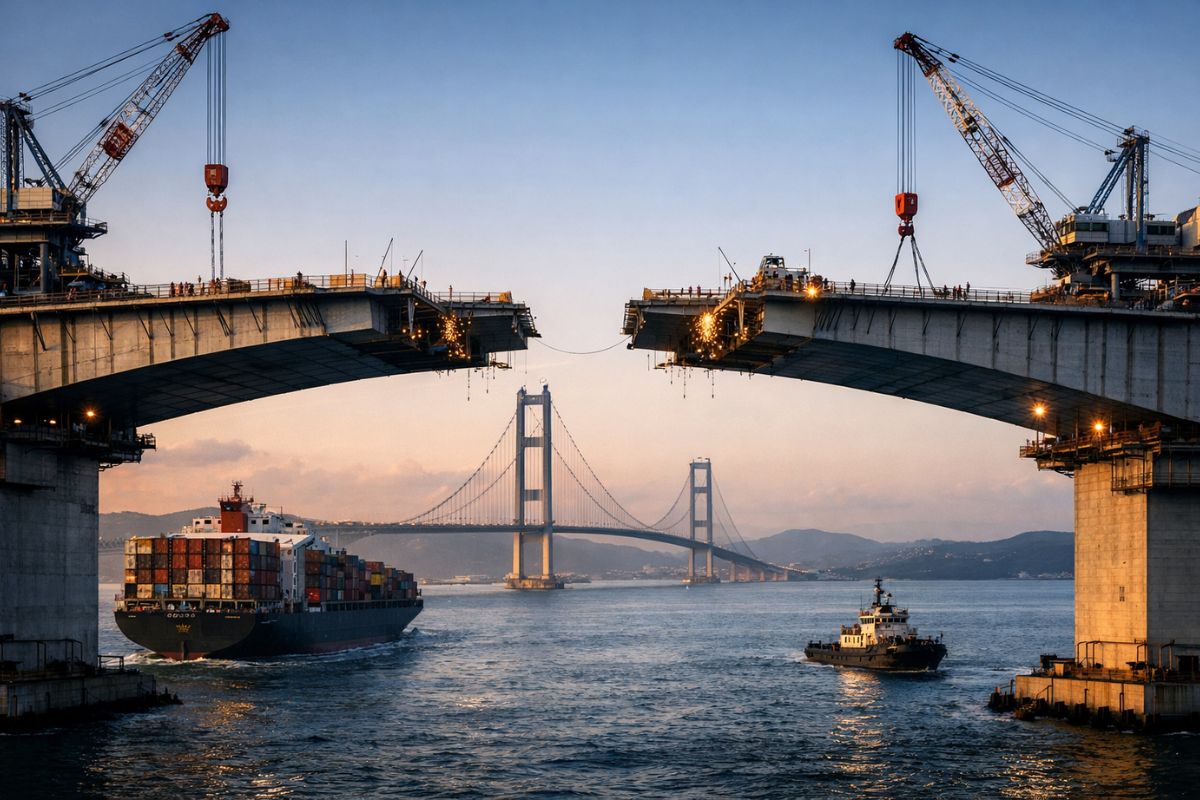


Between Porto Murtinho and Carmelo Peralta, the new bridge of the Bioceanic Route reaches final adjustments: 1,294 meters, 21 wide, and 280 workers. In May 2026, the union of the spans occurs; in August, signaling and finishing touches. The corridor promises 250 trucks per day and lower costs to China.
The new bridge over the Paraguay River, between Porto Murtinho in Mato Grosso do Sul and Carmelo Peralta in Paraguay, has entered the phase where detail becomes headline: 101 meters remain until the kiss of the segments. It is the point where two construction fronts finally meet in the air.
The appeal is logistical and political at the same time. The new bridge is presented as the centerpiece of a route that promises to shorten the maritime distance to Asia by 9,700 km and reduce the export route to China by 12 to 17 days, in a corridor that reshapes priorities in the center of the continent.
The Kiss of the Segments and the Countdown Over the Paraguay River

The kiss of the segments is the scene that summarizes months of calculation: two structures advancing from opposite banks until forming a single board over the Paraguay River.
-
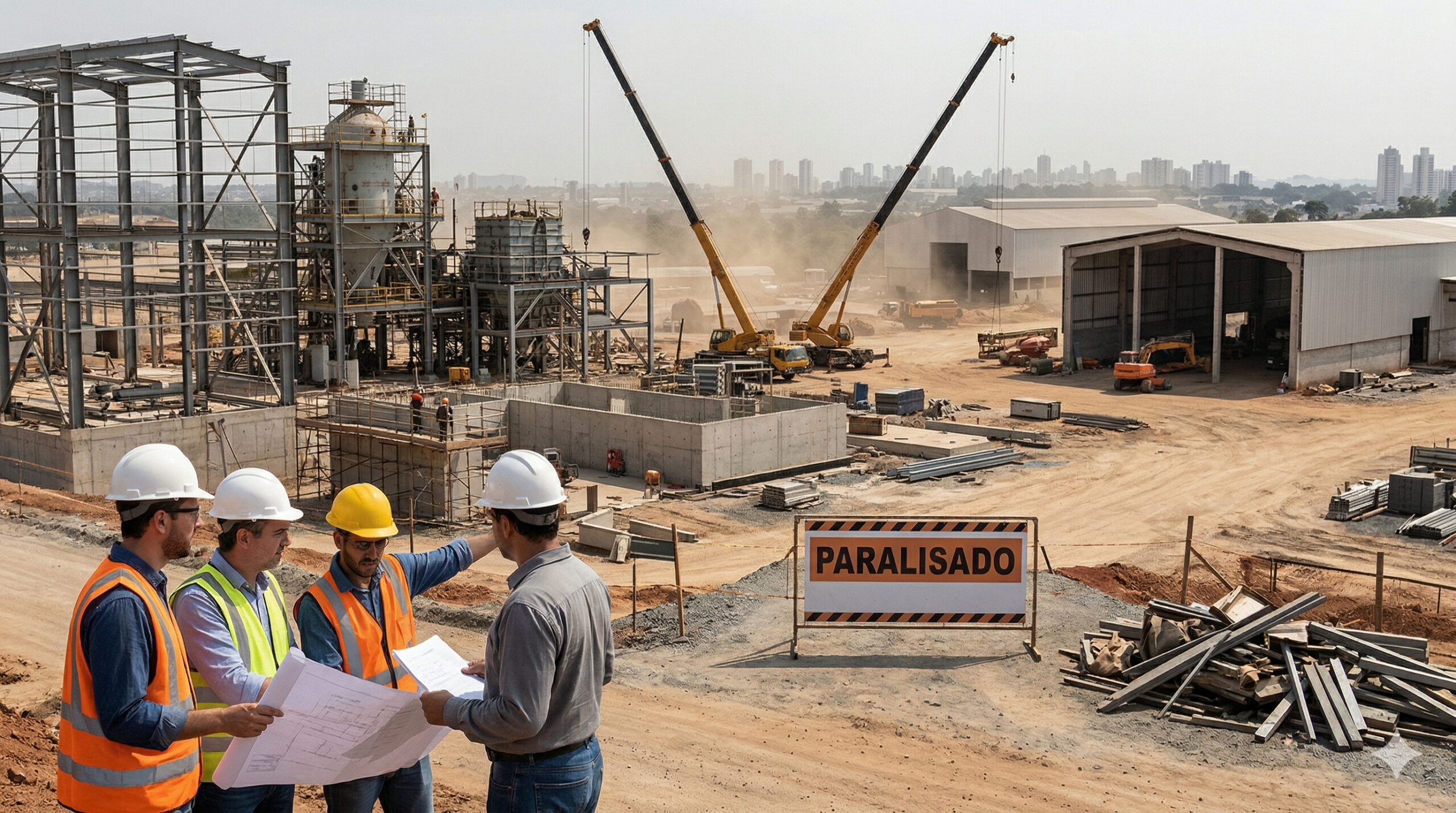
The lack of welders, electricians, and operators becomes a structural threat in 2025, with the construction industry and manufacturing already suffering from delays, cost pressures, and labor shortages in Brazil.
-
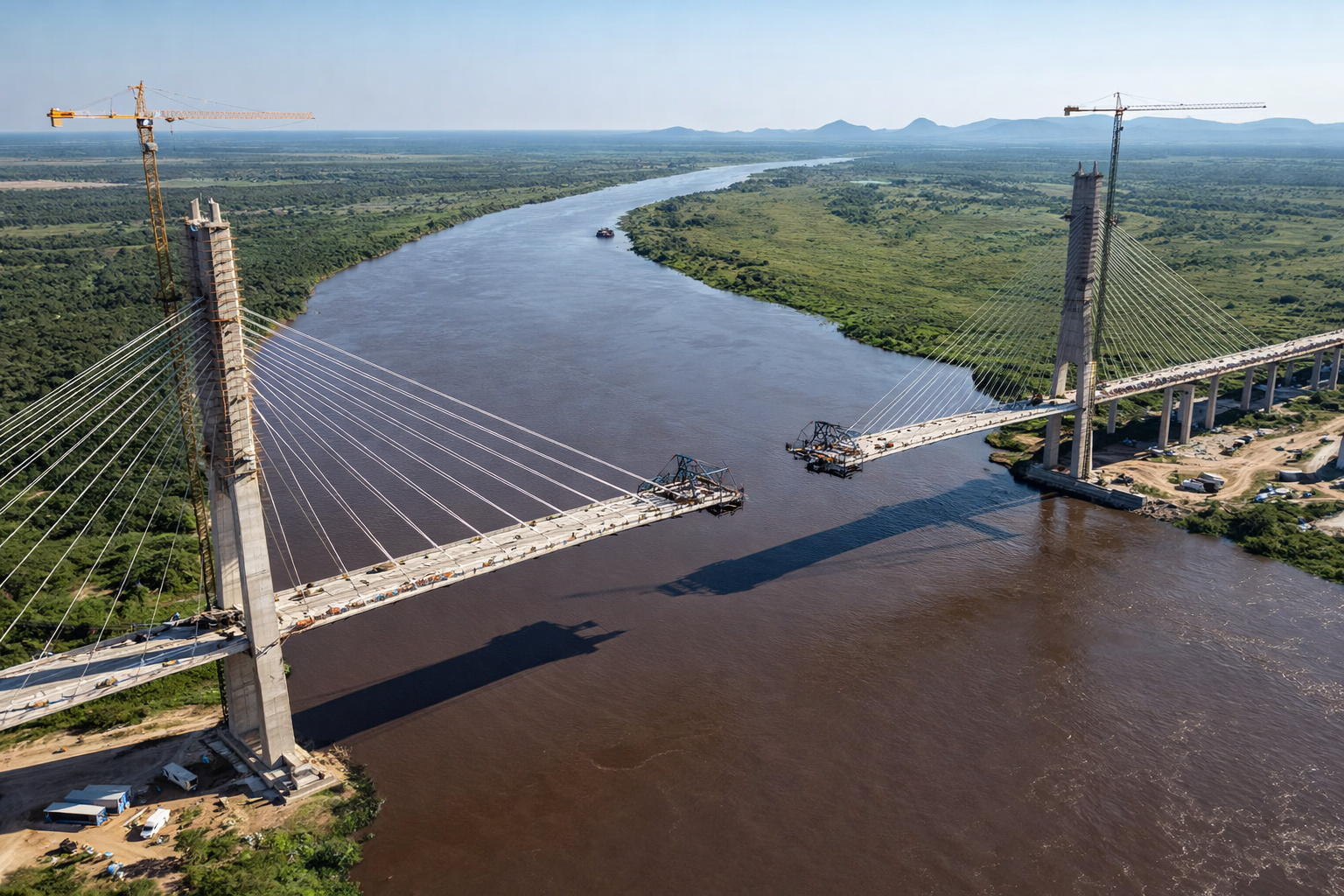
Brazil and Paraguay are just 46 meters away from a historic union on the bioceanic bridge that promises to revolutionize trade between the Atlantic and the Pacific.
-
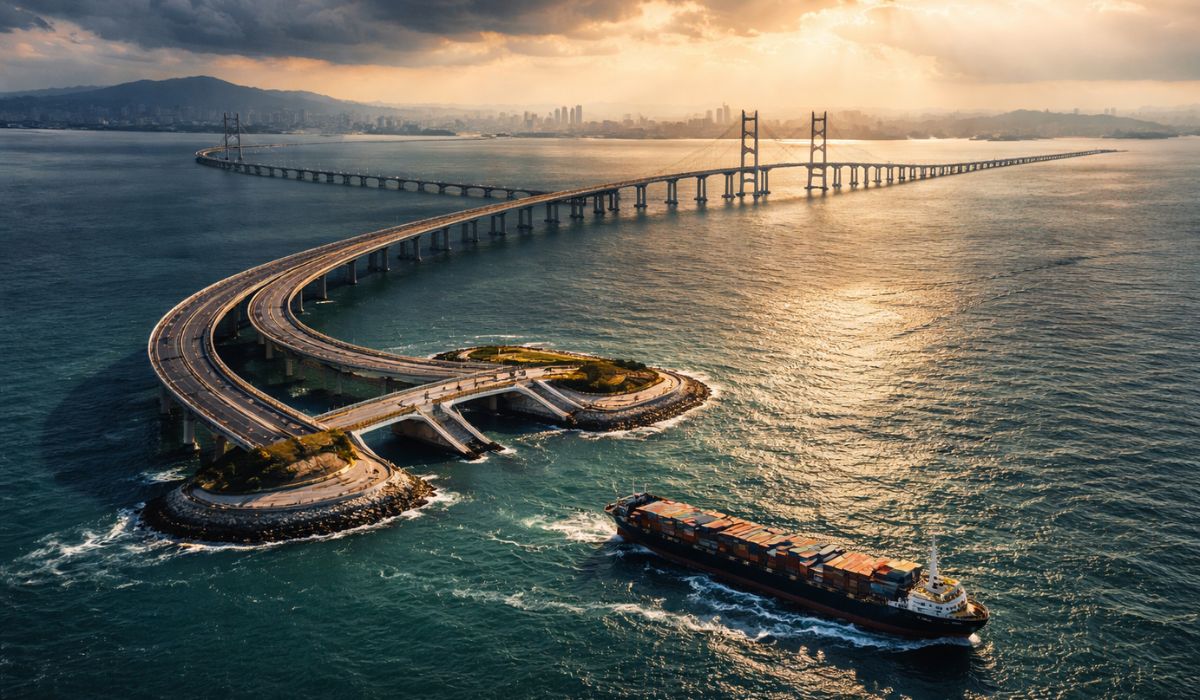
With 55 km over the sea, a cost of US$ 20 billion, and enough steel to build 60 Eiffel Towers, China’s largest project has connected Hong Kong, Zhuhai, and Macau in a colossal bridge that defies the logic of engineering.
-
A trick with joint compound transforms a Styrofoam ceiling into a plaster-like ceiling: leveled panels, wires and mesh at the joints, sand, paint, and change the environment while spending little today.


In the construction of the new bridge, this final distance of 101 meters is treated as a decisive stage because, from then on, what was a construction site becomes a single body.
The forecast is to complete the main structure by May 2026, when the physical connection of the spans occurs.
This is when the symbol appears, but it is still not total delivery: the mentioned schedule points to August 2026 to finalize signaling, lighting, and finishing touches that transform the new bridge into operational infrastructure.
The Engineering Behind the New Bridge, Cables, Sensors, and Dampers
With 1,294 meters in length and 21 meters in width, the new bridge enters a category where the structural design is not just aesthetic; it is safety.
The described plan includes the adjustment of 168 steel cables that support the central span and the installation of dampers to reduce vibrations and oscillations.
The control does not stop at steel. The new bridge will have electronic sensors in the pillars and cables to monitor, in real time, the weight supported and signal anomalies.
The promise is to anticipate problems before they happen, a logic increasingly common in works that need to operate under heavy traffic and climatic variations, with the Paraguay River below as a permanent risk factor.
Capricorn Road Corridor and the Clock That Shifts on the Route to China
The new bridge is presented as a key piece of the Capricorn Road Corridor, within the Bioceanic Route.
The idea is to create a land route that connects ports in Brazil to ports in Chile, crossing Paraguay and Argentina, to reach the Pacific Ocean and, from there, shorten the maritime journey to Asia.
The expected effect appears in numbers that catch attention: reducing the maritime distance for exports to Asia by more than 9,700 kilometers and cutting between 12 and 17 days in trips to China, which is described as an approximately 23% savings in transport time.
In logistics, days turn into money, and the new bridge becomes an argument to reposition Mato Grosso do Sul on the trade route.
Integrated Customs and the Test of 250 Trucks Per Day
No new bridge operates alone when crossing a border.
To sustain the promised flow, the plan provides for integrated customs structures in both countries, with procedures capable of handling documentation, inspection, and control without turning the corridor into a permanent queue.
The Federal Revenue Service is cited with an initial estimate of 250 trucks circulating daily over the new bridge shortly after inauguration, a number that tends to grow as the route consolidates.
This figure is a thermometer, because 250 trucks per day mean more demand for yards, services, security, and inspection routines in the surrounding areas of Porto Murtinho and Carmelo Peralta.
Infrastructure on the Board and the Impact That Does Not Fit in an Aerial Photo
Besides the roadway, the new bridge is described with a bike lane, protective barriers, ornamental lighting, and specific signaling for vessels navigating the Paraguay River.
These elements may seem peripheral, but they are the items that define coexistence between modalities and reduce usage conflicts.
What changes outside the board is even more sensitive.
The new bridge can reorganize circulation, land prices, demand for lodging and services, because a corridor brings not just cargo but people, bureaucracy, and risk.
The logistical benefit often comes with urban pressure, and the region needs to absorb this effect so that the shortcut to China does not become a local bottleneck.
The new bridge of the Bioceanic Route is 101 meters from the kiss of the segments and just a few months away from completing its main structure by May 2026, with total delivery expected in August 2026.
On paper, the numbers are alluring: 1,294 meters, 168 cables, sensors, integrated customs, 250 trucks per day, and a shortcut of 9,700 km that promises to cut 12 to 17 days on the route to China.
The real question begins after the inauguration, when the corridor transitions from announcement to routine. In your view, what determines if a new bridge actually leads to development: the engineering and maintenance, the efficiency of customs, or the ability of cities to absorb the flow without losing quality of life?









Mais uma obra começada no Governo Bolsonaro.