





 Portuguese
  English
  Spanish
  6 min of reading
  0 comments


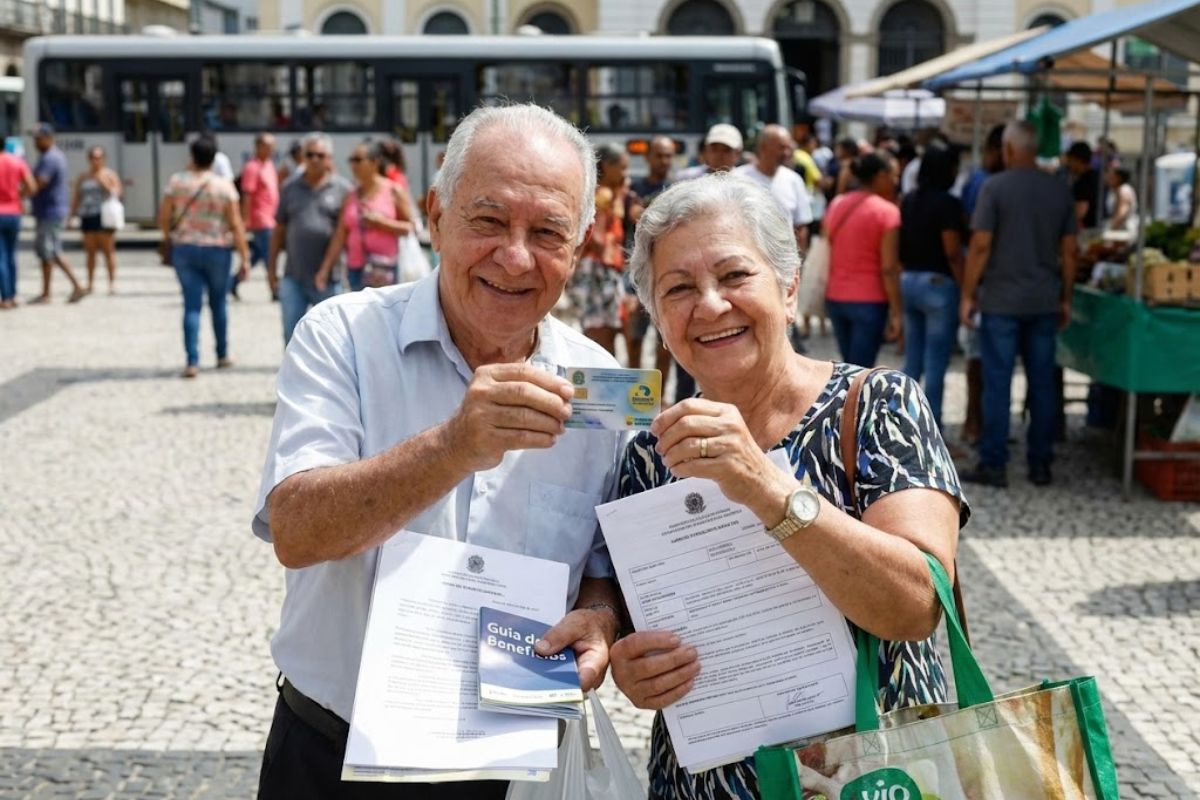
With the Senior Citizen Card, the government card expands the right to intercity travel: seniors aged 60 and over, with a monthly income of up to two minimum wages, have two free seats per bus and, if they run out, receive a 50% discount, upon CadÚnico and issuance on Gov.br or CRAS.
The guidance has circulated again with a clear point: the government card known as the Senior Citizen Card allows for requesting intercity travel at no cost on regular buses, provided that the senior is 60 years or older and meets the income criteria outlined.
On the same date, 01/01/2026, the explanation emphasized that the Senior Citizen Card is primarily used when a person cannot prove an income of up to two minimum wages and that the issuance depends on CadÚnico, which can be done on Gov.br with login or in person at CRAS, with a time frame of up to 45 days.
What is the Government Card and What Right Does It Organize
The government card mentioned in the context is the Senior Citizen Card.
-
Brazilian city bets on the business environment to generate jobs and attract investments in the energy sector — secretary reveals strategy at Macaé Energy 2026.

-
50 viaducts, 4 tunnels, 28 bridges, and 40 kilometers of bike paths: BR-262 in Espírito Santo will receive 8.6 billion reais for the largest engineering project in the state’s history, inspired by the Immigrant Highway in São Paulo.

-
Brazil produces too much clean energy and doesn’t know what to do with it: over 20% of solar and wind capacity was wasted in 2025 while investors flee and 509 renewable generation projects were abandoned in the last year.

-
Piauí will produce a new fuel that replaces diesel without needing to change anything in the truck’s engine and reduces pollutant gas emissions by half: truck drivers from all over the Northeast are already celebrating the news that will arrive later this decade.


It acts as a supporting document for accessing intercity travel, especially when the senior cannot easily prove the required income.
In practice, the Senior Citizen Card does not change the numbers of the rule.
It enables access to the described benefit: free intercity travel within the limit of seats per bus and, when those seats are filled, a 50% discount on the intercity travel fare.
The government card, therefore, organizes the proof and reduces friction in service.
Who Can Use It: Minimum Age and Income of Up to Two Minimum Wages
The rule has two clear constraints.
The first is age: the benefit is for seniors aged 60 or older. The second is monthly income: up to two minimum wages, indicated in the context as R$ 3,036.
This point is not a detail. It defines who can issue and use the government card for intercity travel.
If the monthly income exceeds two minimum wages, the person does not qualify, even if they are 60+. The income criterion is a central part of the eligibility filter.
How Two Free Seats Per Bus Work
The context states that each bus must have two seats reserved for seniors who meet the age and income criteria.
This means that the free intercity travel exists, but it is limited by the vehicle.
When the request is made and one of the two seats is still available, the benefit is free intercity travel.
When both seats on the bus have been filled by other eligible seniors, the rule does not disappear; it changes its mode.
Understanding this dynamic avoids the false impression that the right “ended” when the free seats are filled.
What Applies When Full: 50% Discount on Intercity Travel
The second layer of the rule is explicit. If the senior meets the criteria, but the two free seats on the bus are already occupied, they maintain one right: a 50% discount on the intercity travel fare.
This detail makes the government card relevant even when no free seat is available.
The document remains the supporting tool to demonstrate eligibility and facilitate the discount.
The benefit, in this scenario, swaps the free travel for a formal reduction of half the fare price.
Why CadÚnico Is a Mandatory Requirement for Issuing the Senior Citizen Card
CadÚnico appears in the context as a condition for issuing the Senior Citizen Card.
Without CadÚnico, the government card is not issued, and the senior loses the main access instrument when they cannot prove income by other means.
The operational point is straightforward: those who intend to use intercity travel by this means must be registered in CadÚnico.
Without CadÚnico, there is no issuance, and without issuance, there is no document to present when requesting intercity travel.
Digital Issuance on Gov.br: Login and Use of the Document
The described digital path is simple: enter the official website within Gov.br, log in with the same user and password from Gov.br, and issue the Senior Citizen Card.
The context states that the use can be digital or printed.
This detail is important because it enhances the accessibility of the government card.
Those who prefer a physical document can print it; those who use a cell phone can keep the digital version, reducing dependence on paper and facilitating storage.
In-Person Issuance at CRAS: Requested Data and a Time Frame of Up to 45 Days
For those who are not internet-savvy, the context indicates CRAS as an alternative for issuance.
The senior needs to provide data such as CPF, name, or NIS, the Social Identification Number.
There is one piece of data that defines planning: the time frame of up to 45 days for issuing the document when requested at CRAS.
This time frame requires advance notice, because an intercity trip scheduled for close dates may occur before the card is ready, especially if the request is made last minute.
When the Senior Citizen Card Is Most Useful: Difficulty in Proving Income
The context clarifies the practical purpose of the Senior Citizen Card: to facilitate access to the benefit, especially when the senior cannot prove income of up to two minimum wages.
This focus matters because it prevents confusion.
The government card is presented as a tool for access and proof.
It does not change the minimum age, does not change the income ceiling, and does not increase the limit of two seats per bus.
It reduces barriers to proving and requesting intercity travel.
Common Errors That Block Access to the Government Card
The context allows for mapping three recurring failures that, in practice, prevent correct usage:
First, ignoring the income ceiling of two minimum wages and trying to request the benefit outside the criteria. Age alone is not enough.
Second, not being in CadÚnico or not being able to link the request to the registration. Since CadÚnico is a requirement to issue the Senior Citizen Card, the issuance of the government card does not progress without this base.
Third, seeking CRAS without advance notice.
With a time frame of up to 45 days, the document may not be ready in time for an upcoming intercity trip, leaving the senior without the card at the time of the request.
The government card described as the Senior Citizen Card organizes access to intercity travel for seniors 60+ with an income of up to two minimum wages: it guarantees two free seats per bus and maintains a 50% discount when those seats are already occupied, provided that there is CadÚnico and the card has been issued on Gov.br or at CRAS.
If you plan to travel, the most realistic path is to check CadÚnico, issue the Senior Citizen Card on Gov.br when possible, or seek CRAS in advance due to the time frame of up to 45 days, and then request intercity travel considering the two seats and the discount rule.
Have you tried using the government card for intercity travel and managed to get the free seat, or did you only find the 50% discount option?










-

-

-

-

10 pessoas reagiram a isso.