





 Portuguese
  English
  Spanish
  4 min of reading
  0 comments


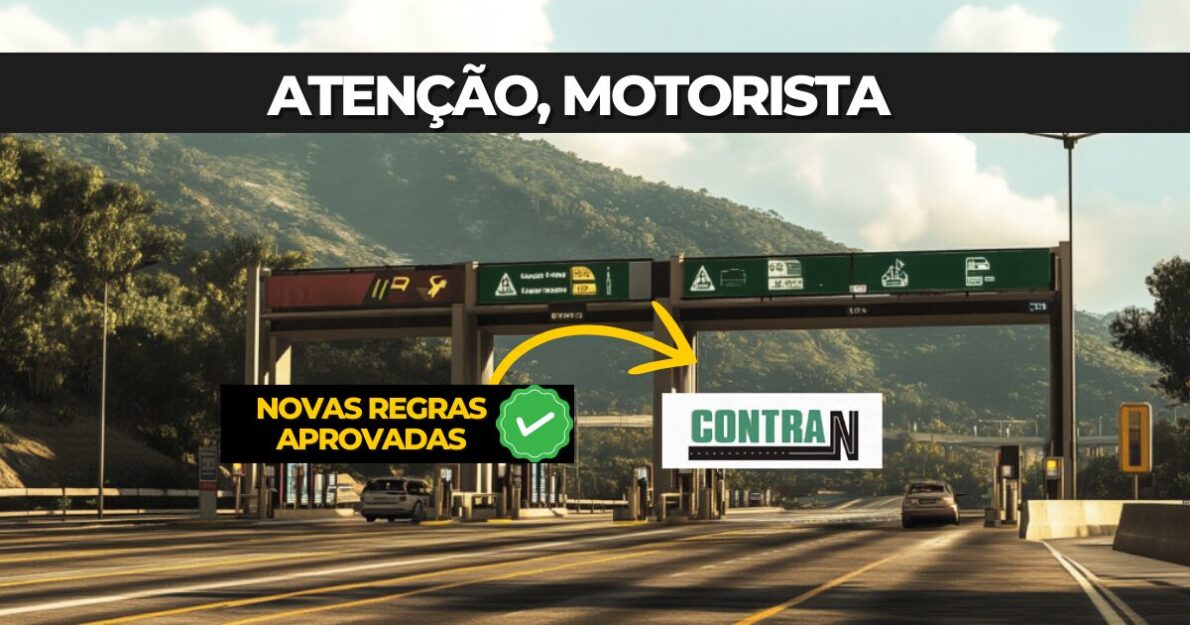
Contran Approved New Rules For Electronic Toll, Promising More Transparency And Ease In Payment, But Drivers Must Stay Alert To Fines.
The National Traffic Council (Contran) approved new and impactful rules for the collection of electronic tolls on Brazilian highways on Monday (14).
Focusing on increasing transparency and making life easier for drivers, these changes promise to transform the way tolls work in the country.
The electronic toll, known as “free flow” or “free flow”, is already a reality on some Brazilian highways, allowing drivers to pass through toll booths without the need to stop or reduce speed.
-
A 250cc motorcycle that can reach 560 km with a 14-liter tank, features disc brakes on both wheels and is among the most well-known in Brazil.

-
Man finds over 200 rare cars abandoned on a lot and tries to do the impossible in 8 hours with a surprise at the end.

-
An irregular parking case gains attention after a Mercedes Classe A was removed in such a strange way that it even raised doubts about damage to the car.
-
Costing R$ 16,000, the new Yamaha features a 125 cc hybrid engine with electric assistance, delivers 8.3 hp, includes ABS, optimized fuel consumption, Y-Connect connectivity, 25 liters of storage space, and a surprising 4-year warranty in the urban segment.

However, Contran decided to review and update the rules governing this system, establishing clear and uniform guidelines for charging on roads throughout the country.
Among the main changes are the extension of the payment deadline for the toll fee, the centralization of billing data, and the creation of a standardized signaling on all highways.
Longer Payment Deadline And Reduction Of Fines
One of the most relevant points of this new resolution is the extension of the payment deadline.
Now, drivers will have 30 days to pay the toll, counted from the date they passed through the toll booth.
According to the Ministry of Transport, this change was necessary due to the complexity of payment procedures, as the previous 15-day deadline was insufficient.
The new rule aims to reduce defaults, but drivers need to stay alert: after 30 days, failure to pay will incur a severe fine of R$ 195.23 and 5 points on their driver’s license.
Standardized Signaling: More Clarity For The Driver
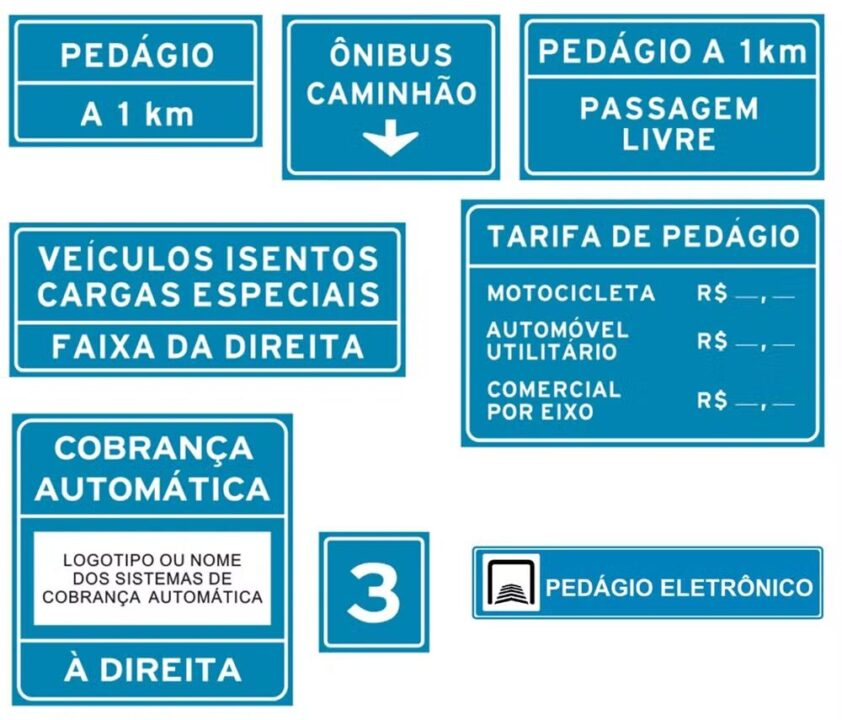
Another significant advancement is the creation of a national signaling system to identify electronic tolls on highways.
Signs with a specific symbol for the system will be installed at major access points and along the roads, providing more clarity and information to drivers.
According to Senatran, this measure ensures that users are not surprised by the presence of the toll, minimizing the risk of violations due to lack of knowledge about the system.
Until now, signaling was the responsibility of the concessionaires, who had the freedom to choose the format. Now, standardization seeks to ensure uniformity and visibility on the country’s highways.
How Will The Electronic Toll Be Collected?
With the new resolution, the electronic toll collection will be made through automatic vehicle identification, whether by license plate, by “tags” on the windshield, or by other methods that will still be regulated.
As the vehicle passes through the toll booth, the system registers the license plate and collects images of the movement.
According to Contran, these images will be stored for 90 days or for five years if the driver does not pay the fee and is fined.
All data generated by the system will be integrated into the Digital Traffic Wallet (CDT), allowing drivers to check values and payment deadlines easily and quickly.
Data Centralization: More Ease In Payment
One of the biggest challenges faced by drivers today is the lack of integration between the toll systems of different highways.
Each concessionaire adopts its own rules for collection and payment, making the process confusing and bureaucratic for those traveling through different regions.
Now, the passage data and records will be centralized in a national platform, available on the Digital Traffic Wallet (CDT) app and on the Senatran Services Portal.
According to the Ministry of Transport, this will facilitate payment and consultation of information for drivers, in addition to improving transparency in the billing process.
Impact On Highways And Concessionaires
The electronic toll system will be implemented on various highways across the country, but for this to happen, the concessionaires must adapt to the new rules.
According to the approved text, they will have up to 180 days to regularize their systems and ensure they comply with the regulations established by Senatran.
Additionally, it will be required that each highway with approved electronic tolls has physical payment points for those who prefer not to use the electronic system.
This new measure seeks not only to make drivers’ lives easier but also to reduce toll costs, something that has become a major concern for frequent highway users.
A Promise Of Savings Or Another Cost For The Driver?
The idea behind these changes, according to the national traffic secretary, Adrualdo Catão, is to protect the citizen.
The new regulation aims to provide more payment options, greater transparency, and more time to pay the fees, with the goal of making the system more efficient and fair.
On the other hand, drivers may wonder if these changes will truly alleviate costs.
Although the extended payment deadline and centralization of data make the process easier, the inclusion of fines and the lack of integration of existing systems show that there are still challenges to be overcome.
How Do These Changes Affect You?
The new electronic toll regulation brings significant advancements, but does it really benefit drivers or create more complications?
Brazilian highways need solutions that ensure efficiency and lower costs, and the centralization of collections seems to be a step in the right direction.
Do you believe these changes will help or complicate the journeys of those on the road? Share your opinion in the comments!






Seja o primeiro a reagir!