





 English
  Francês
  Alemão
  Italiano
  Japonês
  Norueguês
  Portuguese
  Spanish
  7 min of reading
  0 comments


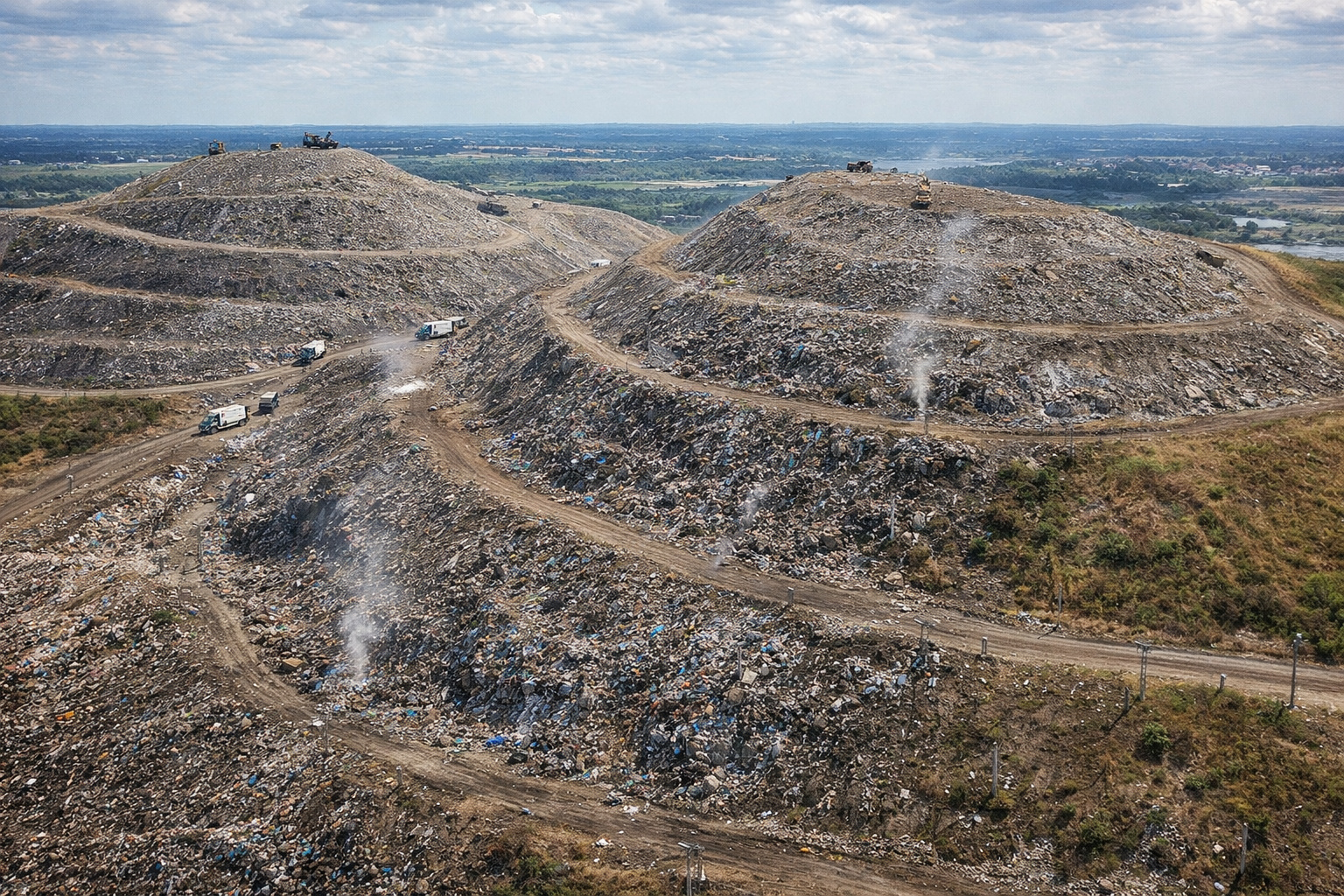
For Decades, Fresh Kills Symbolized The Peak Of Urban Trash: A Giant Landfill In New York That Turned Into An Artificial Mountain, Visible From Space And Still Generates Energy From Methane Today.
In 1948, Robert Moses — the urban planner who shaped New York for forty years — looked at a tidal swamp on the west side of Staten Island and said it was useless. The land was not suitable for construction. It was not useful for agriculture. It did not generate revenue. There was only one reasonable utility for that mud: to bury the city’s trash. The plan was simple. The landfill would operate for three years. After that, it would be closed and the land developed for housing. Three years turned into 53.
When the last garbage barge docked at Fresh Kills on March 22, 2001, the site had accumulated 150 million tons of solid waste — forming four hills up to 70 meters high that dominated the Staten Island skyline and could be identified in satellite images. For archaeologist Martin Jones from the University of Cambridge, Fresh Kills was “one of the largest human-made structures in history.” The trash had won.
The Impossible Math Of A Metropolis’ Trash
New York produces trash on an industrial scale. In the second half of the 20th century, as the population grew and consumption exploded in the post-war era, the city needed a permanent solution for its household waste. Fresh Kills was perfect logistically. It was located in Staten Island — the most remote borough, with less political power — and trash arrived by boat through the Arthur Kill estuary, directly from the docks of Manhattan and Brooklyn. There were no trucks crossing bridges, no complaints from affluent neighborhoods. The trash disappeared into barges and reappeared, silently, in the swamp.
-
Seen from space, a colossal ‘Y’ cuts through the largest desert in China, blending a jade-filled river, red and white mountains, and revealing the absurd scale of the transformation of the Taklamakan surrounded by a green wall with billions of trees.

-
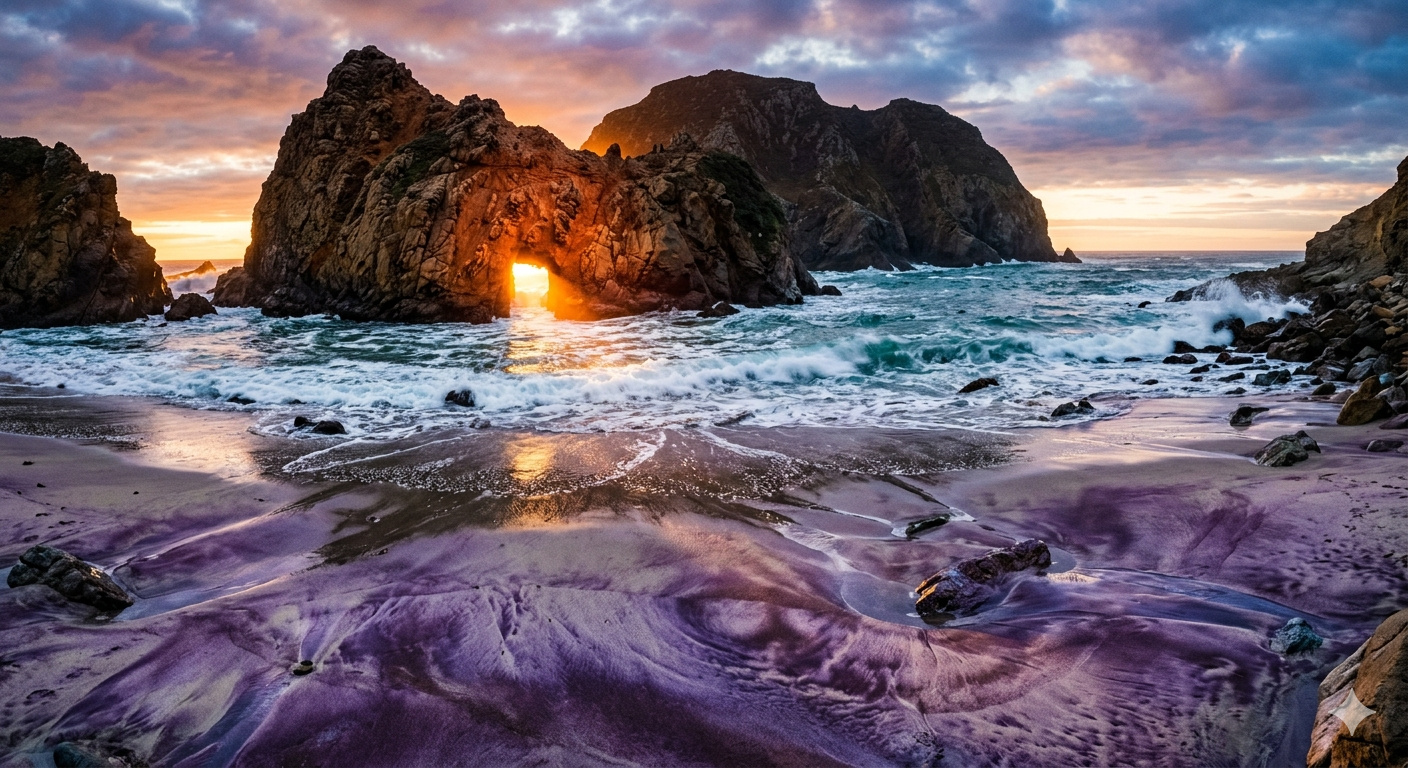
The Pacific Ocean reveals what the cliffs of Big Sur have hidden for millennia: Pfeiffer Beach, in California, features swirling purple sand formed by garnet crystals and displays a stone arch that is illuminated by the sun in winter for just a few days each year.
-
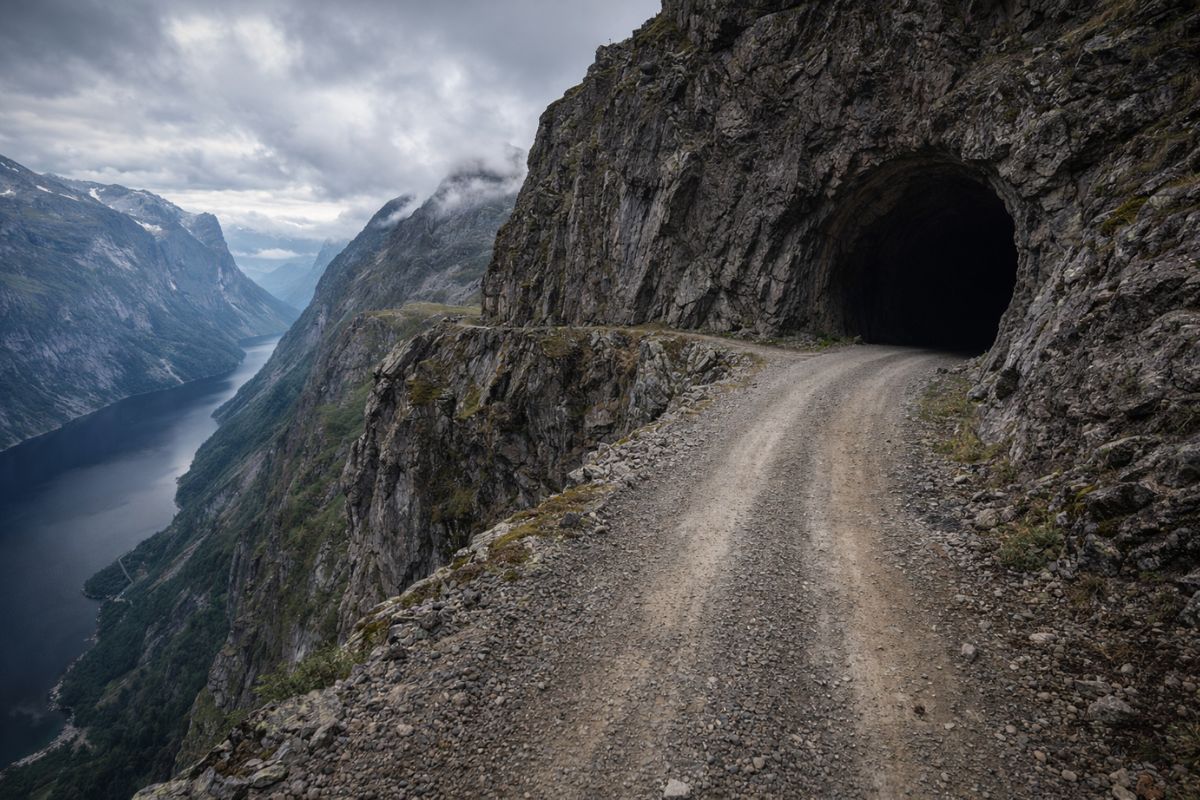
Aursjøvegen in Norway is a 100-kilometer gravel road that crosses chasms and dark tunnels carved into the rock at an altitude of 947 meters in the fjords and is only open for four months a year.
-
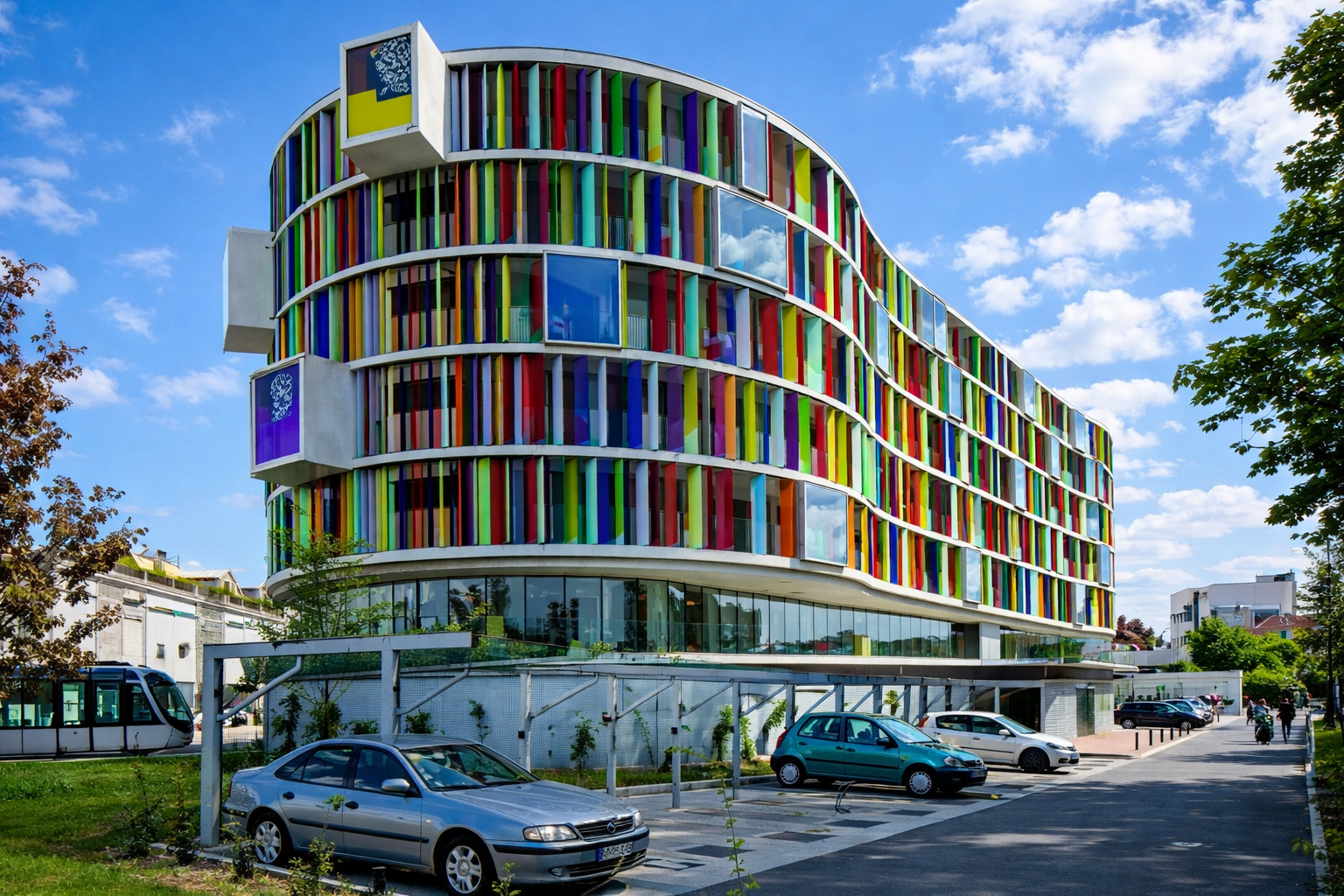
With about 4,000 m², the building constructed in a traditional neighborhood in France looks like a rainbow, has a colorful facade, mixes vibrant glass, and creates one of the most unusual visuals in Bordeaux.
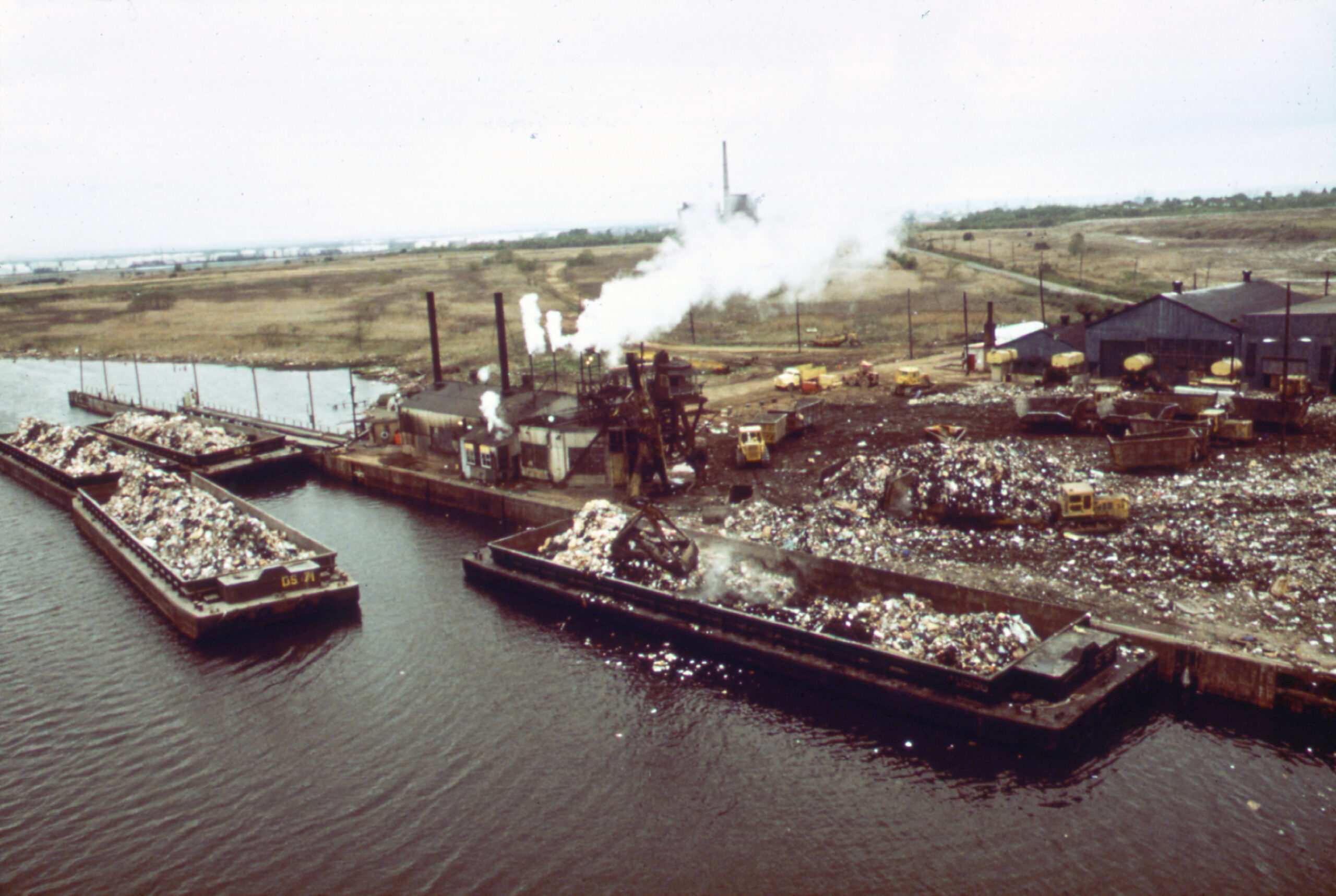
At the peak of operations, between 1986 and 1987, Fresh Kills received 29,000 tons of trash per day. The equivalent of the weight of 129 Statues of Liberty, every day, year after year. Beginning in 1991, it was the only active landfill receiving household waste from the entire city — the others had been closed under environmental pressure. What arrived at Staten Island was everything.
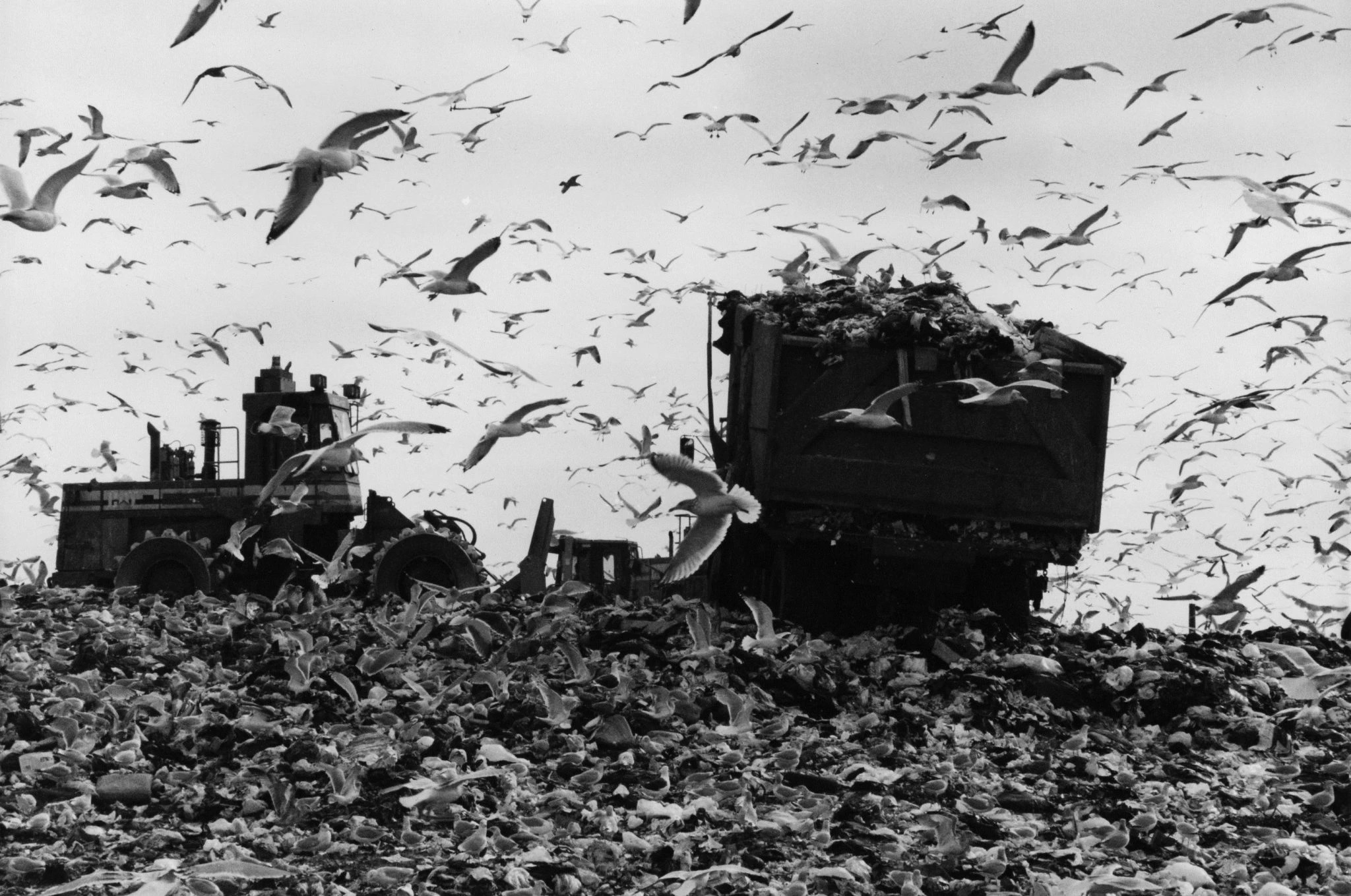
There were 680 employees. Tractors, compactors, and graders worked in continuous shifts to spread the trash in thin layers, compact it, and cover it with soil. The four hills — called “mounds” in official documents — grew centimeter by centimeter, ton by ton.
In the 1960s, the landfill had grown so much that workers had to build new internal infrastructure just to reach the unloading fronts. In the 1970s, a rat infestation threatened to take over the island. The solution was to declare the landfill a sanctuary for wild birds and bring in falcons, owls, and hawks to control the rats. It worked. Fresh Kills became, simultaneously, an industrial landfill and a wildlife refuge.
The Smell That Defined A Generation
For Staten Island residents, Fresh Kills was not an abstraction. It was the horizon. The odor permeated the nearby neighborhoods on windy days. Children grew up without seeing the horizon over the mounds of trash — the finish line of each day was interrupted by an artificial rise covered in seagulls. Formal complaints about smell, health, and quality of life began in 1949, a year after opening. And they continued for decades.
Staten Island residents were the ones most wanting to close the landfill. And the ones with the least power to force the city to find alternatives. The rest of the five boroughs wanted a convenient solution for trash and did not want to bear the political cost of confronting it. Staten Island footed the bill.
This political asymmetry lasted for decades. Only in the 1990s, with New York State pressuring and Governor Pataki aligned with Mayor Giuliani, was a deadline established for closure: December 31, 2001. The landfill closed nine months early, in March 2001. Six months later, it had to reopen.
September 11
The closure of Fresh Kills lasted less than half a year. On the morning of September 12, 2001 — less than 24 hours after the attacks — the governor of New York State signed an administrative order temporarily reopening the landfill. The reason: there was no other place in the metropolitan area with space and logistical capacity to process the debris volume from the World Trade Center.
Over the next ten months, about 500 barges transported 1.4 million tons of material from Ground Zero to Fresh Kills. The material arrived, was unloaded, and passed through quarter-inch screens — fine enough to capture fragments of bones, documents, personal belongings.
Thousands of detectives and forensic specialists worked for more than 1.7 million hours at the site. 4,257 fragments of human remains were identified — but only 300 people could be identified based on this material. The remaining fragments were buried in a specific 48-acre section of the landfill, with clean soil layers above and below.
In that Staten Island landfill that the city had tried to close, the debris from the largest terrorist attack on American soil found its final resting place. In 2011, a memorial was inaugurated at the site to honor the victims whose remains could not be identified.
What Is Under The Hills
Buried under 150 million tons of compacted trash and covered by layers of impermeable clay, soil, and vegetation, decomposition continues. Organic waste — food scraps, paper, wood — ferments in an anaerobic environment for decades. The process releases methane in industrial quantities. At the peak of gas production, Fresh Kills emitted over 15 billion cubic feet of greenhouse gases per year — approximately 2% of all methane emitted globally during certain periods in the 1990s.


Modern engineering has transformed this liability into a resource. A network of wells drilled into the hills captures the gas before it reaches the atmosphere. The methane is purified at an industrial plant installed on-site, converted into pipeline gas, and injected into the domestic distribution network. At the peak of this operation, the methane from Fresh Kills warmed 22,000 Staten Island homes per year and generated up to US$ 12 million annually in revenue for the city. Under each green hill, wells and pipes continue to work. The trash keeps fermenting.
Three Times The Size Of Central Park
The plan for Fresh Kills was approved in 2006 and is the largest urban environmental reclamation project in the United States: transforming the world’s largest landfill into a public park of 890 acres — almost three times the size of Central Park and the second largest park in New York when completed.
The process is, in itself, a feat of engineering. Each hill received overlapping layers: first a leveling layer, then a high-density plastic impermeable membrane, then compacted clay, then cover soil, then fertile soil with at least 15 centimeters of depth, and finally a vegetation layer with native grasses.
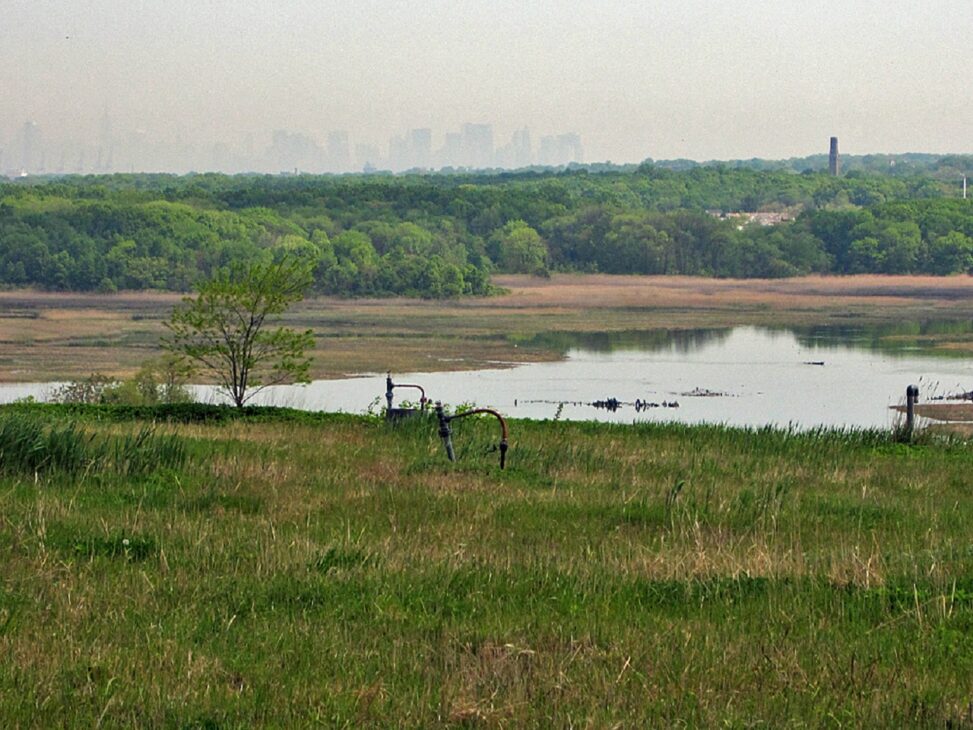
Under all of this, a network of pipes captures leachate — the toxic liquid that drains from trash decomposition, carrying heavy metals, organic compounds, and PCBs — and directs it to the treatment station on-site.
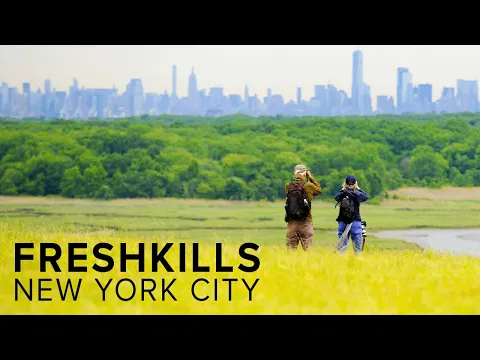
The North Park section, 21 acres, opened to the public in October 2023 — the first area formally accessible. It is possible to walk, bike, and kayak in the restored channels. Full completion is expected between 2035 and 2037.
In 2015, a 24-hour bioblitz recorded 320 species of plants and animals at the site. Today, the park is home to the largest breeding colony of savannah sparrows in New York State — a species of special concern for conservationists — as well as peregrine falcons, kingfishers, deer, and red foxes. More than 200 bird species have already been recorded.
The Bill That Stays For The Rest Of The Country
When Fresh Kills closed in 2001, New York did not stop producing trash. It simply started exporting the problem. Trash from the five boroughs began to be transported by train and truck to landfills in other states — primarily Pennsylvania, but also Virginia, Ohio, and more recently South Carolina. An orange freight train, visible from the construction site of the park, regularly carries waste generated by Staten Island to out-of-state deposits.
The Commissioner of the New York City Department of Parks put into words what Staten Island residents have known for decades: “Our trash is still affecting other people.” Closing Fresh Kills did not solve the trash problem — it only transferred the cost to other communities, usually poorer and with less political power.
What Fresh Kills Says About Cities
Fresh Kills lasted 53 years because it was convenient to ignore. It was located in the most isolated borough, away from neighborhoods making political decisions. The trash arrived by boat, invisible. It grew slowly enough not to alarm, fast enough to dominate the horizon.
It is the classic model of so-called “sacrifice zones” — areas that bear the environmental costs of metropolitan consumption while the benefits are distributed throughout the rest of the city. The difference, in Fresh Kills, is that the sacrifice zone was large enough to be seen from space.
Today, the green hills of Staten Island — with their methane wells, impermeable membranes, and sparrows nesting in native grasses — represent another category of human structure: the largest ongoing urban environmental reclamation project in the Americas. Where the world’s largest landfill once was, New York’s newest park is emerging. The trash is down there. And it will continue to ferment for decades.








Seja o primeiro a reagir!