





 Portuguese
  English
  Spanish
  7 min of reading
  8 comments


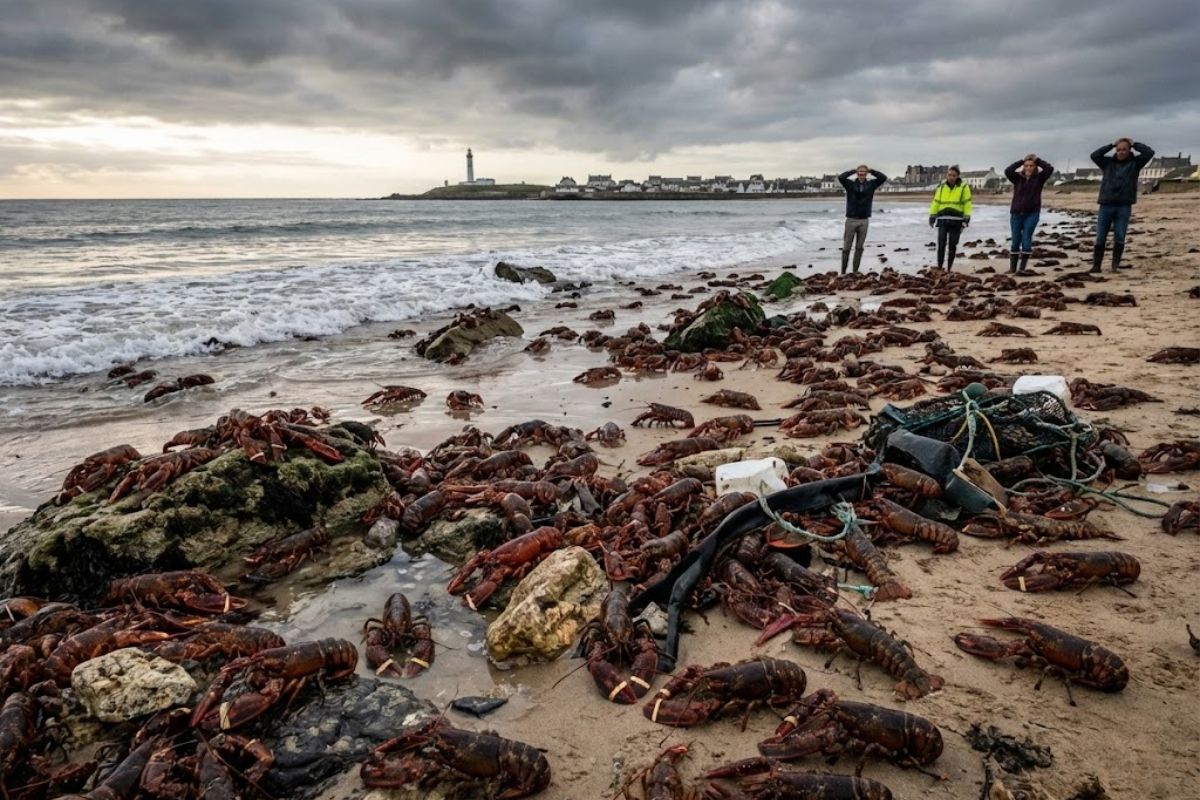


Invasive Species Become Moral And Legal Dispute: Activists Stop Eradication, Lawsuits Halt Actions, Populations Explode And Managers Lose Critical Window; Cases Involving Grey Squirrel, Crustaceans And Mute Swan Show Long-Lasting Consequences.
In 1997, experts structured a plan to control invasive species and protect an endangered species, but the intervention was halted when activists took the dispute to court. The case locked the project for years, and by the time authorization was granted, the window for action had already closed.
The repetition of the pattern appears in other episodes: emotional rescues, releases without verification, and actions that ignore technical management end up increasing the risk of invasive species, accelerating expansion and pushing costs onto the state, with impacts described as irreversible.
The 1997 Case That Halted Control And Changed The Fate Of Invasive Species

In 1997, the National Wildlife Institute, working with the University of Turan, developed a plan to eradicate invasive species in Italy, specifically the grey squirrel.
-
From sertanejo star to international investor: Ana Castela invests millions in a mansion in the USA, creates a themed accommodation in Orlando, and shows that the “boiadeira” also wants to grow away from the stage.

-
The 10 most stunning motorhomes in the world: a $3 million trailer with a rooftop nightclub and garage for a Ferrari, “palaces on wheels” with Italian marble, private cinema, and five-star hotel luxury for billionaires.

-
Trump wanted to spend $400 million on the White House, but the courts prohibited the million-dollar construction.

-
How the Egyptians erected giant structures like pyramids, temples, and obelisks without modern technology, cranes, or engines still amazes the world and reveals the power of engineering based on ramps, levers, ropes, and colossal organization.


The proposal was simple: remove the invaders to save endangered species threatened by competition and ecological pressure.
The plan stalled in June 1997 when animal rights activists took the institute to court.
The project was suspended and remained stuck in investigations and lawsuits until July 2000.
The scientists prevailed and received the green light, but the report itself points out the central issue: three years of delay were enough for squirrels to expand their territory to a level deemed impractical for eradication.
How The Grey Squirrel Became One Of The Most Aggressive Invasive Species In Europe

The grey squirrel is described as one of the most aggressive invasive species on the planet, introduced from North America about 140 years ago.
In the UK, it has already colonized large areas and put the local red squirrel at risk of extinction.
In Italy, the record of the invader’s presence is established in an area of about 770 square miles in the northwest.
The history of introductions includes 1948, in Piedmont, with two pairs coming from Washington DC and released in Stuan, in the province of Turan.
In 1966, five more animals from Norol, Virginia, were released in Villa Galo park in Genoa.
A third incident occurred in 1994, with three pairs released in a commercial park, captured and removed in 1996, without changing the trajectory of the already established individuals.
The material also points out a critical feature of invasive species: they do not need a large group to form a new population.
The cited data is straightforward: in 71.4% of cases, only 10 squirrels would be sufficient to create a stable population, expand, and cause problems.
62% Drop And The Domino Effect On Biodiversity, Health And Economy
Between 1970 and 2010, the population of red squirrels in Italy would have dropped by 62%, equivalent to about 652 square miles lost, while the grey squirrels took over the space.
The expansion would have been slow in the first 20 years, but then the invaders doubled their speed of dispersion.
The described impact goes beyond competition.
In the forestry sector, grey squirrels in the UK are presented as causing significant damage to forests and commercial areas by stripping the bark off trees, opening wounds that allow entry of insects and fungi and degrade the quality of the wood.
In the health field, the squirrel pox virus appears as a decisive factor: the greys would be carriers without getting sick, while the reds develop lesions on their face, feet, and genitals and die quickly, making it rare to find a living infected.
The report also points to the invasion of bird nests, with consumption of eggs and, sometimes, chicks, expanding the scope of the typical damage caused by invasive species.
“Too Late” And The Forecast Of Expansion: Alps, France And Switzerland On The Horizon
When eradication becomes unfeasible, the reported path is to anticipate expansion.
The cited projection indicates that grey squirrels could reach the Western Alps between 2026 and 2036, France between 2066 and 2071, and Switzerland between 2051 and 2066.
The study also points out that if things worsen, they could arrive much sooner, evoking what happened in the UK as a warning.
In this scenario, selective culling is described as insufficient to reverse the situation when invasive species have already multiplied on a large scale, because the victories would be temporary and populations quickly reoccupy the areas.
“Rescues” That Became Risk: Released Lobsters, Species Error And Fine
On May 8, 2015, activists opened the tank of a Chinese restaurant in Dublin and took the lobsters, releasing the animals into the sea in Clarf, a neighborhood of the city.
The intention was to save them from being food, but the text underscores the risk: you cannot release an animal into a random environment and expect it to work out.
The material argues that lobsters typically live in warm tropical waters, like the Caribbean Sea, while the Irish Sea is too cold.
The most likely outcome pointed out is that the animals died quickly due to climate, predators, unknown prey, and diseases, with the added risk that, if they survived, there would be the introduction of a species into an environment where it does not occur naturally, a typical scenario of invasive species.
In 2017, near Brighton, hundreds of lobsters and crabs were released into the sea by people intending to spare them from being sold and eaten.
The action was described as a mistake because the lobsters were American, considered invasive in the UK.
The episode resulted in a fine of around US$ 20,000 and a public cost of approximately US$ 23,000 in capture attempts, recovering only half of the animals.
The Marble Lobster And Cloning Reproduction That Accelerates Collapse
The case of the marble lobster emerges as a symbol of the explosive potential of certain invasive species.
In 1995, a student bought these lobsters in Frankfurt, sold as “Texas lobsters.”
When they began to multiply rapidly, he gave them to friends, who released them into rivers, lakes, and even flushed them down toilets.
The described biology explains the panic: they clone themselves, reproducing from a single cell, and all current individuals would be descendants of one original female.
Each female reproduces about four times a year, without needing males.
The result is the possibility of a single female starting a population of millions of genetically identical individuals.
In Germany, the text claims they are so abundant that it is possible to catch about 150 in an hour by hand using a flashlight.
In Madagascar, where they are said to have arrived around 2007, the population would already be in the millions, putting local species at risk, with the warning that the problem could become global.
Mute Swan: From Five Birds To Thousands, Aggressiveness And Devoured Vegetation
The material expands the debate to birds. In 2003, the U.S. Fish and Wildlife Service, along with the Wildlife Service and the Maryland Department of Natural Resources, planned to reduce swan populations, but faced resistance from animal rights groups that used the National Environmental Policy Act to argue that invasive birds should be protected.
The text cites about 13,000 mute swans in the Atlantic Flyway and details Maryland with approximately 3,600 swans in the bay and surroundings, a population that would have started with just five birds.
Between 1986 and 1999, Rhode Island would have recorded an increase of almost 80%, with a forecast of continued growth every 3 to 4 years.
The described origin is intentional: swans brought from Europe to ornament lakes and reservoirs, with wings clipped to prevent them from flying, which later became wild due to rapid reproduction, lack of natural predators, and abundance of habitat.
The behavior is described as aggressive: during mating season, a pair can dominate up to 10 acres, driving away other species, evicting birds from nests, and sometimes killing chicks.
The cited ecological impact includes significant reduction of aquatic vegetation and even complete disappearance of some plants, devoured by the swans.
Fish dependent on these plants also suffer.
In this depiction, the mute swan appears as an example of invasive species that seem “elegant,” but disrupt food chains.
When Conflict Turns Into Cooperation And Management Exits The Emotional Field
The material does not close the door on animal defenders.
It claims there is documented collaboration between activists and biologists, with an example of a program to deal with wild pigs in Fort Worth, Texas.
The key to the case was to inform all parties about the harm caused and seek more humane methods of euthanasia, with the declared goal of caring for nature.
The practical conclusion, within what has been narrated, is that interfering without a technical basis increases the risk of invasive species and shortens response time, while coordinated actions with professionals reduce damage and avoid what is described as ecological hell.
From your point of view, when invasive species are already in expansion, what should weigh more in the decision: individual compassion for the animal or the collective risk of environmental collapse?








Risco coletivo de colapso ambiental
No mangue de Cubatão foi detectado em 2024 a presença de uma Espécie Exótica Invasora, a Sonneratia apetala. Por enquanto restrita a este manguezal. O IBAMA já foi alertado.
Concordo totalmente com o Christian. O **** estúpido do ser humano é o culpado. Os culpados por deslocar os animais tem que morrer. Imbecis esses biólogos e outros que querem resolver da pior maneira e da mais cruel, matando todos. Tomara Deus que morram todos esses bestiais maldotos que dão a solução do extermínio. Mas se falarmos em exterminar eles e suas famílias nojentas aí não pode, mas matar os filhotinhos e outros, eles acham o certo. Cretinos, Deus há de dar o pior destino pra esses canalhas. Planta crueldade, vai colher, jumentos !!
Eu vou te dar uma comparação pra ver se você entende: pensa no ecossistema como uma casa, enquanto todos os moradores estiverem nela, tudo fica bem, porém, de repente, alguém invade a casa e fica lá, se aproveitando do que tem nela, consumindo os recursos, então quem invadiu a casa chama amigos pra invadirem e ficarem lá com ele, consumindo ainda mais recursos ainda mais rápido, seguindo esse ciclo até que não sobre nada na casa se não forem expulsos a tempo.É assim que funciona com a maioria das espécies invasoras, ficou fácil de entender?
Faltou só o detalhe de que na maioria dos casos não é invasão, são os donos da casa que sequestram o “invasor” por que ele é bonitinho dá vontade de ter perto, sem pensar além do próprio umbiguinho. Depois o que resta para o sequestrado é seguir o rumo natural da vida da melhor forma que podem, que no caso é através da sobrevivência e reprodução.