





 Portuguese
  English
  Spanish
  3 min of reading
  0 comments


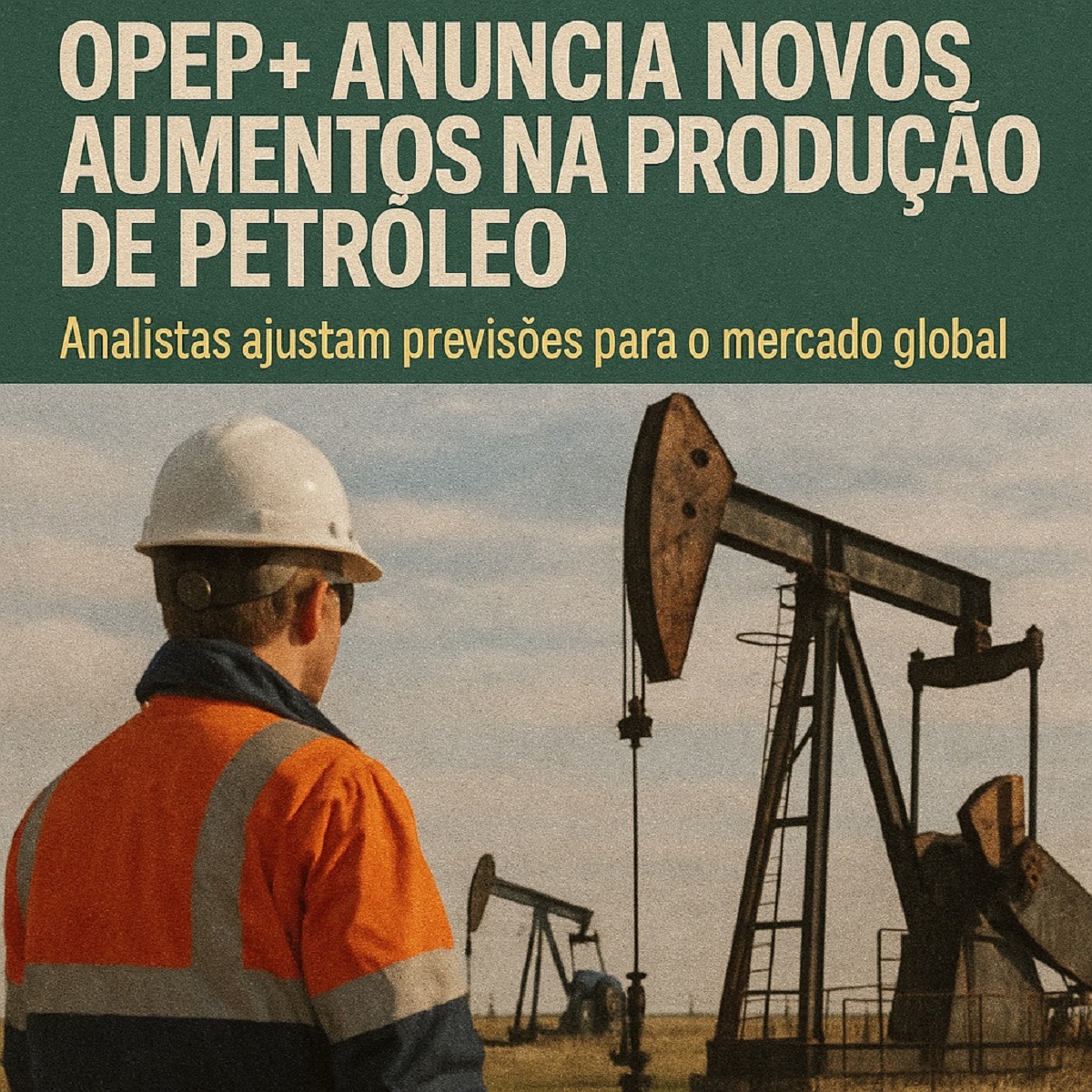
The Decision of OPEC+ to Increase Oil Supply Directly Affects International Prices.
This Motivates the Revision of Forecasts by Banks and Industry Experts.
As reported by InfoMoney on May 5, 2025, OPEC+ announced new changes to its production policy. Thus, in addition, the announcement reinforces the strategy of the group, which, consequently, aims to control supply and, therefore, stabilize global prices. Furthermore, the Organization of the Petroleum Exporting Countries and allies declared that it will gradually increase production in the coming months. The expectation is to reintroduce up to 2.2 million barrels per day to the market by November 2025, in a staggered manner.
The measure seeks to compensate for the non-compliance with quotas, as some member countries, such as Iraq and Kazakhstan, did not adhere to them. Although there were well-defined limits, these countries, according to Reuters, ended up exceeding their established production targets.
In April, OPEC+ had already signaled a change in posture by unexpectedly approving a production increase greater than expected for May. Moreover, Saudi Arabia, which leads the group, indicated that it no longer intends to sustain the balance of the global oil market alone. As a result, the country is seeking greater participation in total production, especially after consecutive years of significant cuts.
-
Petrobras evaluates suspension of sales to distributors and considers canceling the cooking gas auction following guidelines from the Federal Government.
-
Lula reveals a masterstroke by Petrobras to undo a deal made by Bolsonaro, which involves the return of an important refinery that currently produces less than half of what was expected and makes Brazil dependent on international diesel.
-
A study confirms that the natural gas sector will reduce greenhouse gas emissions in Brazil by 0.5% and accelerate the energy transition by 2026.

-
Petrobras implements a severe adjustment and confirms a 55% increase in the price of aviation kerosene with a proposal for installment payments for the companies.


Gradual End of Voluntary Cuts Adopted Since 2022
Since 2022, the group’s production cuts have totaled around 5 million bpd, equivalent to 5% of global demand. Part of these cuts will remain in effect until 2026. In April 2025, OPEC+ decided to begin the gradual withdrawal of the voluntary portion of 2.2 million barrels per day. The reduction will start gradually in May.
For June, a significant increase is scheduled, totaling nearly 1 million bpd between April and June. The trend continues into July, when an additional 411 thousand bpd should be added to the supply.
The continuation of the plan will depend on members’ adherence to the established targets. If countries like Iraq and Kazakhstan do not meet their quotas, the group may adopt measures sooner. These additional increases could be anticipated between August and October.
If the situation persists, the remaining voluntary cuts could be reversed by November.
Kazakhstan, in particular, has prioritized national policies, despite recording a 3% decline in production. Nonetheless, the country exceeded the agreed limits.
Effects on Prices and Market Forecasts
The combination of increased production and slowing global demand has contributed to the decline in barrel prices. In April, Brent crude was traded for less than US$ 60, reaching the lowest value in four years.
According to Giovanni Staunovo, an analyst at UBS cited by InfoMoney, this price pressure is expected to continue. It will persist as long as countries do not show greater alignment with the goals of OPEC+.
Morgan Stanley revised its estimates. It now projects an excess supply of 1.1 million bpd in the second half of 2025. For 2026, the forecast is for 1.9 million bpd excess.
Therefore, the bank lowered its projection for Brent prices by US$ 5 to US$ 10 per barrel.
It now predicts that the price could reach US$ 55 in the first half of 2026.
Previously, the estimate was US$ 65 for the same period.
Geopolitical Context Influences Decisions
The movement of OPEC+ occurs at a time of increasing international attention. According to InfoMoney, the decision precedes the visit of U.S. President Donald Trump to Saudi Arabia, scheduled for the coming days. During the visit, Trump is expected to discuss military agreements and energy issues, reinforcing calls for OPEC+ to increase production and contribute to lowering gasoline prices in the U.S. market.








Seja o primeiro a reagir!