





 Portuguese
  English
  Spanish
  3 min of reading
  0 comments


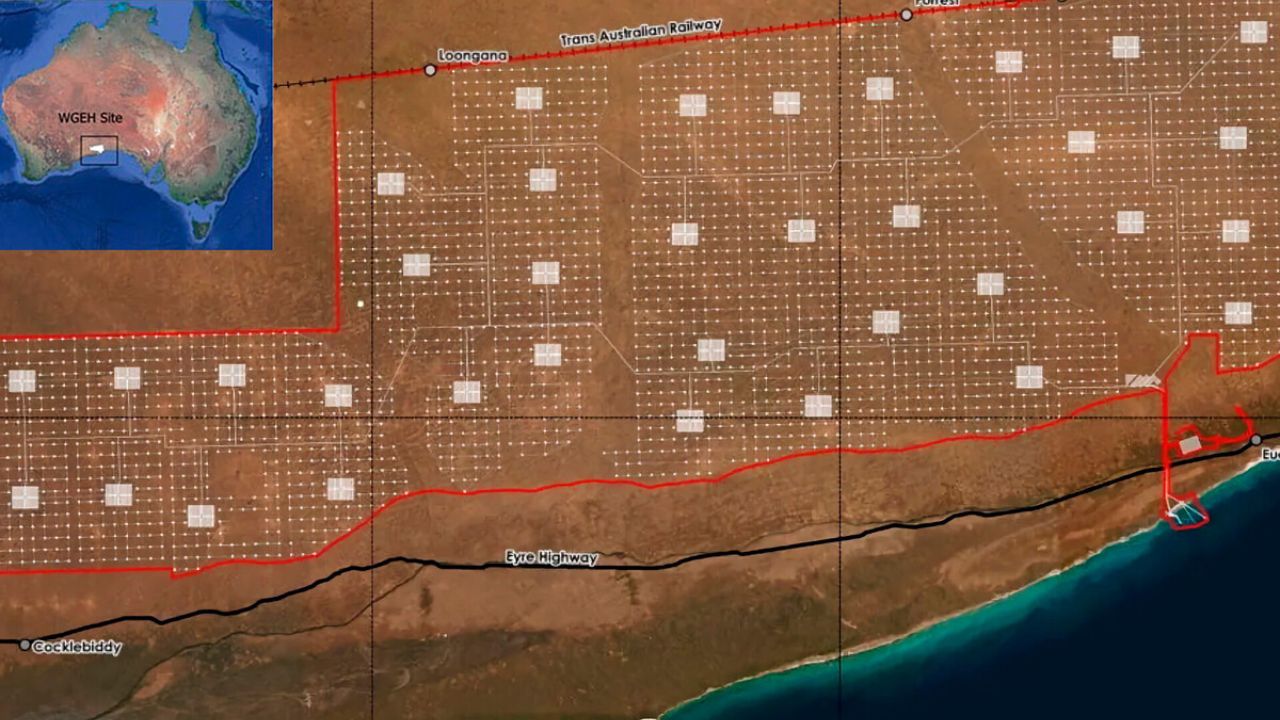
With 22,700 km² of area, 60 million solar panels, and 3,000 wind turbines, this renewable energy plant could surpass the electricity production of entire countries! With an investment of AUD 100 billion, its energy will be transformed into green hydrogen for export, making Australia a global powerhouse in the energy transition!
The public consultation period for the environmental approval of the Western Green Energy Hub has ended. Now, Australia is facing a historic decision: to approve or not the largest renewable energy plant project in the world. If authorized, this center will not only drive the global transition to sustainable sources but will also position the country as a leader in clean energy generation.
However, the magnitude of the initiative raises questions. What will the environmental impact be? Is green hydrogen the solution of the future? Does Australia really need that much energy? In this article, we explore all the details of this megaproject.
What Makes This Renewable Energy Plant So Grand?

The Western Green Energy Hub is not just an ambitious project: its scale challenges geography. The plant would occupy an area of 22,700 km², surpassing entire territories, such as Slovenia and El Salvador. For comparison, this is equivalent to about 47 countries worldwide.
-
Renewable energy advances over protected areas in Brazil, and a survey by the Energy Transition Observatory reveals silent impacts that challenge environmental conservation and pressure sensitive traditional territories.

-
Rio Grande do Sul accelerates energy transition: State invests in renewable technologies and consolidates decarbonization strategies and pathways to attract billions in new industrial investments.

-
With 160,000 m² of collectors, an area larger than 20 football fields, Silkeborg, in Denmark, hosts a solar thermal plant that heats 19,500 homes and could become the largest solar heating plant in the world.

-
A study reveals the expansion of renewable energy procurement in Brazil and shows how companies are taking advantage of opportunities to reduce expenses, ensure energy efficiency, and strengthen strategic environmental commitments.


In addition to its size, the energy generation capacity is impressive. The hub would feature 60 million solar panels and 3,000 wind turbines distributed between the sea and the mainland, producing an impressive 70 GW of clean electricity.
The Magnitude of the Western Green Energy Hub
The central idea of the project is to combine solar and wind energy on an unprecedented scale. With an investment of AUD 100 billion (USD 60 billion), the plant promises to generate more than 200 terawatt-hours of energy annually, surpassing the production of many countries.
Australia does not need all that electricity. Therefore, much of the energy will be converted into green hydrogen through the electrolysis of desalinated water. The result will be 3.5 million tons of ammonia per year, a highly valued product in the industry and the agricultural sector.
This solution could transform Australia into an exporter of clean energy, selling hydrogen to countries seeking sustainable alternatives to reduce their carbon emissions.
The Importance of Involving Indigenous Peoples
One of the most interesting aspects of the project is its construction on Indigenous lands. The consortium responsible for the plant has reached an agreement with the Mirning Traditional Lands Aboriginal Corporation, representing the native peoples of the region.
The plant will be installed in seven phases, with completion expected by 2050. Throughout this period, the project will not only transform Australia’s energy matrix but could also provide economic and social benefits to local communities.









Seja o primeiro a reagir!