





 English
  Francês
  Alemão
  Italiano
  Japonês
  Norueguês
  Portuguese
  Spanish
  3 min of reading
  0 comments


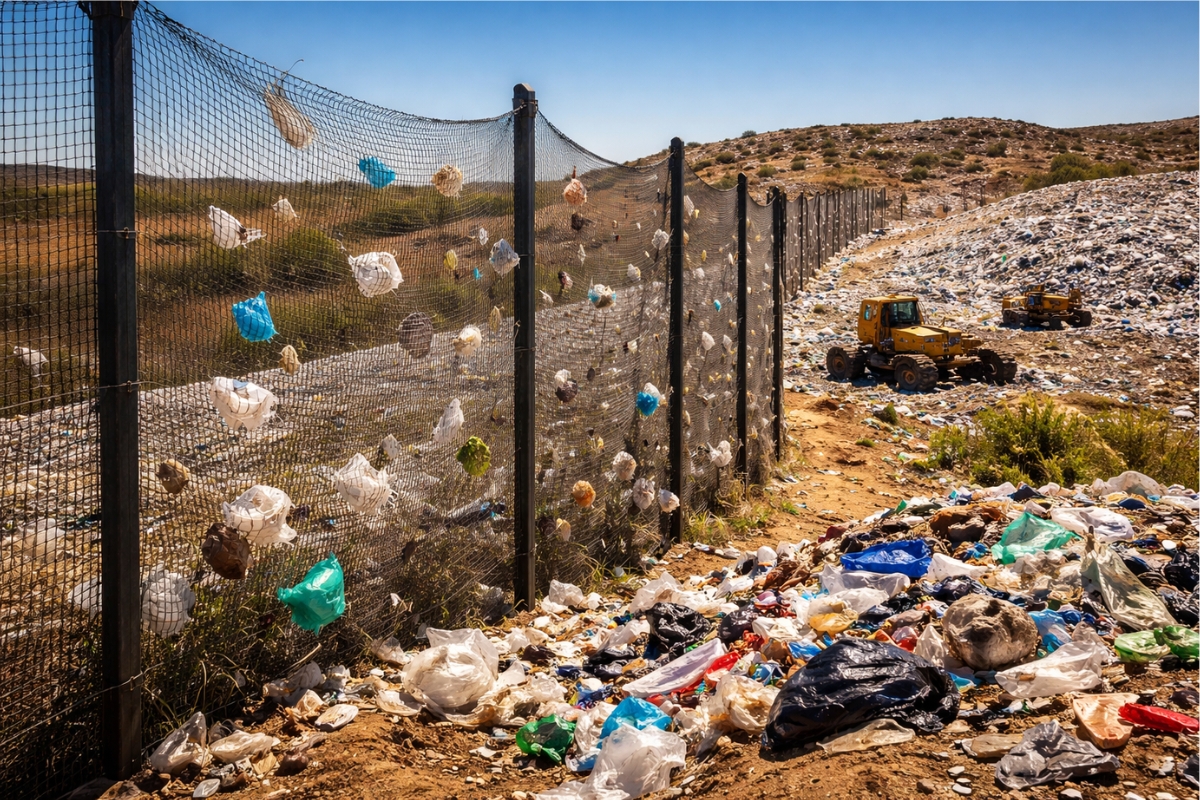
With 20.5 million tons sent to landfills in a single period, Australia turns to more than 10,000 km of special fences to trap waste at the most critical point, before the wind spreads plastic over roads, farms, and natural areas.
Australia has expanded a discreet solution that has a direct effect on the environment. There are already more than 10,000 kilometers of special fences around landfills and recycling units to prevent bags, packaging, and plastics from escaping with the wind.
The impact goes far beyond the visual. This barrier reduces the arrival of waste to highways, rural properties, and natural habitats, which decreases the risk to wildlife, livestock, and productive areas.
Waste carried by the wind hits fields and wildlife
On windy days, the problem becomes evident at the edges of landfills. Bags caught in trees, packaging scattered along the edges of roads, and plastics encroaching on pasture areas show how quickly waste can get out of control.
-
Seen from space, a colossal ‘Y’ cuts through the largest desert in China, blending a jade-filled river, red and white mountains, and revealing the absurd scale of the transformation of the Taklamakan surrounded by a green wall with billions of trees.

-
The Pacific Ocean reveals what the cliffs of Big Sur have hidden for millennia: Pfeiffer Beach, in California, features swirling purple sand formed by garnet crystals and displays a stone arch that is illuminated by the sun in winter for just a few days each year.

-
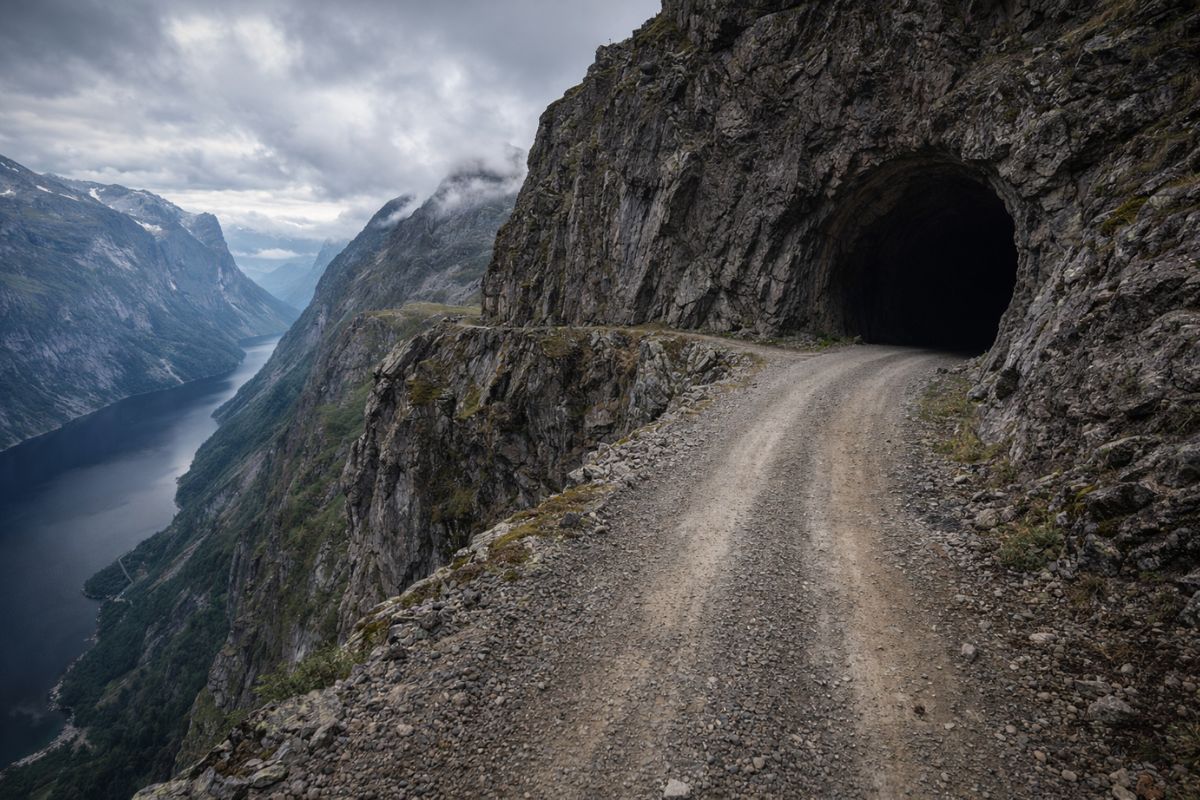
Aursjøvegen in Norway is a 100-kilometer gravel road that crosses chasms and dark tunnels carved into the rock at an altitude of 947 meters in the fjords and is only open for four months a year.
-
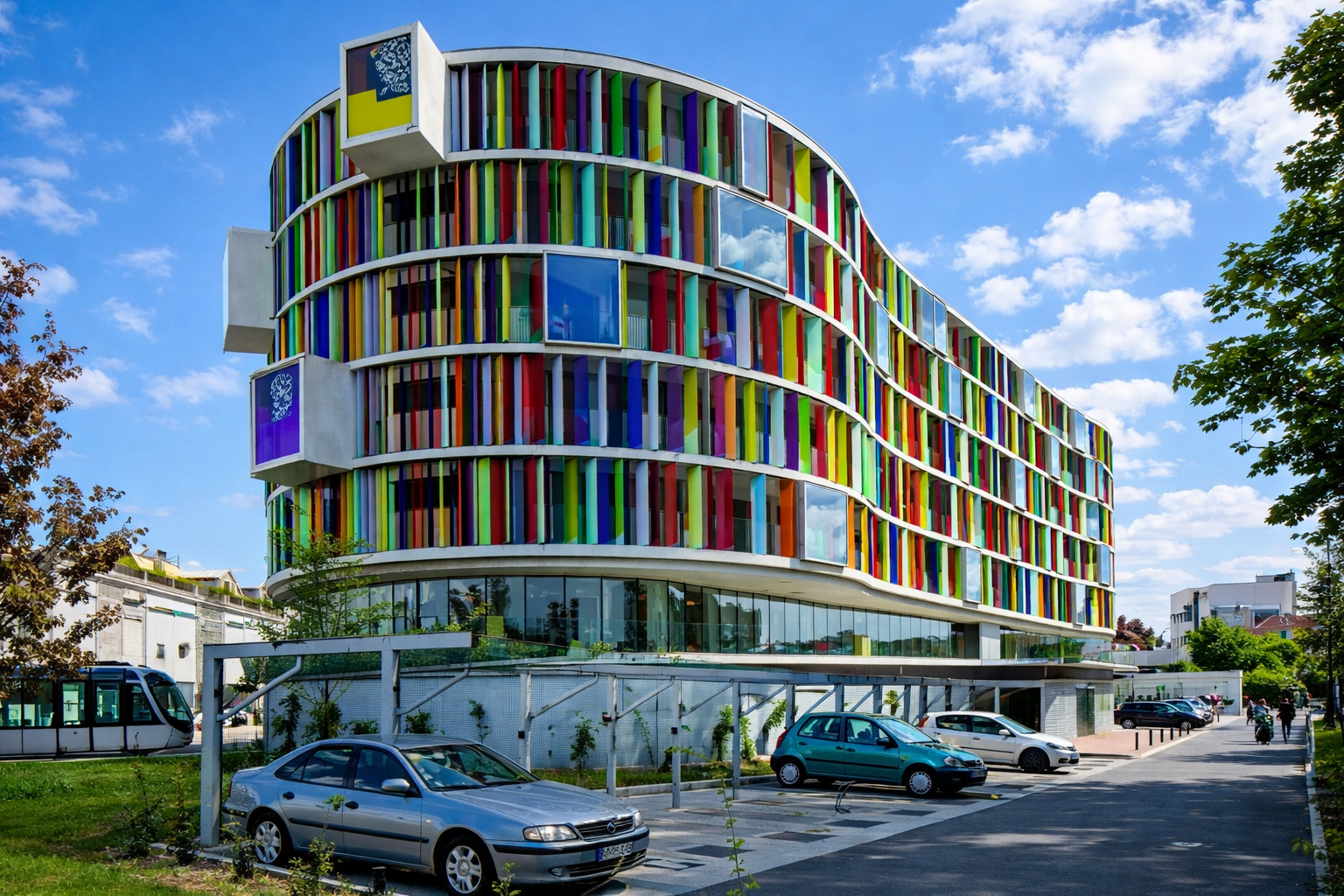
With about 4,000 m², the building constructed in a traditional neighborhood in France looks like a rainbow, has a colorful facade, mixes vibrant glass, and creates one of the most unusual visuals in Bordeaux.

When this material reaches animal husbandry regions or conservation spaces, the damage is no longer just environmental. The risk now involves ingestion of waste, suffocation, and contamination of areas used for food production.

Structures withstand winds of up to 100 km per hour
The fences use posts anchored deeply and meshes designed to withstand gusts of up to 100 km per hour. In open areas, where the wind easily gains strength, this resistance becomes essential to keep the containment functioning.
The design of the mesh changes according to the type of operation. In landfills, the openings are around 40 millimeters, enough to retain bags and lightweight packaging. In recycling centers, the mesh is tighter to hold smaller fragments and synthetic fibers.
Country sent 20.5 million tons to landfills
The scale of the challenge helps explain the advancement of these barriers. According to the Australian Bureau of Statistics, the official statistics agency of the country, between 2018 and 2019, Australia sent 20.5 million tons of waste to landfills, a volume close to a quarter of all waste generated during that period.
With this volume concentrated in large disposal areas, physical containment gains immediate importance. The goal is not to eliminate waste at the source, but to prevent part of it from spreading to crops, roads, and wildlife zones.
Networks also advance over urban drainage in Kwinana
The logic of the barriers has already begun to extend beyond the surroundings of landfills. In Kwinana, in Western Australia, networks have been installed at the outlets of stormwater drains to prevent trash carried by rain from reaching a nearby nature reserve.
In the first months, the system collected about 370 kilograms of waste in two large pipes. With the expansion of the program, five networks began to intercept more than 3.6 tons of debris before they reached parks and wetlands.

Secure solution, but far from solving everything
The fences help to halt the advance of waste at the most critical moment, when the wind tries to pull the waste out of the perimeter. Still, they do not replace policies for waste reduction, more efficient recycling, and less environmentally harmful packaging.
The next step involves increasing the durability of these meshes and improving monitoring of the points of greatest accumulation. The idea is to make containment more precise without turning the structure itself into a new environmental liability.
Immediate effect reaches the field and cities
Each package retained before leaving the landfill represents less pressure on wildlife, less litter in productive areas, and a lower chance of waste reaching waterways or public spaces. It is a simple protection, but with a direct effect on those living near these facilities.
At the same time, the expansion of this network highlights the size of the problem. If thousands of kilometers of containment have become necessary, the volume of disposables in circulation has already exceeded the acceptable limit and changes the strategic reading.









Seja o primeiro a reagir!