





 Portuguese
  English
  Spanish
  4 min of reading
  0 comments


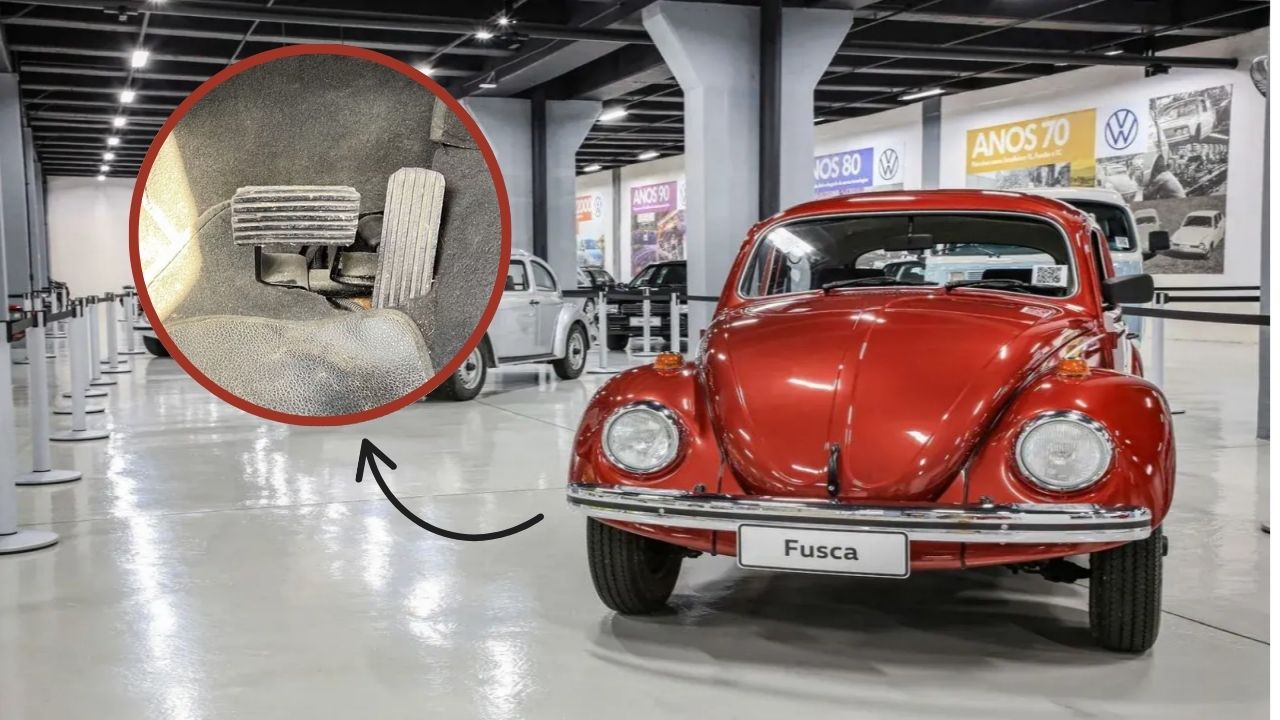
A Gem of German Volkswagen. The Automatic Beetle That Became a Museum Piece in Brazil. See Where to Visit This Rare Classic Car and Understand How Its Different Transmission Works
An automatic Beetle, manufactured in Germany in 1970, which was never officially offered in the Brazilian market, is now on display in the interior of São Paulo. This rarity is part of the collection of the Dream Car Museum in São Roque, and it is attracting the attention of vintage car enthusiasts, curious visitors, and collectors.
It represents a special chapter in automotive history. After all, few Brazilians know that there is an automatic Beetle equipped with an automatic transmission. And this is not an adaptation, but rather an original project by Volkswagen itself.
A Rare Find That Came from Lima, Peru, Straight to São Paulo
Márcio Guerino, a collector and enthusiast of classic Volkswagen vehicles, was the one who brought this gem to Brazil. The story is at least curious. Márcio always had that lingering question: did an automatic Beetle actually come from the factory?
-
Friends have been building a small “town” for 30 years to grow old together, with compact houses, a common area, nature surrounding it, and a collective life project designed for friendship, coexistence, and simplicity.

-
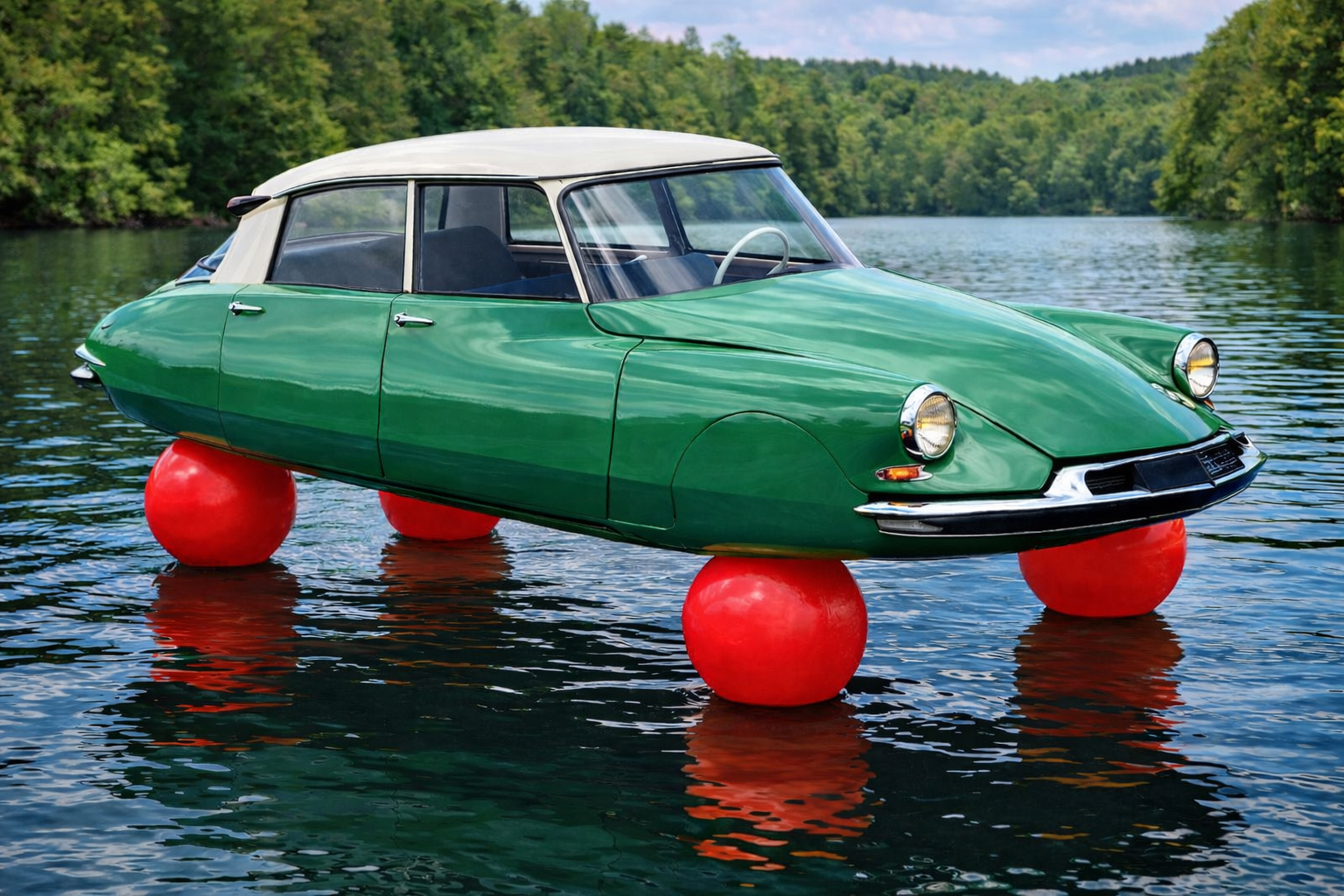
A French brand placed a car on four huge red balloons to prove that its suspension made the vehicle “float,” and the surreal scene became one of the most iconic and unusual images in automotive history.
-
This small town in Germany created its own currency 24 years ago, today it circulates millions per year, is accepted in over 300 stores, and the German government allowed all of this to happen under one condition.

-
Curitiba is shrinking and is expected to lose 97,000 residents by 2050, while inland cities in Paraná such as Sarandi, Araucária, and Toledo are experiencing accelerated growth that is changing the entire state’s map.


Determined to find the answer, he embarked on a true hunt on the internet. After some time researching, he found exactly what he was looking for. A perfect specimen, kept in the collection of a collector in Lima, Peru. It took months of negotiations until, in March 2024, the car boarded a ship bound for Brazil, landing at the Port of Santos with only 55,000 kilometers on the clock. A true miracle on wheels, practically new, considering its over 50 years of age.
How Does This Automatic Beetle Work? Spoiler: It’s Quite Different from What You Imagine

The transmission of this Beetle is not automatic in the way we know today in modern cars. In fact, it is the result of a clever idea created by Volkswagen engineers at the end of the 1960s. The system became known as Autostick and combined characteristics of manual transmissions with elements of automation.
The first gear was eliminated and the clutch pedal simply disappeared. In its place, a hydraulic torque converter was installed, responsible for engaging and disengaging the clutch automatically, without driver intervention.
But be careful; this is not a conventional automatic transmission. The driver still needs to manually select the gears. The difference is that there is no need to press a clutch pedal, making driving much more practical for that era’s standards.
The Transmission Offers Three Gears and a Reverse, Distributed as Follows.
- “L” (Low): corresponds to the old second gear, used for climbing, difficult terrain, or when the car is heavy.
- “1”: equivalent to the third gear of the manual gearbox, ideal for urban use.
- “2”: replaces the fourth gear, perfect for hitting the road.
The engine powering this Beetle follows the classic boxer configuration with four cylinders, with 1.5 liters of displacement. It delivers 52 horsepower and 10.3 kgfm of torque, performance that was impressive in the 1970s.
Anyone curious to understand more about how this system works can check out details on the official Volkswagen Heritage website, which has a rich collection on the history of the brand, including a complete explanation about the Autostick.
German Style and Technology Far Ahead of Its Time
If the interior of the automatic Beetle is already a lesson in creative engineering, its exterior also exudes personality. There are several visible differences when compared to the national models that ran here in Brazil.
On the engine cover, a small plate with the inscription Automatic immediately indicates that this is not just any Beetle. The side windows and windshield are noticeably larger, providing more comfort, brightness, and better internal visibility. The wheels are of a style known as Mexican, which did not exist in Brazilian models.
And there’s more. This German Beetle was already equipped in 1970 with features that would only be adopted many years later here. This includes the right-side rearview mirror, hazard lights, the external fuel tank filler neck, and the fuel gauge integrated into the speedometer, right in the center of the dashboard.
If you enjoy comparisons and curiosities, it’s worth checking out a complete article from Quatro Rodas magazine, which shows how the Brazilian Beetle took much longer to adopt some of these innovations.
Where and How to Visit This Rarity
The Dream Car Museum, which houses this true gem of automotive history, is located in São Roque, a tourist city in the interior of São Paulo, famous for its wine route and cultural attractions. The space is a dream park for any vintage car lover, featuring everything from historic Volkswagen models to American muscle cars and European sports cars.
Complete Service Information for the Dream Car Museum
Address: Estrada do Vinho, number 7,901, São Roque, São Paulo
Operating Hours
- Tuesday to Thursday: 9 AM to 6 PM
- Friday and Saturday: 9 AM to 7 PM
- Sunday and holidays: 9 AM to 6 PM
Tickets:
- R$ 39.90 (during the week)
- R$ 42.99 (half-price: students, seniors, teachers, police officers, and people with disabilities)
- R$ 85.99 (full price on weekends and holidays)










-

2 pessoas reagiram a isso.